
In recent years, as societal dependence on the power industry has grown with economic development and improved living standards, the instantaneous nature of electricity production and consumption has posed significant challenges. Unlike other commodities, electricity cannot be stored as inventory to balance supply and demand discrepancies. To meet peak demand, numerous power plants must be constructed, many of which remain idle during off-peak periods, leading to low annual utilization rates and resource wastage. The advancement of energy storage battery technology offers a solution by providing storage capacity for electrical energy. Due to its rapid response, stability, and versatility across generation, user-side, and grid-side applications, energy storage battery systems have garnered widespread attention.
Large-scale energy storage battery power stations invested in by the grid can help regulate frequency, alleviate peak load pressures, and delay upgrades to transmission and distribution equipment. Despite these multi-faceted benefits, energy storage battery facilities are not considered essential grid assets. According to regulations, the construction and operational costs of energy storage battery stations cannot be recovered through transmission and distribution tariffs, making the revenue stream a critical focus of research. We aim to analyze the cost-effectiveness of energy storage battery stations by examining their lifecycle costs against benefits derived from peak-valley time-of-use pricing and auxiliary services. This analysis will utilize financial metrics such as net present value (NPV), internal rate of return (IRR), and dynamic payback period to evaluate economic viability.
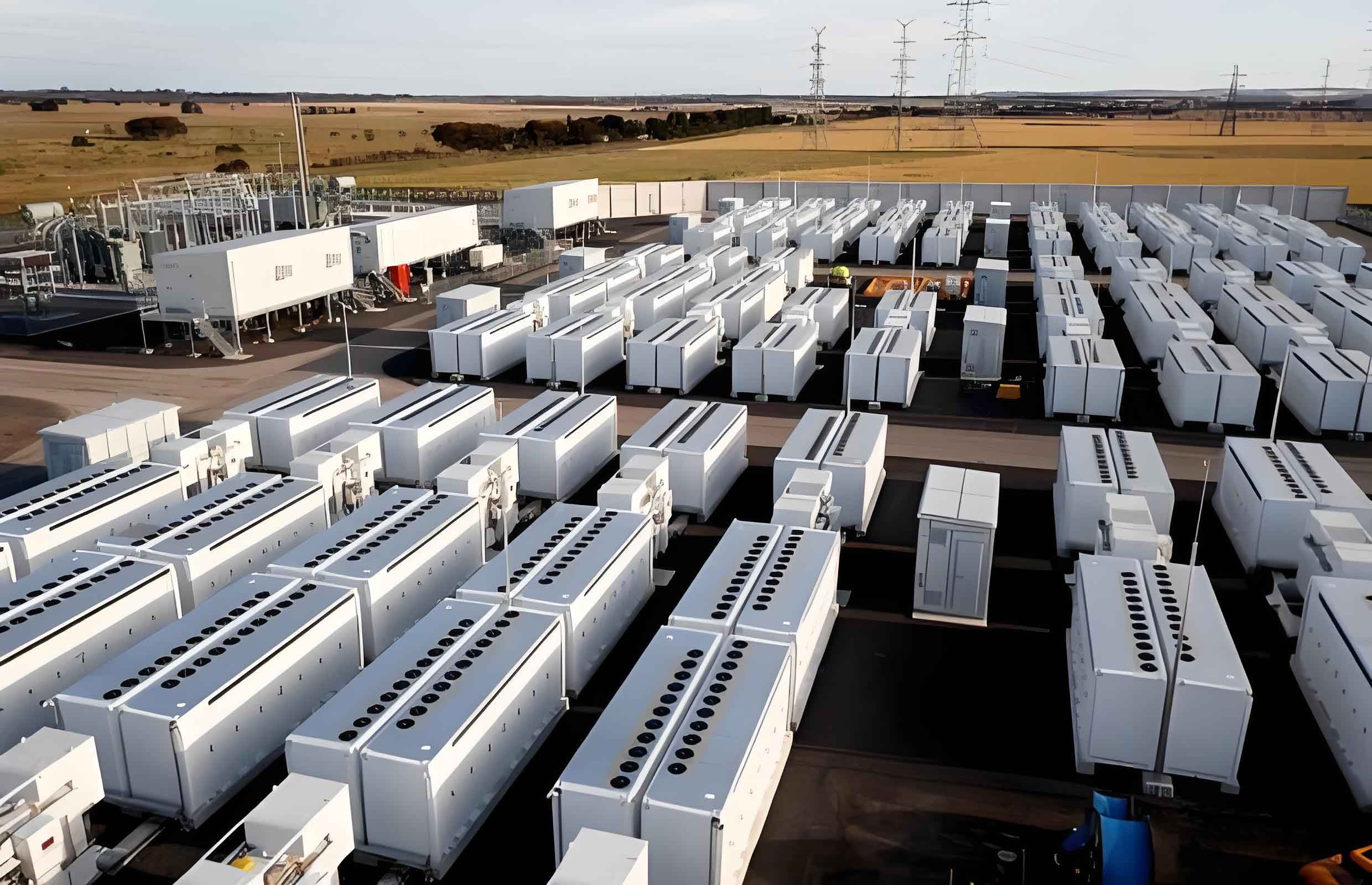
The total cost of an energy storage battery power station primarily comprises construction costs, operation and maintenance costs, and degradation costs. While initial investments and operational expenses for energy storage battery systems are comparable to conventional power plants, factors such as battery performance degradation and end-of-life disposal add to maintenance and decommissioning costs. We break down these components in detail.
Cost Analysis of Energy Storage Battery Power Stations
Construction costs for an energy storage battery station include the cost of the energy storage battery itself, balance of system costs, civil engineering costs, and capitalizable financing costs. Financing costs vary significantly based on investor equity and interest rate policies, so we focus on the tangible costs associated with the energy storage battery and supporting infrastructure.
Energy Storage Battery Cost
The cost of the energy storage battery is closely tied to the battery material. Under current technological conditions, scalable energy storage batteries include lead-acid, nickel-cadmium, sodium-sulfur, lithium-ion, vanadium redox, and zinc-bromine batteries. Each type varies in lifespan and construction cost, with capacity costs ranging from 300 to 3000 USD per kilowatt. The choice of energy storage battery depends on specific functional requirements, energy density, power density, lifespan, and unit cost. To illustrate, we present a table summarizing key characteristics of different energy storage battery types.
| Battery Type | Energy Density (Wh/kg) | Cycle Life (cycles) | Approx. Cost (USD/kWh) | Common Applications |
|---|---|---|---|---|
| Lithium-ion | 150-250 | 2000-5000 | 400-800 | Grid storage, EVs |
| Lead-acid | 30-50 | 500-1000 | 150-300 | Backup power |
| Vanadium Redox | 25-35 | 10000+ | 500-1000 | Large-scale storage |
| Sodium-sulfur | 150-240 | 2500-4500 | 300-500 | Grid support |
| Zinc-bromine | 60-80 | 2000-3000 | 400-700 | Renewable integration |
The energy storage battery cost is a significant portion of the total investment, and advancements in technology are expected to reduce these costs over time.
Balance of System Costs
The balance of system includes hardware and software that support the energy storage battery’s functions, such as voltage conversion devices, power conversion systems (PCS), automatic generation control (AGC), and safety systems. These costs are typically expressed per kilowatt-hour and depend on site conditions, load characteristics, and application scenarios. The balance of system ensures the energy storage battery operates at maximum output power and integrates seamlessly with the grid.
Civil Engineering Costs
Compared to pumped hydro storage, energy storage battery stations have advantages in land use, construction duration, and labor costs. They offer flexibility in site selection. For instance, a 10 MW/20 MWh energy storage battery station in China occupies approximately 2000 square meters and takes 8 to 10 months to build. Civil engineering costs are influenced by land prices and labor expenses in the location.
Operation and Maintenance Costs
Annual operation and maintenance costs include system maintenance, electricity procurement, and labor. Maintenance covers inspection, repair, spare parts, facilities, insurance, management, control systems, risk management, and energy trading. These costs are generally consistent in real terms each year. Electricity procurement costs, or charging costs, involve expenses during charging, including energy losses. Charging costs fluctuate with battery performance and wholesale energy prices. Labor costs depend on the scale of the energy storage battery equipment.
Degradation Costs of Energy Storage Battery
Degradation costs arise from capacity fade and disposal of the energy storage battery at end-of-life. Capacity degradation can be modeled as a function of usage frequency and age. For different types of energy storage batteries, capacity decay over time is expressed as:
$$L_t = L_0 \left[ 1 – \left( \sum_{t=0}^{T_n} \frac{\eta}{1000} \alpha_c + \beta_c \right) \right]$$
Where:
- $L_t$ is the storage capacity at time $t$ (MWh),
- $L_0$ is the initial storage capacity (MWh),
- $\eta$ is the number of cycles,
- $\alpha_c$ is the capacity decay rate per thousand cycles,
- $\beta_c$ is the annual natural capacity decay rate,
- $T_n$ is the battery lifespan.
As battery efficiency declines, more electricity is drawn from the grid to maintain output, increasing operational costs. The efficiency decay model is:
$$e_t = e_0 \left[ 1 – \left( \sum_{t=0}^{T_n} \frac{\eta}{1000} \alpha_e + \beta_e \right) \right]$$
Where:
- $e_t$ is the battery efficiency at time $t$,
- $e_0$ is the initial efficiency,
- $\alpha_e$ is the efficiency decay rate per thousand cycles,
- $\beta_e$ is the annual natural efficiency decay rate.
The total lifecycle cost $C$ of an energy storage battery station is the sum of investment cost $C_i$, charging cost during operation $C_p$, maintenance cost $C_m$, and disposal cost $C_s$:
$$C = C_i + C_p + C_m + C_s$$
Where $C_p$ can be expressed as a function of charging price and battery performance: $C_p = \sum_{t=0}^{T_n} P_t L_t e_t$, with $P_t$ as the charging price at time $t$.
Revenue Analysis of Energy Storage Battery Power Stations
Energy storage battery stations offer multiple benefits across the grid, generation, and user sides, but not all translate directly into revenue. In social cost-benefit analyses, only a few benefits are compensated through market mechanisms. Currently, revenue for energy storage battery stations in China mainly comes from arbitrage and auxiliary service market compensations.
Arbitrage Revenue
Peak-valley time-of-use pricing, implemented since the 1980s, helps manage load differences. The average peak-to-valley price ratio for large industries is 2.8, and for general commercial use, it is 2.9. Energy storage battery stations can charge during low-price periods and discharge during high-price periods to generate arbitrage revenue. For example, the first 6 MW/10 MWh energy storage battery station in the UK and the 101 MW/202 MWh station in Jiangsu, China, rely heavily on arbitrage income. This revenue stream provides cash flow to offset operational costs.
The arbitrage revenue $R_a$ over a period can be calculated as:
$$R_a = \sum_{t=1}^{T} (P_{d,t} \cdot D_t – P_{c,t} \cdot C_t)$$
Where:
- $P_{d,t}$ is the discharge price at time $t$,
- $D_t$ is the discharge energy at time $t$,
- $P_{c,t}$ is the charging price at time $t$,
- $C_t$ is the charging energy at time $t$.
Auxiliary Service Revenue
Revised regulations define auxiliary services such as primary frequency regulation, automatic generation control, peak shaving, reactive power support, reserve capacity, and black start. Energy storage battery stations can earn revenue from compensated auxiliary services, but standards vary by region. Since services cannot be provided simultaneously, revenue sources cannot be fully叠加. We summarize potential auxiliary service revenues in the table below.
| Auxiliary Service | Description | Typical Compensation (USD/MWh) | Applicability to Energy Storage Battery |
|---|---|---|---|
| Frequency Regulation | Maintain grid frequency | 10-50 | High, due to fast response |
| Peak Shaving | Reduce peak load demand | 5-30 | Moderate, depends on capacity |
| Reactive Power Support | Manage voltage levels | 2-20 | Low, usually integrated |
| Reserve Capacity | Provide backup power | 15-60 | High, for quick deployment |
| Black Start | Restart grid after outage | 50-100 | Moderate, requires specific capabilities |
The total revenue $R$ from auxiliary services can be modeled as:
$$R = \sum_{j=1}^{m} r_j \cdot Q_j$$
Where $r_j$ is the compensation rate for service $j$, and $Q_j$ is the quantity of service $j$ provided.
Economic Evaluation of a Case Study
We evaluate a 26 MW/52 MWh energy storage battery station in Central China, using lithium iron phosphate batteries. Key parameters are:
- Initial battery capacity: 95%
- Annual natural capacity decay rate ($\beta_c$): 0.5%
- Capacity decay per thousand cycles ($\alpha_c$): 4.6%
- Annual natural efficiency decay rate ($\beta_e$): 1%
- Efficiency decay per thousand cycles ($\alpha_e$): 1%
- Lifespan: 10 years
- Total construction cost: 157.9896 million CNY (approx. 22.57 million USD at 7 CNY/USD)
- Monthly O&M cost: 50,000 CNY
- Residual value: 20 million CNY
- Disposal cost: 8.5 million CNY
We assume depreciation using the straight-line method. Revenue streams are based on peak-valley arbitrage and auxiliary services. The net present value (NPV), internal rate of return (IRR), and dynamic payback period are calculated using a discount rate of 8%.
The NPV formula is:
$$NPV = \sum_{t=0}^{T} \frac{CF_t}{(1 + r)^t}$$
Where $CF_t$ is the net cash flow at time $t$, and $r$ is the discount rate.
For the energy storage battery station, cash flows include initial investment (negative), annual revenues, O&M costs, and terminal cash flows from residual value and disposal. We compute NPV for different revenue scenarios:
- Peak-valley arbitrage only
- Frequency regulation only
- Combination of services (optimistic scenario)
The results are summarized below:
| Scenario | NPV (million CNY) | IRR (%) | Dynamic Payback Period (years) |
|---|---|---|---|
| Peak-Valley Arbitrage | -115.57 | 0 | >10 |
| Frequency Regulation | -177.59 | 0 | >10 |
| Combined Services | -137.90 | 0 | >10 |
These results indicate that under current market conditions, a single revenue stream cannot recover the investment cost for the energy storage battery station. The NPV is negative, IRR is zero, and the payback period exceeds the lifespan. Sensitivity analysis shows that for peak-valley arbitrage to break even, the price difference needs to increase to approximately 1.75 CNY/kWh. Studies on joint frequency regulation with generators suggest a potential payback period of 6.59 years and IRR of 3.10% under ideal conditions, highlighting the importance of integrated services.
Conclusions and Recommendations
Our analysis of large-scale energy storage battery stations reveals several key points. First, energy storage battery systems play a crucial role in optimizing resource allocation, enhancing grid stability, and promoting renewable energy integration, making them vital for future power systems. Second, costs are dominated by the energy storage battery itself, with current prices around 4000 CNY/kWh, but technological progress is expected to reduce these costs. Third, revenues from peak-valley arbitrage and auxiliary services are insufficient to cover lifecycle expenses, necessitating policy interventions.
Recommendations
Establish Special Subsidy Mechanisms for Energy Storage Battery Stations: The positive externalities of energy storage battery systems, such as reduced carbon emissions and improved grid security, are not compensated in current markets. To foster development, dedicated subsidy mechanisms should be created. These could include upfront investment subsidies for developers or joint funding by government entities to lower initial capital burdens. During operation, energy storage battery stations should benefit from preferential charging prices, possibly settled at grid-side tariffs. Additionally, energy storage battery technology should receive tax incentives and subsidies akin to other clean energy sources.
Improve the Auxiliary Service Price System: Large energy storage battery stations, though smaller in capacity than traditional plants, excel in auxiliary services. Current compensation standards under existing regulations are low and lack tailored pricing for energy storage battery assets. To reflect the value of fast response, low loss, and stable output, the auxiliary service price system should be enhanced. Expanding the use of capacity-based pricing could better monetize the contributions of energy storage battery stations.
Actively Promote Energy Storage Participation in Electricity Spot Market Trading: The flexibility and rapid response of energy storage battery stations are well-suited for spot markets. As spot markets pilot in provinces like Guangdong, Zhejiang, and Shandong, opportunities arise for energy storage battery integration. Through real-time bidding, energy storage battery systems can maximize value in frequency regulation and peak shaving. Current rules often prevent standalone participation, but allowing joint bids with thermal units could unlock potential. A mature spot market will incentivize deployment on both generation and user sides, driving technological advancement and efficient energy use.
In summary, while energy storage battery stations face economic challenges today, strategic policies focusing on subsidies, pricing reforms, and market access can pave the way for sustainable growth. By addressing these areas, we can harness the full potential of energy storage battery technology to build a resilient and clean energy future.