
In recent years, the global overexploitation of fossil fuels has led to a significant energy crisis, driving increased demand for innovative energy technologies. As a representative clean energy technology, solar power systems offer substantial value by harnessing renewable resources. However, these systems are highly dependent on natural conditions, resulting in intermittency and unpredictability, which necessitate reliable energy storage solutions. This paper focuses on the application of energy storage batteries in solar power systems, analyzing various battery types and their characteristics to enhance system efficiency and reliability.
The development of solar power technology is crucial for mitigating carbon emissions and promoting sustainable energy. According to global data, thermal power generation accounts for approximately half of carbon emissions, exacerbating climate change. In alignment with national carbon reduction goals, such as those outlined in the Five-Year Plan, transitioning to solar power systems is essential. These systems not only reduce reliance on fossil fuels but also require advanced energy storage to manage fluctuations in energy generation. We will explore the current state of solar power systems and the role of energy storage batteries in ensuring stable operation.
| Battery Type | Nickel-Cadmium | Nickel-Metal Hydride | AGM Lead-Acid | Lithium-Ion |
|---|---|---|---|---|
| Mass Specific Energy (Wh/kg) | 45–80 | 80–90 | 30–50 | 110–160 |
| Specific Power (W/kg) | 150–500 | 500–1000 | 150–350 | 1000–1200 |
| Internal Resistance (mΩ) | 100–200 | 200–300 | <100 | 150–250 |
| Cycle Life at Room Temperature* | 500–1000 | 300–500 | 400–500 | 500–1000 |
| Fast Charging Time (h) | 1–3 | 2–4 | 2–5 | 2–4 |
| Overcharge Tolerance | Medium | Low | High | Very Low |
| Self-Discharge Rate (%/month) | 20 | 30 | 5 | 10 |
| Nominal Voltage (V) | 1.25 | 1.25 | 2 | 3.6 |
| Peak Load Current | 20C | 5C | 5C | >2C |
| Optimal Load Current | 1C | 0.2–0.5C | 0.2C | ≤1C |
| Operating Temperature (°C) | -20 to 60 | -20 to 60 | -20 to 60 | -20 to 60 |
| Maintenance Interval (months) | 1–2 | 2–3 | 3–6 | Not Required |
| Market Entry Year | 1950 | 1990 | 1970 | 1991 |
| Price ($/kWh) | 200–300 | 300–500 | 60–100 | 3000–4000 |
*Note: Cycle life varies significantly with charging/discharging methods, depth of discharge, and environmental temperature.
Lead-acid batteries are widely used in various applications due to their mature technology and cost-effectiveness. In solar power systems, valve-regulated lead-acid (VRLA) batteries, including absorbed glass mat (AGM) and gel types, are prevalent. These batteries offer high capacity, with some models reaching up to 10,000 A, making them suitable for large-scale energy storage. The energy density of lead-acid batteries can be expressed as $$ E_d = \frac{C \times V}{m} $$ where \( E_d \) is the energy density in Wh/kg, \( C \) is the capacity in Ah, \( V \) is the voltage, and \( m \) is the mass in kg. For solar power systems, lead-acid batteries provide a reliable solution, but their performance depends on factors like temperature and discharge depth.
Nickel-cadmium (Ni-Cd) batteries are known for their rapid charging capabilities and durability. They can be charged in as little as 1 hour and withstand numerous charge-discharge cycles, often exceeding 1000 cycles. However, they exhibit a memory effect, requiring periodic full discharges to maintain capacity. The operating temperature range of Ni-Cd batteries is from -40°C to 60°C, with discharge capacity at -40°C being about 20% of that at room temperature. The self-discharge rate is approximately 10% within the first 24 hours, increasing with temperature. Despite their advantages, the use of toxic cadmium has led to restrictions in many regions, limiting their application in modern solar power systems.
Nickel-metal hydride (Ni-MH) batteries offer higher energy density compared to Ni-Cd batteries, around 40% more, and are environmentally friendly. They have a reduced memory effect, eliminating the need for frequent maintenance cycles. However, their lifespan is shorter, and they generate heat during charging, which can affect performance. The specific energy density of Ni-MH batteries is typically 80–90 Wh/kg at low discharge currents but drops significantly under high-power conditions. For solar power systems, Ni-MH batteries are suitable for applications requiring moderate energy storage with minimal environmental impact.
Lithium-ion batteries boast high energy density, often two to three times that of Ni-Cd batteries, and a nominal voltage of 3.6 V. They lack a memory effect and offer excellent charging characteristics. For instance, lithium iron phosphate (LiFePO4) batteries operate on the principle of lithium-ion movement between electrodes during charge and discharge cycles. The efficiency can be modeled as $$ \eta = \frac{E_{out}}{E_{in}} \times 100\% $$ where \( \eta \) is efficiency, \( E_{out} \) is energy output, and \( E_{in} \) is energy input. In solar power systems, lithium-ion batteries provide high performance but require protective circuits to prevent overcharging or over-discharging. Their cycle life is influenced by temperature, with optimal storage below 15°C to minimize capacity degradation.
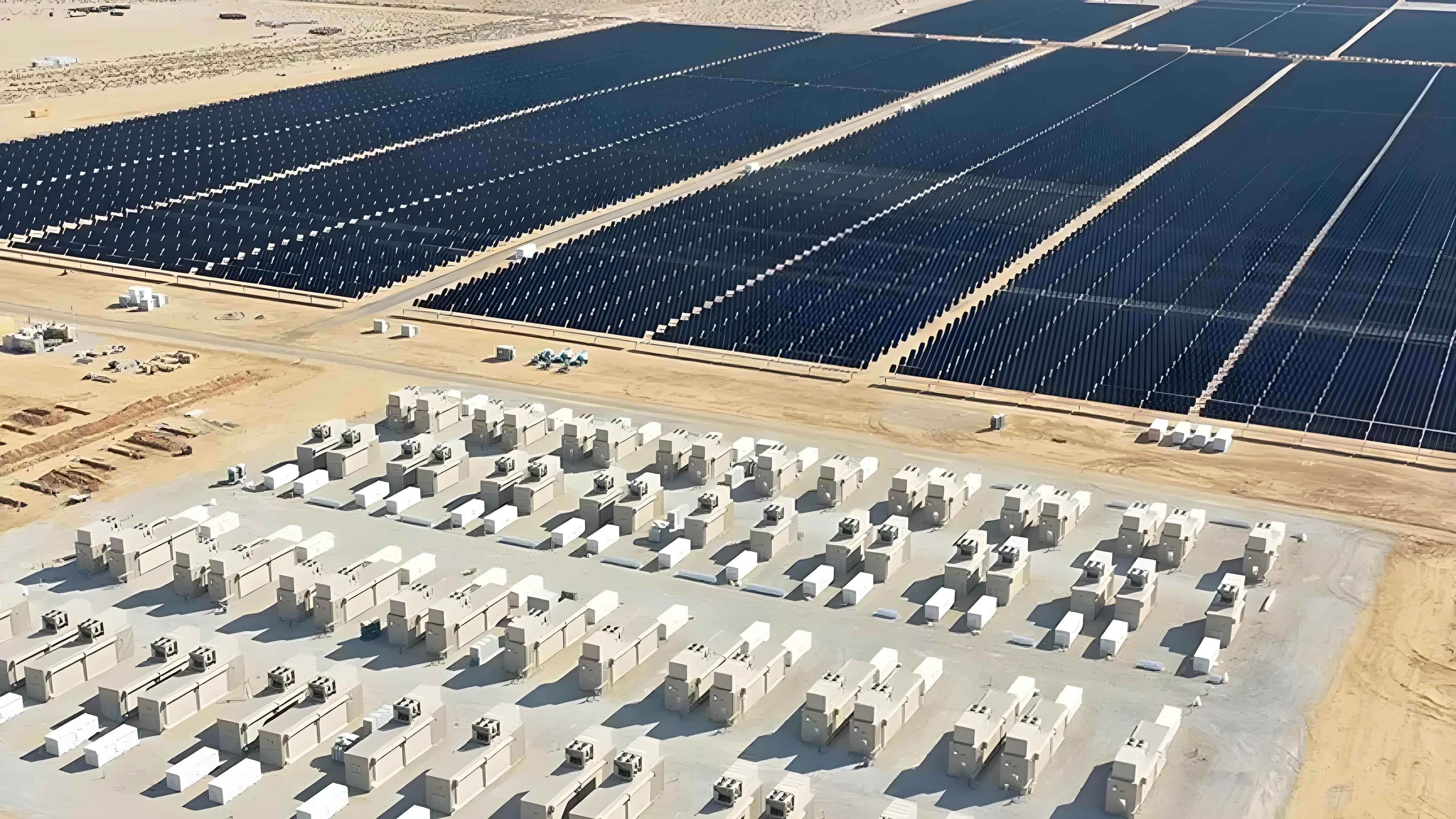
Sodium-sulfur (Na-S) batteries represent an emerging technology for large-scale energy storage in solar power systems. Operating at high temperatures around 300°C, they use liquid sodium and sulfur as electrodes separated by a ceramic membrane. The energy density of Na-S batteries is approximately three times that of lead-acid batteries, with charge efficiency of 70–80%. The theoretical capacity can be derived from the reaction $$ 2\text{Na} + 3\text{S} \rightarrow \text{Na}_2\text{S}_3 $$ yielding high energy output. However, safety concerns due to high operating temperatures limit their widespread adoption. These batteries are ideal for load-leveling and backup power in solar power systems, particularly in remote installations.
Redox flow batteries, such as vanadium redox batteries, utilize different oxidation states of vanadium for energy storage. The system involves circulating electrolytes through electrodes separated by an ion-exchange membrane. The cell voltage \( E \) can be calculated using the Nernst equation: $$ E = E^0 – \frac{RT}{nF} \ln Q $$ where \( E^0 \) is the standard cell potential, \( R \) is the gas constant, \( T \) is temperature, \( n \) is the number of electrons, \( F \) is Faraday’s constant, and \( Q \) is the reaction quotient. Redox batteries offer long cycle life, high efficiency, and scalability, making them suitable for solar power systems with fluctuating energy generation. They have been tested in various pilot projects, demonstrating potential for grid integration.
Supercapacitors, developed since the 1960s, combine double-layer electrochemical and pseudocapacitive properties. They use high-surface-area carbon electrodes and electrolytes like sulfuric acid or polymers. The energy storage mechanism involves charge separation at the electrode-electrolyte interface, with capacitance \( C \) given by $$ C = \frac{\varepsilon A}{d} $$ where \( \varepsilon \) is the permittivity, \( A \) is the surface area, and \( d \) is the separation distance. Supercapacitors exhibit power densities up to 1000 W/kg, cycle lives exceeding 50,000 cycles, and charging times of 10–30 minutes. In solar power systems, they are ideal for high-power applications, such as smoothing output fluctuations and providing burst power.
Advanced gel batteries, a type of VRLA battery, feature tubular or thick plate electrodes, suspended electrode groups, and composite separators. They use low-antimony or antimony-free grid alloys and low-density electrolytes (1.24–1.26 g/mL). The cycle life can exceed 5500 cycles at 40–80% depth of discharge, with charging efficiency up to 99%. The performance in solar power systems is enhanced by their slow self-discharge rate (about 1% per month) and adaptability to partial state-of-charge operations. Compared to AGM batteries, gel batteries have slightly higher internal resistance but comparable high-current discharge capabilities, making them cost-effective for long-term energy storage in solar power systems.
| Parameter | AGM Battery | Gel Battery |
|---|---|---|
| Electrolyte Density (g/cm³) | 1.29–1.31 | 1.24–1.26 |
| Internal Resistance | Low | Moderate |
| Cycle Life (cycles) | 400–500 | 1600+ |
| Self-Discharge Rate (%/month) | 5 | 1 |
| Cost-Effectiveness | High | Very High |
In conclusion, energy storage batteries are indispensable for the reliable operation of solar power systems, addressing intermittency and enhancing grid stability. While mature technologies like lead-acid and lithium-ion batteries dominate current applications, emerging options such as sodium-sulfur and redox batteries offer promising alternatives. Gel batteries, in particular, provide excellent cycle life and efficiency for solar power systems. Future research should focus on improving battery longevity, safety, and cost-effectiveness to support the global transition to renewable energy. As solar power systems expand, innovative energy storage solutions will play a critical role in achieving sustainable development goals.