
The integration of intermittent renewable energy sources like wind and solar has fundamentally altered grid dynamics. As of 2023, China’s grid-connected wind and solar capacity reached 1.05×10⁹ kW, representing 36% of total national installed capacity. This paradigm shift creates unique stability challenges that energy storage batteries must address through advanced power conversion technologies.
1. The Stability Paradox of Modern Power Grids
Traditional synchronous generators provide inherent stability through rotational inertia expressed as:
$$H = \frac{J\omega_s^2}{2S_{base}}$$
where H is the inertia constant (s), J is moment of inertia (kg·m²), ωs is synchronous speed (rad/s), and Sbase is generator rating (VA). Renewable sources lack this inertial response, creating frequency stability risks quantified by the rate of change of frequency (RoCoF):
$$RoCoF = \frac{\Delta P}{2H_{sys}}$$
where ΔP is power imbalance and Hsys is system inertia.
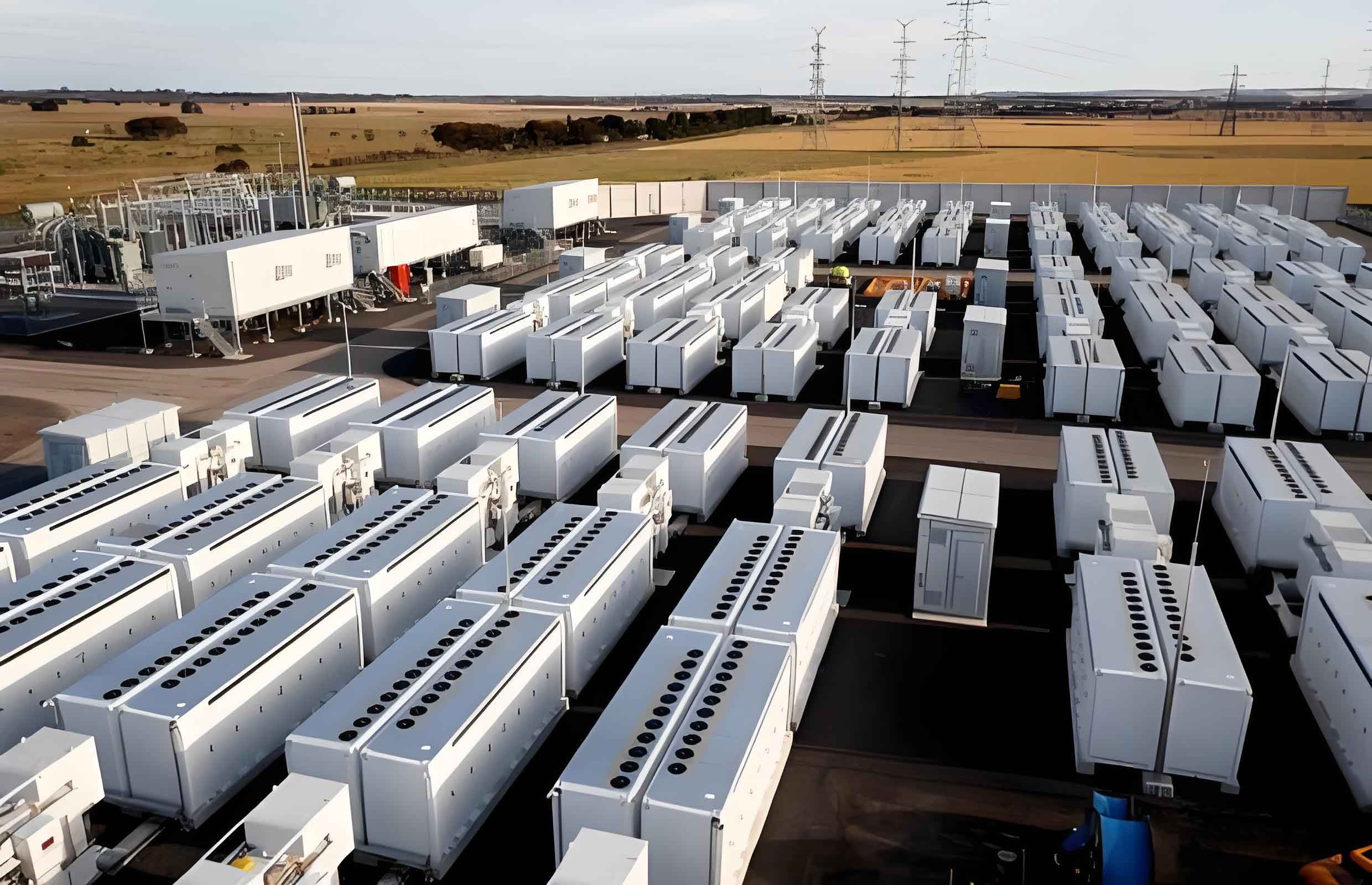
2. Energy Storage Battery Technologies: Performance Comparison
| Parameter | Sodium-Sulfur | Lithium-Ion | Redox Flow |
|---|---|---|---|
| Energy Efficiency (%) | 90 | 95 | 85 |
| Cycle Life | 4,500 | 15,000 | 100,000 |
| Energy Density (Wh/L) | 83 | 176 | 15 |
| Response Time | 50 ms | 20 ms | 100 ms |
3. Virtual Inertia Implementation
Energy storage batteries enable synthetic inertia through grid-forming inverters. The virtual inertia constant Hv can be expressed as:
$$H_v = \frac{E_{storage}}{2S_{inv}f_0}$$
where Estorage is available energy (J), Sinv is inverter rating (VA), and f0 is nominal frequency (Hz).
4. Global Deployment Case Studies
China’s Datang Hubei 100MW/200MWh sodium-ion project demonstrates energy storage battery capabilities:
- 185Ah cells with 85% efficiency at -20°C
- 1.3×10⁵ tons CO2 reduction annually
- 1500 cycles at 60°C
Japan’s Matsumae Wind Farm employs hybrid energy storage battery systems:
$$P_{hybrid} = P_{NaS} + P_{Li} = 18MW + 6MW$$
achieving 92% capacity factor through multi-timescale regulation.
5. Advanced Control Architectures
Modern energy storage battery systems utilize cascaded control strategies:
$$G_{c}(s) = K_p + \frac{K_i}{s} + K_ds$$
implementing:
- Primary frequency response (5-30s)
- Secondary regulation (30s-15min)
- Tertiary optimization (15min-24h)
6. Future Technology Roadmap
Next-generation energy storage battery targets:
| Metric | 2025 Target | 2030 Target |
|---|---|---|
| Cycle Life | 20,000 | 50,000 |
| Cost ($/kWh) | 80 | 50 |
| Response Time | <10 ms | <5 ms |
The evolution of energy storage battery technologies continues to redefine grid stability paradigms, enabling secure integration of renewable generation while maintaining strict power quality standards. Through continuous innovation in battery chemistry, power electronics, and control algorithms, these systems are poised to become the cornerstone of modern power systems.