
In the realm of energy storage, lithium-ion batteries have become ubiquitous, powering everything from portable electronics to electric vehicles and grid-scale systems. Among these, the LiFePO4 battery, known for its stability and long cycle life, is widely adopted in applications requiring high safety standards. However, like all lithium-ion batteries, the LiFePO4 battery is susceptible to thermal runaway—a dangerous condition where excessive heat generation leads to uncontrolled temperature rise, potentially causing fires or explosions. Understanding the energy released during such events is critical for designing effective safety protocols and fire suppression systems. In this study, I investigate the energy release during thermal runaway of LiFePO4 batteries, focusing on the influence of state of charge (SOC). Using experimental methods and calorimetric analysis, I quantify the energy output and explore its correlation with SOC, providing insights that can enhance the safety engineering of LiFePO4 battery systems.
Thermal runaway in lithium-ion batteries is a complex phenomenon triggered by internal short circuits, mechanical damage, or thermal abuse. Previous research has extensively studied the behavior and mechanisms of thermal runaway, often employing methods such as nail penetration, overcharging, or external heating. For LiFePO4 batteries, the relatively high thermal stability of the phosphate-based cathode material reduces the risk, but under extreme conditions, thermal runaway can still occur, releasing significant energy. The energy released stems from exothermic reactions within the battery, including electrolyte decomposition, electrode-electrolyte interactions, and combustion of materials. Quantifying this energy is challenging due to the rapid and violent nature of thermal runaway. Traditional direct measurement techniques are impractical, prompting the need for indirect approaches, such as comparing the energy content of the battery before and after the event.
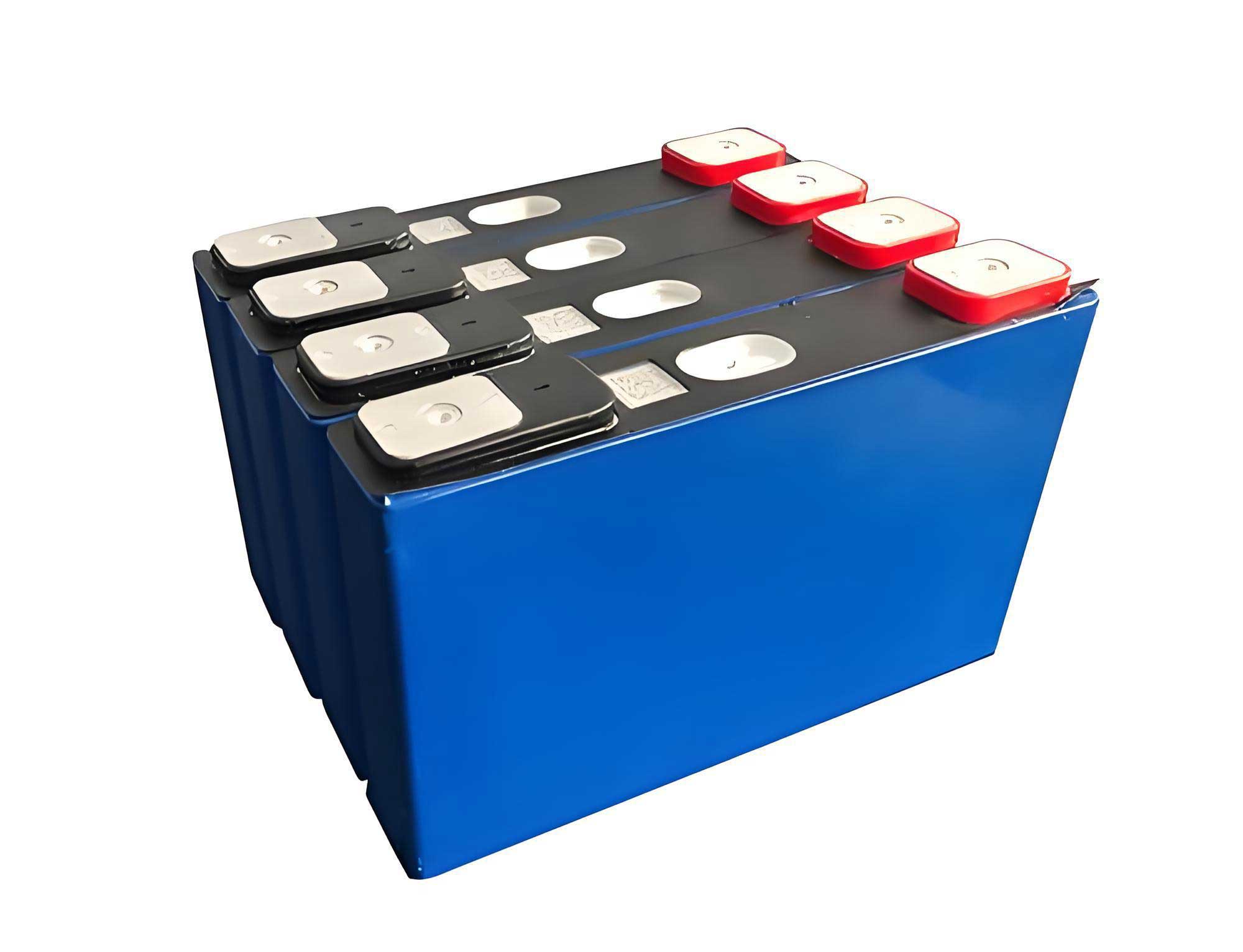
My experimental approach involves conducting thermal runaway tests on commercial soft-pack LiFePO4 batteries at varying SOC levels, followed by disassembly and calorimetric measurements. The core idea is to treat the energy of the LiFePO4 battery as a state function, dependent only on its initial and final conditions, independent of the thermal runaway path. By measuring the heat of combustion of battery components before and after thermal runaway using an oxygen bomb calorimeter, and applying weighted calculations, I derive the energy released during the process. This method offers a reliable means to assess the hazard potential of LiFePO4 batteries under different charging states.
The LiFePO4 battery samples used in this study are 20 Ah commercial soft-pack cells with a nominal voltage of 3.3 V. The anode is graphite-based, and the electrolyte is a typical lithium-ion battery electrolyte. The external dimensions are 227 mm × 160 mm × 7.25 mm. To examine SOC effects, I prepared batteries at three SOC levels: 100% (fully charged), 50% (half-charged), and 0% (fully discharged). Each LiFePO4 battery was subjected to thermal runaway via external heating on a dedicated experimental platform, which allowed for controlled triggering and data acquisition.
The thermal runaway experimental platform consists of an electric heating element, a battery fixture, temperature and voltage sensors, and a data acquisition system. The heating plate, with a power of 500 W, was applied to the battery surface until thermal runaway initiated, characterized by a sudden voltage drop and temperature spike. Temperature was monitored using K-type thermocouples placed at strategic locations: at the battery center in contact with the heater, at the battery mid-point, and 10 cm above the battery. Voltage was recorded continuously, and visual data were captured via a high-speed camera. After thermal runaway, the battery remnants were collected, and the cell components were separated for further analysis.
To determine the energy content, I employed an oxygen bomb calorimeter (Model Pair6400), which measures the heat of combustion of materials by comparing temperature rises with a standard reference. For new LiFePO4 batteries (before thermal runaway), I disassembled the cells in an argon-filled glovebox to obtain the cathode material, anode material, separator, and electrolyte. Each component was cleaned, dried, and weighed to establish mass ratios. The heat of combustion was measured individually for the cathode, anode, separator, and electrolyte, as well as for mixtures simulating likely reactions during thermal runaway, such as the anode material mixed with electrolyte. For post-thermal runaway samples, the entire cell residue (excluding the casing and current collectors) was ground into a homogeneous powder, and its heat of combustion was measured. This comprehensive approach ensures that all energy contributions are accounted for.
The energy of the LiFePO4 battery before thermal runaway, denoted as \( Q_{\text{initial}} \), is calculated as a weighted sum of the combustion heats of its components. Let \( m_c \), \( m_a \), \( m_e \), and \( m_g \) represent the masses of the cathode material, anode material, electrolyte, and separator, respectively, with total cell mass \( M = m_c + m_a + m_e + m_g \) (excluding casing and current collectors). The heat of combustion values are \( q_c \), \( q_a \), \( q_e \), and \( q_g \). However, during thermal runaway, interactions occur, particularly between the electrolyte and electrodes. To model this, I define parameters \( \alpha \), \( \beta \), and \( \gamma \) as the fractions of electrolyte reacting with the cathode, anode, and remaining unreacted, respectively, such that \( \alpha + \beta + \gamma = 1 \). The effective heat of combustion for mixtures is measured: \( q_{c,e} \) for cathode-electrolyte mix and \( q_{a,e} \) for anode-electrolyte mix. Thus, the initial energy can be expressed as:
$$ Q_{\text{initial}} = \alpha m_e q_{c,e} + \beta m_e q_{a,e} + \gamma m_e q_e + m_c q_c + m_a q_a + m_g q_g $$
Since the exact proportions of reactions are unknown, \( Q_{\text{initial}} \) is bounded by scenarios where electrolyte reacts fully with either electrode or remains separate. For simplicity, I consider several cases: Case 1: \( \alpha = \beta = 0, \gamma = 1 \) (no interaction); Case 2: \( \alpha = 1, \beta = \gamma = 0 \) (all electrolyte with cathode); Case 3: \( \beta = 1, \alpha = \gamma = 0 \) (all electrolyte with anode); Case 4: \( \alpha = \beta = 0.5, \gamma = 0 \) (equal split); Case 5: \( \alpha = \beta = \gamma = 1/3 \) (equal thirds). These provide a range for the initial energy of the LiFePO4 battery.
After thermal runaway, the residual energy \( Q_{\text{residual}} \) is directly measured from the combustion heat of the post-runaway mixture. The energy released during thermal runaway, \( Q_{\text{released}} \), is then:
$$ Q_{\text{released}} = Q_{\text{initial}} – Q_{\text{residual}} $$
This formulation allows for an indirect calculation of the energy release, circumventing the difficulties of direct measurement during the chaotic thermal runaway event.
The experimental results for the LiFePO4 batteries at different SOC levels are summarized in tables below. Table 1 presents the mass changes before and after thermal runaway, indicating that higher SOC leads to greater mass loss, suggestive of more intense reactions.
| Battery SOC (%) | Initial Total Mass (g) | Post-Runaway Total Mass (g) | Mass Loss (g) |
|---|---|---|---|
| 100 | 488.03 | 387.63 | 100.40 |
| 50 | 488.62 | 403.57 | 85.05 |
| 0 | 488.38 | 408.31 | 80.07 |
The thermal runaway behavior, as captured by temperature and voltage curves, showed distinct patterns. For the 100% SOC LiFePO4 battery, a sharp voltage drop occurred within 2 seconds, accompanied by a rapid temperature rise from 81°C to 191°C in 26 seconds, yielding an average heating rate of 4.2°C/s. In contrast, the 50% SOC battery exhibited a milder response, with a temperature increase from 78°C to 141°C over 21 seconds (1.2°C/s), and the 0% SOC battery had no significant thermal runaway features, with gradual voltage decline. This visually confirms that the severity of thermal runaway in a LiFePO4 battery escalates with SOC.
Table 2 details the combustion heat measurements for new LiFePO4 battery components. The values are averages from multiple trials, with the cathode and anode materials showing variations due to SOC-dependent lithiation states.
| Component | Heat of Combustion (kJ/g) | Notes |
|---|---|---|
| Cathode Material (LiFePO4) | 2.79 – 3.03 | Increases slightly with SOC |
| Anode Material (Graphite) | 26.26 – 27.95 | Higher for lithiated states |
| Separator | 45.45 | Constant, based on polyolefin |
| Electrolyte | 15.01 | Constant, typical LiPF6 in organic solvents |
| Cathode + Electrolyte Mix | 6.86 – 6.87 | Measured for 1:1 mass ratio |
| Anode + Electrolyte Mix | 22.58 – 23.77 | Measured for 1:1 mass ratio, exothermic |
The mass ratios of components in the LiFePO4 battery were consistent across SOC levels, with approximate proportions of cathode:anode:electrolyte:separator as 6.4:4.1:3.1:1. Using these, the initial energy \( Q_{\text{initial}} \) was computed for each case, as shown in Table 3. The values are normalized per gram of cell material to facilitate comparison.
| Battery SOC (%) | Case 1 (kJ/g) | Case 2 (kJ/g) | Case 3 (kJ/g) | Case 4 (kJ/g) | Case 5 (kJ/g) |
|---|---|---|---|---|---|
| 100 | 15.10 | 15.10 | 16.25 | 15.67 | 15.49 |
| 50 | 15.02 | 15.03 | 15.44 | 15.24 | 15.17 |
| 0 | 14.99 | 15.01 | 15.27 | 15.14 | 15.09 |
From Table 3, it is evident that the initial energy of the LiFePO4 battery increases with SOC, but not linearly. Case 3, where all electrolyte reacts with the anode, yields the highest values, underscoring the anode-electrolyte reaction as a major energy source. The range of values provides bounds for the initial energy content.
Post-thermal runaway, the residual energy was measured directly from the combustion of the cell remnants. Table 4 presents the results, showing that higher SOC leads to lower residual energy, implying more energy was released during thermal runaway.
| Battery SOC (%) | Post-Runaway Mixture Mass (g) | Heat of Combustion (kJ/g) | Residual Energy \( Q_{\text{residual}} \) (kJ) |
|---|---|---|---|
| 100 | 274.16 | 13.66 | 3745.02 |
| 50 | 290.18 | 15.35 | 4454.26 |
| 0 | 294.88 | 16.78 | 4948.09 |
Combining the initial and residual energies, the released energy \( Q_{\text{released}} \) was calculated for each SOC, considering the range from Case 1 to Case 5 for \( Q_{\text{initial}} \). The results are in Table 5, expressed in absolute kilojoules and equivalent TNT mass (1 g TNT ≈ 4.184 kJ) and water mass required to absorb the energy (assuming water heated from 25°C to 100°C, specific heat 4.2 kJ/(kg·°C)).
| Battery SOC (%) | Released Energy \( Q_{\text{released}} \) Range (kJ) | TNT Equivalent Range (kg) | Water Mass to Absorb Energy (kg) |
|---|---|---|---|
| 100 | 1911 – 2342 | 0.46 – 0.56 | 6.1 – 7.5 |
| 50 | 1182 – 1339 | 0.28 – 0.32 | 3.8 – 4.3 |
| 0 | 673 – 778 | 0.16 – 0.19 | 2.1 – 2.5 |
The data clearly demonstrate that the energy released during thermal runaway of a LiFePO4 battery is positively correlated with SOC. The fully charged LiFePO4 battery (100% SOC) releases up to 2342 kJ, equivalent to 0.56 kg of TNT, while the discharged battery releases only about 778 kJ. This has profound implications for safety design, as higher SOC LiFePO4 battery systems pose greater hazards.
To delve deeper, the mechanism of energy release in LiFePO4 batteries involves several exothermic reactions. Primarily, the lithiated graphite anode reacts with the electrolyte at elevated temperatures, producing gases and heat. The reaction for ethylene carbonate (EC) and diethyl carbonate (DEC) with lithium-intercalated graphite can be simplified as:
$$ \text{EC: } \mathrm{LiC_6} + \mathrm{C_3H_4O_3} \rightarrow \mathrm{Li_2CO_3} + \mathrm{C_2H_4} + \text{heat} $$
$$ \text{DEC: } 2\mathrm{LiC_6} + \mathrm{C_5H_{10}O_3} \rightarrow \mathrm{Li_2CO_3} + 4\mathrm{C_2H_4} + \text{heat} $$
These reactions are more vigorous at higher SOC because the anode contains more lithium, increasing the reactivity. The cathode material LiFePO4 is relatively stable, but under extreme heat, it may decompose, though in my experiments, the temperatures did not reach that threshold. The separator melting and combustion also contribute, but to a lesser extent. The weighted calculation approach captures these contributions effectively.
The uncertainty in \( Q_{\text{released}} \) stems from the unknown reaction fractions \( \alpha \), \( \beta \), and \( \gamma \). However, even the lower bounds for high SOC LiFePO4 batteries exceed the upper bounds for low SOC, confirming that SOC is the dominant factor. This insight is crucial for risk assessment: when designing fire suppression for LiFePO4 battery packs, the worst-case scenario (full charge) must be assumed to prevent cascading failures.
In practical terms, the energy release values can guide the selection and quantity of灭火剂. For instance, to fully absorb the energy from a thermal runaway event in a 20 Ah LiFePO4 battery at 100% SOC, approximately 7.5 kg of water is needed, assuming ideal heat absorption. In real firefighting, factors like evaporation and heat dissipation would require even more resources. Thus, for large-scale LiFePO4 battery installations, such as energy storage systems, tailored消防 strategies are essential.
Comparing my findings with literature, the positive SOC-energy correlation aligns with studies on other lithium-ion chemistries, but the LiFePO4 battery exhibits lower energy release due to its stable cathode. For example, nickel-cobalt-aluminum (NCA) or nickel-manganese-cobalt (NMC) batteries might release more energy under similar conditions, but the LiFePO4 battery’s advantage lies in its slower reaction kinetics, which can provide longer response times for safety systems.
Further analysis involves the specific energy contributions. Let \( E_{\text{total}} \) be the total electrical energy stored in the LiFePO4 battery, which for a 20 Ah cell at 3.3 V is approximately:
$$ E_{\text{electrical}} = 20 \, \text{Ah} \times 3.3 \, \text{V} \times 3600 \, \text{s/h} = 237.6 \, \text{kJ} $$
However, the thermal energy released during runaway far exceeds this, reaching up to 2342 kJ, almost ten times the electrical energy. This discrepancy highlights that the majority of energy comes from chemical reactions of the materials, not just the stored electrical charge. Thus, even a discharged LiFePO4 battery can pose a significant thermal hazard due to its combustible components.
To model the energy release quantitatively, I propose an empirical formula based on my data. Let \( x \) be the SOC in decimal form (0 to 1). The released energy \( Q_{\text{released}} \) in kJ for a 20 Ah LiFePO4 battery can be approximated by:
$$ Q_{\text{released}} = 673 + 1669x^2 $$
This quadratic fit reflects the nonlinear increase with SOC, derived from the midpoints of the ranges in Table 5. For general application to other LiFePO4 battery capacities, scaling by mass or energy content may be appropriate.
In terms of safety implications, my results advocate for SOC management in LiFePO4 battery systems. Operating at lower SOC levels, when feasible, can reduce thermal runaway risks. Additionally, thermal monitoring and early detection systems should be calibrated based on SOC, as the onset temperatures and heating rates vary. For instance, the 100% SOC LiFePO4 battery showed a sharp thermal runaway at around 80°C, whereas the 50% SOC battery had a more gradual onset.
Future work could expand this study to larger LiFePO4 battery formats, such as prismatic or cylindrical cells, and under different triggering methods like overcharge or short circuit. Also, in-situ calorimetry during thermal runaway could provide direct validation of my indirect method. Moreover, the effects of aging and cycle life on energy release in LiFePO4 batteries warrant investigation, as degradation might alter the reaction dynamics.
In conclusion, my analysis confirms that the energy released during thermal runaway of a LiFePO4 battery is strongly dependent on SOC, with higher SOC leading to greater energy output. The maximum release for a 20 Ah soft-pack LiFePO4 battery at full charge reaches 2342 kJ, comparable to 0.56 kg of TNT. This energy primarily stems from exothermic reactions between the lithiated anode and electrolyte. The findings emphasize the need for SOC-aware safety designs and adequate fire suppression resources in applications using LiFePO4 batteries. By quantifying these hazards, this study contributes to the safer deployment of LiFePO4 battery technology in renewable energy storage, electric transportation, and beyond.
The robustness of the LiFePO4 battery chemistry is evident, but as with any energy-dense system, proactive risk management is essential. I recommend that engineers and designers incorporate these energy release estimates into their safety calculations, ensuring that LiFePO4 battery systems are both efficient and resilient against thermal events. Continued research into advanced materials and cooling techniques will further enhance the safety profile of the LiFePO4 battery, solidifying its role in the sustainable energy landscape.