
I have long regarded the solid state cell as one of the most promising electrochemical architectures for high-energy and safe energy storage, yet I also recognize that its practical realization is still limited by interfacial instability. In my view, the solid state cell community has spent years addressing mechanical contact loss and parasitic chemical reactions, but a deeper and more fundamental problem remains the redistribution of ionic and electronic charges across heterogeneous solid–solid interfaces. When a solid electrolyte meets a high-voltage layered oxide cathode, the electrochemical potential mismatch between the two phases can drive lithium ions away from the interface and create a space charge layer. This space charge layer, or SCL, is not a passive byproduct. It actively distorts the local electrochemical environment, increases interfacial resistance, and accelerates degradation in the solid state cell.
From my perspective, the most persistent obstacle in sulfide-based all-solid-state lithium batteries is therefore not merely the absence of intimate contact or the occurrence of side reactions. It is the coupled ionic and electronic charge redistribution that emerges whenever two solids with different chemical potentials are joined. I find it useful to describe this phenomenon with the electrochemical potential of mobile species, because the solid state cell is fundamentally a system in which local thermodynamic variables control transport and stability. The electrochemical potential of lithium ions can be written as:
$$ \mu_{\mathrm{Li}^+} = \mu_{\mathrm{Li}^+}^0 + RT \ln a_{\mathrm{Li}^+} + z_{\mathrm{Li}^+} F \phi $$
In this expression, the first term is the standard chemical potential, the second term captures activity or concentration effects, and the third term represents the electrostatic contribution. At a solid–solid interface, the electrostatic potential and the lithium activity must adjust to satisfy local equilibrium. When the chemical potential of lithium in the cathode differs from that in the electrolyte, a redistribution of charge occurs. This redistribution is the origin of the space charge layer in a solid state cell. I consider it essential to state the Poisson equation that governs the electrostatic potential profile:
$$
abla^2 \phi = -\frac{\rho}{\varepsilon} $$
Here, \rho is the local charge density and \varepsilon is the dielectric permittivity. Because \rho includes both mobile lithium ions and electrons, the space charge layer in a solid state cell is not simply an ionic phenomenon. It is an electrochemical phenomenon that couples ion transport, electron transport, and electrostatic potential. The characteristic thickness of this layer is often described by the Debye length:
$$ \lambda_D = \sqrt{\frac{\varepsilon k_B T}{2 F^2 c_0}} $$
When the Debye length is comparable to the interfacial roughness or the grain boundary width, the space charge layer can extend deep into the electrolyte or the cathode. In a solid state cell, this extension is particularly harmful because it can deplete lithium ions near the interface and create a reverse electric field that opposes further lithium transport. I have observed that many degradation pathways in solid state cells can be traced back to this reverse field and the associated lithium depletion.
To organize my thinking, I summarize the major interfacial degradation modes in Table 1. This table reflects my own understanding of how charge redistribution interacts with mechanical and chemical processes in a solid state cell.
| Degradation mode | Originating mechanism | Role of charge redistribution | Impact on solid state cell performance |
|---|---|---|---|
| Mechanical contact loss | Volume changes and void formation | Space charge can modify local adhesion and ionic flux | Increased impedance and current constriction |
| Parasitic chemical reactions | Thermodynamic instability at interfaces | Charge transfer alters reaction kinetics and product distribution | Interphase growth and capacity fade |
| Space charge layer | Chemical potential mismatch | Directly generated by ionic and electronic redistribution | Lithium depletion, high interfacial resistance |
| Electrochemical potential drift | Non-uniform activity and potential | Couples with SCL to create local overpotential | Reduced rate capability and cycling stability |
| Chemo-mechanical fatigue | Cyclic stress and strain | Space charge modifies local diffusion and stress fields | Crack formation and contact loss |
In the past, I and many others focused on cathode modification as the primary strategy to mitigate these problems. Surface coatings, compositional gradients, and protective layers can indeed reduce side reactions and improve interfacial stability. However, I have come to believe that cathode modification alone cannot fully solve the space charge problem in a solid state cell. A coating may block electron transfer, but it does not necessarily eliminate the chemical potential mismatch that drives charge redistribution. Similarly, a compositional optimization of the cathode may improve bulk stability but leave the electrolyte side of the interface unchanged. The space charge layer is a property of the entire junction, not of one side alone.
This is why I find electrolyte-centric strategies so compelling. If we can tune the chemical potential of the electrolyte itself, we can reduce the mismatch with the cathode and thereby weaken the driving force for charge redistribution. In my view, this approach shifts the paradigm from cathode-dominated modification to a more balanced design in which the electrolyte actively regulates the interfacial electrochemical environment. Table 2 contrasts these two philosophies as I see them.
| Design philosophy | Primary target | Mechanism of action | Limitations for solid state cell |
|---|---|---|---|
| Cathode modification | Cathode surface and bulk | Coatings, doping, compositional gradients | Does not fully address electrolyte-side chemical potential |
| Electrolyte engineering | Solid electrolyte chemical potential | Electronic structure modulation and chemical potential matching | Requires careful control of ionic conductivity and stability |
| Interphase engineering | Interfacial reaction products | Artificial interphase or in situ formed layers | Can add resistance and may not suppress SCL formation |
| Mechanical engineering | Stack pressure and contact | External pressure and compliant layers | Does not eliminate intrinsic charge redistribution |
I have been particularly interested in a recent electrolyte-centric strategy that uses a small amount of tungsten trioxide, WO3, to modify a chlorine-rich argyrodite electrolyte. The resulting composition, Li5.49P0.99W0.01S4.47O0.03Cl1.5, achieves a record-high room-temperature ionic conductivity of 13.5 mS cm−1. In my assessment, this is not merely a conductivity record. The more important achievement is that the targeted substitution reshapes the electrolyte’s electronic structure and enables deliberate modulation of its chemical potential. By partially substituting P5+ with W6+ and S2− with O2−, the chemical potential mismatch between the electrolyte and high-voltage layered oxide cathodes is significantly reduced. I see this as a direct attack on the root cause of space charge formation in the solid state cell.
To understand why this works, I return to the thermodynamics of the interface. The driving force for charge redistribution is the difference in electrochemical potential across the interface. For lithium ions, this difference can be expressed as:
$$ \Delta \mu_{\mathrm{Li}^+} = \mu_{\mathrm{Li}^+}^{\mathrm{cathode}} – \mu_{\mathrm{Li}^+}^{\mathrm{electrolyte}} $$
When \Delta \mu is large, the system responds by transferring charge and creating an electric field that opposes further transfer. This is the space charge layer. If we can reduce \Delta \mu by engineering the electrolyte, we reduce the magnitude of the space charge and the associated lithium depletion. In the WO3-modified argyrodite, the substitution of P5+ by W6+ introduces additional electronic states and shifts the Fermi level. The substitution of S2− by O2− modifies the anion framework and changes the Madelung potential. Together, these effects align the chemical potential of the electrolyte with that of the cathode. I find this mechanism elegant because it uses bulk chemistry to control an interfacial phenomenon.
From my perspective, the solid state cell community should pay close attention to the electronic structure of the electrolyte. The projected density of states provides a direct window into how substitutions alter the energy levels near the Fermi edge. When the electronic structure is modified, the chemical potential and the charge transfer propensity change. I summarize the key electronic and ionic parameters in Table 3.
| Parameter | Role in solid state cell | Effect of WO3 substitution | Desired direction |
|---|---|---|---|
| Ionic conductivity | Determines rate capability | Increases to 13.5 mS cm−1 | Higher |
| Activation energy | Controls temperature dependence | Reduced by electronic structure modulation | Lower |
| Chemical potential mismatch | Drives space charge formation | Reduced by P5+ and S2− substitution | Smaller |
| Electronic density of states | Governs charge transfer | Reshaped near Fermi level | Aligned with cathode |
| Li vacancy formation energy | Controls Li+ mobility | Optimized by W and O co-substitution | Moderate |
| Interfacial resistance | Limits power and cycling | Lowered by suppressed SCL | Lower |
I also want to emphasize the transport equations that govern the solid state cell. The Nernst–Planck equation describes the flux of lithium ions under both concentration and potential gradients:
$$ J_{\mathrm{Li}^+} = -D_{\mathrm{Li}^+}
abla c_{\mathrm{Li}^+} – \frac{z_{\mathrm{Li}^+} F D_{\mathrm{Li}^+} c_{\mathrm{Li}^+}}{RT}
abla \phi $$
When a space charge layer forms, the potential gradient term becomes significant and can oppose the concentration gradient term. This opposition reduces the net lithium flux and increases the interfacial resistance. By suppressing the space charge layer, the electrolyte-centric strategy restores a more favorable balance between the two terms. In my view, this is why the modified electrolyte delivers such impressive performance in a solid state cell.
The ionic conductivity as a function of temperature follows an Arrhenius relationship:
$$ \sigma(T) = \frac{A}{T} \exp\left(-\frac{E_a}{k_B T}\right) $$
Here, A is a pre-exponential factor, E_a is the activation energy, and k_B is the Boltzmann constant. A high ionic conductivity at room temperature and a low activation energy are both desirable for a solid state cell. The WO3-modified argyrodite achieves both. I attribute this to the combined effect of the W and O substitutions, which widen the lithium diffusion pathways and reduce the energy barriers for hopping. The chlorine-rich framework also plays a role by providing a favorable anion sublattice for lithium transport.
When paired with a LiNi0.92Co0.05Mn0.03O2 cathode, the optimized electrolyte delivers outstanding electrochemical performance. I summarize the key metrics in Table 4. These numbers are important because they demonstrate that suppressing the space charge layer translates directly into improved cycling stability and rate capability in a solid state cell.
| Performance metric | Value | Conditions | Significance for solid state cell |
|---|---|---|---|
| Initial specific capacity | High | With NCM92 cathode | Confirms cathode compatibility |
| Capacity retention at 1 C | 92% after 1000 cycles | 1 C rate | Excellent long-term stability |
| Cycling at 5 C | Stable over 5000 cycles | 5 C rate | Outstanding rate capability |
| Areal capacity | 15 mAh cm−2 | 101.91 mg cm−2 loading | High loading feasibility |
| Pouch cell retention | 93% after 100 cycles | Stable charge–discharge | Scalable format demonstration |
| Ionic conductivity | 13.5 mS cm−1 | Room temperature | Record-high for argyrodite |
I find the high-loading result especially noteworthy. An areal capacity of 15 mAh cm−2 at a cathode loading of 101.91 mg cm−2 is a strong indication that the electrolyte can support practical solid state cell designs. In many solid state cell studies, high performance is demonstrated only at low loading, where interfacial effects are less severe. Here, the electrolyte-centric design maintains performance even when the cathode is thick and the interfacial area is large. This suggests that the space charge suppression is robust and not limited to thin-film geometries.
The pouch cell demonstration is equally important. A sulfide-based pouch cell that retains 93% of its capacity after 100 stable charge–discharge cycles shows that the concept can be translated beyond coin cells. I do not think this means the problem is solved, but it does provide a credible pathway toward practical solid state cell manufacturing. The ability to fabricate a pouch cell with a sulfide electrolyte and a high-voltage cathode is a significant step.
Crucially, the mechanistic framework is clear. Electrolyte chemical potential engineering reduces interfacial charge redistribution, weakens space charge layers, and enhances interfacial kinetics and durability. I illustrate this sequence in my own summary:
$$ \text{Electrolyte chemical potential engineering} \rightarrow \text{reduced charge redistribution} \rightarrow \text{weakened space charge layer} \rightarrow \text{improved solid state cell performance} $$
This causal chain is what makes the work conceptually important. It elevates the space charge from a passive interfacial byproduct to an actively regulated parameter. In my view, this is a paradigm shift from cathode-dominated modification to a more balanced, electrolyte-driven approach. I expect that future solid state cell designs will increasingly consider the electrolyte not just as an ion conductor but as an electrochemical potential regulator.
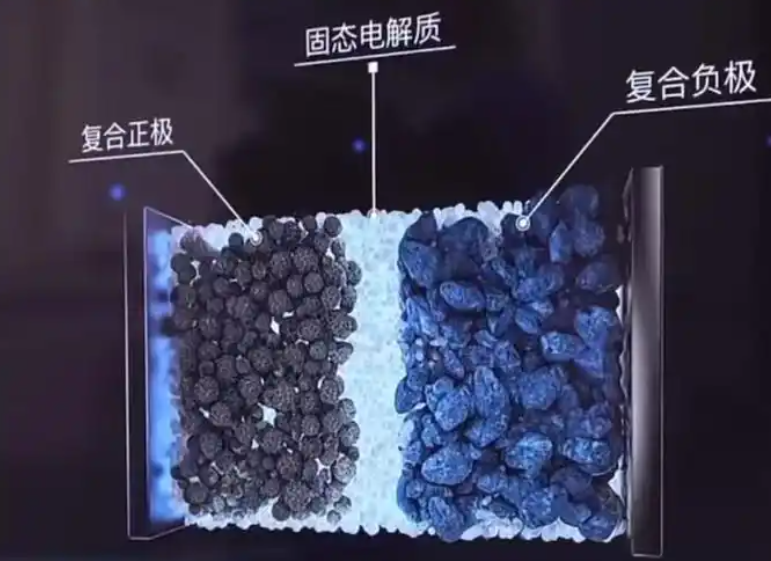
Looking forward, I believe the most important question is how electrolyte-driven space-charge regulation can be translated from materials-level optimization into practically relevant solid state cells. The pouch cell demonstration is encouraging, but its effectiveness under reduced or near-zero stack pressure, higher areal capacity, thinner electrolyte membranes, and larger cell formats has not been established. Under these conditions, dynamic contact evolution, chemo-mechanical deformation, and interfacial reactions may become increasingly coupled with space-charge redistribution. I therefore think it is essential to understand the mechanism of these coupled processes for long-term interfacial stability in a solid state cell.
To frame the challenge, I consider the stress–chemistry coupling at the interface. The chemical potential of lithium depends not only on concentration and potential but also on mechanical stress:
$$ \mu_{\mathrm{Li}^+} = \mu_{\mathrm{Li}^+}^0 + RT \ln a_{\mathrm{Li}^+} + z_{\mathrm{Li}^+} F \phi + \Omega \sigma_h $$
Here, \Omega is the partial molar volume and \sigma_h is the hydrostatic stress. In a solid state cell, stress can vary significantly during cycling because of volume changes in the cathode and lithium metal anode. If the stress field is non-uniform, it can create additional driving forces for lithium redistribution and modify the space charge layer. I believe that future models of the solid state cell must incorporate this coupling.
Table 5 lists the practical conditions that I think deserve systematic investigation. Each condition interacts with charge redistribution in a different way.
| Practical condition | Expected challenge | Interaction with space charge | Required design response |
|---|---|---|---|
| Reduced stack pressure | Contact loss and void formation | Altered local potential and Li+ activity | Compliant interfaces and pressure-tolerant electrolytes |
| Near-zero stack pressure | Poor mechanical contact | SCL may dominate interfacial resistance | Self-adhering electrolytes and surface engineering |
| Higher areal capacity | Larger Li+ flux and stress | SCL can spread over larger areas | High conductivity and uniform charge distribution |
| Thinner electrolyte membranes | Increased leakage and dendrite risk | Space charge may penetrate entire membrane | Mechanically robust and electronically insulating films |
| Larger cell formats | Non-uniform current and temperature | Local SCL variations | Scalable processing and thermal management |
Beyond practical cell engineering, I think the generality of this concept deserves exploration. Extending chemical-potential matching to other high-voltage cathodes, sulfide electrolyte chemistries, and potentially other solid–solid interfaces could reveal whether electrolyte-driven charge redistribution can serve as a broader design principle for solid-state electrochemistry. If the same principle applies to different material systems, then we can develop a unified framework for interfacial design in the solid state cell.
I also want to highlight the role of computational methods in this field. Density functional theory calculations of the projected density of states can reveal how substitutions shift the Fermi level and modify the electronic structure. Calculations of lithium vacancy formation energy can show how substitutions affect the energy landscape for lithium hopping. X-ray photoelectron spectroscopy can probe the chemical environment of sulfur and other elements at different depths. Together, these methods provide a multiscale picture of the interface in a solid state cell. The vacancy formation energy can be expressed as:
$$ E_v = E_{\mathrm{tot}}(\text{defect}) – E_{\mathrm{tot}}(\text{perfect}) + \sum_i n_i \mu_i $$
When the vacancy formation energy is too high, lithium hopping becomes difficult; when it is too low, the lattice may become unstable. The optimal value depends on the host structure and the operating conditions. In the WO3-modified argyrodite, the co-substitution appears to tune the vacancy formation energy to a favorable range, enabling high ionic conductivity without sacrificing stability. I consider this a key design principle for the solid state cell.
Table 6 summarizes the computational and experimental descriptors that I would use to evaluate an electrolyte-centric strategy for a solid state cell.
| Descriptor | Method | Target | Relevance to solid state cell |
|---|---|---|---|
| Projected density of states | DFT | Fermi level alignment | Controls charge transfer and SCL |
| Li vacancy formation energy | DFT | Moderate values | Governs Li+ mobility |
| S 2p XPS | Depth-profiled XPS | Chemical stability | Detects interfacial reactions |
| Ionic conductivity | EIS | High at room temperature | Enables fast charging |
| Activation energy | Arrhenius analysis | Low | Improves low-temperature performance |
| Interfacial resistance | EIS | Low and stable | Indicates weak SCL |
From my perspective, the most exciting aspect of this electrolyte-centric strategy is that it harmonizes electronic structure modulation with ionic transport kinetics. It does not simply add a coating or a barrier layer. It changes the bulk chemistry of the electrolyte so that the interface is thermodynamically better matched to the cathode. This is a more fundamental solution. I believe it provides a universal blueprint for the rational design of high-performance solid state cells.
However, I also want to be cautious. A single study cannot resolve all the challenges of the solid state cell. There are still open questions about long-term chemical stability, compatibility with lithium metal anodes, and scalability. The electrolyte must not only match the cathode but also resist reduction by lithium metal. It must be stable against moisture and air during processing. It must be manufacturable as a thin membrane. These are non-trivial requirements. Table 7 lists some of the remaining challenges and possible research directions.
| Challenge | Why it matters | Possible research direction | Expected impact on solid state cell |
|---|---|---|---|
| Lithium metal compatibility | Anode stability | Interfacial layers and electrolyte composition tuning | Longer cycle life |
| Moisture sensitivity | Processing and manufacturing | Dry-room processing and protective coatings | Lower cost and higher yield |
| Thin membrane fabrication | Energy density | Scalable casting and sintering | Higher volumetric energy |
| Stack pressure reduction | System design | Compliant electrolytes and engineered interfaces | Simpler and lighter packs |
| Chemo-mechanical coupling | Long-term durability | Multiphysics modeling and in situ characterization | Predictable degradation |
| Generalization | Broad applicability | Testing other cathodes and electrolytes | Unified design principles |
In my own work, I have often observed that interfacial resistance in a solid state cell is not a single number but a distribution. Different regions of the interface may have different space charge characteristics depending on local composition, stress, and contact geometry. This heterogeneity can lead to current constriction and accelerated degradation. An electrolyte-centric approach that reduces the average chemical potential mismatch may also reduce the heterogeneity, but this needs to be verified with spatially resolved techniques. I would like to see operando measurements that map the potential and lithium concentration across the interface during cycling.
Another important direction is the development of multiscale models. The space charge layer forms on the nanometer scale, but its consequences are felt on the micrometer and millimeter scales. To predict the performance of a solid state cell, we need to couple atomic-scale electronic structure calculations with continuum-scale transport models. The Poisson–Nernst–Planck equations provide a starting point:
$$
abla \cdot \left( \varepsilon
abla \phi \right) = -F \sum_i z_i c_i $$
$$ \frac{\partial c_i}{\partial t} = –
abla \cdot J_i $$
These equations can be solved numerically to simulate the evolution of the space charge layer under different operating conditions. I believe that such models will become essential tools for designing solid state cell interfaces. They can help us identify which substitutions or coatings are most effective and how the interface evolves over thousands of cycles.
I also want to emphasize that the electrolyte-centric strategy is not mutually exclusive with other approaches. It can be combined with cathode coatings, interphase engineering, and mechanical optimization. In fact, I suspect that the best solid state cell designs will use multiple strategies simultaneously. For example, a cathode coating can block electron transfer and reduce side reactions, while an electrolyte with matched chemical potential can suppress the space charge layer. A compliant interlayer can accommodate volume changes, while a mechanically robust electrolyte can resist dendrite penetration. The key is to understand how these strategies interact and to avoid negative synergies.
Table 8 presents a design matrix that I find useful for thinking about combined strategies in a solid state cell.
| Strategy | Primary benefit | Potential drawback | Synergy with electrolyte engineering |
|---|---|---|---|
| Cathode coating | Blocks electron transfer | Can add resistance | Reduces side reactions while electrolyte reduces SCL |
| Interphase engineering | Stabilizes interface | May be thick or unstable | Combines chemical and electrochemical stabilization |
| Mechanical compliance | Accommodates strain | Can reduce ionic conductivity | Maintains contact while SCL is suppressed |
| Electrolyte doping | Tunes chemical potential | May reduce stability | Directly targets SCL |
| Grain boundary engineering | Improves ion transport | Complex processing | Enhances uniformity of charge distribution |
In my view, the solid state cell field is moving toward a more holistic understanding of interfaces. The old dichotomy between cathode and electrolyte is becoming less useful. What matters is the electrochemical potential landscape across the entire junction. By engineering this landscape, we can control charge redistribution, space charge layers, and ultimately performance. The electrolyte-centric approach is a major step in this direction.
I am also intrigued by the possibility of extending this concept to other solid–solid interfaces. For example, the interface between a solid electrolyte and a lithium metal anode also suffers from charge redistribution and space charge effects. The chemical potential of lithium in the metal is very different from that in the electrolyte. This mismatch can drive lithium deposition and dendrite formation. If we can engineer the electrolyte’s chemical potential to better match lithium metal, we might reduce the driving force for inhomogeneous deposition. Similarly, interfaces between different solid electrolytes, or between an electrolyte and a conversion-type cathode, could benefit from the same principle.
To quantify the effect of chemical potential matching, I find it useful to define a matching parameter:
$$ \chi = \frac{\left| \mu_{\mathrm{cathode}} – \mu_{\mathrm{electrolyte}} \right|}{\mu_{\mathrm{reference}}} $$
When \chi is small, the interface is well matched and the space charge layer is weak. When \chi is large, the interface is poorly matched and the space charge layer is strong. This parameter could be used to screen candidate electrolytes for a given cathode. Of course, \mu depends on lithium concentration and temperature, so \chi is not a constant. But it provides a useful qualitative guide.
I also want to discuss the role of electronic conductivity in the electrolyte. A solid electrolyte should be an electronic insulator to prevent self-discharge and short circuits. However, some electronic conductivity may be necessary to facilitate charge transfer at the interface. The WO3 substitution modifies the electronic structure, which could affect both ionic and electronic transport. In my opinion, the ideal electrolyte for a solid state cell should have high ionic conductivity and very low electronic conductivity, but the electronic structure should be aligned with the cathode to minimize charge redistribution. This is a subtle balance.
The concept of a space charge layer is not new. It has been studied for decades in solid-state ionics. However, I think the solid state cell community has often treated it as an unavoidable nuisance rather than a design variable. The recent electrolyte-centric strategy changes that. By showing that a targeted substitution can reduce the chemical potential mismatch and suppress the space charge layer, it demonstrates that we can actively control this phenomenon. This is a significant conceptual advance.
I would like to see more work on the following questions:
First, what is the optimal chemical potential for a given cathode? Different cathodes have different lithium chemical potentials. A single electrolyte cannot be perfectly matched to all cathodes. We need to develop a family of electrolytes with tunable chemical potentials.
Second, how does the space charge layer evolve during cycling? The lithium concentration in the cathode changes during charge and discharge, so the chemical potential mismatch changes. The electrolyte must be able to accommodate these changes without forming a strong space charge layer.
Third, how do other interfaces in the solid state cell respond? The anode interface, grain boundaries, and current collector interfaces all have their own charge redistribution phenomena. A holistic design must consider all of them.
Fourth, how can we manufacture these electrolytes at scale? The synthesis of argyrodite electrolytes with precise substitutions requires careful control of composition and processing. Scalable methods are needed.
Fifth, how do we validate the mechanism in operating cells? Advanced characterization techniques such as operando X-ray photoelectron spectroscopy, neutron depth profiling, and solid-state nuclear magnetic resonance can provide direct evidence of space charge layer formation and suppression.
Table 9 lists these open questions along with the methods that I think are most promising for addressing them.
| Open question | Promising method | Expected outcome | Impact on solid state cell design |
|---|---|---|---|
| Optimal chemical potential | DFT and combinatorial synthesis | Electrolyte families for different cathodes | Better cathode–electrolyte matching |
| Dynamic SCL evolution | Operando spectroscopy and modeling | Time-resolved potential profiles | Improved cycling stability |
| Anode interface | In situ microscopy and impedance | Understanding dendrite nucleation | Safer lithium metal anodes |
| Scalable manufacturing | Process engineering and roll-to-roll | Large-area electrolyte membranes | Commercial viability |
| Mechanism validation | Operando XPS, NMR, neutron depth profiling | Direct evidence of SCL suppression | Rational design rules |
In conclusion, I believe the electrolyte-centric approach represents a major step forward for the solid state cell. By regulating charge redistribution through chemical potential engineering, it addresses a fundamental origin of interfacial degradation. The impressive performance metrics—high specific capacity, excellent rate capability, 92% capacity retention after 1000 cycles at 1 C, stable operation over 5000 cycles at 5 C, and a pouch cell with 93% retention after 100 cycles—demonstrate the practical potential of this strategy. The ultrahigh cathode loading of 101.91 mg cm−2 and areal capacity of 15 mAh cm−2 further show that the concept can be extended to high-energy configurations.
I am convinced that the solid state cell will eventually become a commercial reality, but only if we continue to develop a deeper understanding of interfacial charge redistribution. The space charge layer is not just a scientific curiosity. It is a central player in the performance and durability of every solid state cell. By treating it as an actively regulated parameter, we can design better electrolytes, better interfaces, and better batteries. The electrolyte-centric paradigm provides a blueprint for this effort.
As I look to the future, I see three major directions. The first is the development of a general theory of chemical potential matching for solid–solid interfaces. The second is the integration of this theory with mechanical and chemical stability considerations. The third is the translation of these insights into scalable manufacturing processes. If we can achieve all three, I believe we can accelerate the transition of the solid state cell from laboratory curiosities to large-scale practical deployment.
To summarize my perspective, I present a final conceptual equation that captures the essential relationship:
$$ \text{Solid state cell performance} = f\left( \sigma_{\mathrm{ion}}, \Delta \mu, \lambda_D, \sigma_h, \text{interface stability} \right) $$
Each variable in this equation can be engineered. The electrolyte-centric strategy primarily targets \Delta \mu and \lambda_D, but it also influences \sigma_{\mathrm{ion}} and interface stability. By optimizing these variables in a coordinated way, we can design solid state cells that operate reliably under practical conditions.
I remain optimistic. The recent progress in electrolyte chemical potential engineering shows that the field is maturing. We are moving from empirical optimization to rational design. We are learning to control the electrochemical potential landscape at solid–solid interfaces. This is exactly what is needed for the solid state cell to fulfill its promise. I look forward to seeing how this concept evolves and how it is applied to other materials and interfaces. The future of the solid state cell is bright, and charge redistribution will be at the heart of its development.