
As a researcher dedicated to advancing energy storage technologies, I find the li ion battery to be a fascinating and critical system that powers our modern world. The continuous demand for higher energy density, longer cycle life, and faster charging capabilities drives the exploration of novel anode materials beyond traditional graphite. In this context, electrochemical Raman spectroscopy has emerged as an indispensable in-situ characterization tool, allowing me to probe molecular-level structural changes and interfacial dynamics during battery operation. This article delves into the principles, applications, and future directions of this technique, with a focus on anode materials for li ion batteries. I will incorporate tables and formulas to summarize key concepts, ensuring a comprehensive discussion that highlights the role of electrochemical Raman spectroscopy in optimizing li ion battery performance.
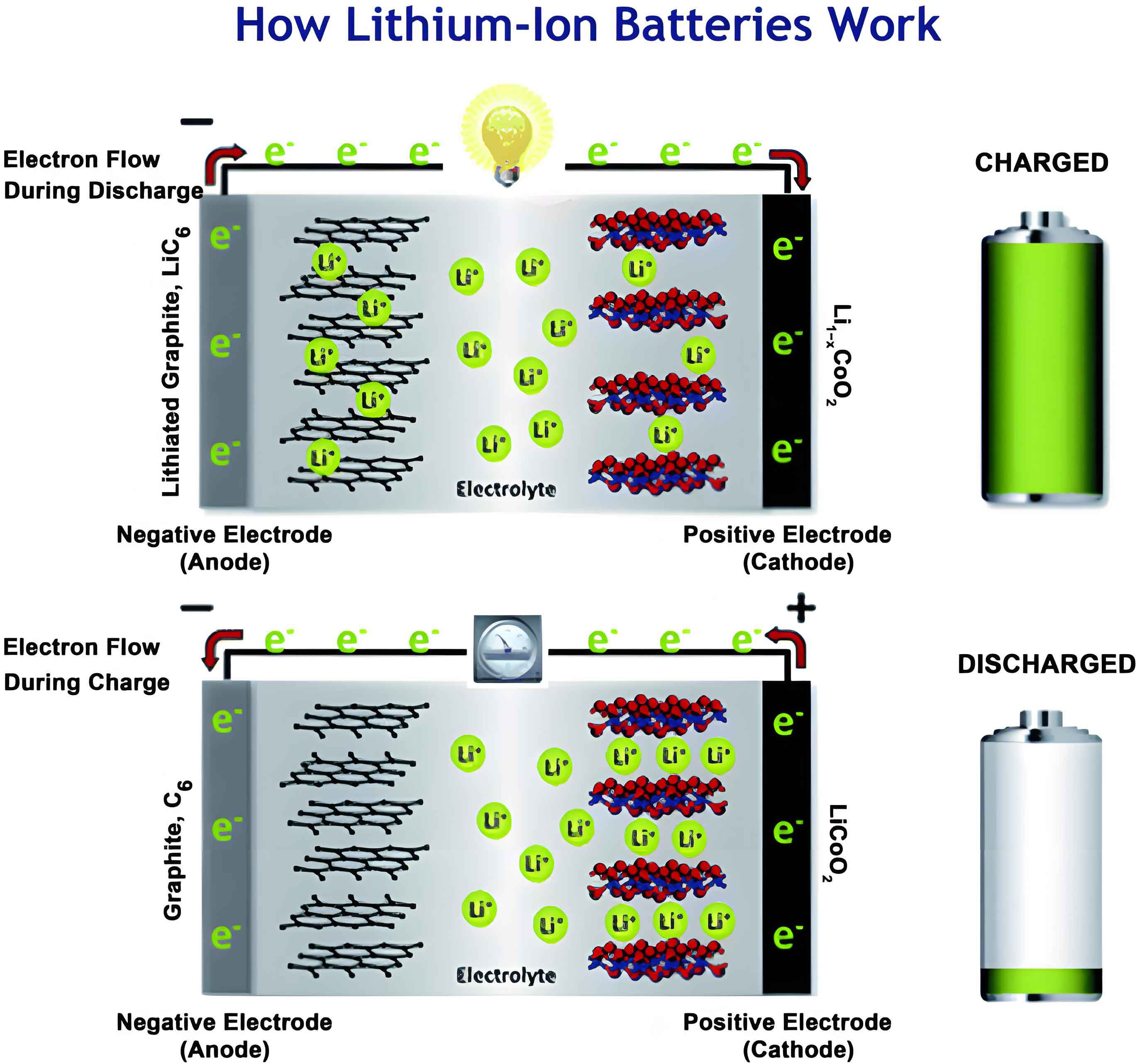
The li ion battery relies on the reversible intercalation of lithium ions into electrode materials, with anode performance being a major bottleneck. While carbon-based anodes like graphite have dominated commercial li ion batteries due to their stability and low cost, their limited theoretical capacity (372 mAh/g) necessitates alternatives such as silicon-based and transition metal oxide anodes. However, these materials often suffer from issues like volume expansion, poor conductivity, and irreversible side reactions. To address these challenges, I employ electrochemical Raman spectroscopy to gain real-time insights into structural evolution, stress development, and solid-electrolyte interphase (SEI) formation. This technique combines Raman spectroscopy with electrochemical control, enabling non-destructive, fingerprint-level analysis under operating conditions. Throughout this discussion, I will emphasize how electrochemical Raman spectroscopy contributes to the development of advanced li ion battery anodes.
Raman spectroscopy is based on the inelastic scattering of light, known as Raman scattering, which provides vibrational information about molecules. From a quantum mechanical perspective, when a molecule in the ground state is excited by an incident photon of energy \(h\nu_0\), it transitions to a virtual state. Subsequently, the molecule may return to the ground state, emitting a photon of the same energy (Rayleigh scattering), or to a vibrationally excited state, emitting a photon of lower energy (Stokes scattering) or higher energy (anti-Stokes scattering). The energy difference, called Raman shift \(\Delta\nu\), is characteristic of molecular vibrations. The intensity of Stokes scattering is typically higher than anti-Stokes due to the Boltzmann distribution of vibrational states. The fundamental equation for Stokes Raman scattering is:
$$I_s \propto \left( \frac{\partial \alpha}{\partial Q} \right)^2 I_0$$
where \(I_s\) is the Stokes scattering intensity, \(\alpha\) is the polarizability, \(Q\) is the normal coordinate of vibration, and \(I_0\) is the incident light intensity. This relationship underpins the sensitivity of Raman spectroscopy to molecular structure and environment. In the context of li ion battery anodes, Raman shifts can reveal lattice distortions, phase transitions, and bond formation during lithiation and delithiation.
Electrochemical Raman spectroscopy integrates Raman measurements with controlled electrode potentials, allowing me to monitor dynamic processes at the electrode-electrolyte interface. The development of surface-enhanced Raman scattering (SERS) and shell-isolated nanoparticle-enhanced Raman spectroscopy (SHINERS) has significantly boosted sensitivity, enabling the detection of weak signals from battery materials. For instance, the SERS enhancement factor \(G\) can be expressed as:
$$G = \frac{I_{SERS}}{I_{bulk}} \approx |E_{loc}|^4 / |E_0|^4$$
where \(I_{SERS}\) is the enhanced Raman intensity, \(I_{bulk}\) is the normal Raman intensity, \(E_{loc}\) is the localized electric field near metallic nanostructures, and \(E_0\) is the incident field. This enhancement permits the study of thin SEI layers and adsorbed species in li ion batteries. SHINERS extends this capability by coating SERS-active nanoparticles with an inert shell, preventing interference while maintaining enhancement. Table 1 summarizes key advancements in electrochemical Raman techniques relevant to li ion battery research.
| Technique | Key Feature | Application in Li-Ion Battery | Advantage |
|---|---|---|---|
| Conventional Raman | Non-enhanced scattering | Bulk electrode material analysis | Non-destructive, wide applicability |
| SERS | Plasmonic enhancement | SEI and interface studies | High surface sensitivity |
| SHINERS | Shell-isolated nanoparticles | Universal substrate analysis | Minimized interference |
| In-situ Raman Cell | Integrated electrochemical control | Real-time monitoring of lithiation | Operando capability |
In carbon-based anodes for li ion batteries, Raman spectroscopy is extensively used to characterize structural order and lithium storage mechanisms. The D-band (around 1350 cm\(^{-1}\)) and G-band (around 1580 cm\(^{-1}\)) are signature peaks for carbon materials, corresponding to disordered sp\(^3\) carbon and graphitic sp\(^2\) carbon, respectively. The intensity ratio \(I_D/I_G\) indicates the degree of graphitization and defect density. During lithiation in a li ion battery, the evolution of these peaks reveals intercalation dynamics. For graphite, lithium insertion causes a shift in the G-band position due to lattice strain, as described by the Daumas-Hérold model. The relationship between Raman shift and lithium content \(x\) in Li\(_x\)C\(_6\) can be approximated by:
$$\Delta \omega_G = k \cdot x$$
where \(\Delta \omega_G\) is the G-band shift and \(k\) is a proportionality constant. For graphene-based anodes, the D- and G-band shifts reflect reversible lithium adsorption and layer stacking changes. Hard carbon anodes, with their disordered structure, show broad Raman features that correlate with lithium storage in pores and between layers. Table 2 compares Raman characteristics and lithium storage behaviors for various carbon anodes in li ion batteries.
| Carbon Anode Type | D-band Position (cm\(^{-1}\)) | G-band Position (cm\(^{-1}\)) | \(I_D/I_G\) Ratio | Lithium Storage Mechanism | Reversibility in Li-Ion Battery |
|---|---|---|---|---|---|
| Graphite | 1350-1360 | 1580-1585 | 0.1-0.3 | Intercalation into layers | High |
| Graphene | 1340-1360 | 1580-1600 | 0.5-1.2 | Adsorption and intercalation | Moderate |
| Hard Carbon | 1350-1370 | 1580-1600 | 1.0-2.0 | Pore filling and layer adsorption | High |
| Mesocarbon Microbeads | 1350-1360 | 1580-1585 | 0.2-0.5 | Intercalation and surface storage | High |
Silicon-based anodes offer high theoretical capacity but undergo significant volume expansion during lithiation in li ion batteries, leading to mechanical stress and degradation. Electrochemical Raman spectroscopy allows me to measure stress-induced Raman shifts in silicon. The first-order Raman peak of crystalline silicon at around 520 cm\(^{-1}\) shifts under stress, with a linear relationship for biaxial stress:
$$\Delta \omega = \lambda \sigma$$
where \(\Delta \omega\) is the Raman shift, \(\lambda\) is the stress coefficient (approximately -4.4 cm\(^{-1}\)/GPa for silicon), and \(\sigma\) is the stress. During lithiation in a li ion battery, silicon transforms from crystalline to amorphous Li\(_x\)Si phases, and the Raman peak broadens and shifts. In-situ measurements reveal that compressive stress develops in the silicon core as lithium alloys with the outer layers. The stress evolution can be modeled using strain energy density calculations. For anisotropic silicon crystals, such as (100), (110), and (111) orientations, the Raman response varies due to different lithiation rates, impacting performance in li ion batteries. Table 3 summarizes stress-related parameters for silicon anodes derived from Raman spectroscopy.
| Silicon Anode Form | Initial Raman Peak (cm\(^{-1}\)) | Shift During Lithiation (cm\(^{-1}\)) | Calculated Stress (GPa) | Phase Transformation | Implication for Li-Ion Battery |
|---|---|---|---|---|---|
| Nanoparticles | 520.6 | -2 to -3 | 0.3-0.5 (compressive) | Crystalline to amorphous | Moderate stress accumulation |
| Thin Films | 520.0 | -1 to -4 | 0.2-0.9 (compressive) | Layer-by-layer lithiation | Crack propagation risk |
| Nanowires | 520.5 | -3 to -6 | 0.7-1.4 (compressive) | Anisotropic expansion | High cycle stability possible |
| Single Crystal (100) | 520.2 | -2 to -5 | 0.5-1.1 (compressive) | Direction-dependent lithiation | Orientation optimization needed |
Transition metal oxide anodes, such as those based on vanadium, zinc, or titanium compounds, are promising for li ion batteries due to their high capacity and safety. Electrochemical Raman spectroscopy helps elucidate their redox mechanisms and structural stability. For example, in disordered rock salt oxides like Li\(_3\)V\(_2\)O\(_5\), Raman peaks corresponding to V-O vibrations shift during lithium insertion, indicating changes in local coordination. The intensity variation of peaks near 900 cm\(^{-1}\) can be correlated with the formation of V\(^{4+}\)=O bonds. In spinel oxides like ZnCo\(_2\)O\(_4\), Raman modes reveal phase transitions to ZnO and Co\(_3\)O\(_4\) during cycling in li ion batteries. The reversibility of these transitions is key to long-term performance. For titanium-based oxides, such as Na\(_2\)Ti\(_2\)O\(_5\), Raman spectroscopy monitors the reversible distortion of TiO\(_6\) octahedra upon sodium insertion, relevant for sodium-ion batteries but analogous to li ion systems. Table 4 provides an overview of Raman features for selected transition metal oxide anodes in li ion battery applications.
| Oxide Anode Material | Key Raman Peaks (cm\(^{-1}\)) | Assignment | Change During Lithiation | Reversibility | Role in Li-Ion Battery |
|---|---|---|---|---|---|
| Li\(_3\)V\(_2\)O\(_5\) | 280, 450, 720, 930 | V-O stretching and bending | Peak weakening and new peak at 930 cm\(^{-1}\) | High | Fast-charging capability |
| ZnCo\(_2\)O\(_4\) | 470, 520, 680 | Co-O and Zn-O vibrations | Intensity decrease, then recovery | Moderate | High capacity with carbon coating |
| Fe\(_2\)O\(_3\) | 225, 245, 410, 610 | Fe-O modes | Broadening and shift | Low | Conversion reaction anode |
| TiO\(_2\) | 144, 399, 519, 639 | Ti-O vibrations | Minor shifts, intensity changes | High | Stable but low-capacity anode |
Despite its utility, electrochemical Raman spectroscopy faces challenges in li ion battery research. Fluorescence from electrolytes can overwhelm Raman signals, necessitating advanced background subtraction techniques. The need for optical access in cells may compromise battery integrity, though custom designs like optically transparent electrodes mitigate this. Moreover, quantifying stress and composition from Raman data requires robust calibration models. For instance, the relationship between Raman shift and lithium concentration \(c\) in electrode materials can be expressed using polynomial fits:
$$\Delta \omega = a_0 + a_1 c + a_2 c^2$$
where \(a_0\), \(a_1\), and \(a_2\) are material-specific coefficients determined from in-situ experiments. Future trends include integrating Raman spectroscopy with other techniques like X-ray diffraction or atomic force microscopy for multi-modal analysis, and developing fiber-optic probes for real-time monitoring in commercial li ion batteries. Additionally, machine learning algorithms can enhance spectral interpretation, automating the detection of SEI components or degradation markers. The ultimate goal is to use electrochemical Raman spectroscopy to design anodes with optimized structures for high-performance li ion batteries.
In conclusion, electrochemical Raman spectroscopy is a transformative tool for advancing li ion battery anode materials. By providing real-time, molecular-level insights into structural evolution, stress dynamics, and interfacial processes, it guides the rational design of carbon-based, silicon-based, and transition metal oxide anodes. I have highlighted how Raman principles, enhanced techniques like SERS, and quantitative analyses through tables and formulas contribute to this field. As li ion battery technology evolves, continued innovation in electrochemical Raman spectroscopy will be crucial for unlocking higher energy densities and longer lifetimes, solidifying its role as a cornerstone characterization method in energy storage research.