
Perovskite solar cells have emerged as a prominent research focus in photovoltaics due to their exceptional photoelectric conversion efficiency. This is primarily attributed to the unique optical properties of perovskite materials, including high light absorption coefficients, long exciton diffusion lengths, tunable band structures, and low exciton binding energies. However, despite significant advancements in the performance of perovskite solar cells, interfacial defects remain a critical factor limiting further improvements. To address this challenge, we employed an interface engineering strategy by introducing urea into tin oxide (SnO2) to passivate surface defects in the electron transport layer (ETL). This approach not only facilitates efficient charge transfer at the interface but also significantly enhances the quality of the perovskite film, leading to improved device performance. After modification, the photoelectric conversion efficiency (ηPCE) increased from 19.23% to 20.50%, with better stability and reduced hysteresis. This work provides a new perspective and effective pathway for interface modification in perovskite solar cells and the fabrication of high-performance devices, contributing to the advancement of perovskite solar cell technology.
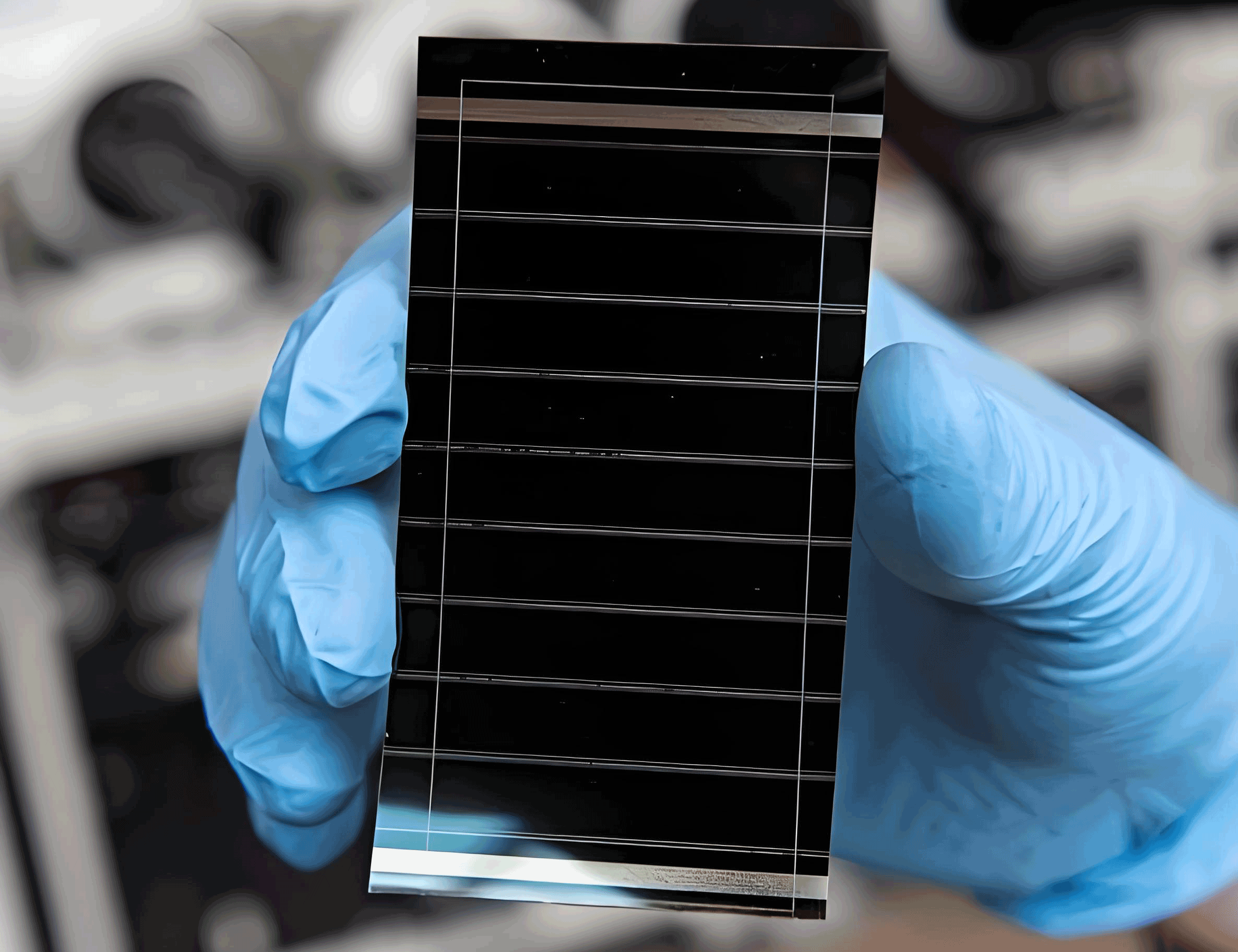
The development of efficient and stable perovskite solar cells is crucial for sustainable energy solutions. In recent years, perovskite solar cells have achieved remarkable progress, with certified efficiencies reaching over 26%. However, the presence of defects at the ETL/perovskite interface often leads to non-radiative recombination, reducing the overall performance of perovskite solar cells. Various strategies, such as surface modification and doping, have been explored to mitigate these issues. In this study, we focus on urea doping in the SnO2 ETL to enhance the properties of perovskite solar cells. Urea, with its functional groups, can interact with SnO2 surfaces, reducing aggregation and improving film morphology. This, in turn, promotes better perovskite crystallization and charge transport in perovskite solar cells.
The general formula for the photoelectric conversion efficiency of a perovskite solar cell is given by:
$$ \eta_{PCE} = \frac{J_{SC} \times V_{OC} \times FF}{P_{in}} $$
where $J_{SC}$ is the short-circuit current density, $V_{OC}$ is the open-circuit voltage, $FF$ is the fill factor, and $P_{in}$ is the incident light power. For high-performance perovskite solar cells, optimizing these parameters is essential, and interface engineering plays a key role.
Experimental Methods
The fabrication of perovskite solar cells followed a standard n-i-p structure with FTO/SnO2/perovskite/Spiro-OMeTAD/Ag. The SnO2 ETL was prepared by spin-coating a colloidal dispersion on cleaned FTO substrates. Urea was dissolved in the SnO2 precursor solution at concentrations of 0, 0.25, 0.5, and 0.75 mg/mL to investigate the doping effect. The perovskite layer was deposited using a two-step method, involving the sequential coating of PbI2 and organic ammonium salts, followed by annealing. The hole transport layer (Spiro-OMeTAD) was spin-coated, and silver electrodes were evaporated to complete the device. All processes were conducted in controlled environments to ensure reproducibility. The devices were characterized using current density-voltage (J-V) measurements, scanning electron microscopy (SEM), X-ray diffraction (XRD), dynamic light scattering (DLS), and impedance spectroscopy.
The trap density in the perovskite solar cells was calculated using the space-charge-limited current (SCLC) method, with the formula:
$$ n_t = \frac{2 \epsilon \epsilon_0 V_{TFL}}{e L^2} $$
where $\epsilon$ is the relative permittivity of the perovskite, $\epsilon_0$ is the vacuum permittivity, $e$ is the electron charge, $L$ is the thickness of the perovskite layer, and $V_{TFL}$ is the trap-filling limit voltage obtained from I-V curves.
Results and Discussion
Characterization of the Electron Transport Layer
The impact of urea doping on the SnO2 ETL was evaluated through various techniques. Dynamic light scattering (DLS) analysis revealed that the addition of urea reduced the particle size distribution in the SnO2 precursor solution. For the pristine SnO2, peaks were observed at 11.7 nm and 394.1 nm, whereas urea-doped SnO2 showed peaks at 10.5 nm and 272.2 nm, indicating suppressed aggregation and improved dispersion. This is beneficial for forming uniform ETL films in perovskite solar cells. XRD patterns confirmed that urea doping did not alter the crystalline structure of SnO2, maintaining its inherent properties. SEM images demonstrated that urea-doped SnO2 films were smoother and more compact, with fewer large particles compared to the undoped films. This enhanced morphology facilitates better perovskite film deposition and reduces interfacial defects in perovskite solar cells.
The improved ETL properties can be attributed to the interaction between urea and SnO2 nanoparticles. Urea molecules likely adsorb on the SnO2 surface, preventing agglomeration and promoting homogeneous film formation. This is critical for achieving high-performance perovskite solar cells, as a uniform ETL ensures efficient electron extraction and minimizes recombination losses.
Morphology of Perovskite Films
The quality of the perovskite film deposited on urea-doped ETLs was examined using SEM. Undoped ETLs resulted in perovskite films with small grains, pinholes, and indistinct grain boundaries. In contrast, urea doping at optimal concentrations (0.25 and 0.5 mg/mL) led to larger grain sizes, well-defined boundaries, and denser films. Specifically, at 0.5 mg/mL urea, the perovskite grains were largest, indicating enhanced crystallization. However, excessive urea (0.75 mg/mL) caused a porous morphology due to increased nucleation sites, negatively affecting film quality. These findings highlight the importance of controlled doping for optimizing perovskite solar cell performance.
The grain size distribution can be modeled using the following relation for perovskite growth:
$$ G = k \cdot \exp\left(-\frac{E_a}{RT}\right) $$
where $G$ is the grain size, $k$ is a constant, $E_a$ is the activation energy, $R$ is the gas constant, and $T$ is the temperature. Urea doping likely reduces $E_a$, promoting larger grain formation and improving the efficiency of perovskite solar cells.
| Urea Concentration (mg/mL) | Grain Size | Film Density | Pinhole Presence |
|---|---|---|---|
| 0 | Small | Low | High |
| 0.25 | Medium | Medium | Low |
| 0.5 | Large | High | Very Low |
| 0.75 | Variable | Medium | Medium |
Photoelectric Performance of Perovskite Solar Cells
The J-V characteristics of perovskite solar cells with varying urea concentrations were measured under AM1.5G illumination. The optimal doping concentration was 0.5 mg/mL, achieving a reverse-scan ηPCE of 20.50% (forward-scan: 19.03%), compared to 19.23% for undoped devices. The hysteresis index (HI) decreased with urea doping, from 0.09 (undoped) to 0.05 (0.75 mg/mL), indicating reduced hysteresis and improved interfacial properties. The enhanced performance is attributed to better charge transport and reduced recombination in urea-modified perovskite solar cells.
The hysteresis index is calculated as:
$$ HI = \frac{\eta_{PCE,R} – \eta_{PCE,F}}{\eta_{PCE,R}} $$
where $\eta_{PCE,R}$ and $\eta_{PCE,F}$ are the efficiencies from reverse and forward scans, respectively. Lower HI values signify minimal ionic migration and defect-mediated recombination in perovskite solar cells.
| Urea Concentration (mg/mL) | Scan Direction | VOC (V) | JSC (mA/cm²) | FF (%) | ηPCE (%) | HI |
|---|---|---|---|---|---|---|
| 0 | Forward | 1.01 | 22.75 | 75.9 | 17.45 | 0.09 |
| 0 | Reverse | 1.01 | 23.72 | 80.2 | 19.23 | |
| 0.25 | Forward | 1.02 | 23.07 | 75.3 | 17.72 | 0.07 |
| 0.25 | Reverse | 1.03 | 23.60 | 79.9 | 19.44 | |
| 0.5 | Forward | 1.03 | 24.26 | 76.1 | 19.03 | 0.07 |
| 0.5 | Reverse | 1.06 | 24.27 | 79.6 | 20.50 | |
| 0.75 | Forward | 1.04 | 23.62 | 76.7 | 18.86 | 0.05 |
| 0.75 | Reverse | 1.05 | 23.63 | 79.6 | 19.86 |
Statistical analysis of 16 devices per concentration showed that urea-doped perovskite solar cells had higher average VOC, JSC, and FF values, with improved reproducibility. The increase in JSC and FF is linked to enhanced charge extraction and reduced trap states, while excessive urea may hinder charge transport, lowering performance.
To further investigate the trap density, electron-only devices were fabricated. The trap-filling limit voltage (VTFL) decreased from 0.2 V (undoped) to 0.11 V (urea-doped), indicating a lower trap density according to the SCLC model. Dark J-V curves showed reduced leakage current in doped devices, confirming suppressed non-radiative recombination. Electrochemical impedance spectroscopy revealed a smaller charge transport resistance (Rct) and larger recombination resistance (Rrec) for urea-doped perovskite solar cells, facilitating better charge transfer and reduced recombination. Mott-Schottky analysis indicated a higher built-in potential (Vbi) of 0.85 eV for doped devices versus 0.8 eV for undoped, enhancing charge separation in perovskite solar cells.
The charge transport resistance can be expressed as:
$$ R_{ct} = \frac{kT}{e J_0} $$
where $k$ is Boltzmann’s constant, $T$ is temperature, and $J_0$ is the saturation current density. A lower Rct signifies improved electron extraction in perovskite solar cells.
Stability of Perovskite Solar Cells
The stability of perovskite solar cells was evaluated through maximum power point tracking and long-term storage. Urea-doped devices exhibited a stabilized ηPCE of 19.65% under continuous illumination, compared to 18.15% for undoped devices. After 400 hours in ambient conditions (30-40% relative humidity), doped devices retained 90% of their initial efficiency, while undoped devices retained only 81%. This improved stability is attributed to the passivation of interfacial defects and enhanced film quality in urea-modified perovskite solar cells.
The degradation kinetics of perovskite solar cells can be described by:
$$ \frac{d\eta}{dt} = -k \eta $$
where $\eta$ is efficiency, $t$ is time, and $k$ is the degradation rate constant. Urea doping reduces $k$, leading to longer-lasting perovskite solar cells.
Conclusion
In summary, urea doping in the SnO2 ETL significantly enhances the performance and stability of perovskite solar cells. By optimizing the urea concentration to 0.5 mg/mL, we achieved a notable improvement in ηPCE from 19.23% to 20.50%, along with reduced hysteresis and better reproducibility. The doping process improves ETL morphology, reduces trap states, and promotes high-quality perovskite film formation. These findings underscore the potential of urea as a simple yet effective modifier for developing efficient and stable perovskite solar cells. Future work could explore other dopants and interface engineering strategies to further advance perovskite solar cell technology.
The general formula for the efficiency enhancement can be summarized as:
$$ \Delta \eta_{PCE} = \eta_{doped} – \eta_{undoped} $$
where $\Delta \eta_{PCE}$ represents the gain due to urea doping in perovskite solar cells. This study provides a foundation for innovative approaches in the fabrication of high-performance perovskite solar cells, contributing to the global pursuit of clean energy solutions.