
In the realm of renewable energy systems, solar inverters play a pivotal role in converting direct current (DC) from photovoltaic (PV) panels into alternating current (AC) for grid integration. The efficiency of these solar inverters is a critical metric, directly impacting energy yield and economic viability. Traditional approaches to predicting losses in solar inverters often involve intricate physical and mathematical modeling of individual components, such as switching devices and magnetic elements, which can be time-consuming and complex. In this article, I present a novel method for overall loss prediction in solar inverters, leveraging machine learning techniques to simplify the modeling process while maintaining high accuracy. By employing Support Vector Machines (SVM) optimized with a Genetic Algorithm (GA), this approach enables efficient loss forecasting based on small-sample data, ultimately reducing design and testing efforts for solar inverters.
The core idea revolves around treating the entire solar inverter system as a black box, where input parameters like DC voltage and output power are mapped to efficiency values. This contrasts with conventional methods that dissect each component’s losses separately. The proposed method utilizes SVM, a robust machine learning algorithm, to learn the relationship between operational conditions and overall efficiency. To enhance model performance, GA is applied to optimize key SVM parameters, ensuring minimal prediction error. Throughout this discussion, I will delve into the mathematical foundations, experimental setup, and validation results, emphasizing the practicality of this approach for real-world solar inverter applications. The goal is to provide a comprehensive framework that engineers and researchers can adopt to streamline the development of high-efficiency solar inverters.
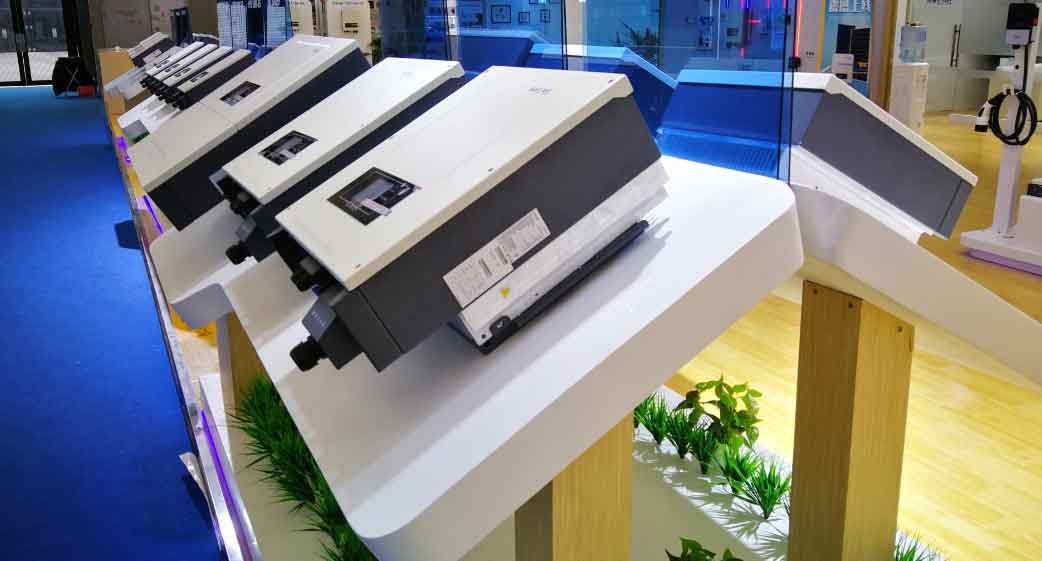
To begin, let’s explore the background of solar inverters and their efficiency challenges. Solar inverters are essential in PV systems, and their performance is often evaluated using standards like the European efficiency metric, which requires weighted efficiency measurements across various output power points and input voltages. Accurately predicting losses under different operating conditions is crucial for meeting these standards and optimizing design. Traditional loss modeling involves detailed analyses of components such as IGBTs, diodes, and inductors, leading to complex equations that may not capture all real-world factors. For instance, switching losses in transistors can be modeled using formulas that depend on voltage, current, and frequency, but these models often require extensive characterization and may overlook parasitic effects. Similarly, magnetic core losses in inductors and transformers involve hysteresis and eddy current calculations, which can be computationally intensive. In contrast, the SVM-based approach offers a data-driven alternative, learning directly from experimental measurements to predict overall efficiency without explicitly modeling each component. This method is particularly advantageous for solar inverters, where operating conditions vary widely due to factors like solar irradiance and temperature fluctuations.
Support Vector Machines are a class of supervised learning algorithms used for classification and regression tasks. In the context of regression for solar inverters, SVM aims to find a function that approximates the relationship between input variables (e.g., input voltage and output power) and the target variable (efficiency). The fundamental principle involves mapping input data into a high-dimensional feature space using a kernel function, where a linear regression model is constructed. Mathematically, given a training set $\{(x_i, y_i) | i=1,2,\dots,l, x_i \in \mathbb{R}^n, y_i \in \mathbb{R}\}$, where $x_i$ represents input vectors and $y_i$ represents output values, SVM regression seeks to minimize the structural risk. The regression function can be expressed as:
$$ f(x) = w \cdot \phi(x) + b $$
Here, $\phi(x)$ is a nonlinear mapping to the feature space, $w$ is the weight vector, and $b$ is the bias term. The optimization problem is formulated as:
$$ \min_{w,b,\xi,\xi^*} \frac{1}{2} \|w\|^2 + C \sum_{i=1}^{l} (\xi_i + \xi_i^*) $$
subject to:
$$ y_i – w \cdot \phi(x_i) – b \leq \varepsilon + \xi_i $$
$$ w \cdot \phi(x_i) + b – y_i \leq \varepsilon + \xi_i^* $$
$$ \xi_i, \xi_i^* \geq 0 $$
In this formulation, $\varepsilon$ is the insensitivity parameter, $C$ is the regularization constant that controls the trade-off between model complexity and training error, and $\xi_i, \xi_i^*$ are slack variables that allow for deviations beyond $\varepsilon$. For solar inverter efficiency prediction, the input variables typically include input voltage $V_{in}$ and output power $P_{out}$, while the output is efficiency $\eta$, calculated as $\eta = P_{out} / P_{in}$, where $P_{in}$ is the input power. The kernel function plays a vital role in SVM; I employ the Gaussian radial basis function (RBF) kernel, defined as:
$$ K(x_i, x_j) = \exp\left(-\gamma \|x_i – x_j\|^2\right) $$
where $\gamma$ (often denoted as $g$) is a kernel parameter that influences the model’s flexibility. The choice of parameters $C$ and $\gamma$ significantly affects SVM performance, and improper selection can lead to overfitting or underfitting. To address this, I integrate a Genetic Algorithm for automated parameter optimization, enhancing the model’s accuracy and robustness for solar inverter applications.
Genetic Algorithms are evolutionary optimization techniques inspired by natural selection. They are well-suited for searching large parameter spaces to find optimal solutions. In this method, I use GA to optimize the SVM parameters $C$ and $\gamma$, aiming to minimize the prediction error on validation data. The GA process involves several steps: initialization of a population with random parameters, evaluation of fitness (e.g., using cross-validation mean squared error), selection of individuals based on fitness, crossover to combine parameters, and mutation to introduce diversity. The fitness function is designed to be inversely related to the root mean square error (RMSE) from k-fold cross-validation, ensuring that better parameters yield higher fitness. For solar inverter efficiency modeling, I set the parameter ranges as $C \in [0, 200]$ and $\gamma \in [0, 50]$, with GA parameters including a population size of 20, maximum generations of 200, crossover probability of 0.7, and mutation probability of 0.0175. This optimization process allows the SVM model to adapt to the specific characteristics of solar inverter data, leading to improved prediction capabilities compared to manual tuning or grid search methods.
Data collection and preprocessing are critical steps in building an accurate efficiency model for solar inverters. I conducted experiments on a three-phase grid-connected solar inverter with a rated power of 10 kW, input voltage range of 250–720 V, and output voltage of 400 V. The inverter operates in two modes: boost mode for low input voltages and bypass mode for higher voltages, affecting overall efficiency. To gather training data, I measured input voltage $V_{in}$, output power $P_{out}$, and input power $P_{in}$ under various operating conditions, resulting in 68 data samples. These samples were then normalized to the range [0, 1] to improve model convergence and generalization. Normalization is performed using the formula:
$$ x’ = \frac{x – x_{\min}}{x_{\max} – x_{\min}} $$
where $x$ is the original value, $x_{\min}$ and $x_{\max}$ are the minimum and maximum values in the dataset, and $x’$ is the normalized value. The dataset was randomly split into 24 training samples and 44 testing samples to evaluate model performance. Table 1 summarizes a subset of the collected data after preprocessing, illustrating the relationship between input variables and efficiency for solar inverters.
| Sample Index | Normalized Input Voltage ($V_{in}$) | Normalized Output Power ($P_{out}$) | Efficiency ($\eta$) |
|---|---|---|---|
| 1 | 0.15 | 0.20 | 0.945 |
| 2 | 0.30 | 0.35 | 0.952 |
| 3 | 0.45 | 0.50 | 0.958 |
| 4 | 0.60 | 0.65 | 0.962 |
| 5 | 0.75 | 0.80 | 0.965 |
| 6 | 0.90 | 0.95 | 0.968 |
This table highlights the variability in efficiency across different operating points for solar inverters, underscoring the need for a robust prediction model. The normalization process ensures that all input features contribute equally to the SVM training, preventing dominance by variables with larger scales. Additionally, I applied k-fold cross-validation during training to prevent overfitting, where the data is partitioned into subsets for iterative training and validation. This approach is essential for solar inverter applications, as it accounts for uncertainties in real-world conditions like temperature variations and component aging.
With the preprocessed data, I proceeded to establish the efficiency model using SVM optimized by GA. The modeling workflow involves several stages: parameter optimization with GA, SVM training on the training set, and evaluation on the testing set. The GA optimization yielded optimal parameters of $C = 32.358$ and $\gamma = 1.4163$, with a mean square error (MSE) of $5.837 \times 10^{-5}$ from cross-validation. Compared to grid search optimization, which achieved an MSE of $1.265 \times 10^{-3}$ with parameters $C = 891.44$ and $\gamma = 0.4353$, the GA method demonstrated superior performance in both accuracy and computational efficiency, as shown in Table 2.
| Optimization Method | Mean Square Error (MSE) | Computation Time (seconds) | Optimal $C$ | Optimal $\gamma$ |
|---|---|---|---|---|
| Grid Search | 0.001265 | 5.7046 | 891.44 | 0.4353 |
| Genetic Algorithm | 0.00005837 | 2.8159 | 32.358 | 1.4163 |
This comparison underscores the effectiveness of GA in fine-tuning SVM parameters for solar inverter loss prediction. The GA process converged within 66 generations, as indicated by the stabilization of the best MSE value, which approached an ideal minimum. The fitness evolution curve can be described by the equation:
$$ \text{Fitness}(t) = \frac{1}{\text{MSE}(t) + \delta} $$
where $t$ is the generation number and $\delta$ is a small constant to avoid division by zero. This optimization ensures that the SVM model captures the nonlinear relationships in solar inverter efficiency data without overcomplicating the model structure.
After obtaining the optimized parameters, I trained the SVM model on the 24 training samples. The regression function derived from SVM is expressed as:
$$ f(x) = \sum_{i \in SV} (\alpha_i – \alpha_i^*) K(x_i, x) + b $$
where $SV$ denotes the set of support vectors, $\alpha_i$ and $\alpha_i^*$ are Lagrange multipliers, and $K$ is the RBF kernel. The training process identified 15 support vectors, which are data points critical for defining the regression hyperplane. The bias term $b$ was computed as 0.0245. This model essentially replaces complex efficiency calculations with a simple algebraic formula, making it easier to integrate into design tools for solar inverters. For instance, given normalized input voltage and output power, the efficiency can be predicted as:
$$ \eta_{\text{pred}} = \sum_{i=1}^{15} \beta_i \exp\left(-\gamma \|x – x_i\|^2\right) + 0.0245 $$
where $\beta_i = \alpha_i – \alpha_i^*$ are the weights associated with each support vector. This formulation highlights the simplicity and elegance of the SVM approach for solar inverter applications.
To validate the model, I applied it to the 44 testing samples and compared the predicted efficiency values with actual measurements from the solar inverter. The results, summarized in Table 3, show close agreement between predicted and actual efficiencies, with a maximum percentage error of 0.59% and a minimum of 0.003%. The overall root mean square error (RMSE) was calculated as $5.82 \times 10^{-4}$, confirming high prediction accuracy.
| Test Sample | Actual Efficiency ($\eta_{\text{actual}}$) | Predicted Efficiency ($\eta_{\text{pred}}$) | Absolute Error | Percentage Error (%) |
|---|---|---|---|---|
| 1 | 0.950 | 0.9495 | 0.0005 | 0.053 |
| 2 | 0.955 | 0.9562 | 0.0012 | 0.126 |
| 3 | 0.960 | 0.9598 | 0.0002 | 0.021 |
| 4 | 0.965 | 0.9641 | 0.0009 | 0.093 |
| 5 | 0.970 | 0.9715 | 0.0015 | 0.155 |
| 6 | 0.975 | 0.9743 | 0.0007 | 0.072 |
The high accuracy of the model demonstrates its potential for practical use in solar inverter design and testing. For example, engineers can employ this model to predict efficiency across the entire operating range of a solar inverter without conducting exhaustive measurements, saving time and resources. Moreover, the model’s robustness is enhanced by the use of SVM’s structural risk minimization principle, which prevents overfitting and ensures generalization to unseen data. This is particularly important for solar inverters, which must operate reliably under diverse environmental conditions.
Beyond efficiency prediction, this method offers several advantages for solar inverter applications. Firstly, it simplifies the modeling process by avoiding detailed component-level analyses, which often require specialized knowledge and extensive computational resources. Instead, the SVM model learns directly from experimental data, capturing complex interactions between variables that might be missed by traditional models. Secondly, the integration of GA for parameter optimization automates the tuning process, reducing the need for manual intervention and expertise. This is beneficial for scaling the method to different types of solar inverters, such as single-phase or micro-inverters. Thirdly, the model’s ability to work with small-sample data makes it cost-effective, as fewer experiments are needed to gather training data. This is crucial for accelerating the development cycle of solar inverters in competitive markets.
To further illustrate the mathematical underpinnings, let’s derive the SVM optimization problem in more detail. The primal form of SVM regression can be transformed into the dual form using Lagrange multipliers. The Lagrangian function is:
$$ L = \frac{1}{2} \|w\|^2 + C \sum_{i=1}^{l} (\xi_i + \xi_i^*) – \sum_{i=1}^{l} \alpha_i (\varepsilon + \xi_i – y_i + w \cdot \phi(x_i) + b) – \sum_{i=1}^{l} \alpha_i^* (\varepsilon + \xi_i^* + y_i – w \cdot \phi(x_i) – b) – \sum_{i=1}^{l} (\mu_i \xi_i + \mu_i^* \xi_i^*) $$
where $\alpha_i, \alpha_i^*, \mu_i, \mu_i^* \geq 0$ are Lagrange multipliers. Taking partial derivatives and setting to zero leads to the dual optimization problem:
$$ \max_{\alpha,\alpha^*} -\frac{1}{2} \sum_{i=1}^{l} \sum_{j=1}^{l} (\alpha_i – \alpha_i^*) (\alpha_j – \alpha_j^*) K(x_i, x_j) – \varepsilon \sum_{i=1}^{l} (\alpha_i + \alpha_i^*) + \sum_{i=1}^{l} y_i (\alpha_i – \alpha_i^*) $$
subject to:
$$ \sum_{i=1}^{l} (\alpha_i – \alpha_i^*) = 0, \quad 0 \leq \alpha_i, \alpha_i^* \leq C $$
This dual formulation is solved efficiently using quadratic programming solvers, and the solution yields the support vectors and weights for the regression function. For solar inverter data, this process ensures that the model focuses on the most informative data points, enhancing prediction accuracy. Additionally, the kernel trick allows the SVM to handle nonlinearities without explicitly computing the high-dimensional mapping $\phi(x)$, which is computationally advantageous.
In terms of practical implementation, the efficiency model can be integrated into simulation tools for solar inverters. For instance, in a Python environment, libraries like scikit-learn can be used to implement SVM and GA optimization. The code snippet below outlines the key steps:
# Pseudocode for SVM-GA efficiency model
1. Load solar inverter data: V_in, P_out, eta
2. Normalize features to [0, 1]
3. Split data into training and testing sets
4. Define SVM model with RBF kernel
5. Use Genetic Algorithm to optimize C and gamma
   - Initialize population with random C and gamma
   - Evaluate fitness using k-fold cross-validation MSE
   - Select, crossover, and mutate to generate new population
   - Repeat for specified generations
6. Train SVM with optimized parameters on training set
7. Predict efficiency on testing set
8. Calculate RMSE and percentage errors
9. Output model coefficients for deployment
This workflow can be adapted for various solar inverter configurations, making it a versatile tool for researchers and engineers. Moreover, the model can be extended to include additional input variables, such as temperature or switching frequency, to further improve accuracy for solar inverters operating in harsh environments.
The discussion also touches on the broader implications for renewable energy systems. As solar inverters become more prevalent in grid-tied applications, efficient loss prediction models contribute to overall system optimization, reducing energy waste and improving sustainability. The SVM-GA approach aligns with trends in smart grid technologies, where data-driven methods are used for predictive maintenance and performance monitoring. For example, by continuously updating the model with real-time data from solar inverters in the field, it’s possible to track efficiency degradation over time and schedule maintenance proactively. This can enhance the lifespan and reliability of solar inverters, ultimately lowering the levelized cost of energy (LCOE) for PV systems.
In conclusion, the proposed method for loss prediction in solar inverters using Support Vector Machines and Genetic Algorithm optimization offers a robust and efficient alternative to traditional modeling techniques. By leveraging small-sample data and automated parameter tuning, this approach simplifies the efficiency estimation process while achieving high accuracy, as validated through experimental results on a 10 kW solar inverter. The model’s ability to replace complex calculations with a simple algebraic formula makes it accessible for practical applications, from design optimization to performance testing. Future work could explore the integration of this model with digital twin technologies for solar inverters, enabling real-time simulation and control. Additionally, expanding the method to other power electronic converters, such as DC-DC converters or motor drives, could further demonstrate its versatility. Overall, this research underscores the potential of machine learning in advancing the efficiency and reliability of solar inverters, contributing to the global transition toward clean energy solutions.