
In recent years, perovskite solar cells have emerged as a promising photovoltaic technology due to their high efficiency and low-cost fabrication potential. Among them, inorganic perovskite solar cells, particularly those based on cesium lead halide compositions, have gained significant attention for their superior thermal and light stability compared to organic-inorganic hybrid counterparts. However, achieving high efficiency in inorganic perovskite solar cells often relies on organic materials for interface modification or bulk doping, which can compromise long-term stability. In this study, I propose a novel phase heterojunction (PHJ) strategy to address this issue by employing a fully inorganic approach for interface engineering. By spin-coating a methanol solution and thermally evaporating cesium iodide (CsI) at the upper interface of the inorganic perovskite absorption layer, I constructed a PHJ that effectively mitigates interface defects, reduces non-radiative recombination, and enhances carrier extraction. This method eliminates the need for organic components, thereby potentially improving the overall stability of the device. The resulting inorganic perovskite solar cells achieved a remarkable power conversion efficiency of 20.56%, significantly higher than the reference devices without PHJ treatment (18.03%). Furthermore, the PHJ-based devices demonstrated excellent stability, retaining 86.14% of their initial efficiency after 1000 hours in a nitrogen atmosphere at 65°C. This work highlights the potential of PHJ strategies in advancing high-performance and stable inorganic perovskite solar cells for applications such as tandem solar cells, where top-cell stability is critical.
The fundamental operation of perovskite solar cells relies on the efficient absorption of light and subsequent charge carrier generation, separation, and collection. Inorganic perovskite materials, such as CsPbI3 and its derivatives, exhibit a suitable bandgap for photovoltaic applications, typically around 1.7 eV, which is ideal for top cells in tandem configurations. However, the interface between the perovskite layer and charge transport layers often hosts a high density of defects, leading to significant non-radiative recombination losses. The formation energy of iodine vacancies (VI) is particularly low at the surface, making them predominant defects that degrade performance. To quantify the impact of defects, the defect density (Nt) can be estimated using the space-charge limited current (SCLC) method, where the trap-filled limit voltage (VTFL) relates to Nt through the equation:
$$N_t = \frac{2 \epsilon_0 \epsilon_r V_{TFL}}{e L^2}$$
where ε0 is the vacuum permittivity, εr is the relative permittivity of the perovskite, e is the elementary charge, and L is the thickness of the perovskite layer. In this study, the PHJ strategy aimed to passivate these defects by introducing CsI, which fills iodine vacancies and forms a heterojunction that improves energy level alignment. The bandgap (Eg) of the inorganic perovskite remains unchanged at approximately 1.71 eV, as confirmed by UV-visible absorption spectroscopy, indicating that the PHJ does not alter the bulk optical properties but optimizes the interface. The external quantum efficiency (EQE) spectra further support this, with integrated current densities matching the short-circuit current (JSC) values from current-voltage (J-V) measurements.
To evaluate the photovoltaic performance, I fabricated n-i-p structured inorganic perovskite solar cells with the configuration Glass/FTO/SnO2/CsPbI2.85Br0.15/Spiro-OMeTAD/Au. The reference devices were prepared without the PHJ treatment, while the PHJ devices underwent spin-coating of methanol and thermal evaporation of CsI before depositing the hole transport layer. The J-V characteristics under AM 1.5G illumination revealed a substantial improvement in all key parameters for PHJ devices. The open-circuit voltage (VOC) increased due to reduced non-radiative recombination, as evidenced by higher built-in potential from Mott-Schottky analysis. The short-circuit current density (JSC) improved owing to enhanced carrier extraction, and the fill factor (FF) remained stable. Statistical analysis of multiple devices confirmed the reproducibility of these results. The following table summarizes the average photovoltaic parameters from 20 independent devices for both reference and PHJ-based inorganic perovskite solar cells:
| Device Type | VOC (V) | JSC (mA/cm2) | FF (%) | PCE (%) |
|---|---|---|---|---|
| Reference | 1.10 | 21.50 | 76.2 | 18.03 |
| PHJ | 1.17 | 22.00 | 79.8 | 20.56 |
The enhancement in VOC can be attributed to the reduction in interface recombination, which is described by the diode ideality factor (n) in the Shockley diode equation:
$$J = J_0 \left( \exp\left(\frac{eV}{nkT}\right) – 1 \right) – J_{ph}$$
where J0 is the reverse saturation current, k is Boltzmann’s constant, T is temperature, and Jph is the photocurrent. A lower n value indicates suppressed recombination, which was observed in PHJ devices. Time-resolved photoluminescence (TRPL) measurements showed longer carrier lifetimes for PHJ-treated films, confirming reduced non-radiative recombination. The carrier lifetime (τ) can be modeled using a bi-exponential decay function:
$$I(t) = A_1 \exp\left(-\frac{t}{\tau_1}\right) + A_2 \exp\left(-\frac{t}{\tau_2}\right)$$
where I(t) is the PL intensity, and τ1 and τ2 represent fast and slow decay components, respectively. PHJ films exhibited a dominant slow component with τ2 > 100 ns, compared to reference films with τ2 ~ 50 ns, indicating improved carrier dynamics. Additionally, dark J-V curves revealed lower leakage currents in PHJ devices, further supporting the reduction in defect-assisted recombination.
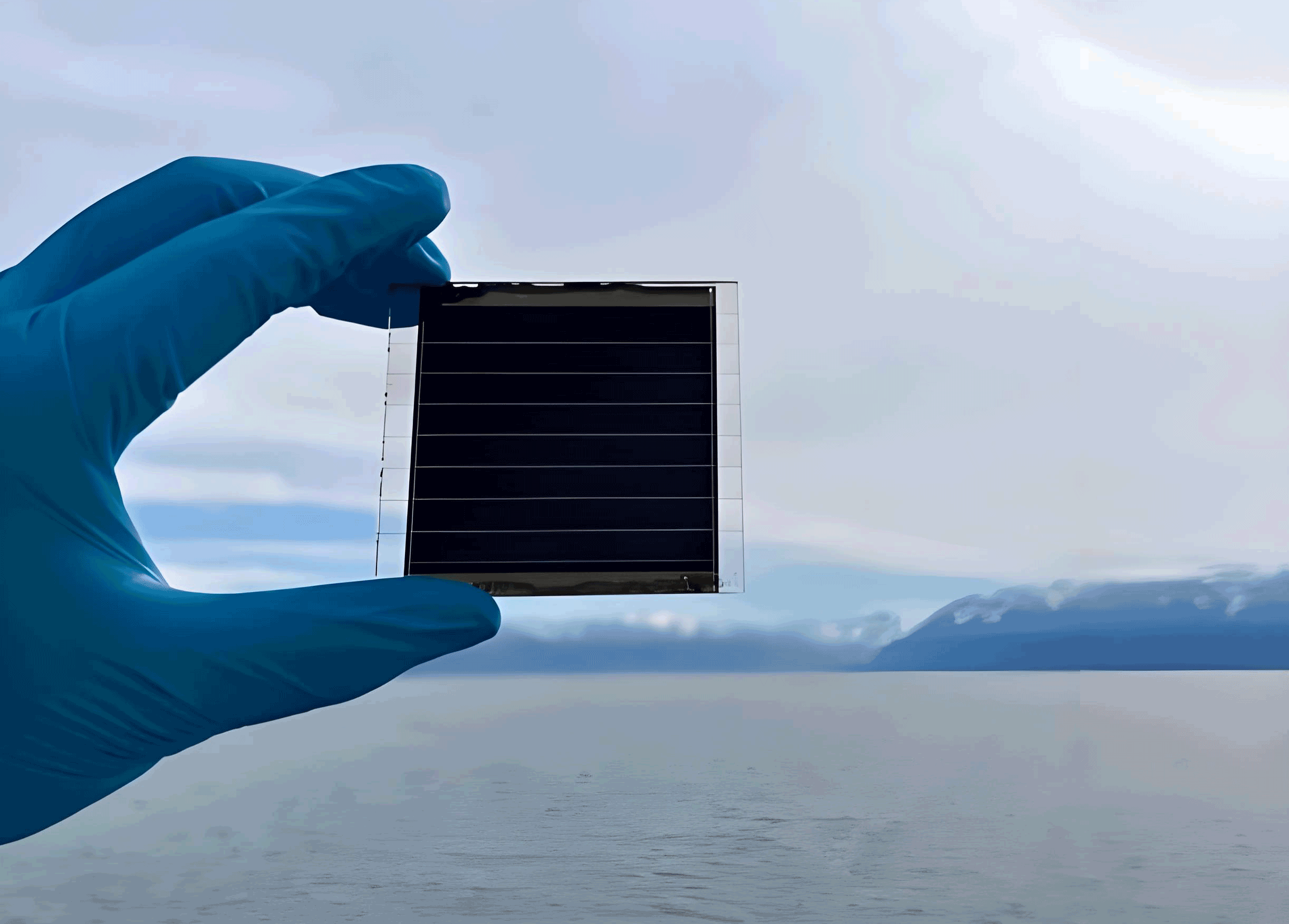
The stability of inorganic perovskite solar cells is a critical factor for commercial deployment. I conducted accelerated aging tests under controlled humidity and thermal conditions to assess the long-term performance of PHJ devices. The water contact angle measurements showed an increase from 49.03° for reference films to 60.72° for PHJ films, indicating enhanced hydrophobicity and moisture resistance. This improvement is crucial for preventing moisture-induced degradation, as water ingress can lead to perovskite decomposition. The humidity stability test at 25°C and 20-30% relative humidity over 500 hours demonstrated that PHJ devices retained 85.43% of their initial efficiency, while reference devices degraded to 60.93%. The thermal stability test at 65°C in a nitrogen atmosphere for 1000 hours revealed that PHJ devices maintained 86.14% of their initial efficiency, compared to only 50.64% for reference devices. These results underscore the effectiveness of the PHJ strategy in bolstering both environmental and thermal stability. The following table compares the stability retention rates:
| Stability Test | Condition | Reference Retention (%) | PHJ Retention (%) |
|---|---|---|---|
| Humidity | 500 h, 25°C, 20-30% RH | 60.93 | 85.43 |
| Thermal | 1000 h, 65°C, N2 | 50.64 | 86.14 |
To further understand the mechanism behind the performance enhancement, I analyzed the interface properties using SCLC and Mott-Schottky measurements. The defect density (Nt) decreased from 1.55 × 1016 cm−3 in reference devices to 1.51 × 1016 cm−3 in PHJ devices, as calculated from the VTFL values. This reduction in defect density minimizes trap-assisted recombination, which is described by the Shockley-Read-Hall recombination rate:
$$R_{SRH} = \frac{np – n_i^2}{\tau_p (n + n_t) + \tau_n (p + p_t)}$$
where n and p are electron and hole concentrations, ni is the intrinsic carrier concentration, τn and τp are carrier lifetimes, and nt and pt are trap densities. The lower RSRH in PHJ devices contributes to higher VOC and JSC. Moreover, the built-in potential (Vbi) increased from 1.02 V to 1.12 V after PHJ treatment, as derived from Mott-Schottky plots:
$$\frac{1}{C^2} = \frac{2}{A^2 e \epsilon_0 \epsilon_r N} (V_{bi} – V)$$
where C is capacitance, A is area, and N is doping density. The higher Vbi enhances the electric field across the junction, promoting efficient charge separation and collection. This aligns with the observed improvement in EQE, where PHJ devices showed higher quantum efficiency across the visible spectrum, particularly in the long-wavelength region, due to reduced interface recombination.
In terms of material characterization, scanning electron microscopy (SEM) images revealed that PHJ-treated films had a smoother and more compact surface with fewer pinholes compared to reference films. This morphological improvement reduces pathways for moisture penetration and minimizes shunt paths, contributing to better performance and stability. The PHJ acts as a protective layer that also facilitates better contact with the hole transport layer, further enhancing carrier transport. The phase heterojunction concept involves creating a thin layer with modified composition at the interface, which can be modeled as a heterostructure with band alignment that favors hole extraction while blocking electron recombination. The energy level diagram can be represented using Anderson’s rule, where the band offsets determine carrier injection efficiency. For inorganic perovskite solar cells, the PHJ optimizes the valence band offset, reducing interface resistance and improving fill factor.
The development of efficient and stable inorganic perovskite solar cells is essential for advancing perovskite-based tandem solar cells, which aim to surpass the Shockley-Queisser limit. The PHJ strategy presented here offers a scalable and organic-free approach to interface engineering, making it compatible with industrial fabrication processes. Future work could explore the application of PHJ in other perovskite compositions or device architectures, such as inverted structures or flexible substrates. Additionally, in-depth studies on the ion migration and phase stability under operational conditions could provide further insights into the long-term durability of these devices. In conclusion, the phase heterojunction strategy significantly enhances the efficiency and stability of inorganic perovskite solar cells by mitigating interface defects and reducing non-radiative recombination, paving the way for their integration into next-generation photovoltaic technologies.
To summarize the key findings, I have compiled a comprehensive table of the optoelectronic properties and performance metrics for reference and PHJ-based inorganic perovskite solar cells. This includes parameters from absorption, TRPL, SCLC, and J-V measurements, highlighting the consistent improvements achieved through PHJ engineering:
| Parameter | Reference | PHJ |
|---|---|---|
| Bandgap (Eg, eV) | 1.71 | 1.71 |
| Carrier Lifetime (τ, ns) | 50 | >100 |
| Defect Density (Nt, cm−3) | 1.55 × 10¹⁶ | 1.51 × 10¹⁶ |
| Built-in Potential (Vbi, V) | 1.02 | 1.12 |
| VOC (V) | 1.10 | 1.17 |
| JSC (mA/cm2) | 21.50 | 22.00 |
| FF (%) | 76.2 | 79.8 |
| PCE (%) | 18.03 | 20.56 |
The success of this approach underscores the importance of interface management in perovskite solar cells. By focusing on inorganic modifications, we can overcome the limitations associated with organic materials, thereby achieving higher stability without sacrificing efficiency. As research in perovskite solar cells continues to evolve, strategies like PHJ will play a crucial role in enabling commercial viability and large-scale deployment. I believe that further optimization of the PHJ thickness and composition could lead to even greater performance gains, potentially pushing the efficiency of inorganic perovskite solar cells beyond 22%. This work contributes to the growing body of knowledge on defect passivation and heterojunction engineering in photovoltaics, offering a promising direction for future innovations in solar energy conversion.