
In recent years, the global push toward carbon neutrality has accelerated the adoption of renewable energy technologies, with energy storage lithium battery systems playing a pivotal role in stabilizing power grids and enhancing energy efficiency. Containerized energy storage lithium battery systems, characterized by high power density, long lifespan, and reliability, have become integral to modern energy infrastructure. However, the increasing deployment of these systems has raised concerns about fire safety, as incidents involving thermal runaway and subsequent fires have led to significant economic losses and safety hazards. In this study, I evaluate the effectiveness of various fire protection facilities for containerized energy storage lithium battery systems through numerical simulation and analysis. The focus is on understanding how different fire suppression methods—water sprinkler systems, HFC-227ea gas extinguishment, and a combined gas-water approach—impact key fire parameters such as smoke concentration, visibility, and temperature within a sealed container environment. By modeling a real-world scenario based on a photovoltaic project’s energy storage container, I aim to provide insights that can inform the design and optimization of fire safety measures for energy storage lithium battery applications.
The fire risk in containerized energy storage lithium battery systems primarily stems from the inherent properties of lithium-ion batteries, which can undergo thermal runaway due to factors like overheating, overcharging, mechanical damage, or internal short circuits. Thermal runaway involves a self-sustaining exothermic reaction that releases flammable gases and heat, potentially leading to fires or explosions. To quantify the fire load in such systems, I calculate the total energy release using the formula for fire load $Q_i$ and fire load density $q$, as follows:
$$Q_i = G_i \times H_i = C \times M \times H_i$$
where $G_i$ represents the total mass of combustible material, $H_i$ is the heat release per unit mass, $C$ is the number of battery cells, and $M$ is the mass per cell. For a typical LiFePO4 battery setup, with $C = 2240$ cells, $M = 5.42 \, \text{kg}$, and $H_i = 212.36 \, \text{kJ/kg}$, the fire load $Q_i$ is computed as:
$$Q_i = 2240 \times 5.42 \times 212.36 = 2,492,600 \, \text{kJ} = 2,492.6 \, \text{MJ}$$
The fire load density $q$, which indicates the energy per unit area, is given by:
$$q = \frac{Q_i}{A}$$
where $A = 23.8 \, \text{m}^2$ is the area of the battery compartment. Thus,
$$q = \frac{2,492.6}{23.8} = 104.73 \, \text{MJ/m}^2$$
This high fire load density underscores the potential severity of fires in energy storage lithium battery systems and the need for effective fire protection measures.
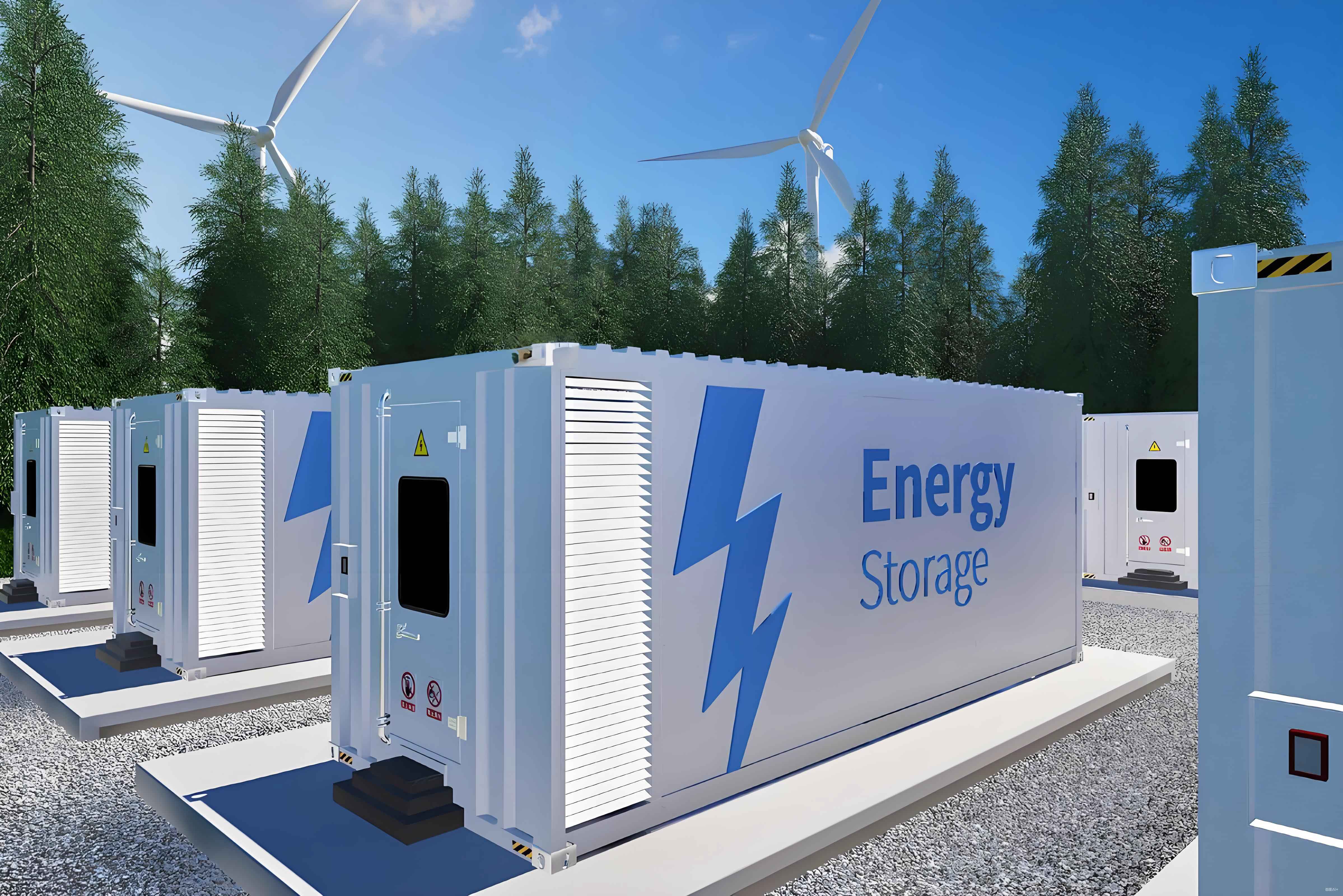
Fire protection facilities for energy storage lithium battery systems typically include automatic fire alarm systems and various灭火 systems. The alarm system consists of gas灭火 controllers, smoke detectors, heat sensors, and audible-visual alarms, which trigger responses such as power shutdown and ventilation closure upon detecting fire indicators.灭火 systems are categorized into water sprinkler systems, gas灭火 systems, and combined systems. Water sprinkler systems, which can be open, closed, or pre-action types, work by cooling the fire source and suppressing flames through water mist. Gas灭火 systems, such as those using HFC-227ea (heptafluoropropane), act by reducing oxygen concentration and inhibiting chemical chain reactions. Combined systems integrate both methods to enhance overall effectiveness. In this analysis, I model these systems to assess their performance in controlling fires involving energy storage lithium battery arrays.
To simulate fire scenarios, I developed a numerical model using Pyrosim software, based on a containerized energy storage lithium battery system with dimensions of 8.500 m in length, 2.800 m in width, and 2.896 m in height. The simulation domain was set to 10 m × 4 m × 3 m to account for boundary effects. The battery model simplified LiFePO4 cells into a single unit, with material properties summarized in Table 1. The heat source was placed at a critical location within a battery rack, with a heat release rate of 4.236 MW, representing thermal runaway initiation.消防 facilities were activated at an environmental temperature of 150°C, corresponding to the time when the control group first reached this threshold. Simulations were conducted for four scenarios: no fire protection (control), water sprinkler灭火, HFC-227ea gas灭火, and combined gas-water灭火. Key parameters monitored included CO concentration, visibility, and temperature at specific probe points.
| Material | Density, $\rho$ (kg/m³) | Specific Heat, $c_p$ (kJ/kg·K) | Thermal Conductivity, $\kappa$ (W/m·K) | Heat Absorption Coefficient |
|---|---|---|---|---|
| Electrolyte | 2600 | 1.1 | 21 | 0.9 |
| Negative Electrode | 8500 | 0.385 | 146 | 0.8 |
| Positive Electrode | 2700 | 0.9 | 160 | 0.8 |
| Separator | 492 | 1.978 | 0.334 | 0.8 |
The simulation results for CO concentration, a critical indicator of fire toxicity, revealed distinct patterns across the scenarios. In the control group, CO levels increased steadily due to incomplete combustion during thermal runaway, with fluctuations caused by successive battery ignitions. The water sprinkler system effectively reduced fire spread but led to higher CO concentrations compared to the control, as the cooling effect promoted incomplete combustion. In contrast, the gas灭火 system rapidly suppressed the fire, resulting in lower CO levels due to oxygen depletion and chemical inhibition. The combined system showed intermediate CO concentrations, balancing the effects of both methods. The CO concentration at probe point 2 over time is summarized in Table 2, highlighting the trade-offs between灭火 efficacy and gas emissions.
| Scenario | Max CO Concentration at Point 2 (ppm) | Time to Max CO (s) | Visibility Recovery Time to 2.5 m (s) | Key Observations |
|---|---|---|---|---|
| No Protection | ~1200 | 70 | Not achieved | Continuous rise due to thermal runaway |
| Water Sprinkler | ~1500 | 50 | 40 (partial) | Increased CO from incomplete combustion |
| Gas Extinguishment | ~800 | 30 | 64 | Rapid suppression, improved visibility |
| Combined | ~1000 | 40 | 34 | Balanced performance, faster visibility recovery |
Visibility, essential for safe evacuation and firefighting, was analyzed based on the time required to restore visibility to 2.5 meters. In the control scenario, visibility deteriorated rapidly and did not recover within the simulation period. The water sprinkler system showed inconsistent improvements, with visibility partially recovering around 40 seconds but remaining poor due to persistent smoke. The gas灭火 system demonstrated significant visibility enhancement, achieving recovery by 64 seconds, as the gas reduced smoke production. The combined system outperformed others, with visibility restoring by 34 seconds, indicating synergistic effects. This underscores the importance of integrated approaches in maintaining visibility during energy storage lithium battery fires.
Temperature analysis focused on probe point 2, revealing how different灭火 systems control thermal buildup. The control group exhibited rapid temperature spikes, peaking at approximately 600°C by 43 seconds, with widespread high-temperature zones due to thermal runaway propagation. The water sprinkler system reduced the maximum temperature to around 440°C, effectively localizing the fire but with periodic fluctuations. The gas灭火 system achieved the most rapid temperature drop, suppressing the fire entirely and preventing reignition. The combined system further enhanced cooling, maintaining lower temperatures and minimizing recurrence risks. The temperature dynamics can be described by the heat transfer equation:
$$\frac{\partial T}{\partial t} = \alpha \nabla^2 T + \frac{\dot{q}}{\rho c_p}$$
where $T$ is temperature, $t$ is time, $\alpha$ is thermal diffusivity, $\dot{q}$ is heat generation rate, $\rho$ is density, and $c_p$ is specific heat. This equation highlights how灭火 systems alter the heat balance, with water sprinklers increasing heat loss through evaporation and gas systems reducing $\dot{q}$ via chemical inhibition. A summary of temperature metrics is provided in Table 3.
| Scenario | Max Temperature at Point 2 (°C) | Time to Max Temperature (s) | Temperature Stabilization Time (s) | Notes |
|---|---|---|---|---|
| No Protection | 600 | 43 | Not stabilized | Continuous thermal runaway |
| Water Sprinkler | 440 | 50 | 70 | Effective cooling but fluctuations |
| Gas Extinguishment | 300 | 20 | 30 | Rapid suppression, no reignition |
| Combined | 350 | 25 | 35 | Enhanced cooling and stability |
Additionally, I investigated the impact of mechanical smoke ventilation on fire control, comparing it to a sealed container environment. In scenarios with ventilation, fire intensity increased, leading to earlier temperature peaks and higher smoke concentrations, without significant visibility improvements. This aligns with the ideal gas law and combustion theory, where increased airflow can exacerbate fires by supplying oxygen. The relationship can be expressed as:
$$P V = n R T$$
where $P$ is pressure, $V$ is volume, $n$ is the number of moles of gas, $R$ is the gas constant, and $T$ is temperature. In a sealed container, reducing $V$ and $n$ through ventilation closure limits combustion efficiency, enhancing灭火 effectiveness. Thus, for energy storage lithium battery systems, maintaining a closed environment during fire incidents is recommended to optimize fire suppression.
In conclusion, this study demonstrates that fire protection facilities for containerized energy storage lithium battery systems vary in effectiveness. Water sprinkler systems excel in temperature reduction but may increase CO emissions, while gas灭火 systems offer rapid fire control and visibility improvements. The combined gas-water approach provides the best overall performance, mitigating the limitations of individual systems. Furthermore, avoiding mechanical ventilation in favor of a sealed environment proves crucial for containing fires. These findings emphasize the need for tailored消防 designs in energy storage lithium battery applications to enhance safety and reliability. Future work could explore additional factors such as battery types, container geometries, and environmental conditions to further refine fire safety strategies.