
Perovskite solar cells have garnered significant attention in recent years due to their high conversion efficiency and straightforward fabrication processes. As a researcher in the field of photovoltaics, I have focused on addressing the stability and performance issues associated with these devices. In particular, the presence of organic insulating ligands in quantum dots poses a challenge when used for interface modification in perovskite solar cells. These ligands can hinder charge transport, leading to reduced device efficiency. In this study, I investigate the effect of phenylethylamine iodide (PEAI) treatment on CsPbI2Br quantum dot-modified perovskite solar cells. By controlling the soaking time in a PEAI solution, I aim to remove organic insulating ligands and enhance the charge transfer properties, ultimately improving the photoelectric conversion efficiency (PCE) of the devices.
The development of perovskite solar cells has been remarkable, with certified PCEs reaching over 26% for hybrid organic-inorganic variants. However, the instability of organic components under environmental stressors like moisture, heat, and oxygen remains a critical issue. To overcome this, inorganic perovskites, such as those based on cesium (Cs), have emerged as promising alternatives due to their superior stability. Additionally, the integration of low-dimensional perovskite quantum dots as interface layers offers tunable energy levels and enhanced stability. Despite these advantages, the organic ligands in quantum dots, such as oleic acid and oleylamine, can act as insulators, impeding charge transport. Therefore, developing strategies to mitigate this effect is essential for advancing perovskite solar cell technology.
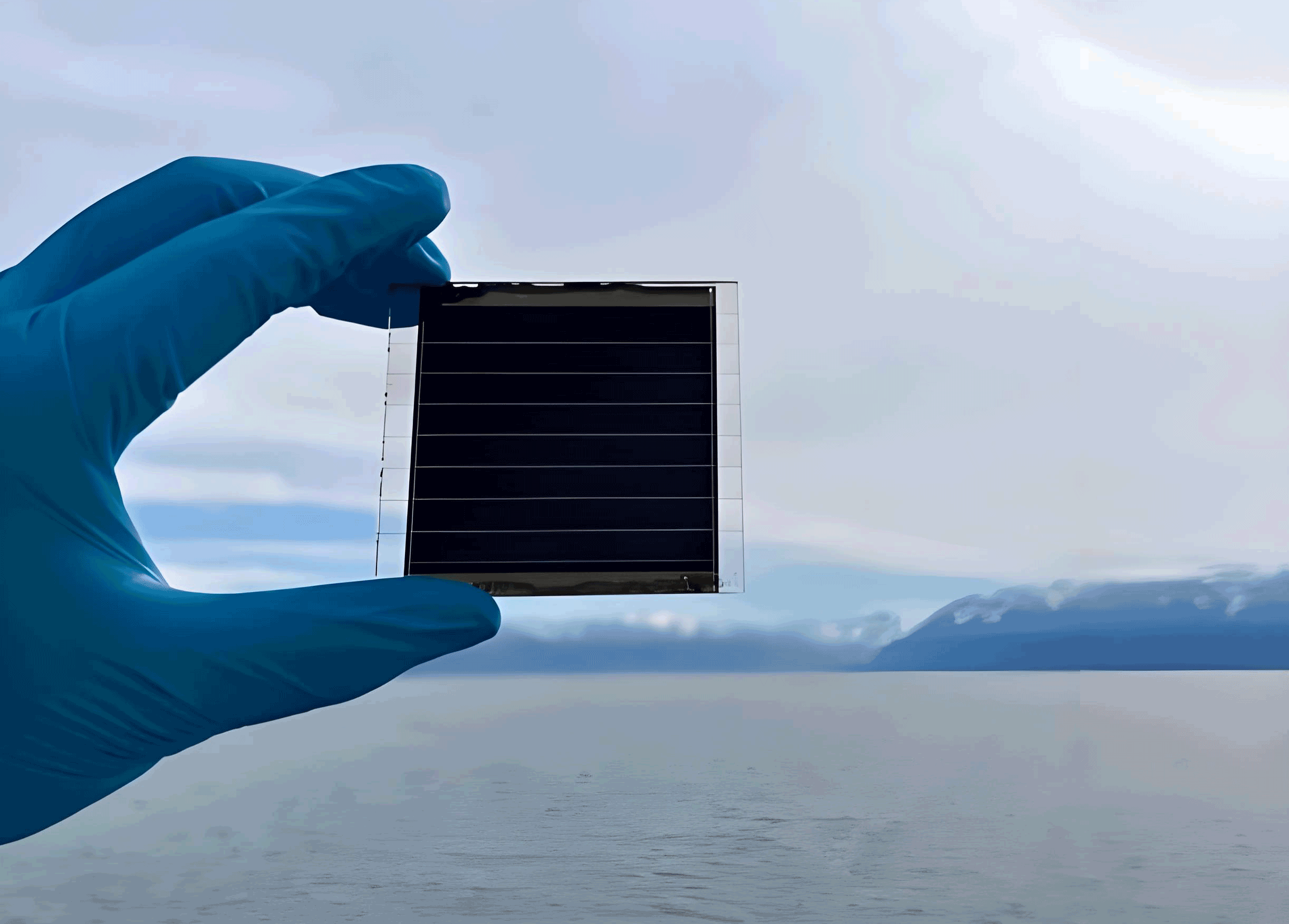
In this work, I employed a simple soaking method using a PEAI solution in ethyl acetate to treat the perovskite absorption layer modified with CsPbI2Br quantum dots. The soaking time was varied to optimize the removal of insulating ligands. Through comprehensive characterization techniques, including X-ray diffraction (XRD), photoluminescence (PL), time-resolved photoluminescence (TRPL), current-voltage (J-V) measurements, Mott-Schottky analysis, and electrochemical impedance spectroscopy (EIS), I evaluated the structural, optical, and electrical properties of the devices. The results demonstrate that PEAI treatment significantly improves the film morphology, charge transport, and overall performance of the perovskite solar cells.
Experimental Section
The experimental procedures were carefully designed to ensure reproducibility and accuracy. All reagents were of analytical grade and used without further purification. The key materials included cesium iodide (CsI), lead iodide (PbI2), lead bromide (PbBr2), phenylethylamine iodide (PEAI), titanium isopropoxide, oleic acid (OA), oleylamine (OAM), 1-octadecene (ODE), n-hexane, ethyl acetate (EA), anhydrous ethanol, hydrochloric acid (HCl), titanium dioxide paste (18NR-T), acetone, dimethyl sulfoxide (DMSO), and low-temperature carbon paste.
Preparation of Solutions and Precursors
The compact TiO2 (c-TiO2) solution was prepared by mixing 750 mL of titanium isopropoxide, 10 mL of anhydrous ethanol, and 70 μL of 2 mol/L HCl. The mixture was stirred thoroughly to ensure homogeneity. For the mesoporous TiO2 (m-TiO2) sol, the 18NR-T paste was mixed with ethanol in a mass ratio of 1:15 and stirred vigorously.
The CsPbI2Br quantum dots were synthesized using a hot-injection method. In a typical procedure, 10 mL of ODE, 0.25 mmol of PbBr2, and 0.5 mmol of PbI2 were placed in a three-neck flask and dried under vacuum at 120°C for 1 hour. Under a nitrogen atmosphere, 2 mL of dried OA and OAm were added, and the temperature was raised to 140°C. After the solution became clear, the temperature was increased to 150°C, and 1.3 mL of cesium oleate was swiftly injected. The reaction was quenched after 5 seconds by immersing the flask in an ice bath. The crude solution was centrifuged with ethyl acetate at 11,000 rpm for 5 minutes, and the precipitate was dissolved in n-hexane and centrifuged at 7,800 rpm for 5 minutes to obtain the purified CsPbI2Br quantum dots.
The CsPbI2Br perovskite precursor solution was prepared by dissolving CsI, PbI2, PbBr2, and dimethylammonium iodide (DMAI) in a mass ratio of 1:0.5:0.5:1 in DMSO to achieve a concentration of 1 mol/L. The solution was heated at 60°C for 12 hours to ensure complete dissolution.
Device Fabrication
The fabrication of perovskite solar cells began with cleaning FTO conductive glass (20 cm × 20 cm) using deionized water, ethanol, acetone, and isopropanol in an ultrasonic bath. The substrates were treated with UV ozone for 15 minutes before use. The c-TiO2 layer was deposited by spin-coating the c-TiO2 solution at 3,000 rpm for 20 seconds, followed by annealing at 500°C for 60 minutes in air. After cooling, the m-TiO2 sol was spin-coated at 3,000 rpm for 30 seconds and annealed at 500°C for 30 minutes. The substrates were again treated with UV ozone for 15 minutes.
The CsPbI2Br perovskite layer was deposited by spin-coating the precursor solution at 500 rpm for 15 seconds and then at 3,000 rpm for 45 seconds, followed by annealing at 200°C for 20 minutes. The quantum dot layer was applied by spin-coating the CsPbI2Br quantum dot solution at 2,000 rpm for 30 seconds. The films were then soaked in a 1 mg/mL PEAI solution in ethyl acetate for varying times (0, 5, 10, and 15 seconds) and annealed at 90°C for 3 minutes. Finally, a carbon electrode was deposited by blade-coating the carbon paste and drying at 120°C for 16 minutes.
Characterization and Testing
The structural properties of the perovskite films were analyzed using X-ray diffraction (XRD) with a D8 ADVANCE diffractometer (Cu Kα radiation, λ = 1.5406 Å). Optical properties were assessed through steady-state photoluminescence (PL) and time-resolved photoluminescence (TRPL) measurements using a Fluorolog-3 spectrophotometer. The photovoltaic performance was evaluated under a solar simulator (Newport 150W Oriel 92252A) at 100 mW/cm² (AM 1.5G). Current-voltage (J-V) characteristics were recorded with a Keithley 2400 source meter, and capacitance-voltage (C-V) measurements were conducted using a CHI660 electrochemical workstation in the dark. Electrochemical impedance spectroscopy (EIS) was performed under a 0.8 V bias in the dark to study charge transport and recombination.
Results and Discussion
Impact of PEAI Soaking on Crystal Structure
The crystal structure of the perovskite films plays a crucial role in determining the performance of perovskite solar cells. I conducted XRD analysis to examine the effect of PEAI soaking time on the crystallinity of the CsPbI2Br quantum dot-modified films. The XRD patterns for different soaking times are summarized in Table 1, which shows the intensity of the main diffraction peaks at 14.5° and 29.1°.
| Soaking Time (s) | Peak Intensity at 14.5° (a.u.) | Peak Intensity at 29.1° (a.u.) |
|---|---|---|
| 0 | 850 | 420 |
| 5 | 920 | 480 |
| 10 | 1050 | 550 |
| 15 | 900 | 460 |
The data indicate that the peak intensities increased with soaking time up to 10 seconds, suggesting enhanced crystallinity. However, beyond 10 seconds, the intensities decreased, likely due to excessive removal of ligands or structural degradation. The full width at half maximum (FWHM) of the peaks can be related to crystallite size using the Scherrer equation:
$$D = \frac{K \lambda}{\beta \cos \theta}$$
where \(D\) is the crystallite size, \(K\) is the shape factor (approximately 0.9), \(\lambda\) is the X-ray wavelength, \(\beta\) is the FWHM in radians, and \(\theta\) is the Bragg angle. Calculations based on this equation revealed that the crystallite size was largest for the 10-second soaking time, confirming optimal crystal growth. This improvement in crystallinity is beneficial for charge transport in perovskite solar cells, as it reduces defect density and enhances carrier mobility.
Optical Properties Analysis
To understand the effect of PEAI soaking on the optical properties, I performed PL and TRPL measurements. The PL spectra showed a characteristic emission peak at 707 nm, and the intensity varied with soaking time. The normalized PL intensities are listed in Table 2, along with the TRPL fitting parameters.
| Soaking Time (s) | Normalized PL Intensity | τ₁ (ns) | τ₂ (ns) | A₁ | A₂ | τ_avg (ns) |
|---|---|---|---|---|---|---|
| 0 | 1.00 | 0.41 | 5.00 | 25770 | 314 | 1.20 |
| 5 | 0.85 | 0.48 | 5.10 | 17877 | 472 | 1.35 |
| 10 | 0.70 | 0.43 | 6.16 | 20089 | 343 | 1.56 |
| 15 | 0.90 | 0.39 | 5.08 | 26424 | 285 | 1.18 |
The PL intensity decreased with soaking time up to 10 seconds, indicating reduced radiative recombination due to improved charge extraction. This is consistent with the enhanced performance of perovskite solar cells. The TRPL decay curves were fitted using a bi-exponential function:
$$f(t) = A_1 \exp\left(-\frac{t}{\tau_1}\right) + A_2 \exp\left(-\frac{t}{\tau_2}\right)$$
where \(A_1\) and \(A_2\) are amplitudes, and \(\tau_1\) and \(\tau_2\) are decay times for non-radiative and radiative recombination, respectively. The average carrier lifetime (\(\tau_{\text{avg}}\)) was calculated as:
$$\tau_{\text{avg}} = \frac{A_1 \tau_1^2 + A_2 \tau_2^2}{A_1 \tau_1 + A_2 \tau_2}$$
The highest \(\tau_{\text{avg}}\) of 1.56 ns for the 10-second soaking time suggests superior charge carrier migration and reduced recombination, which aligns with the PL results. This optimization is critical for achieving high-efficiency perovskite solar cells.
Electrochemical Performance Evaluation
The photovoltaic performance of the devices was assessed through J-V measurements. The key parameters, including short-circuit current density (\(J_{\text{sc}}\)), open-circuit voltage (\(V_{\text{oc}}\)), fill factor (FF), and PCE, are summarized in Table 3.
| Soaking Time (s) | \(J_{\text{sc}}\) (mA/cm²) | \(V_{\text{oc}}\) (V) | FF (%) | PCE (%) |
|---|---|---|---|---|
| 0 | 13.98 | 0.99 | 74.92 | 10.50 |
| 5 | 14.95 | 1.01 | 76.16 | 11.57 |
| 10 | 15.05 | 1.03 | 77.24 | 12.05 |
| 15 | 15.04 | 0.97 | 70.63 | 10.33 |
The PCE improved from 10.50% to 12.05% with a 10-second soaking time, primarily due to increases in \(J_{\text{sc}}\) and \(V_{\text{oc}}\). This enhancement can be attributed to better charge transport and reduced recombination. To further investigate the charge dynamics, I conducted Mott-Schottky analysis and EIS.
The Mott-Schottky plot was used to determine the built-in potential (\(V_{\text{bi}}\)) from the intercept of the \(C^{-2}\) vs. \(V\) curve. The values of \(V_{\text{bi}}\) for different soaking times are shown in Table 4.
| Soaking Time (s) | \(V_{\text{bi}}\) (V) |
|---|---|
| 0 | 0.98 |
| 5 | 1.01 |
| 10 | 1.03 |
| 15 | 0.97 |
The highest \(V_{\text{bi}}\) of 1.03 V for the 10-second soaking time indicates a stronger internal electric field, which facilitates charge separation and suppresses recombination. This is consistent with the improved \(V_{\text{oc}}\) observed in the J-V curves.
EIS measurements provided insights into charge transport and recombination resistance (\(R_{\text{rec}}\)). The Nyquist plots were fitted with an equivalent circuit model, and the \(R_{\text{rec}}\) values are listed in Table 5.
| Soaking Time (s) | \(R_{\text{rec}}\) (Ω) | Series Resistance (\(R_s\)) (Ω) |
|---|---|---|
| 0 | 300 | 50 |
| 5 | 350 | 52 |
| 10 | 400 | 51 |
| 15 | 320 | 53 |
The highest \(R_{\text{rec}}\) of 400 Ω for the 10-second soaking time confirms reduced charge recombination, leading to better charge collection and higher PCE. The series resistance remained relatively constant, indicating that the FTO substrate properties were unaffected by the treatment.
Theoretical Considerations
The improvement in performance can be explained by considering the charge transport mechanisms in perovskite solar cells. The diode equation for a solar cell is given by:
$$J = J_{\text{ph}} – J_0 \left[\exp\left(\frac{q(V + J R_s)}{n k T}\right) – 1\right] – \frac{V + J R_s}{R_{\text{sh}}}$$
where \(J_{\text{ph}}\) is the photocurrent density, \(J_0\) is the reverse saturation current density, \(q\) is the electron charge, \(n\) is the ideality factor, \(k\) is Boltzmann’s constant, \(T\) is the temperature, \(R_s\) is the series resistance, and \(R_{\text{sh}}\) is the shunt resistance. The enhancement in \(J_{\text{sc}}\) and \(V_{\text{oc}}\) after PEAI treatment suggests a reduction in \(J_0\) and an increase in \(R_{\text{sh}}\), which aligns with the observed decrease in recombination.
Furthermore, the charge carrier diffusion length (\(L_D\)) can be estimated using the formula:
$$L_D = \sqrt{D \tau}$$
where \(D\) is the diffusion coefficient and \(\tau\) is the carrier lifetime. The increased \(\tau_{\text{avg}}\) from TRPL implies a longer \(L_D\), enhancing charge collection efficiency. This is crucial for achieving high-performance perovskite solar cells.
Conclusion
In this study, I demonstrated that PEAI treatment via soaking in ethyl acetate solution effectively improves the performance of CsPbI2Br quantum dot-modified perovskite solar cells. By optimizing the soaking time to 10 seconds, I achieved a significant enhancement in PCE from 10.50% to 12.05%. The improvements are attributed to the removal of organic insulating ligands, which enhanced crystallinity, charge transport, and reduced recombination. The structural, optical, and electrochemical analyses confirmed that the PEAI treatment optimizes the film morphology and interface properties, leading to superior device performance. This simple and cost-effective method holds great promise for advancing the development of efficient and stable perovskite solar cells. Future work will focus on scaling up the process and exploring long-term stability under operational conditions.