
In recent years, the global shift toward renewable energy has intensified, and lithium-ion batteries have emerged as a cornerstone technology due to their high energy density, long cycle life, and environmental friendliness. Among these, the lifepo4 battery, or lithium iron phosphate battery, has gained significant traction in electric vehicles and energy storage systems because of its inherent safety and stability. However, as battery capacities increase to meet growing energy demands, thermal runaway incidents remain a critical safety concern. Thermal runaway in a lifepo4 battery can lead to catastrophic failures, including fires and explosions, posing risks to both property and human life. In my research, I aim to address this issue by developing an effective early warning strategy for large-capacity lifepo4 batteries, focusing on real-time monitoring and proactive prevention.
The thermal runaway process in a lifepo4 battery is a complex phenomenon involving exothermic reactions, gas generation, and rapid temperature rise. When a lifepo4 battery is subjected to abusive conditions such as overcharging or external heating, internal components degrade, leading to heat accumulation. This can trigger a cascade of reactions, including solid-electrolyte interphase (SEI) decomposition, electrolyte breakdown, and cathode material decomposition, ultimately resulting in thermal runaway. For large-capacity lifepo4 batteries, the heat dissipation is often inadequate, exacerbating the risk. Therefore, early detection of pre-thermal runaway signs is crucial to mitigate hazards. My study explores the characteristic parameters during thermal runaway in commercial large-capacity lifepo4 batteries and designs a multi-sensor coupled warning strategy to provide timely alerts.
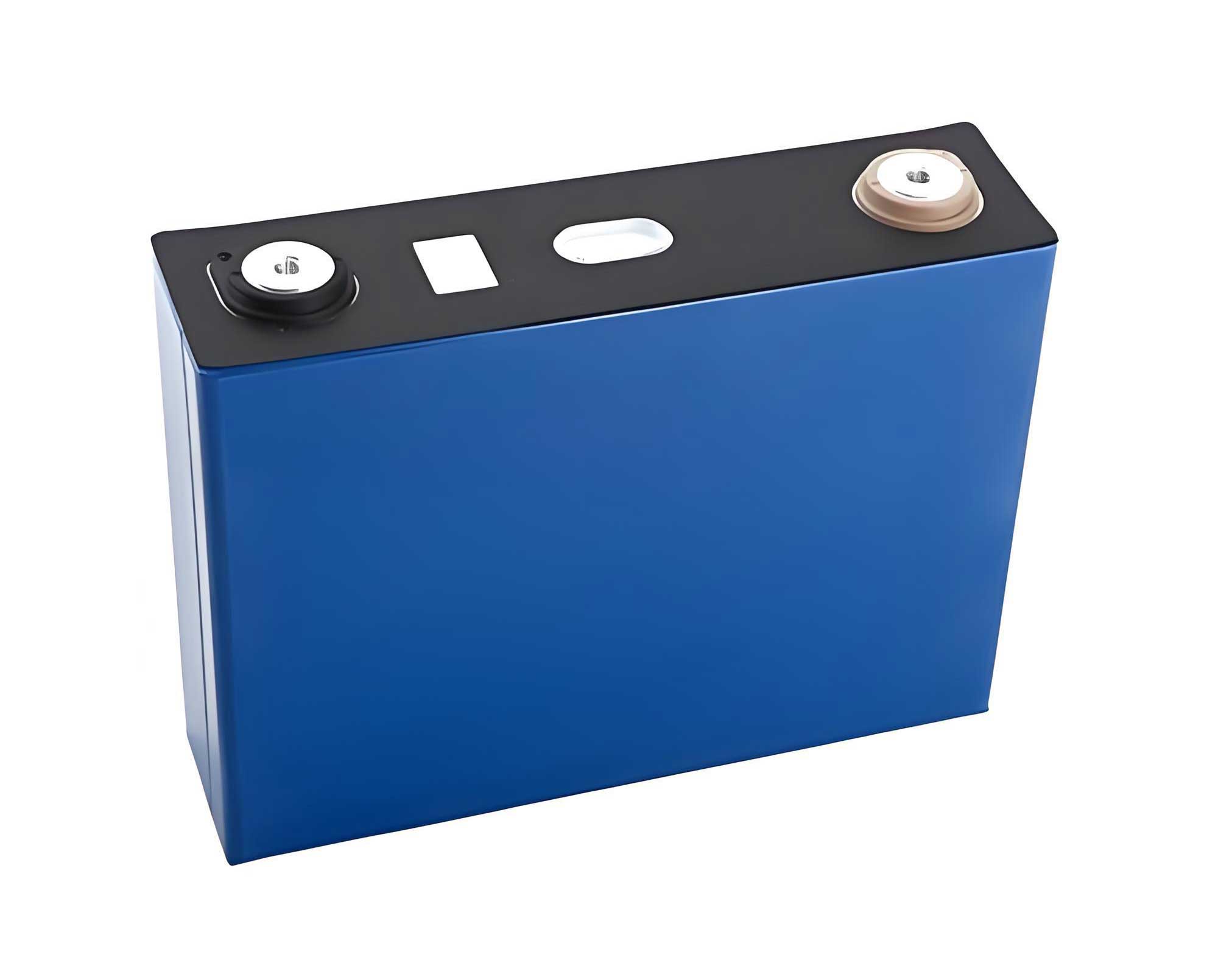
To investigate the thermal runaway behavior, I conducted experiments using large-capacity lifepo4 battery cells with a nominal capacity of 305 Ah. These lifepo4 batteries are prismatic in shape, measuring 172 mm × 70 mm × 202 mm, and operate within a voltage range of 3.20 V to 3.65 V. The experiments were performed in a specialized large-scale thermal runaway test container, which simulates real-world conditions while ensuring safety. The container, measuring 6.1 m × 2.6 m × 2.4 m, is equipped with explosion-proof boxes for battery testing, various gas sensors, and data acquisition systems. This setup allows for comprehensive monitoring of thermal runaway events in a controlled environment.
In my experiments, I focused on two common thermal runaway triggers: external heating and overcharging. For external heating, I used a 400 W electric heating plate attached to the battery surface with high-temperature resistant tape and stainless steel clamps to mimic confined conditions in battery packs. For overcharging, I applied a constant current of 50 A to the lifepo4 battery until thermal runaway occurred. All tests were conducted on lifepo4 batteries at 100% state of charge (SOC) to represent worst-case scenarios. I instrumented the batteries with K-type thermocouples (1 mm diameter) at key locations, such as the positive terminal and surface, to monitor temperature changes. Additionally, gas sensors for CO, H₂, CO₂, CH₄, C₂H₄, and C₂H₆ were deployed in the container to measure gas emissions during thermal runaway. Video recording was used to capture visual phenomena, and data loggers collected real-time signals.
The experimental design included four main tests: single-cell overcharging thermal runaway, single-cell external heating thermal runaway (two repetitions), and a dual-cell external heating test to study propagation. Subsequently, a validation test with nine lifepo4 batteries in a simulated vehicle battery box was performed to evaluate the proposed warning strategy. Table 1 summarizes the test conditions for these experiments, highlighting the triggers and configurations used for each lifepo4 battery test.
| Experiment Name | Number of Lifepo4 Batteries | Thermal Runaway Trigger | Configuration |
|---|---|---|---|
| Overcharging Thermal Runaway | 1 | 50 A constant current overcharge | Explosion-proof box with clamping |
| External Heating 1 | 1 | 400 W heating plate | Vehicle battery box with clamping |
| External Heating 2 | 1 | 400 W heating plate | Vehicle battery box with clamping |
| Dual-Cell Test | 2 | 400 W heating plate on one cell | Vehicle battery box with tight contact |
| Validation Test | 9 | 400 W heating plate on one cell | Vehicle battery box with surrounding cells |
From the experiments, I observed consistent thermal runaway characteristics in large-capacity lifepo4 batteries. The process typically begins with a slow heat accumulation phase, where the battery temperature gradually rises due to abusive conditions. This is followed by the opening of the safety valve, which releases flammable gases and electrolytes, causing a slight temperature jump in the environment. After a delay, complete thermal runaway occurs, characterized by rapid temperature escalation, massive gas emission, and sometimes fire. For instance, in the overcharging test, the lifepo4 battery’s positive terminal temperature reached a critical point of approximately 72.6°C at safety valve opening, with a temperature rise rate of 0.45°C/s. In contrast, external heating tests showed higher critical temperatures, around 105–116°C, and rates of 1.2–1.7°C/s. This indicates that trigger mechanisms influence the thermal runaway onset, but all cases exhibit a predictable sequence.
The temperature profiles during thermal runaway are crucial for early warning. I modeled the temperature rise using a simplified heat generation equation, where the rate of temperature increase is proportional to the heat generated from internal reactions. For a lifepo4 battery, the temperature dynamics can be expressed as:
$$ \frac{dT}{dt} = \frac{Q_{gen} – Q_{diss}}{mC_p} $$
Here, \( T \) is the battery temperature, \( t \) is time, \( Q_{gen} \) is the heat generation rate from exothermic reactions, \( Q_{diss} \) is the heat dissipation rate, \( m \) is the mass, and \( C_p \) is the specific heat capacity. During thermal runaway, \( Q_{gen} \) dominates, leading to exponential temperature growth. My data shows that for large-capacity lifepo4 batteries, the temperature can soar from around 70°C to over 500°C within minutes, with peak rates exceeding 2°C/s. Table 2 summarizes the critical temperature parameters observed in different tests for the lifepo4 battery.
| Experiment | Critical Temperature (°C) | Critical Temperature Rise Rate (absolute value, °C/s) |
|---|---|---|
| Overcharging | 72.6 | 0.45 |
| External Heating 1 | 106.6 | 1.2 |
| External Heating 2 | 116.5 | 1.7 |
| Dual-Cell Test | 105.6 | 1.6 |
Gas emissions are another key indicator of thermal runaway in a lifepo4 battery. Upon safety valve opening, significant amounts of characteristic gases are released. In my tests, CO, H₂, CH₄, C₂H₄, and C₂H₆ showed immediate concentration spikes, while CO₂ increased slightly later. For example, CO levels jumped by 0.12% to 0.26% shortly after valve opening, providing a clear signal for detection. The gas generation can be linked to electrochemical reactions during degradation. The production rate of gas species \( i \) can be described as:
$$ \frac{dC_i}{dt} = k_i e^{-E_a/(RT)} $$
where \( C_i \) is the concentration, \( k_i \) is a pre-exponential factor, \( E_a \) is activation energy, \( R \) is the gas constant, and \( T \) is temperature. This equation highlights the temperature dependence of gas evolution, reinforcing the need for coupled sensor monitoring. Table 3 presents the gas sensor responses after safety valve opening in the lifepo4 battery tests, demonstrating the consistency across experiments.
| Experiment | CO Step Increase (%) | VOC Sensor Peak (V) | Smoke Sensor Peak (V) |
|---|---|---|---|
| External Heating 1 | 0.1571 | 4.05 | 3.5 |
| External Heating 2 | 0.2595 | 4.68 | 3.14 |
| Dual-Cell Test | 0.121 | 4.77 | 4.4 |
Based on these findings, I developed a multi-parameter coupled early warning strategy for large-capacity lifepo4 batteries. The strategy involves three alarm levels, each targeting different stages of thermal runaway progression. Level 1 warning relies on battery temperature data from the Battery Management System (BMS), monitoring for abnormal temperature rises. For a lifepo4 battery, the threshold is set between 60°C and 75°C, with a temperature rise rate of 0.5°C/s to 1.7°C/s, based on the experimental data. Level 2 warning uses gas and smoke sensors to detect safety valve opening. The thresholds include CO concentration (0.12% to 0.15%), VOC sensor voltage (4 V to 4.5 V), and smoke sensor voltage (3 V to 3.5 V). Level 3 warning is triggered by ambient temperature sensors, indicating complete thermal runaway, with a threshold range of 55°C to 70°C. This graded approach ensures timely alerts, providing a response window of over 15 minutes before full thermal runaway in a lifepo4 battery.
The warning module integrates CO sensors, VOC sensors, smoke sensors, and temperature sensors, along with data processing electronics. The VOC sensor detects hydrocarbon gases like CH₄ and C₂H₄, which are common in lifepo4 battery off-gassing. The coupling of multiple sensors reduces false alarms and enhances reliability. The alarm logic can be expressed as a decision function:
$$ \text{Alarm Level} = \begin{cases}
1 & \text{if } T_{\text{battery}} > T_{\text{th1}} \text{ and } \frac{dT}{dt} > r_{\text{th1}} \\
2 & \text{if } C_{\text{CO}} > C_{\text{th2}} \text{ or } V_{\text{VOC}} > V_{\text{th2}} \text{ or } V_{\text{smoke}} > V_{\text{sth2}} \\
3 & \text{if } T_{\text{ambient}} > T_{\text{th3}}
\end{cases} $$
Here, \( T_{\text{th1}} \), \( r_{\text{th1}} \), \( C_{\text{th2}} \), \( V_{\text{th2}} \), \( V_{\text{sth2}} \), and \( T_{\text{th3}} \) are threshold values derived from my experiments on lifepo4 batteries. This function ensures progressive escalation based on real-time data.
To validate the strategy, I conducted a test with nine lifepo4 batteries arranged in a vehicle battery box. One central lifepo4 battery was heated with a 400 W plate, while others were placed around it to check for propagation. The warning module was installed inside the box, connected via CAN bus to an external computer for alarm triggering. During the test, the module successfully issued Level 2 and Level 3 alarms, with no thermal runaway propagation to adjacent lifepo4 batteries. The data showed that VOC and smoke sensors responded to initial gas releases, followed by CO spikes, and finally ambient temperature rise. The warning time was approximately 15 minutes before complete thermal runaway, demonstrating the strategy’s effectiveness for lifepo4 battery safety.
The validation test results are summarized in Table 4, which compares sensor responses across different alarm levels for the lifepo4 battery system. This table highlights the sequential activation of sensors, reinforcing the need for integrated monitoring.
| Alarm Level | Trigger Parameter | Observed Value | Time Before Thermal Runaway |
|---|---|---|---|
| Level 1 (Simulated) | Battery Temperature | >70°C (estimated) | ~20 minutes |
| Level 2 | CO Concentration | 0.14% | ~18 minutes |
| Level 2 | VOC Sensor Voltage | 4.2 V | ~17 minutes |
| Level 2 | Smoke Sensor Voltage | 3.3 V | ~16 minutes |
| Level 3 | Ambient Temperature | 65°C | ~5 minutes |
In discussing the implications, my research shows that large-capacity lifepo4 batteries exhibit stable thermal runaway characteristics, making them amenable to early warning systems. The delay between safety valve opening and complete thermal runaway provides a critical window for intervention. By leveraging multiple sensor signals, the proposed strategy enhances the reliability of lifepo4 battery monitoring compared to traditional BMS-based approaches, which often rely solely on voltage and temperature. Moreover, the use of gas sensors adds a proactive element, as gas emissions precede significant temperature spikes in a lifepo4 battery.
From a technical perspective, the lifepo4 battery’s chemistry influences the warning thresholds. For instance, the lower gas emissions compared to other lithium-ion batteries might require more sensitive sensors, but my data confirms that CO and VOC levels are detectable. The mathematical model for heat and gas generation can be refined further by incorporating battery aging effects, as an aged lifepo4 battery may have different thermal runaway kinetics. Future work could involve embedding fiber-optic sensors inside lifepo4 batteries for direct internal monitoring, but my external sensor approach is practical for existing systems.
In conclusion, my study on large-capacity lifepo4 batteries demonstrates that thermal runaway can be predicted through coupled monitoring of temperature, gas, and smoke parameters. The developed three-level warning strategy provides over 15 minutes of advance alert, enabling timely safety measures. This contributes to the safer deployment of lifepo4 batteries in electric vehicles and energy storage, reducing fire risks. As the demand for high-capacity lifepo4 batteries grows, such warning systems will become essential for ensuring public safety and infrastructure resilience. Continued research on lifepo4 battery behavior under various abuse conditions will further optimize these strategies, making energy storage technologies more robust and reliable.
Throughout this work, the focus on lifepo4 battery safety has been paramount, and the repeated emphasis on lifepo4 battery characteristics underscores its importance in the renewable energy landscape. By integrating experimental data with sensor technology, we can pave the way for smarter, safer lifepo4 battery systems that harness energy efficiently while minimizing hazards.