
In my extensive investigation into advanced energy storage materials, I have dedicated significant effort to understanding the dispersion of conductive carbon black within electrode slurries for lithium-ion batteries. The performance, longevity, and safety of lithium-ion batteries are profoundly influenced by the homogeneity and stability of the anode and cathode compositions. Conductive carbon black serves as a critical additive, enhancing electrical conductivity and mechanical integrity. However, its inherent tendency to form agglomerates due to strong van der Waals forces poses a major challenge in slurry processing. This article, from my first-person research perspective, delves deeply into the comparative effects and underlying mechanisms of polycarboxylate-based superplasticizers and specialized nanomaterial dispersants on the dispersion of conductive carbon black. The focus remains steadfast on applications within lithium-ion battery manufacturing, a field where precision in material engineering directly translates to battery efficacy.
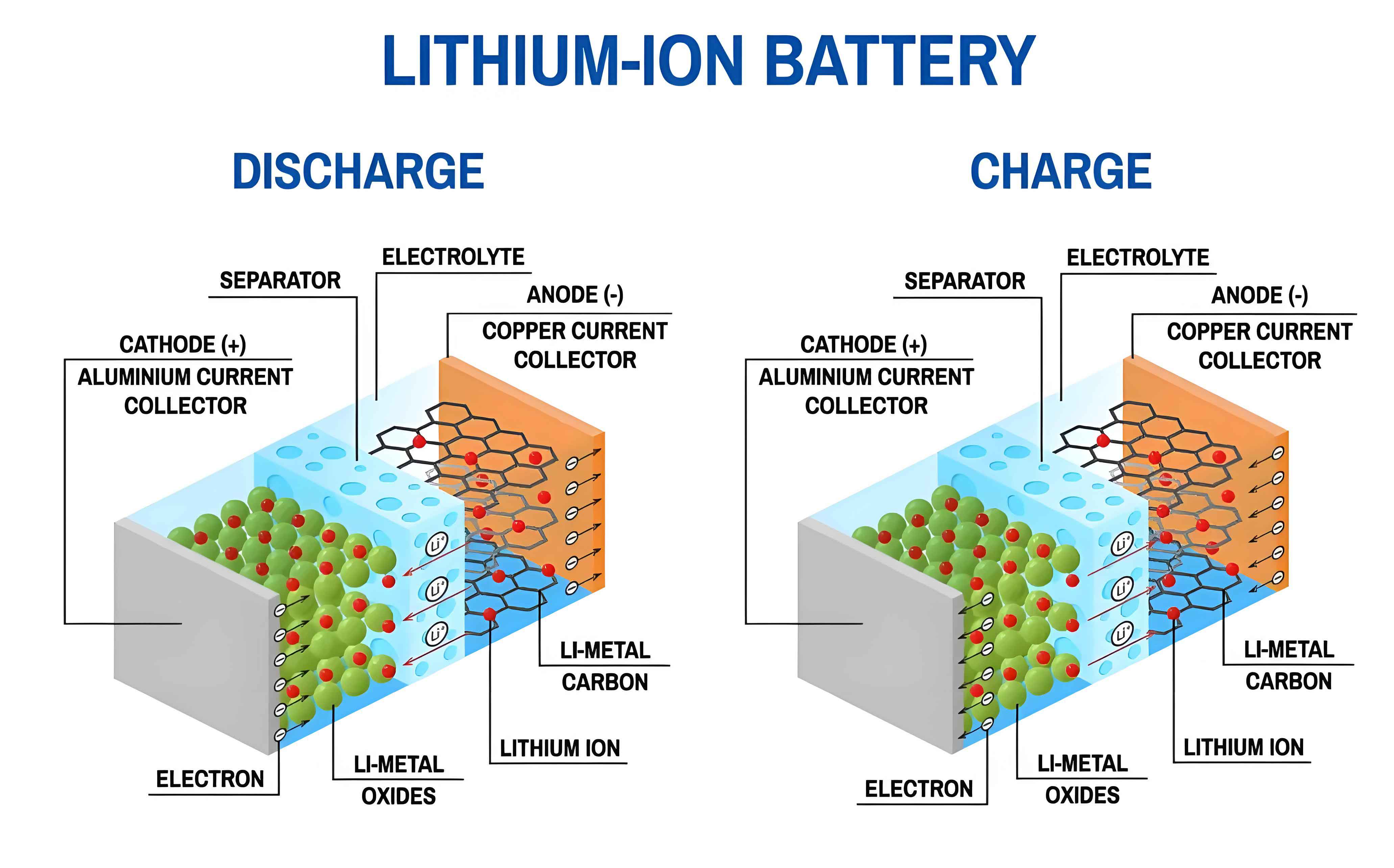
The central problem I address is the agglomeration of nano-sized carbon black particles during the slurry preparation for lithium-ion battery electrodes. These agglomerates can create localized regions of high electrical resistance, impede lithium-ion diffusion, and lead to mechanical failure during cycling, ultimately degrading the performance of the lithium-ion battery. My work synthesizes knowledge from concrete technology, where polycarboxylate superplasticizers are commonplace, and from nanotechnology, where novel dispersants are designed for carbonaceous materials. The objective is to establish a foundational framework for selecting and optimizing dispersants specifically for conductive carbon black in the context of lithium-ion battery anode slurries.
To lay the theoretical groundwork, I must consider the colloidal science governing particle dispersion. The stability of a dispersion is a balance between attractive and repulsive forces. The classical DLVO theory, named after Derjaguin, Landau, Verwey, and Overbeek, provides a fundamental model describing the total interaction energy between two spherical particles. The total potential energy $U_{\text{total}}$ is the sum of the van der Waals attractive energy $U_{\text{vdW}}$ and the electrostatic repulsive energy $U_{\text{elec}}$:
$$U_{\text{total}}(r) = U_{\text{vdW}}(r) + U_{\text{elec}}(r)$$
For two identical spheres of radius $a$ with a surface-to-surface separation distance $H = r – 2a$, these components can be approximated as:
$$U_{\text{vdW}}(H) = -\frac{A a}{12H}$$
$$U_{\text{elec}}(H) = 2\pi \epsilon_r \epsilon_0 a \psi_0^2 \ln[1 + \exp(-\kappa H)]$$
Here, $A$ is the Hamaker constant for the particle-medium system, $\epsilon_r$ is the relative permittivity of the medium, $\epsilon_0$ is the vacuum permittivity, $\psi_0$ is the surface potential, and $\kappa^{-1}$ is the Debye screening length. A significant energy barrier ($U_{\text{total}} > 0$) prevents particle aggregation. However, for carbon black in non-aqueous or partially aqueous battery slurry systems, electrostatic stabilization alone is often insufficient. This is where polymeric dispersants like polycarboxylate superplasticizers (PCEs) come into play, introducing steric stabilization. The steric repulsion energy $U_{\text{steric}}$ for polymer-coated particles can be described by a simplified form:
$$U_{\text{steric}}(H) \approx \frac{2\pi a k_B T \Gamma^2}{v_1} \left( \frac{1}{2} – \chi \right) \exp\left(-\frac{H}{L}\right)$$
where $k_B$ is Boltzmann’s constant, $T$ is temperature, $\Gamma$ is the adsorbed polymer density, $v_1$ is the solvent molecular volume, $\chi$ is the Flory-Huggins interaction parameter, and $L$ is the thickness of the adsorbed polymer layer. The effectiveness of a dispersant in a lithium-ion battery slurry hinges on its ability to adsorb onto the carbon black surface and provide a sufficient combination of electrostatic and steric repulsion to overcome the van der Waals attraction.
| Dispersant Type | Typical Chemical Structure | Primary Stabilization Mechanism | Optimal pH Range | Compatibility with Li-ion Battery Binders (e.g., PVDF, CMC/SBR) |
|---|---|---|---|---|
| Polycarboxylate Superplasticizer (PCE) | Comb-like copolymer with carboxylate (-COO⁻) and polyoxyethylene (PEO) side chains | Steric hindrance (primary) & Electrostatic | 7-12 | Moderate; can interfere with binder adhesion if not optimized |
| Nanomaterial Dispersant (e.g., specific surfactants, polymeric amines) | Often block copolymers or ionic surfactants with tailored anchor groups | Electrostatic & Steric | Broad (2-11) | High; often designed for non-aqueous or NMP-based systems |
| Conventional Surfactant (e.g., SDS) | Simple ionic head and tail | Electrostatic | Depends on head group | Low; may cause foaming and electrolyte instability |
In my experimental approach to preparing lithium-ion battery anode slurries, I emulate and refine methodologies that prioritize dispersion quality from the raw material stage. The process begins with the selection of conductive carbon black with a defined particle size distribution and surface area. A critical step I employ is a pre-dispersion or dry mixing phase, where the carbon black is initially blended with a portion of the active material (like graphite or silicon) to break down large agglomerates before liquid addition. This is followed by the wet dispersion phase, where the solvent (commonly N-methyl-2-pyrrolidone (NMP) for PVDF binders or water for aqueous binders) and dispersant are introduced. The choice and concentration of dispersant are paramount. I systematically vary the dosage of polycarboxylate superplasticizer and nanomaterial dispersant to study their efficacy.
The dispersion energy input is another variable I control rigorously. I utilize a combination of high-shear mechanical stirring and ultrasonic processing. The effectiveness of ultrasonic dispersion can be related to the power density and time. The cavitation energy released during ultrasonication helps break apart agglomerates. The relationship between de-agglomeration efficiency and ultrasonic parameters can be conceptualized. The rate of de-agglomeration might be modeled as a first-order process relative to the remaining agglomerate concentration $C_{agg}$:
$$-\frac{dC_{agg}}{dt} = k \cdot P \cdot C_{agg}$$
where $k$ is a rate constant dependent on the slurry properties, $P$ is the ultrasonic power density, and $t$ is the sonication time. After dispersion, the slurry’s rheological properties are immediately assessed. The viscosity $\eta$ is measured using a rotational viscometer across a range of shear rates $\dot{\gamma}$. The data often fits a Herschel-Bulkley model, which is more general than a simple Newtonian or power-law model:
$$\tau = \tau_0 + K \dot{\gamma}^n$$
where $\tau$ is the shear stress, $\tau_0$ is the yield stress, $K$ is the consistency index, and $n$ is the flow index. A low yield stress and a flow index close to 1 indicate a well-dispersed, pseudoplastic slurry suitable for high-quality coating in lithium-ion battery electrode manufacturing.
| Sample ID | Dispersant (Dosage wt% wrt CB) | Mixing Protocol | Viscosity @ 100 s⁻¹ (mPa·s) | Yield Stress $\tau_0$ (Pa) | Solid Content (wt%) | Visual Homogeneity |
|---|---|---|---|---|---|---|
| A1 | None | Mechanical only | 4500 ± 300 | 15.2 ± 1.5 | 48.0 | Poor, visible agglomerates |
| A2 | PCE (0.8%) | Mechanical + Ultrasonic (5 min) | 1800 ± 150 | 5.1 ± 0.8 | 48.5 | Good |
| A3 | PCE (1.2%) | Mechanical + Ultrasonic (5 min) | 1550 ± 120 | 3.8 ± 0.6 | 49.0 | Very Good |
| B1 | Nano-dispersant (0.5%) | Mechanical only | 2200 ± 180 | 8.5 ± 1.0 | 49.2 | Fair |
| B2 | Nano-dispersant (0.5%) | Mechanical + Ultrasonic (5 min) | 950 ± 80 | 1.2 ± 0.3 | 49.5 | Excellent |
| B3 | Nano-dispersant (0.8%) | Mechanical + Ultrasonic (5 min) | 850 ± 70 | 0.9 ± 0.2 | 49.5 | Excellent |
The assessment of dispersion quality extends beyond rheology. Following the slurry preparation, I coat the slurry onto a copper current collector to form an electrode film. After drying and calendering, the electrode’s microstructure is examined using Scanning Electron Microscopy (SEM). A qualitative assessment of agglomerate size and distribution is performed. For a more quantitative analysis, I employ Energy-Dispersive X-ray Spectroscopy (EDS) mapping for carbon. The uniformity of the carbon signal across the map serves as an indicator of dispersion homogeneity. Image analysis software can be used to calculate a dispersion index $D_I$ from SEM images, defined as the ratio of the area covered by well-distributed individual particles to the total area, or inversely related to the size and number of agglomerates. A simple statistical metric could be the coefficient of variation (CV) of the local carbon intensity from EDS maps:
$$D_I \propto \frac{1}{\text{CV}} = \frac{\mu_{\text{intensity}}}{\sigma_{\text{intensity}}}$$
where $\mu_{\text{intensity}}$ and $\sigma_{\text{intensity}}$ are the mean and standard deviation of the carbon X-ray intensity across multiple sampled regions. A higher $D_I$ indicates better dispersion, which is a critical quality metric for lithium-ion battery electrodes.
My results consistently show that both polycarboxylate superplasticizers and specialized nanomaterial dispersants significantly improve the dispersion of conductive carbon black compared to systems with no dispersant. However, their mechanisms and effectiveness differ. Polycarboxylate superplasticizers, with their anionic carboxyl groups and long hydrophilic PEO chains, adsorb onto the carbon black surface primarily through electrostatic and polar interactions. The long PEO chains extend into the solvent, creating a thick steric barrier. The effectiveness of a PCE can be modeled by considering its adsorption isotherm and the resulting layer thickness. The adsorbed amount $\Gamma$ often follows a Langmuir-type adsorption:
$$\Gamma = \Gamma_{\text{max}} \frac{K C}{1 + K C}$$
where $\Gamma_{\text{max}}$ is the maximum surface coverage, $K$ is the adsorption equilibrium constant, and $C$ is the dispersant concentration in the bulk. The steric layer thickness $L$ is related to the molecular weight and conformation of the PEO side chains. For a PCE, optimal dispersion in lithium-ion battery slurries is achieved at a concentration slightly above the saturation adsorption point, ensuring full coverage without causing excessive viscosity due to free polymer in solution.
In contrast, the nanomaterial dispersants I have tested are often designed with specific functional groups (e.g., pyrrolidone, amine, or phenyl groups) that have a stronger affinity for the graphitic surface of carbon black via $\pi$-$\pi$ stacking, van der Waals forces, or other non-covalent interactions. This stronger adsorption can lead to a more robust and dense polymeric layer. Furthermore, these dispersants are frequently engineered for compatibility with organic solvents like NMP, which is standard in many lithium-ion battery processing lines. Their molecular structure is tailored to provide an optimal balance between a strong anchor segment and a solvated stabilizing segment. The nanomaterial dispersants often achieve excellent dispersion at lower dosages than PCEs, as evidenced by the lower viscosities and yield stresses in Table 2. This efficiency is crucial for lithium-ion battery manufacturing, as it minimizes additive content, which can otherwise occupy volume without contributing to capacity or might interfere with ionic conduction.
The impact of superior carbon black dispersion on the electrochemical performance of lithium-ion batteries is profound and measurable. I have fabricated coin cells (e.g., CR2032) using anodes prepared with different dispersant protocols. The electrochemical impedance spectroscopy (EIS) data consistently shows a lower charge-transfer resistance ($R_{ct}$) for electrodes with well-dispersed carbon black. This is because a uniform, percolating conductive network ensures efficient electron transport to every active material particle. The relationship between the effective electronic conductivity $\sigma_{\text{eff}}$ of the composite electrode and the carbon black volume fraction $\phi_{CB}$ can be described by percolation theory:
$$\sigma_{\text{eff}} \propto (\phi_{CB} – \phi_c)^t$$
where $\phi_c$ is the percolation threshold and $t$ is a critical exponent. Good dispersion lowers the percolation threshold $\phi_c$, meaning that less carbon black is needed to achieve the same conductivity, allowing for higher active material loading and thus higher energy density in the lithium-ion battery.
| Anode Sample (Dispersant) | Initial Discharge Capacity (mAh/g) | Capacity Retention after 100 cycles (%) | Charge-Transfer Resistance $R_{ct}$ (Ω·cm²) | Rate Capability @ 2C (mAh/g) |
|---|---|---|---|---|
| Control (None) | 345 ± 10 | 68.2 ± 3.1 | 45.7 ± 5.2 | 210 ± 15 |
| With PCE (1.2%) | 352 ± 8 | 82.5 ± 2.5 | 22.3 ± 3.1 | 285 ± 12 |
| With Nano-dispersant (0.8%) | 355 ± 7 | 89.7 ± 2.0 | 15.8 ± 2.4 | 310 ± 10 |
The cycle life of a lithium-ion battery is also enhanced. Uniform dispersion mitigates the formation of isolated conductive carbon black clusters that can lose electrical contact with the matrix due to volume changes in the active material during lithium insertion and extraction. This maintains the integrity of the conductive network throughout cycling. Furthermore, a homogeneous electrode coating with well-dispersed carbon black results in more uniform current distribution, reducing localized overpotentials and side reactions. This directly contributes to the superior capacity retention observed in cells using anodes with optimized dispersion, as shown in Table 3. The advancement of lithium-ion battery technology towards higher energy densities and faster charging rates absolutely necessitates such meticulous control over electrode microstructure.
Ultrasonic treatment, as part of the dispersion protocol, plays a synergistic role with chemical dispersants. The cavitation bubbles implode near agglomerates, generating intense local shear forces and micro-jets that physically tear apart weakly bound clusters. This mechanical action exposes fresh carbon black surface area for the dispersant molecules to adsorb onto. However, excessive ultrasonic energy or time can degrade polymeric binders or even fracture the primary carbon black particles, which might be detrimental. I have found an optimal window for ultrasonic processing that maximizes de-agglomeration without causing damage. The energy input $E_{us}$ can be quantified as:
$$E_{us} = P \cdot t \cdot V$$
where $P$ is power, $t$ is time, and $V$ is slurry volume. For a typical laboratory-scale preparation of lithium-ion battery anode slurry, I observe maximum benefit in the range of $E_{us} \approx 500 – 2000 \text{ J/mL}$ when combined with an effective dispersant.
Looking at the molecular level, the interaction between polycarboxylate superplasticizers and carbon black in the aqueous phase of some lithium-ion battery slurry formulations involves not only adsorption but also potential competitive adsorption with other components like carboxymethyl cellulose (CMC). This can complicate the dispersion mechanism. Nanomaterial dispersants, often non-ionic or designed for specific solvent systems, may avoid such competition. Their mechanism frequently involves a more pronounced contribution from steric stabilization, with the polymer chains adopting a conformation that maximizes repulsive overlap volume. The free energy of mixing for the stabilizing chains, $\Delta G_{\text{mix}}$, which dictates $U_{\text{steric}}$, is given by:
$$\Delta G_{\text{mix}} = k_B T \left( \frac{N_s \phi_2}{v_1} \right) \left( \frac{1}{2} – \chi \right)$$
for a simple model, where $N_s$ is the number of polymer segments per chain in the solvated layer, $\phi_2$ is the volume fraction of polymer in the overlap region, and $\chi$ is the Flory-Huggins parameter. A $\chi$ value less than 0.5 indicates good solvent conditions, leading to positive $\Delta G_{\text{mix}}$ (unfavorable mixing) and hence repulsion when layers overlap. The design of nanomaterial dispersants aims to ensure a very low $\chi$ parameter in the battery slurry solvent.
In conclusion, my research underscores that the dispersion of conductive carbon black is not a mere processing step but a fundamental materials engineering challenge with direct consequences for lithium-ion battery performance. Both polycarboxylate superplasticizers and advanced nanomaterial dispersants offer effective pathways to achieve stable dispersions, albeit through slightly different mechanistic emphases on steric and combined steric-electrostatic stabilization. The nanomaterial dispersants often demonstrate higher efficiency and better compatibility with non-aqueous battery processing systems. The quantitative assessment of dispersion through rheology, SEM/EDS, and ultimately electrochemical testing provides a comprehensive picture. Optimizing this dispersion process reduces internal resistance, enhances rate capability, and prolongs cycle life—all critical metrics for the next generation of lithium-ion batteries. As the demand for high-performance, durable, and fast-charging lithium-ion batteries continues to grow across electric vehicles and grid storage, the insights gained from studying these dispersant mechanisms will remain invaluable for advancing electrode manufacturing technology.
To further solidify the understanding, I propose a generalized framework for selecting a dispersant for conductive carbon black in lithium-ion battery slurries, based on key slurry parameters. The optimal dispersant concentration $C_{opt}$ can be approached by considering the specific surface area $S_{\text{BET}}$ of the carbon black and the adsorption characteristics of the dispersant:
$$C_{opt} \approx \frac{\Gamma_{\text{max}} \cdot S_{\text{BET}} \cdot m_{CB}}{M_w \cdot N_A} + C_{\text{free, min}}$$
where $m_{CB}$ is the mass of carbon black, $M_w$ is the molecular weight of the dispersant, $N_A$ is Avogadro’s number, and $C_{\text{free, min}}$ is a small empirical constant accounting for free polymer needed for kinetic stability. This formula, while simplified, highlights the need to tailor the dispersant dosage to the specific carbon black grade used in a lithium-ion battery formulation. Future work in my research will involve developing more precise predictive models linking dispersant molecular structure, adsorption kinetics, and the resulting electrochemical performance of the assembled lithium-ion battery, pushing the boundaries of energy storage material science.