
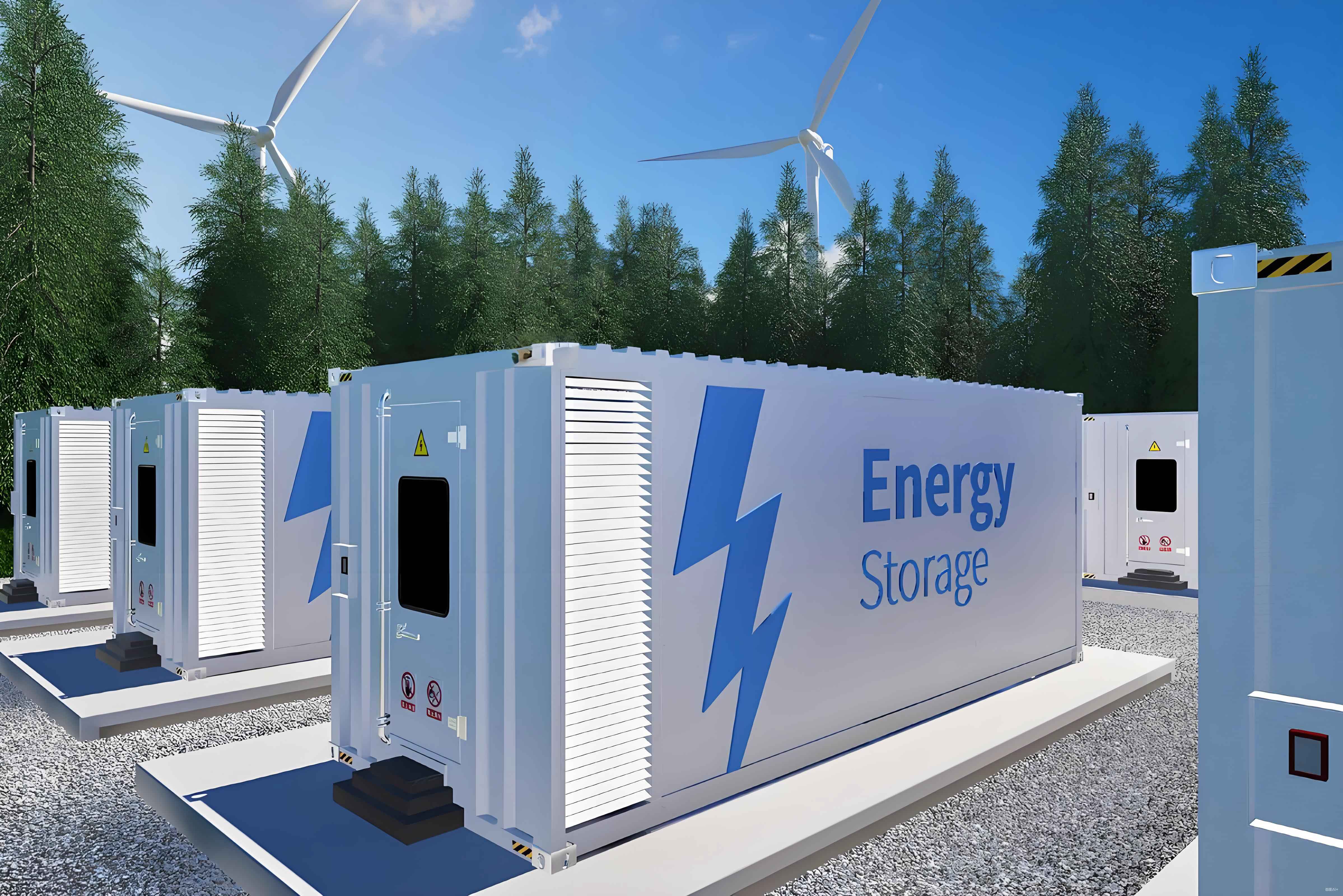
With the rapid development of renewable energy, wind power has become a significant component globally. However, the fluctuating and unstable output of wind farms poses challenges to grid stability. Efficient energy storage systems are essential to mitigate these fluctuations, and energy storage lithium batteries, known for their high energy density, long cycle life, and environmental adaptability, show great potential in wind farm applications. Despite their advantages, energy storage lithium batteries face challenges such as frequent charge-discharge cycles and complex operating environments, which can affect discharge performance and capacity changes. This study investigates the discharge behavior and capacity variations of energy storage lithium batteries under various conditions, aiming to optimize their use and thermal management in wind farm systems.
We conducted experiments using lithium titanate oxide (LTO) batteries, which are commonly employed in energy storage lithium battery systems due to their stability and safety. The anode material consisted of Li12Ti5O12 with binders like carboxymethyl cellulose and styrene-butadiene rubber. The maximum discharge current was set to 1200 A, and tests were performed at different discharge rates. Charging was done at 15 A with a cutoff voltage of 2.75 V, while temperatures were monitored using thermocouples and infrared thermography to ensure safety. The battery module comprised 55 cells in series, with aluminum plates inserted between cells to promote temperature uniformity. Discharge tests were limited to 60 seconds to maintain consistency and prevent overheating.
| Parameter | Value |
|---|---|
| Rated Capacity (Ah) | 15 |
| Rated Voltage (V) | 2.3 |
| Maximum Voltage (V) | 2.8 |
| Minimum Voltage (V) | 1.5 |
| Operating Temperature (°C) | -30 to 55 |
| Cathode Material | NCM |
| Anode Material | LTO |
| Mass (g) | 400 |
| Parameter | Value |
|---|---|
| Rated Voltage (V) | 126.5 |
| Maximum Voltage (V) | 154 |
| Minimum Voltage (V) | 82.5 |
| Operating Temperature (°C) | -30 to 55 |
| Cathode Material | NCM |
| Anode Material | LTO |
The experimental procedure involved constant-current constant-voltage (CCCV) charging at 15 A until the cutoff voltage, followed by a constant-voltage phase until the current dropped to 0.75 A. After a 1-hour rest, discharge was conducted at specified currents until the cutoff voltage, followed by another rest period. This method ensured consistent testing conditions for evaluating the energy storage lithium battery performance.
In the discharge analysis under varying temperatures, we used a discharge current of 15 A and a cutoff voltage of 1.5 V. The capacity of the energy storage lithium battery increased with ambient temperature, as shown in the data below. At -5°C, the discharged capacity was 11.750 Ah; at 25°C, it was 14.898 Ah; and at 45°C, it reached 15.826 Ah. This indicates a 21.13% decrease at -5°C and a 6.23% increase at 45°C compared to 25°C, highlighting the sensitivity of energy storage lithium battery capacity to temperature fluctuations. The relationship between capacity and temperature can be modeled using an Arrhenius-like equation: $$Q = Q_0 \cdot e^{\frac{-E_a}{R T}}$$ where \(Q\) is the capacity, \(Q_0\) is the reference capacity, \(E_a\) is the activation energy, \(R\) is the gas constant, and \(T\) is the temperature in Kelvin. This emphasizes the need for thermal management in energy storage lithium battery systems to maintain optimal performance.
| Ambient Temperature (°C) | Discharged Capacity (Ah) | Change Relative to 25°C (%) |
|---|---|---|
| -5 | 11.750 | -21.13 |
| 5 | 12.500 | -16.10 |
| 15 | 13.800 | -7.38 |
| 25 | 14.898 | 0.00 |
| 35 | 15.300 | 2.70 |
| 45 | 15.826 | 6.23 |
For high-rate discharge analysis, we examined temperature changes at different discharge rates until the cutoff voltage. The temperature curves showed an initial sharp rise, followed by a decline and stabilization. Notably, at a discharge rate of 45 C, the temperature peaked, indicating a拐点 in thermal behavior. This peak is attributed to reduced energy release as the energy storage lithium battery degrades under high rates. The temperature change can be described by a differential equation: $$\frac{dT}{dt} = \frac{I^2 R – hA(T – T_{\text{amb}})}{m C_p}$$ where \(I\) is the current, \(R\) is the internal resistance, \(h\) is the heat transfer coefficient, \(A\) is the surface area, \(T\) is the battery temperature, \(T_{\text{amb}}\) is the ambient temperature, \(m\) is the mass, and \(C_p\) is the specific heat capacity. This model helps predict thermal dynamics in energy storage lithium battery systems during high-rate operations.
| Discharge Rate (C) | Peak Temperature (°C) | Time to Peak (s) |
|---|---|---|
| 5 | 30.5 | 600 |
| 15 | 35.2 | 400 |
| 25 | 42.1 | 300 |
| 35 | 50.8 | 200 |
| 45 | 63.25 | 150 |
| 55 | 59.0 | 120 |
In terms of spatial temperature variation, we monitored eight points on a single energy storage lithium battery during 45 C discharge. The maximum temperature at point 4 was approximately 67°C, while point 8 was around 40°C, resulting in a 27°C difference. This non-uniformity can lead to localized hotspots, affecting the longevity and safety of energy storage lithium battery systems. For battery modules under natural convection, the central cells reached up to 73.35°C, with the upper parts cooling faster post-discharge. The temperature distribution \(T(x,y,z)\) can be approximated using Fourier’s law: $$\nabla \cdot (k \nabla T) + \dot{q} = \rho C_p \frac{\partial T}{\partial t}$$ where \(k\) is the thermal conductivity, \(\dot{q}\) is the heat generation rate, \(\rho\) is the density, and \(t\) is time. This equation underscores the importance of efficient cooling strategies for energy storage lithium battery modules.
Voltage changes in the energy storage lithium battery module under different discharge currents were also analyzed. With increasing current, the voltage drop became more pronounced due to internal resistance and cell inconsistencies. The module voltage \(V\) during discharge can be expressed as: $$V = V_0 – I R_{\text{internal}} – \frac{I t}{C}$$ where \(V_0\) is the initial voltage, \(I\) is the current, \(R_{\text{internal}}\) is the internal resistance, \(t\) is time, and \(C\) is the capacity. This linear model highlights the impact of high discharge rates on energy storage lithium battery performance, necessitating balanced module design.
| Discharge Current (A) | Initial Voltage (V) | Voltage at 60 s (V) | Drop Percentage (%) |
|---|---|---|---|
| 500 | 380 | 360 | 5.26 |
| 600 | 380 | 340 | 10.53 |
| 675 | 380 | 320 | 15.79 |
| 700 | 380 | 300 | 21.05 |
| 800 | 380 | 280 | 26.32 |
To address thermal issues, we implemented liquid cooling technology for the energy storage lithium battery module. The setup included cooling plates, aluminum sheets, and a liquid circulation system. Simulations and experiments showed that liquid cooling reduced the maximum temperature from 69.87°C to 63.25°C, a 9.475% decrease, and shortened the cooling time from 45 minutes to 25 minutes. The temperature decay followed an exponential pattern: $$T(t) = T_{\text{amb}} + (T_{\text{initial}} – T_{\text{amb}}) e^{-t / \tau}$$ where \(\tau\) is the time constant, which was lower for liquid cooling, indicating faster heat dissipation. This approach significantly enhances the reliability of energy storage lithium battery systems in high-rate applications.
| Cooling Method | Maximum Temperature (°C) | Time to Stabilize at 35°C (min) | Temperature Reduction (%) |
|---|---|---|---|
| Natural Convection | 69.87 | 45 | 0 |
| Liquid Cooling | 63.25 | 25 | 9.475 |
In the liquid cooling experiments, we observed temperature distributions at 1, 20, and 40 minutes post-discharge. The battery center temperature decreased from 65.6°C to 38.5°C in 20 minutes and further to 28.5°C in 40 minutes, with cooling rates of 1.36°C/min and 0.5°C/min, respectively. The heat transfer efficiency is governed by Newton’s law of cooling: $$q = h A (T_{\text{battery}} – T_{\text{coolant}})$$ where \(q\) is the heat flux, and \(T_{\text{coolant}}\) is the coolant temperature. This confirms that liquid cooling is highly effective for energy storage lithium battery thermal management, reducing温差 and improving overall system efficiency.
Further analysis involved validating the liquid cooling model through experiments on two battery modules. Temperature measurements at upper, middle, and lower sections showed that liquid cooling maintained temperatures below 63.25°C, with a maximum温差 of 13.87°C. The simulation results aligned with experimental data, e.g., center temperatures of 65.36–66.00°C in simulation versus 61.31–63.29°C in experiments at discharge end. This consistency demonstrates the accuracy of our thermal models for energy storage lithium battery applications.
In conclusion, our study on energy storage lithium batteries reveals that high-rate discharge leads to significant temperature increases, with a peak at 45 C and a maximum temperature of 63.25°C under liquid cooling. Capacity varies with ambient temperature, showing decreases at lower temperatures and slight increases at higher ones. Liquid cooling technology proves effective in reducing temperatures and shortening cooling times, enhancing the performance and safety of energy storage lithium battery systems in wind farms. These findings provide theoretical and practical guidance for optimizing energy storage lithium battery usage in renewable energy applications, emphasizing the importance of integrated thermal management strategies.
The implications of this research extend to the design of future energy storage lithium battery systems, where adaptive cooling methods and material improvements can further mitigate capacity fade and thermal runaway risks. Continued exploration of multi-physics models, incorporating electrochemical, thermal, and mechanical couplings, will be essential for advancing energy storage lithium battery technology in sustainable energy infrastructures.