
In modern power systems, the rapid development of solar energy technology has led to widespread adoption of solar inverters. However, unbalanced voltage conditions pose significant challenges, including power fluctuations and harmonic distortions. This article proposes a direct power control method for solar inverters under unbalanced voltage, aiming to enhance system stability and reliability. The approach involves mathematical modeling, sequence component extraction, and multi-objective optimization using particle swarm algorithms.
The operation of solar inverters under unbalanced voltage is critical due to the increasing integration of distributed generation. Unbalanced voltages can result from asymmetrical loads or grid faults, leading to adverse effects on solar inverters. To address this, a comprehensive analysis of solar inverter characteristics is conducted. The three-phase inverter topology is considered, with filter parameters designed for both DC and AC sides. The mathematical model under grid-connected mode is derived to understand the impact of unbalanced voltage on solar inverters.
The three-phase voltage under unbalanced conditions can be decomposed into positive, negative, and zero-sequence components. The general form is given by:
$$ U_{abc} = \begin{bmatrix} u_a \\ u_b \\ u_c \end{bmatrix} = \sum_{m=1}^{\infty} (u^{+m}_{abc} + u^{-m}_{abc} + u^{0m}_{abc}) + u_{offset} $$
where \( u^{+m}_{abc} \), \( u^{-m}_{abc} \), and \( u^{0m}_{abc} \) represent the positive, negative, and zero-sequence components, respectively, and \( u_{offset} \) denotes DC bias. In three-wire systems, zero-sequence current paths are absent, simplifying the analysis. The positive and negative sequence components are extracted using symmetrical component transformation matrices:
$$ u^{+m}_{abc} = \frac{1}{3} \begin{bmatrix} 1 & a & a^2 \\ a^2 & 1 & a \\ a & a^2 & 1 \end{bmatrix} \begin{bmatrix} u_a \\ u_b \\ u_c \end{bmatrix} $$
$$ u^{-m}_{abc} = \frac{1}{3} \begin{bmatrix} a^2 & 1 & a \\ a & a^2 & 1 \\ 1 & a & a^2 \end{bmatrix} \begin{bmatrix} u_a \\ u_b \\ u_c \end{bmatrix} $$
Here, \( a = e^{j\frac{2\pi}{3}} \) is the phase shift operator. The extraction of these components is vital for accurate control of solar inverters.
To handle non-ideal grid conditions, a phase-locked loop (PLL) with adjustable parameters is employed. The PLL output in the dq-coordinate system is expressed as:
$$ x_q = \frac{ (U_a + U_b + U_c) \times u_{offset} }{ d_{abc} \cdot q_{abc} } $$
where \( d_{abc} \) and \( q_{abc} \) are the d-axis and q-axis components after Park transformation. The natural oscillation frequency is adjusted in real-time using regulation parameters to ensure system stability. The transfer functions for positive and negative sequences are defined as:
$$ G^+_2(s) = \frac{ \alpha \omega_0 (s + j\omega_0) }{ s^2 + 2\alpha \omega_0 s + (j\omega_0)^2 } H^+(s) $$
$$ G^-_2(s) = \frac{ \alpha \omega_0 (s – j\omega_0) }{ s^2 + 2\alpha \omega_0 s + (j\omega_0)^2 } H^-(s) $$
where \( \alpha \) is the damping factor, \( \omega_0 \) is the center frequency, and \( H^+(s) \), \( H^-(s) \) are correction factors. The phase information \( E_{abc} \) is derived as:
$$ E_{abc} = \frac{ \{ G^-_2(s) \cdot H^-(s) \} \{ G^+_2(s) \cdot H^+(s) \} }{ (U_a + U_b + U_c) \times u_{offset} } $$
This enables precise extraction of harmonic components and phase data for solar inverters.
For direct power control, a multi-objective coordination approach is adopted. The reference currents for positive and negative sequences are combined using coordination coefficients \( v_{abc} \):
$$ k^+_{abc} = \frac{ E_{abc} \cdot [u_a \times u_b \times u_c] }{ \frac{2}{3} [d_{abc} \otimes q_{abc}] } $$
$$ k^-_{abc} = \frac{ E_{abc} \cdot [u_a \times u_b \times u_c] }{ \frac{1}{2} [d_{abc} \otimes q_{abc}] \cdot v_{abc} } $$
The unified reference current minimizes power fluctuations. The double-frequency oscillatory components of active and reactive power are given by:
$$ \Delta P = F_{abc1} \cdot F_{abc2} = (v_{abc} + 1) \frac{1}{ (U_a + U_b + U_c) } $$
$$ \Delta Q = F_{abc3} \cdot F_{abc4} = \beta \cdot (v_{abc} + 1) \frac{1}{ (U_a + U_b + U_c) } \frac{2}{3} $$
where \( \beta \) represents the grid frequency range. A multi-objective function \( H(k) \) is formulated to balance current unbalance, active power fluctuation, and reactive power fluctuation:
$$ H(k) = a \left( \frac{1}{I_{max}} \right) + b \left( \frac{1}{u_{max}} \right) + c \left( \frac{1}{w_{max}} \right) $$
Here, \( a \), \( b \), and \( c \) are weight coefficients for current unbalance, voltage fluctuation, and active power fluctuation, respectively. \( I_{max} \), \( u_{max} \), and \( w_{max} \) are the maximum values of current, voltage, and active power.
The particle swarm optimization (PSO) algorithm is applied to optimize the multi-objective function. PSO iteratively updates particle positions and velocities to find the optimal coordination coefficients, ensuring solar inverters operate efficiently under unbalanced voltage. The optimization process involves:
1. Initializing particle positions and velocities.
2. Evaluating the fitness function \( H(k) \).
3. Updating personal and global bests.
4. Adjusting velocities and positions until convergence.
This results in optimal control parameters for direct power control of solar inverters.
Simulation studies are conducted to validate the proposed method. A grid-connected solar inverter system is modeled with parameters summarized in Table 1.
| Parameter | Value |
|---|---|
| DC-side voltage | 600 V |
| Switching frequency | 4 kHz |
| Three-phase grid voltage | 400 V |
| Filter inductance | 2.5 mH |
| Filter resistance | 0.20 Ω |
| Solar inverter rated power | 5800 W |
| Grid frequency | 60 Hz |
| Output power | 50 kW |
The performance of the proposed method is compared with existing approaches. Under harmonic distortion conditions, the positive-sequence component extraction demonstrates superior dynamic response and stability. For instance, when grid voltage drops to 30%, the proposed method maintains minimal DC voltage fluctuations compared to alternatives.
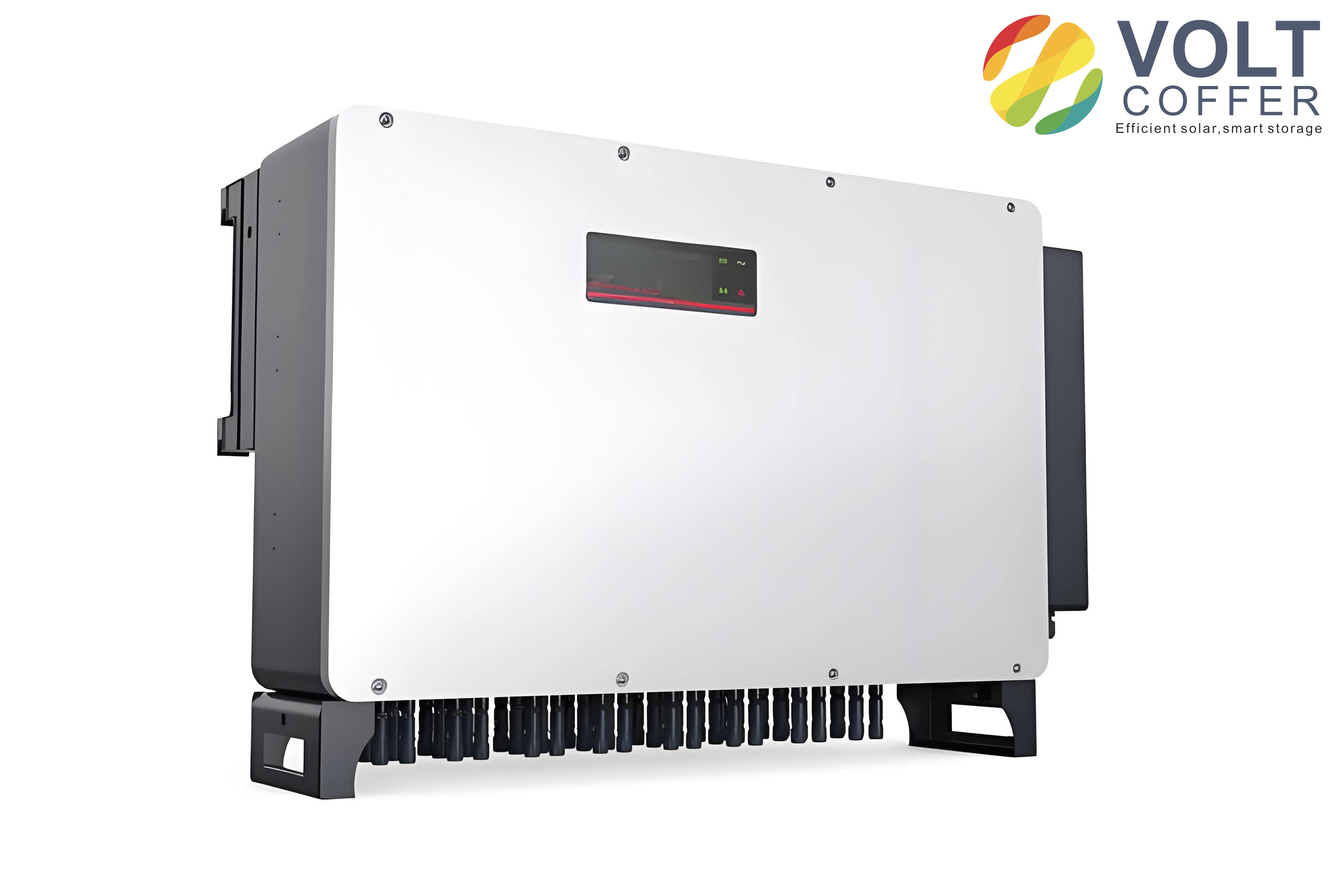
Furthermore, under rapidly deteriorating grid harmonics, the direct power control of solar inverters remains effective, showcasing the robustness of the method. The accurate extraction of sequence components and optimal coordination coefficients ensures stable operation.
In conclusion, the proposed direct power control method for solar inverters under unbalanced voltage conditions effectively mitigates power fluctuations and harmonic distortions. The integration of mathematical modeling, sequence extraction, and PSO optimization provides a comprehensive solution. Future work will focus on large-scale three-phase inverter experiments, fault scenarios such as short circuits, and further enhancements to the control strategy.
The advancements in solar inverter technology are crucial for reliable renewable energy integration. By addressing unbalanced voltage issues, this method contributes to the stability and efficiency of power systems, supporting the global transition to sustainable energy sources.