
In the pursuit of higher energy density for energy storage systems, the development of advanced anode materials has become a critical focus. Among various candidates, silicon stands out due to its exceptional theoretical capacity of approximately 4200 mAh/g, which is about ten times that of conventional graphite anodes. This makes silicon a promising next-generation anode material for li ion battery applications. However, silicon suffers from significant drawbacks, including low electrical conductivity and a substantial volume expansion of up to 300% during lithiation and delithiation cycles. These issues lead to rapid capacity fading, electrode pulverization, and unstable solid electrolyte interface (SEI) formation, hindering its direct use in li ion battery systems. To overcome these challenges, silicon-carbon composites have emerged as a viable solution, combining the high capacity of silicon with the structural stability and conductivity of carbon matrices. In this article, I will explore the dimensional design strategies, synthesis methods, and application performances of silicon-carbon anodes, emphasizing their role in advancing li ion battery technology. The integration of carbon not only buffers volume changes but also enhances electron transport, making these composites essential for high-performance li ion battery designs.
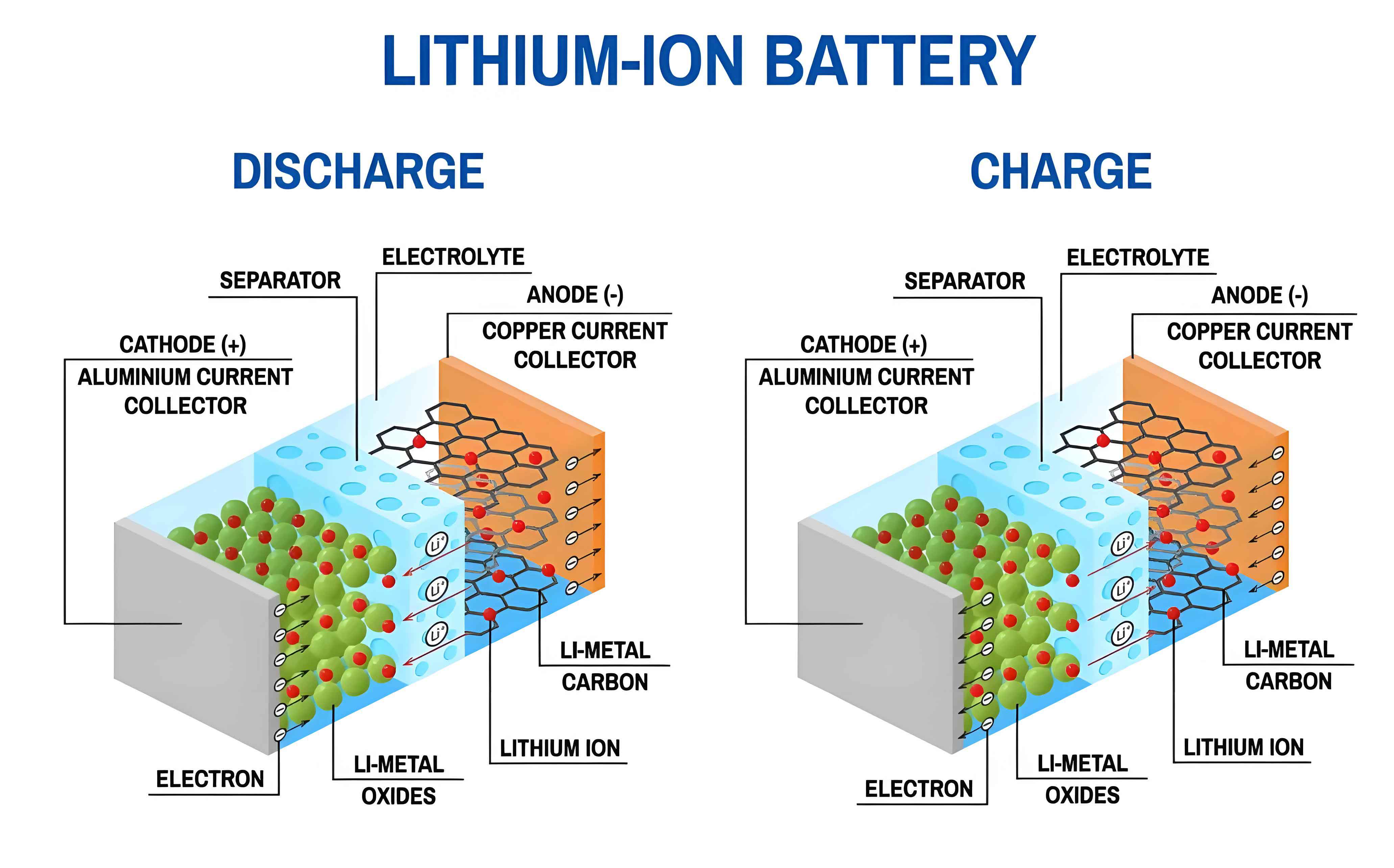
The evolution of li ion battery anodes has shifted from traditional graphite to materials with higher specific capacities. Silicon, with its low discharge voltage plateau and abundant natural resources, offers a path toward achieving energy densities beyond 500 Wh/kg in li ion battery packs. Yet, the practical implementation requires addressing silicon’s inherent limitations through nanostructuring and composite formation. By tailoring the dimensionality of silicon—ranging from zero-dimensional (0D) nanoparticles to three-dimensional (3D) porous frameworks—researchers can mitigate mechanical stress and improve cyclic stability. Coupled with carbon coatings or matrices, these designs enable robust electrodes capable of withstanding repeated cycling in li ion battery environments. In the following sections, I will delve into the classification of silicon dimensions, synthesis techniques for silicon-carbon composites, and their electrochemical performance, highlighting how each approach contributes to the overarching goal of enhancing li ion battery performance.
Dimensional Design of Silicon for Li-Ion Battery Anodes
The dimensionality of silicon plays a pivotal role in determining its electrochemical behavior in li ion battery anodes. By engineering silicon at the nanoscale, we can control volume expansion, ion diffusion pathways, and interfacial reactions. Below, I discuss four primary dimensional categories: 0D, 1D, 2D, and 3D structures, each offering unique advantages for li ion battery applications.
Zero-Dimensional (0D) Silicon Particles
0D silicon refers to nanoscale particles, typically with diameters below 100 nm. These particles exhibit reduced fracture tendencies compared to bulk silicon due to their small size, which alleviates internal stresses during lithium insertion and extraction. In a li ion battery, the volume change of silicon can be described by the strain energy density, which scales with particle size. For a spherical silicon nanoparticle, the volume expansion $\Delta V$ upon full lithiation to Li15Si4 is approximately 280%, leading to a linear strain $\epsilon$ given by:
$$\epsilon = \frac{\Delta r}{r_0} = \left(1 + \frac{\Delta V}{V_0}\right)^{1/3} – 1$$
where $r_0$ is the initial radius and $V_0$ is the initial volume. For nanoparticles, $\epsilon$ is manageable, preventing crack propagation. However, 0D silicon often suffers from high initial irreversible capacity loss due to extensive SEI formation on its large surface area. To address this, carbon coating is employed, which stabilizes the interface and enhances conductivity in li ion battery anodes. Common 0D structures include silicon nanospheres and core-shell designs, where a carbon shell encapsulates silicon cores, providing buffering space. The capacity retention in such systems can be modeled using the equation for capacity fade:
$$C_n = C_0 \cdot e^{-k n}$$
where $C_n$ is the capacity at cycle $n$, $C_0$ is the initial capacity, and $k$ is a degradation constant influenced by particle size and carbon coverage. For instance, 0D silicon-carbon composites have demonstrated capacities exceeding 1500 mAh/g over hundreds of cycles in li ion battery tests, showcasing their potential for high-energy applications.
One-Dimensional (1D) Silicon Nanostructures
1D silicon materials, such as nanowires, nanotubes, and nanorods, offer anisotropic properties that benefit li ion battery anodes. Their high aspect ratios and small diameters facilitate strain relaxation along the longitudinal direction, reducing the risk of fracture. The lithium diffusion length $L$ in 1D structures is shorter compared to bulk materials, enhancing rate capability according to the diffusion equation:
$$J = -D \frac{\partial c}{\partial x}$$
where $J$ is the flux, $D$ is the diffusion coefficient, and $\frac{\partial c}{\partial x}$ is the concentration gradient. For a nanowire of length $L$, the diffusion time $\tau$ scales as $\tau \propto L^2/D$, so reducing $L$ improves kinetics. In li ion battery applications, 1D silicon-carbon composites, such as silicon nanowires embedded in carbon matrices, exhibit excellent cycling stability due to continuous electron pathways and minimal pulverization. Additionally, their flexible nature allows for integration into flexible li ion battery designs. The theoretical capacity of 1D silicon can be derived from the mass of active material, but practical values often reach 2000-3000 mAh/g in half-cell configurations, making them attractive for next-generation li ion battery systems.
Two-Dimensional (2D) Silicon Films and Nanosheets
2D silicon encompasses thin films and nanosheets with thicknesses on the order of nanometers. These structures provide large lateral dimensions that shorten lithium-ion diffusion distances, leading to high power densities in li ion battery anodes. The surface area $A$ of a 2D sheet contributes to rapid charge transfer, as described by the Butler-Volmer equation for electrode kinetics:
$$i = i_0 \left[ e^{\frac{\alpha n F \eta}{RT}} – e^{-\frac{(1-\alpha) n F \eta}{RT}} \right]$$
where $i$ is the current density, $i_0$ is the exchange current density, $\alpha$ is the transfer coefficient, $n$ is the number of electrons, $F$ is Faraday’s constant, $\eta$ is the overpotential, $R$ is the gas constant, and $T$ is the temperature. For 2D silicon, the high $A$ increases $i_0$, enabling fast charging. However, 2D silicon may have lower volumetric energy density due to its thin nature, and production scalability remains a challenge. In li ion battery electrodes, 2D silicon-carbon hybrids, such as silicon nanosheets sandwiched between graphene layers, show exceptional rate performance and cycle life, with capacities maintained above 1000 mAh/g at high currents. This makes them suitable for high-power li ion battery applications, such as electric vehicles.
Three-Dimensional (3D) Porous Silicon Architectures
3D silicon structures, typically porous networks, offer high surface areas and interconnected pores that accommodate volume expansion while maintaining structural integrity. The porosity $\phi$ defined as $\phi = V_{\text{pores}} / V_{\text{total}}$, allows for electrolyte infiltration and reduces diffusion resistance in li ion battery anodes. The effective stress $\sigma$ in a porous silicon particle during lithiation can be expressed as:
$$\sigma = E \cdot \epsilon \cdot (1 – \phi)$$
where $E$ is Young’s modulus. Lower $\sigma$ minimizes cracking. 3D silicon-carbon composites, such as porous silicon coated with carbon layers, demonstrate enhanced cyclic stability due to buffering effects and improved ion transport. The capacity retention in these systems often exceeds 80% after hundreds of cycles in li ion battery testing. Additionally, 3D designs can achieve higher tap densities compared to 0D or 1D materials, contributing to better volumetric energy density in practical li ion battery packs. The table below summarizes the key characteristics of different silicon dimensions for li ion battery anodes.
| Dimensionality | Typical Structures | Advantages for Li-Ion Battery | Challenges | Typical Capacity (mAh/g) |
|---|---|---|---|---|
| 0D | Nanoparticles, Core-shell spheres | Small size reduces fracture, easy carbon coating | High SEI formation, low tap density | 1500-2000 |
| 1D | Nanowires, Nanotubes | Strain relaxation, fast ion diffusion | Synthesis complexity, mechanical fragility | 2000-3000 |
| 2D | Thin films, Nanosheets | Short diffusion paths, high rate capability | Low mass loading, scalability issues | 1000-2000 |
| 3D | Porous networks, Hierarchical frameworks | Volume buffering, high surface area | Processing cost, potential impurity retention | 1200-2500 |
This dimensional tailoring is crucial for optimizing silicon-carbon anodes in li ion battery systems, as each design addresses specific performance metrics like capacity, cycle life, and rate capability.
Synthesis Methods for Silicon-Carbon Composites in Li-Ion Battery Anodes
The fabrication of silicon-carbon composites significantly influences their electrochemical properties in li ion battery anodes. Various synthesis techniques have been developed to achieve uniform carbon distribution, strong interfacial bonding, and controlled morphologies. Below, I review prominent methods, highlighting their principles and outcomes for li ion battery applications.
Hydrothermal Synthesis
Hydrothermal methods involve reactions in aqueous solutions at elevated temperatures and pressures, enabling the growth of carbon coatings on silicon surfaces. This approach is cost-effective and environmentally friendly, often yielding homogeneous composites. For li ion battery anodes, hydrothermal synthesis can produce core-shell structures where silicon particles are encapsulated by carbon layers derived from organic precursors like glucose or dopamine. The process parameters, such as temperature $T$ and time $t$, affect the carbon crystallinity and thickness, which in turn influence conductivity and buffering capacity. The reaction kinetics can be described by the Arrhenius equation:
$$k = A e^{-E_a / RT}$$
where $k$ is the rate constant, $A$ is the pre-exponential factor, and $E_a$ is the activation energy. By optimizing these parameters, composites with high initial coulombic efficiency (e.g., 75-85%) and stable cycling in li ion battery cells can be achieved.
Thermal Treatment and Pyrolysis
Thermal treatment, including pyrolysis, involves heating silicon-polymer mixtures in inert atmospheres to convert polymers into amorphous carbon. This method is widely used due to its simplicity and scalability for li ion battery anode production. Common carbon sources include polyvinylidene fluoride (PVDF), pitch, and phenolic resins. The carbonization process follows a weight loss curve that can be modeled using thermogravimetric analysis (TGA), with the carbon yield $Y$ given by:
$$Y = \frac{m_{\text{carbon}}}{m_{\text{polymer}}} \times 100\%$$
where $m$ denotes mass. Pyrolysis temperatures typically range from 600°C to 900°C, affecting the graphitization degree and pore structure. For li ion battery anodes, pyrolyzed carbon coatings enhance electrical conductivity and provide mechanical support, leading to improved cycle life. For instance, silicon-carbon composites synthesized via pyrolysis have demonstrated capacities above 1000 mAh/g over 500 cycles in li ion battery testing, underscoring their durability.
Electrospinning Technique
Electrospinning is used to fabricate self-standing silicon-carbon nanofiber mats, which eliminate the need for binders and current collectors in li ion battery anodes. This technique involves ejecting a polymer solution containing silicon precursors through a high-voltage needle to form continuous fibers, which are then carbonized. The fiber diameter $d$ can be controlled by adjusting the voltage $V$, flow rate $Q$, and solution concentration $C$, following the relation:
$$d \propto \sqrt{\frac{Q}{V \cdot C}}$$
Electrospun silicon-carbon fibers offer high flexibility and conductivity, making them suitable for flexible li ion battery designs. In half-cell tests, these anodes exhibit excellent rate performance and long-term stability, with capacities retaining over 80% after 1000 cycles. This method aligns with the trend toward lightweight and wearable li ion battery systems.
Ball Milling
Ball milling is a solid-state mechanical method that mixes silicon and carbon powders through high-energy collisions. It is scalable and low-cost, ideal for mass production of li ion battery anodes. The process induces defects and creates intimate contact between silicon and carbon, enhancing electron transfer. The milling energy $E_m$ can be approximated as:
$$E_m = \frac{1}{2} m v^2$$
where $m$ is the mass of milling balls and $v$ is their velocity. Prolonged milling can reduce particle size but may also introduce impurities. For li ion battery applications, ball-milled silicon-carbon composites often show high reversible capacities (e.g., 600-800 mAh/g) and good cycling performance due to the formation of a percolating carbon network.
Spray Drying
Spray drying converts precursor suspensions into microspheres through rapid solvent evaporation, enabling the synthesis of hollow or porous silicon-carbon structures for li ion battery anodes. This technique allows precise control over morphology and composition by tuning the feed rate and temperature. The particle size distribution often follows a log-normal function:
$$f(d) = \frac{1}{d \sigma \sqrt{2\pi}} e^{-\frac{(\ln d – \mu)^2}{2\sigma^2}}$$
where $d$ is the diameter, and $\mu$ and $\sigma$ are parameters. Spray-dried composites exhibit high tap density and uniform carbon distribution, leading to enhanced volumetric energy density in li ion battery packs. They typically deliver capacities around 1200-1800 mAh/g with stable cycle life.
Chemical Vapor Deposition (CVD)
CVD involves gas-phase reactions to deposit carbon or silicon layers on substrates, offering high purity and conformity. For li ion battery anodes, CVD is used to grow carbon nanotubes or graphene on silicon particles, creating conductive networks. The deposition rate $R$ depends on precursor partial pressure $P$ and temperature $T$, as per:
$$R = k P e^{-E_a / RT}$$
CVD-coated silicon-carbon composites show superior rate capability and minimal SEI growth due to the seamless carbon coating. In li ion battery cells, they achieve high initial coulombic efficiency (e.g., 80-90%) and long cycle life, making them candidates for high-power applications.
The table below compares these synthesis methods in the context of li ion battery anode fabrication.
| Synthesis Method | Key Features | Advantages for Li-Ion Battery | Limitations | Typical Si-C Composite Performance |
|---|---|---|---|---|
| Hydrothermal | Aqueous, low-temperature | Uniform coating, eco-friendly | Time-consuming, low yield | Capacity ~1500 mAh/g, cycle life >500 |
| Thermal Pyrolysis | High-temperature carbonization | Scalable, good conductivity | Energy-intensive, potential Si aggregation | Capacity ~1000-2000 mAh/g, ICE ~80% |
| Electrospinning | Fiber formation, binder-free | Flexible electrodes, high surface area | Complex setup, low throughput | Capacity ~1200-1800 mAh/g, stable >1000 cycles |
| Ball Milling | Mechanical mixing | Cost-effective, easy scale-up | Contamination, broad size distribution | Capacity ~600-800 mAh/g, moderate cycle life |
| Spray Drying | Rapid drying, spherical particles | High tap density, controllable morphology | Solvent use, potential hollow structure collapse | Capacity ~1200-1800 mAh/g, good rate performance |
| CVD | Gas-phase deposition | High-quality coatings, conformal | Expensive, low deposition rates | Capacity ~2000-2500 mAh/g, excellent cycling |
Each method offers distinct trade-offs between performance, cost, and scalability, influencing their adoption in commercial li ion battery production.
Electrochemical Performance in Li-Ion Battery Applications
The integration of silicon-carbon anodes into li ion battery systems has led to significant improvements in energy density, cycle life, and rate capability. The electrochemical performance is evaluated through metrics such as specific capacity, initial coulombic efficiency (ICE), capacity retention, and impedance. In this section, I analyze these parameters based on dimensional designs and synthesis routes, emphasizing their impact on li ion battery functionality.
The specific capacity $C_s$ of a silicon-carbon anode is derived from the contributions of silicon and carbon, expressed as:
$$C_s = x C_{\text{Si}} + (1-x) C_{\text{C}}$$
where $x$ is the mass fraction of silicon, $C_{\text{Si}}$ is the theoretical capacity of silicon (4200 mAh/g), and $C_{\text{C}}$ is the capacity of carbon (typically 200-400 mAh/g). In practice, $C_s$ ranges from 600 to 3000 mAh/g depending on silicon content and structure. For li ion battery full-cells, pairing these anodes with high-voltage cathodes like NMC or LCO can yield energy densities exceeding 300 Wh/kg, a substantial leap from graphite-based systems.
Initial coulombic efficiency is critical for li ion battery commercialization, as low ICE indicates irreversible lithium loss due to SEI formation and side reactions. Silicon-carbon composites often exhibit ICE values between 70% and 90%, influenced by surface area and carbon coating quality. The ICE can be modeled as:
$$\text{ICE} = \frac{Q_{\text{delithiation}}}{Q_{\text{lithiation}}} \times 100\%$$
where $Q$ denotes charge capacity. Strategies like prelithiation or fluorine-functionalization have boosted ICE to above 85% in advanced li ion battery anodes.
Cycle life is determined by capacity fade, which correlates with volume expansion and SEI stability. The capacity retention $R$ after $n$ cycles is given by:
$$R = \frac{C_n}{C_1} \times 100\%$$
where $C_1$ is the first-cycle capacity. Silicon-carbon anodes with buffering designs (e.g., yolk-shell or porous structures) show $R > 80\%$ after 500-1000 cycles in li ion battery testing, outperforming pure silicon anodes. The impedance growth over cycles, often represented by the increase in charge-transfer resistance $R_{ct}$, is mitigated by conductive carbon networks, ensuring sustained power delivery in li ion battery packs.
Rate capability reflects the ability to charge and discharge rapidly, a key requirement for electric vehicle li ion battery systems. The capacity at high current density $i$ can be estimated using the Peukert equation:
$$C_i = C_0 \cdot i^{-k}$$
where $C_0$ is the capacity at a reference current, and $k$ is the Peukert constant. Nanostructured silicon-carbon anodes, particularly 1D and 2D designs, exhibit low $k$ values, enabling high capacities at rates up to 10C. For instance, some composites retain over 1000 mAh/g at 5C, facilitating fast-charging li ion battery applications.
The table below summarizes the electrochemical performance of various silicon-carbon anodes reported in li ion battery studies, based on the dimensional categories discussed earlier.
| Dimensionality | Composite Example | Specific Capacity (mAh/g) | Initial Coulombic Efficiency (%) | Cycle Life (Cycles) | Capacity Retention (%) | Rate Performance |
|---|---|---|---|---|---|---|
| 0D | Si@C core-shell nanoparticles | 1500-2000 | 75-85 | 500-1000 | 70-90 | Good up to 2C |
| 1D | Si nanowires/C composite | 2000-3000 | 80-90 | 500-1500 | 80-95 | Excellent, up to 10C |
| 2D | Si nanosheets/graphene | 1000-2000 | 85-92 | 1000-2000 | 85-98 | Superior, high power |
| 3D | Porous Si/C frameworks | 1200-2500 | 78-88 | 500-10000 | 80-90 | Moderate to good |
These performance metrics underscore the progress in silicon-carbon anode technology for li ion battery applications. However, challenges remain in scaling up production while maintaining high ICE and long cycle life.
Challenges and Future Perspectives for Li-Ion Battery Integration
Despite the advancements, silicon-carbon anodes face several hurdles before widespread adoption in commercial li ion battery systems. Key issues include low initial coulombic efficiency, volumetric expansion management, and cost-effective manufacturing. In this section, I discuss these challenges and propose future research directions to enhance li ion battery performance.
First, the initial coulombic efficiency often falls below 90% due to lithium consumption during SEI formation on silicon surfaces. This reduces the overall energy density of li ion battery packs. Strategies such as prelithiation, surface engineering with conductive polymers, or using silicon oxides (SiOx) can mitigate this. The optimization of carbon coating thickness and porosity is also crucial, as described by the equation for SEI growth:
$$\frac{dL_{\text{SEI}}}{dt} = k_{\text{SEI}} \cdot e^{-E_{\text{SEI}}/RT}$$
where $L_{\text{SEI}}$ is the SEI thickness and $k_{\text{SEI}}$ is a kinetic constant. Thinner, more stable SEI layers can be achieved by tuning electrolyte additives and carbon morphology, directly benefiting li ion battery longevity.
Second, volume expansion during cycling causes particle fracture and loss of electrical contact, leading to capacity fade. While nanostructuring alleviates this, it often reduces tap density, impacting volumetric energy density in li ion battery cells. Future designs may incorporate hybrid structures, such as 3D porous silicon encapsulated in graphitic carbon, to balance expansion buffering and density. Computational modeling, including finite element analysis, can predict stress distributions and guide material design for robust li ion battery anodes.
Third, synthesis methods must be scalable and cost-competitive for mass production of li ion battery components. Techniques like spray drying and ball milling show promise, but they require optimization to control impurities and uniformity. The cost per kilowatt-hour (kWh) for silicon-carbon anodes should align with li ion battery market demands, ideally below $100/kWh. Advances in recycling silicon from photovoltaic waste or industrial byproducts could lower costs, supporting sustainable li ion battery ecosystems.
Fourth, integration into full-cell li ion battery configurations necessitates compatibility with existing cathodes and electrolytes. Silicon-carbon anodes may require tailored electrolytes with fluorinated compounds or ionic liquids to suppress side reactions. Additionally, electrode engineering, such as using flexible binders like carboxymethyl cellulose, can accommodate volume changes without delamination. The overall cell balance, expressed by the N/P ratio (negative to positive capacity ratio), must be optimized to maximize li ion battery energy density while preventing lithium plating.
Looking ahead, emerging trends like solid-state li ion battery technology could revolutionize silicon-carbon anode applications. Solid electrolytes offer mechanical strength to constrain volume expansion and reduce SEI formation. The interface resistance $R_i$ in solid-state systems is given by:
$$R_i = \frac{\rho_i}{A}$$
where $\rho_i$ is the interfacial resistivity and $A$ is the contact area. By minimizing $R_i$, high-performance solid-state li ion battery cells with silicon-carbon anodes may achieve energy densities over 400 Wh/kg and enhanced safety.
In conclusion, silicon-carbon anodes represent a transformative path for li ion battery development, offering high capacity and improved cycle life through dimensional design and composite engineering. Continued innovation in synthesis, surface modification, and system integration will be essential to realize their full potential in next-generation li ion battery applications, from portable electronics to grid storage and electric vehicles. As research progresses, the collaboration between material science and battery engineering will drive the commercialization of these advanced anodes, ultimately contributing to a more energy-efficient future powered by li ion battery technology.