
Solid-state batteries (SSBs) represent a revolutionary advancement in energy storage technology, offering superior safety, higher energy density, and broader operational temperature ranges compared to conventional lithium-ion batteries. With global enterprises accelerating investments and strategic deployments, SSBs are poised to redefine the electric vehicle (EV) industry and disrupt traditional fuel vehicle markets. This article analyzes the technological advancements, economic challenges, and future trajectories of SSBs, while proposing actionable strategies for oil and gas enterprises to adapt to this transformative shift.
Technological Advantages of Solid-State Batteries
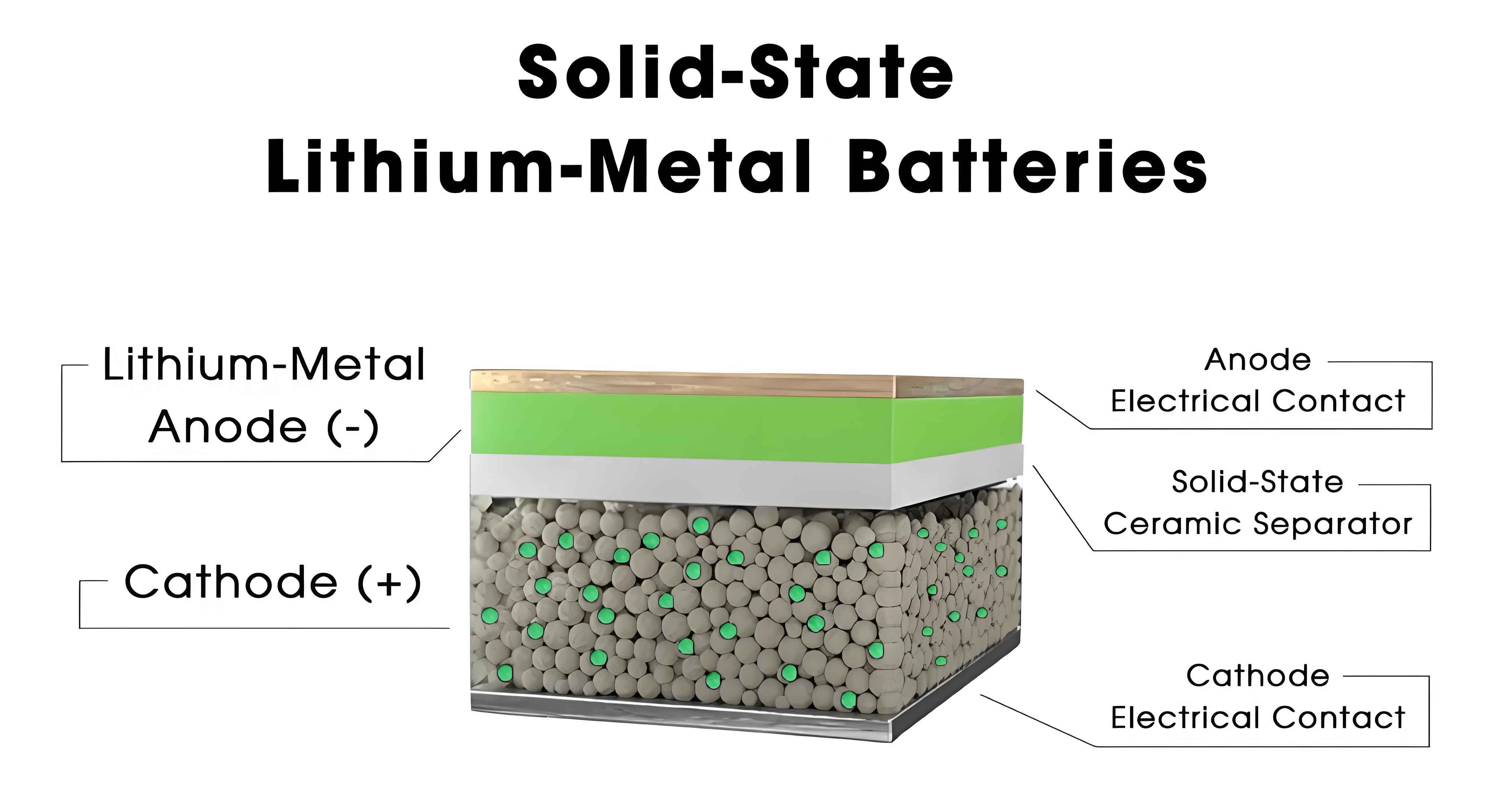
SSBs eliminate flammable liquid electrolytes, replacing them with solid electrolytes such as polymers, oxides, or sulfides. This structural innovation addresses critical limitations of traditional batteries:
- Enhanced Safety: Solid electrolytes exhibit thermal stability up to 300°C, mitigating risks of combustion or explosion.
- Higher Energy Density: SSBs achieve energy densities exceeding 400 Wh/kg, with theoretical limits approaching 700 Wh/kg, far surpassing the 300 Wh/kg ceiling of liquid batteries.
- Extended Lifespan: Ideal SSBs can endure over 45,000 charge-discharge cycles with minimal capacity degradation.
- Temperature Resilience: Operational ranges span -30°C to 100°C, resolving performance issues in extreme climates.
Current Challenges in Solid-State Battery Development
Despite their potential, SSBs face technical and economic barriers:
Technical Challenges
- Low Ionic Conductivity: Solid electrolytes exhibit reduced ion mobility, leading to slower charging rates. The ionic conductivity ($\sigma$) can be modeled as:
$$
\sigma = n \cdot e \cdot \mu
$$
where $n$ is charge carrier density, $e$ is elementary charge, and $\mu$ is ionic mobility. - Interfacial Instability: Poor solid-solid electrode-electrolyte contact increases impedance and accelerates degradation.
- Material Compatibility: Trade-offs exist between electrolyte types (Table 1).
| Parameter | Polymer | Oxide | Sulfide |
|---|---|---|---|
| Ionic Conductivity (S/cm) | 10⁻⁷–10⁻⁵ | 10⁻⁶–10⁻³ | 10⁻⁷–10⁻² |
| Energy Density | Low | Medium | High |
| Cost (USD/kWh) | High | Low | High |
Economic Barriers
- Raw material costs for sulfides (e.g., germanium) and oxides (e.g., zirconium) remain prohibitive.
- Manufacturing complexities elevate production expenses, with current SSB costs at ~137.9 USD/kWh versus 93.2 USD/kWh for lithium-ion batteries.
Development Trends and Market Projections
Material Innovations
Electrolyte and electrode materials are undergoing rapid iteration:
- Electrolytes: Hybrid systems (e.g., polymer-oxide composites) are bridging performance gaps.
- Anodes: Silicon-carbon blends (theoretical capacity: 4200 mAh/g) are replacing graphite, while lithium-metal anodes promise further gains:
$$
E_{\text{density}} = \frac{C \cdot V}{m}
$$
where $C$ is capacity, $V$ is voltage, and $m$ is mass. - Cathodes: High-voltage materials like lithium-rich manganese-based oxides are emerging.
Commercialization Timeline
Global SSB roadmaps anticipate commercialization between 2028–2030:
- China: Semi-solid batteries (360 Wh/kg) entered mass production in 2023; full SSBs targeting 500 Wh/kg by 2030.
- Japan/Korea: Sulfide-based SSBs aiming for 400–500 Wh/kg by 2030.
- EU/US: Polymer and oxide SSBs under development, supported by government subsidies.
Strategic Implications for Oil and Gas Enterprises
- Collaborate with Battery Manufacturers: Partner with industry leaders (e.g., CATL, BYD) to integrate into EV supply chains.
- Prepare for Fuel Demand Decline: Projections indicate 28% and 43% reductions in gasoline/diesel consumption by 2030 and 2035, respectively.
- Diversify into Advanced Materials: Leverage petrochemical expertise to produce battery components (e.g., separators, cooling fluids).
Conclusion
Solid-state batteries are transitioning from laboratory breakthroughs to industrial-scale applications, driven by material innovations and policy support. As SSBs approach cost parity with liquid batteries by 2030, their adoption in EVs, aerospace, and energy storage will accelerate the displacement of fossil fuels. Oil and gas companies must proactively adapt through partnerships, demand forecasting, and strategic diversification to remain competitive in this energy transition.