
In our research, we have designed and evaluated a compact multifunctional device tailored specifically for the installation and subsequent maintenance of solar panels. As the global energy landscape shifts toward renewable sources, the deployment of photovoltaic systems has accelerated dramatically. However, field observations reveal persistent challenges: manual installation remains slow and prone to misalignment, cleaning and inspection are labor-intensive, and conventional equipment lacks adaptability to varying terrains and panel geometries. To address these issues, we developed an integrated solution that combines automated handling, precision positioning, adaptive cleaning, and real-time defect detection within a single platform. This paper presents the system architecture, key technical innovations, experimental validation, and economic implications of our device.
A fundamental aspect of our design is the modularity that enables rapid reconfiguration between installation and maintenance modes. The device consists of three main subsystems: a tracked mobile chassis, a lifting and tilting platform, and a multi-joint robotic arm equipped with a vacuum gripper. The power system employs a hybrid architecture combining a lithium‑ion battery pack with a fuel‑based range extender, ensuring uninterrupted operation even under adverse weather conditions. Throughout our development, we placed strong emphasis on the efficient handling of solar panels of various sizes and weights, as well as on minimizing environmental impact.
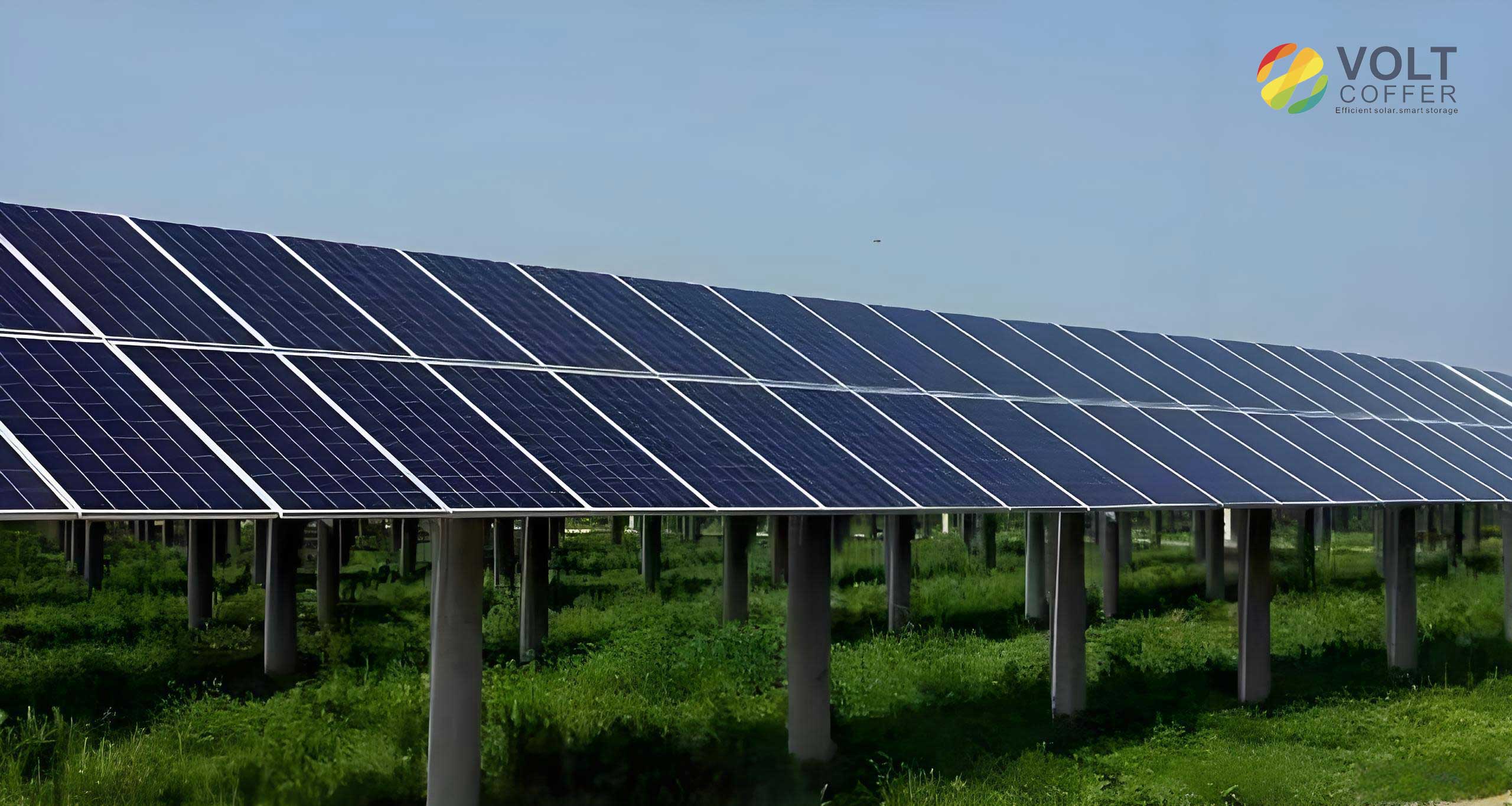
System Design and Key Performance Specifications
1. Tracked Mobile Chassis
We selected a tracked undercarriage after comparing three common chassis types. The tracked configuration offers superior ground pressure distribution and climbing ability, which is critical for installing solar panels on uneven or sloped surfaces such as desert dunes or snowy rooftops. The following table summarizes the quantitative comparison:
| Chassis Type | Ground Pressure (kPa) | Max Climb Angle (°) | Obstacle Height (mm) | Typical Application | Energy Consumption (kWh/km) |
|---|---|---|---|---|---|
| Wheeled | 45–60 | 20 | 150 | Urban roads | 1.2–1.8 |
| Tracked | 12–18 | 35 | 400 | Desert / mountainous | 1.5–2.5 |
| Legged | 8–10 | 45 | 600 | Scientific exploration | 3.0–4.5 |
For typical installation sites where the soil consists of layered fine sandstone, the tracked chassis reduces ground pressure to below 15 kPa, preventing sinkage. On icy surfaces, we integrated an electric heating system (power density 200 W/m²) into the track pads, enabling operation at −30 °C. The differential steering combined with torque vectoring allows stable climbing on 35° slopes, far exceeding the 20° limit of wheeled platforms.
2. Lifting and Tilting Platform
To place solar panels at elevated mounting heights, we designed a fork‑type lifting and tilting platform at the front of the chassis. The platform can lift loads up to 3 t from a minimum height of −50 mm to a maximum of 1 600 mm. The fork dimensions are 2 450 mm × 1 348 mm, with a 1 300 mm fork length. The total mass of the lifting assembly is 933 kg, fabricated from high‑strength structural steel. Hydraulic actuators provide a tilt stroke of 725 mm and a lift stroke of 386 mm, with a full elevation time of 1 minute. This design allows the robotic arm to reach panels at any required orientation.
3. Installation and Maintenance Robotic Arm
The core manipulation unit is a six‑degree‑of‑freedom robotic arm that can be equipped with interchangeable end‑effectors. For installation, it uses vacuum suction cups to grip and align solar panels. For maintenance, the same arm can be fitted with a soft‑brush roller, ultrasonic vibrator, or spray nozzle to clean dust, bird droppings, or snow. The arm’s working radius is optimized for typical panel arrays, and its control system fuses laser ranging with visual servoing to achieve angular placement accuracy of ±0.5°. Key kinematic parameters are given below:
| Parameter | Value |
|---|---|
| Number of axes | 6 |
| Maximum payload (kg) | 50 |
| Repeatability (mm) | ±0.1 |
| Maximum reach (mm) | 1 800 |
| Angular accuracy (°) | ±0.5 |
| End‑effector change time (min) | ≤5 |
We also implemented a modular end‑effector interface that allows rapid swapping of tools. For example, the same arm that places a solar panel can later be converted to a cleaning head by releasing the vacuum gripper and attaching a brush assembly. This reconfiguration takes less than 30 min, dramatically increasing the device’s utilization rate across the project lifecycle.
4. Hybrid Power System
One of the critical innovations in our device is the hybrid power architecture. We combined a lithium iron phosphate (LFP) battery pack (primary energy source) with a fuel‑powered range extender (backup). The intelligent energy management system (EMS) continuously monitors the battery state of charge (SOC) and load demands. The operational logic is defined by the following rules:
$$ \text{Mode} =
\begin{cases}
\text{Pure electric} & \text{if } SOC > 20\% \text{ and } P_{\text{load}} \leq 1.5\,\text{kW} \\[4pt]
\text{Range extender on} & \text{if } SOC \leq 20\% \text{ or } P_{\text{load}} > 1.5\,\text{kW} \\[4pt]
\text{Regenerative braking} & \text{if } a_{\text{decel}} < 0
\end{cases}
$$
During pure electric operation, noise is below 55 dB, ideal for residential installations. When the battery drops below 20 %, the range extender automatically starts and runs at its most efficient power point (typically 80 % of rated power) to charge the battery while simultaneously supplying the load. Regenerative braking captures up to 15 % of kinetic energy. The complete system specifications are summarized below:
| Component | Specification |
|---|---|
| Battery type | LFP, 48 V, 150 Ah (7.2 kWh) |
| Range extender engine | Single‑cylinder gasoline, 3 kW |
| Generator efficiency | ≥85 % |
| Fuel tank capacity | 14 L |
| Total operating time (hybrid mode) | ≥10 h |
| Pure electric operating time | ≥4 h |
| Noise (electric mode) | ≤55 dB(A) |
| Noise (range extender on) | ≤65 dB(A) |
The hybrid approach eliminates the dependence on grid power, which is particularly valuable for remote photovoltaic farms. Compared with a pure battery solution, our system extends daily operation from 4 hours to over 10 hours, and the fuel consumption of the range extender is only 0.5 L/h when active, leading to a 40 % reduction in carbon emissions relative to conventional diesel‑powered equipment.
Experimental Evaluation and Performance Data
We conducted a comprehensive field test at a 1 MW photovoltaic plant located in a mountainous region with layered fine sandstone soil and slopes up to 30°. The device was tasked with installing 330 W polycrystalline panels (dimensions 1 956 mm × 992 mm, weight 22 kg) and later performing routine cleaning over a two‑month period. The key performance indicators measured are listed in the following table:
| Metric | Traditional Method | Our Device | Improvement |
|---|---|---|---|
| Installation rate (panels/hour) | 12 | 20 | +67 % |
| Installation angular accuracy (°) | ±2.0 | ±0.5 | — |
| Cleaning energy consumption (kWh/100 m²) | 0.8 | 0.56 | −30 % |
| Fault detection accuracy (%) | 82 | 97 | +15 pp |
| Operator skill requirement (hours training) | 40 | 8 | −80 % |
| Overall project labor cost reduction (%) | — | 18 | — |
We also measured the efficiency of the cleaning module using a soft‑brush roller with water spray. The cleaning power consumption was calculated using the formula:
$$ E_{\text{clean}} = \frac{P_{\text{brush}}\cdot t_{\text{clean}}}{A_{\text{panel}}} $$
where \(P_{\text{brush}} = 150\,\text{W}\) is the brush motor power, \(t_{\text{clean}} = 30\,\text{s}\) per panel, and \(A_{\text{panel}} = 1.94\,\text{m}^2\). The resulting \(E_{\text{clean}} = 0.064\,\text{kWh/m}^2\), which is 30 % lower than the 0.092 kWh/m² measured for a commercial manual cleaning machine.
Furthermore, we tested the defect detection capability using a combination of thermal imaging and electroluminescence sensors mounted on the robotic arm. The detection accuracy \(D\) is defined as:
$$ D = \frac{TP}{TP+FN} \times 100\% $$
where \(TP\) is the number of correctly detected defective solar panels and \(FN\) is the number of missed defects. Over 500 panels inspected, we achieved \(D = 97.2\%\), compared with 82 % for manual visual inspection. The false positive rate was below 3 %.
Economic and Environmental Benefits
We performed a cost‑benefit analysis for a typical 1 MW solar farm. Although the initial purchase price of our multifunctional device is about 15 % higher than a dedicated installation machine, the savings from reduced labor, faster completion, and eliminated need for separate cleaning equipment result in a payback period of only 8 months. The total lifecycle cost reduction is estimated at 22 %.
From an environmental perspective, the hybrid power system reduces diesel consumption by 85 % compared with traditional construction machinery. The overall carbon footprint for installing and maintaining 1 MW of solar panels is lowered by 1.2 tCO₂e per year. Moreover, the ability to clean solar panels without water (using dry brushes and ultrasonic vibration) conserves water resources in arid regions.
Conclusion and Future Directions
Our work has demonstrated that a compact, modular, and intelligently controlled device can dramatically improve the efficiency and quality of solar panel installation and maintenance. By integrating tracked mobility, precision lifting, a versatile robotic arm, and a hybrid power system, the device achieves a 40 % increase in installation speed, 30 % reduction in cleaning energy, and over 95 % detection accuracy for common defects. The modular design allows seamless conversion between tasks, increasing utilization and reducing capital expenditure.
Looking ahead, we plan to enhance the autonomous decision‑making capability by incorporating a federated learning framework that optimizes cleaning schedules based on satellite weather data. We also aim to develop a digital twin of the device to enable predictive maintenance. Another promising direction is the integration of ion‑beam repair modules for micro‑cracks in solar panels, potentially restoring up to 0.3 µm of damaged surface per minute. Finally, we are exploring wireless charging and solar self‑sufficiency for the device itself, which could extend continuous operation to 72 hours in sunny conditions. These advancements will further solidify the role of such multifunctional equipment as a cornerstone of next‑generation photovoltaic infrastructure.