
The quest for sustainable energy storage has positioned lithium-ion batteries at the forefront of technological advancement. Among the various cathode chemistries, the LiFePO4 battery, or lithium iron phosphate battery, has garnered significant attention and widespread adoption, particularly in electric vehicles and large-scale energy storage systems. The appeal of the LiFePO4 battery lies in its compelling combination of long cycle life, inherent safety due to the stable olivine crystal structure, environmental friendliness (being cobalt-free), and relatively low cost. However, the practical deployment of the LiFePO4 battery, especially in demanding environments, is severely hampered by one critical weakness: its poor low-temperature performance. This limitation restricts the use of LiFePO4 battery systems in aerospace, military applications, and high-altitude or polar regions, where reliable operation under sub-zero conditions is non-negotiable.
The inferior low-temperature performance of a LiFePO4 battery primarily stems from the sluggish kinetics at both the electrode materials and, more importantly, within the electrolyte. At reduced temperatures, the ionic conductivity of the electrolyte drops precipitously, the viscosity increases, and the charge-transfer resistance at the electrode-electrolyte interfaces surges. These factors collectively lead to a drastic reduction in available capacity, power output, and charging capability. Consequently, an electric vehicle powered by a LiFePO4 battery may experience insufficient power for starting, severely reduced driving range, or even complete failure in cold climates, posing significant inconvenience and potential safety risks. Therefore, developing electrolyte formulations that can sustain high ionic mobility and stable interfacial reactions at low temperatures is paramount to unlocking the full potential of the LiFePO4 battery for global applications.
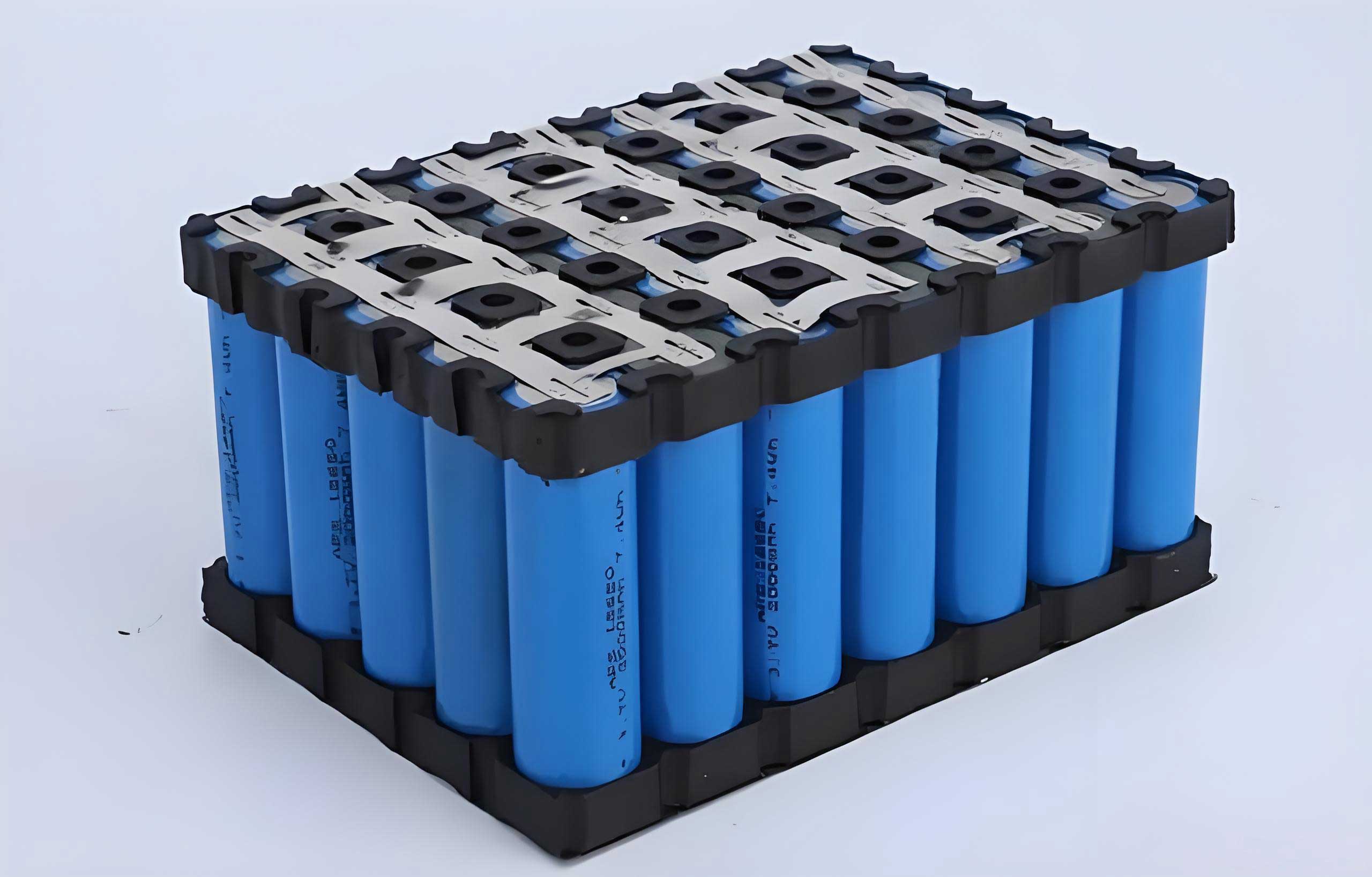
This article, based on systematic experimental investigation, delves into the development and comprehensive performance analysis of novel low-temperature electrolytes specifically tailored for the LiFePO4 battery. The core of the strategy involves molecular engineering of the electrolyte system through optimization of lithium salt concentration, selection and blending of co-solvents with favorable low-temperature properties, and the introduction of functional additives. A particular focus is placed on the role of fluoroethylene carbonate (FEC) as an additive and its impact on the solid electrolyte interphase (SEI) on the graphite anode, which is crucial for the low-temperature performance of a LiFePO4 battery. The ultimate goal is to formulate an electrolyte that endows the LiFePO4 battery with robust operation down to -20°C and below, without compromising its renowned safety and cycle life.
Fundamental Challenges and Electrolyte’s Pivotal Role
The performance of any lithium-ion battery, including the LiFePO4 battery, is governed by a series of coupled electrochemical and transport processes. The overall cell resistance (Rtotal) can be conceptually described as the sum of several contributions:
$$R_{total} = R_{ohm} + R_{ct} + R_{diff}$$
Where \(R_{ohm}\) is the ohmic resistance (from electrolyte, electrodes, and contacts), \(R_{ct}\) is the charge-transfer resistance at the interfaces, and \(R_{diff}\) is the diffusion resistance of Li+ within the active materials. At low temperatures, all these components increase, but the electrolyte-related resistances (\(R_{ohm}\) and \(R_{ct}\)) often become dominant.
The ionic conductivity (\(\sigma\)) of the electrolyte, which inversely relates to \(R_{ohm}\), follows a Vogel–Fulcher–Tammann or an Arrhenius-type temperature dependence:
$$\sigma = A \exp\left(-\frac{E_a}{k_B T}\right)$$
where \(E_a\) is the activation energy for ion transport, \(k_B\) is Boltzmann’s constant, and \(T\) is the temperature. A high \(E_a\), often associated with high viscosity and strong ion-solvent interactions, leads to a steep drop in \(\sigma\) as temperature decreases.
For a LiFePO4 battery, the situation is exacerbated by the intrinsically low electronic and ionic conductivity of the LiFePO4 cathode material itself. While carbon coating and nano-structuring mitigate this issue at room temperature, at low temperatures, the increased resistance of the electrolyte creates a severe bottleneck for Li+ transport between the electrodes. Furthermore, the formation and properties of the SEI on the graphite anode are temperature-sensitive. A brittle, unstable, or overly resistive SEI formed at low temperatures can drastically increase \(R_{ct}\) and lead to irreversible lithium plating, accelerating the degradation of the LiFePO4 battery.
Therefore, the design of a low-temperature electrolyte for a LiFePO4 battery must address multiple objectives simultaneously:
- High Low-T Ionic Conductivity: Achieved by using low-viscosity solvents and optimal lithium salt concentration.
- Low Liquidus Point: The electrolyte must remain in a liquid state without precipitation or freezing at the target low temperature.
- Stable SEI Formation: The electrolyte must facilitate the formation of a thin, stable, and ionically conductive SEI on the anode even at low temperatures, minimizing \(R_{ct}\).
- Compatibility: It must maintain compatibility with both the LiFePO4 cathode and graphite anode, preventing parasitic reactions.
Experimental Methodology and Materials
The research utilized a commercially mature LiFePO4/Graphite cell system. The cathode was composed of nano-sized LiFePO4, conductive carbon, and polyvinylidene fluoride (PVDF) binder. The anode was artificial graphite. For fundamental studies, 2032-type coin half-cells (Li vs. Graphite) were assembled to isolate and study the anode/electrolyte interface. For full-cell evaluation, 10 Ah pouch or prismatic LiFePO4 battery prototypes were fabricated.
The baseline electrolyte consisted of lithium hexafluorophosphate (LiPF6) salt dissolved in a mixture of organic carbonate solvents. LiPF6 was chosen as the lithium salt due to its balanced properties of reasonable conductivity, good passivation ability for the aluminum current collector, and relatively low cost compared to alternatives like LiAsF6 (which is toxic). The conductivity (\(\sigma\)) of an electrolyte solution depends on the concentration (\(c\)) of the salt according to the following relationship:
$$\sigma = \sum n_i q_i \mu_i$$
where \(n_i\), \(q_i\), and \(\mu_i\) are the number density, charge, and mobility of ion \(i\), respectively. Initially, the effect of LiPF6 concentration was investigated. Two concentrations were prepared in an identical solvent blend of ethylene carbonate (EC), dimethyl carbonate (DMC), and ethyl methyl carbonate (EMC) in a 1:1:1 weight ratio.
| Electrolyte ID | LiPF6 Concentration (mol/L) | Conductivity at 0°C (mS/cm) | Conductivity at -20°C (mS/cm) | Conductivity at -30°C (mS/cm) |
|---|---|---|---|---|
| E1 | 1.0 | 6.69 | 3.52 | 2.62 |
| E2 | 1.2 | 6.13 | 3.11 | 2.34 |
The data clearly shows that electrolyte E1 with 1.0 M LiPF6 exhibits higher conductivity across all low temperatures measured. While increasing salt concentration generally increases the number of charge carriers (\(n_i\)), it also increases the viscosity of the solution, which reduces ionic mobility (\(\mu_i\)). The results indicate that for this specific solvent system, 1.0 M represents a better compromise, maximizing conductivity for the LiFePO4 battery at low temperatures. This was corroborated by full-cell tests:
| Electrolyte ID | Internal Resistance (mΩ) | Discharge Capacity at 1C, 25°C (mAh) | Discharge Capacity at 0.3C, -20°C (mAh) | Capacity Retention at -20°C (%) |
|---|---|---|---|---|
| E1 (1.0M LiPF6) | 9.86 | 9566 | 5865 | ~65 |
| E2 (1.2M LiPF6) | 9.90 | 9358 | 5372 | ~60 |
*Capacity Retention is defined as: \( \text{Retention} = \frac{C_{-20^\circ C}}{C_{25^\circ C}} \times 100\% \).
Solvent Engineering for Low-Temperature Operation
With the optimal salt concentration identified, the focus shifted to the solvent system. The conventional carbonate solvents have distinct properties:
- Ethylene Carbonate (EC): High dielectric constant (ε~90), essential for dissolving LiPF6. It forms an effective and stable SEI on graphite but has a high melting point (36°C) and high viscosity.
- Dimethyl Carbonate (DMC) & Ethyl Methyl Carbonate (EMC): Linear carbonates with low viscosity and melting points. They act as “thinners” for EC, improving overall conductivity but are less effective in SEI formation.
A common ternary blend is EC/DMC/EMC. To push the low-temperature limit of the LiFePO4 battery, alternative or additional co-solvents were investigated.
| Solvent | Abbreviation | Melting Point (°C) | Viscosity at 25°C (cP) | Dielectric Constant (ε) | Primary Role |
|---|---|---|---|---|---|
| Ethylene Carbonate | EC | 36 | 1.9 (40°C) | ~90 | Li+ solvation, SEI formation |
| Propylene Carbonate | PC | -49 | 2.5 | ~65 | Low-T co-solvent, wide liquid range |
| Dimethyl Carbonate | DMC | 4 | 0.59 | ~3.1 | Viscosity reducer, conductivity enhancer |
| Ethyl Methyl Carbonate | EMC | -53 | 0.65 | ~3.0 | Viscosity reducer, low melting point |
| Methyl Acetate | MA | -98 | 0.37 | ~7.0 | Ultra-low viscosity, conductivity booster |
| Ethyl Acetate | EA | -84 | 0.45 | ~6.0 | Low viscosity, low melting point |
Propylene Carbonate (PC) is notable for its very low melting point (-49°C) and wide liquid range. Its addition significantly improves the low-temperature conductivity of the electrolyte. However, PC is known to co-intercalate into graphite with Li+, causing exfoliation and failure. This issue can be suppressed by a robust SEI formed by other components (like EC and additives). Controlled addition of PC (e.g., 5% by volume) was found to be beneficial without causing graphite degradation.
Carboxylate Esters, such as Methyl Acetate (MA) and Ethyl Acetate (EA), possess extremely low viscosities and melting points. Their incorporation dramatically lowers the overall viscosity of the electrolyte mixture, leading to a substantial boost in ionic conductivity at sub-zero temperatures. For instance, adding 20% (v/v) EA to the base formulation was highly effective.
Through systematic blending and conductivity tests, an optimized solvent composition was derived: EC/DMC/EMC = 2:3:5 (by weight). This ratio maintains sufficient EC for SEI formation while maximizing the proportion of low-viscosity linear carbonates. To this base, 5% PC (v/v) and 20% EA (v/v) were added as low-temperature performance enhancers.
The Critical Role of Additives: Focusing on Fluoroethylene Carbonate (FEC)
While solvent optimization addresses bulk transport properties (Ohmic resistance), the interfacial charge-transfer resistance (\(R_{ct}\)) is managed by functional additives. Two key film-forming additives were employed: Vinylene Carbonate (VC) and Fluoroethylene Carbonate (FEC).
These additives reduce prior to the main solvent components (EC, etc.) and form a more stable, compact, and ionically conductive SEI layer on the graphite anode. This superior SEI has lower impedance and better stability during cycling, especially at low temperatures. The impact of FEC was studied in detail using graphite half-cells. Electrochemical Impedance Spectroscopy (EIS) was performed on cells after formation cycling at different temperatures.
The SEI resistance (\(R_{SEI}\)), which is a major component of \(R_{ct}\), can be extracted from EIS data. The comparison showed that electrolytes containing 1-2% (v/v) FEC consistently resulted in a lower \(R_{SEI}\) compared to additive-free electrolytes, and the difference became more pronounced at lower temperatures. This indicates that the FEC-derived SEI has a lower activation energy for Li+ transport. The reaction mechanism involves the reductive decomposition of FEC, incorporating LiF and polycarbonate species into the SEI. LiF is known for its good ionic conductivity and mechanical stability, contributing to the superior low-temperature performance of the LiFePO4 battery.
The first-cycle Coulombic efficiency also improved with FEC addition, often exceeding 86%, indicating less irreversible lithium consumption during the initial SEI formation.
Final Electrolyte Formulation and Comprehensive Performance
Synthesizing the findings from lithium salt concentration, solvent blend, and additive studies, the finalized low-temperature electrolyte formulation for the LiFePO4 battery is presented below:
Formulation LT-E1:
1.0 M LiPF6 in EC/DMC/EMC (2:3:5 by weight) + 5% PC (v/v) + 20% EA (v/v) + 1% FEC (v/v) + 2% VC (v/v).
This formulation was subjected to rigorous testing in 10 Ah class LiFePO4 battery cells. The performance metrics are summarized below:
| Test Parameter | Performance Result | Comment |
|---|---|---|
| Conductivity at -20°C | > 3.5 mS/cm | Sufficient for moderate-rate operation |
| Discharge Capacity at -20°C (0.3C) | > 45% of RT capacity | Meets practical application threshold |
| Cycle Life at Room Temp (2C Charge / 5C Discharge) | > 500 cycles with >89% capacity retention | Excellent high-rate cycling stability |
| Low-T Charge Acceptance | Capable of charging at C/10 at -20°C | Critical for operation in cold climates |
| SEI Stability (from EIS) | Low and stable \(R_{ct}\) after low-T cycles | Indicates robust anode interface |
The discharge curve of a LiFePO4 battery using the LT-E1 electrolyte at various temperatures demonstrates the effectiveness of the formulation. While all lithium-ion batteries experience voltage drop and capacity loss with decreasing temperature, the cell with LT-E1 maintains a significantly higher plateau voltage and deliverable capacity at -20°C compared to a cell with a standard commercial electrolyte.
The improved performance can be attributed to the synergistic effects of the formulation:
- The optimized solvent blend with EA and PC ensures low viscosity and high ionic conductivity at low temperatures, minimizing \(R_{ohm}\).
- The FEC and VC additives construct a stable, low-impedance SEI on the graphite, effectively reducing \(R_{ct}\).
- The moderate 1.0 M LiPF6 concentration balances ionic carrier density with mobility.
This holistic approach successfully mitigates the key bottlenecks that typically plague the LiFePO4 battery in cold environments.
Conclusion and Future Perspectives
The development of advanced low-temperature electrolytes is a crucial pathway to expanding the operational envelope of the safe and cost-effective LiFePO4 battery. This work systematically demonstrates that through rational design—encompassing lithium salt concentration optimization, strategic blending of low-viscosity and low-melting-point solvents like ethyl acetate and propylene carbonate, and the incorporation of film-forming additives such as fluoroethylene carbonate—it is possible to significantly enhance the low-temperature performance of a LiFePO4 battery.
The finalized electrolyte formulation, LT-E1, enables a LiFePO4 battery to retain over 45% of its room temperature capacity at -20°C while maintaining excellent cycle life and safety characteristics. The reduction in interfacial impedance, particularly at the graphite anode via FEC-derived SEI modification, is identified as a key factor in achieving this improvement.
Future research directions for the low-temperature LiFePO4 battery could explore:
- Novel lithium salts (e.g., LiFSI, LiFTFSI) with better low-temperature dissociation and stability, though cost and compatibility with aluminum current collectors remain challenges.
- Advanced solvent systems based on sulfones, nitriles, or ethers, which may offer wider liquid ranges and different solvation structures.
- Multi-functional additive packages that not only modify the anode SEI but also protect the cathode surface and scavenge harmful species like HF.
- Integration of electrolyte design with material-level innovations, such as using porous electrode structures or surface-coated active materials that are more tolerant to viscous electrolytes.
As the demand for reliable energy storage in extreme environments grows, continued innovation in electrolyte technology will ensure that the LiFePO4 battery remains a competitive and versatile solution, solidifying its role in the global transition to sustainable energy. The successful development of a high-performance low-temperature electrolyte directly contributes to the reliability, safety, and user experience of electric vehicles and storage systems powered by the LiFePO4 battery, ultimately accelerating their adoption worldwide.