
In the context of global energy transformation and carbon neutrality goals, I have observed a rapid expansion of the energy storage industry, driven by the need to address resource shortages and environmental pollution. Energy storage cells, as critical components in electrical systems, play a pivotal role in enhancing energy utilization efficiency, promoting clean energy applications, and facilitating energy transitions. These cells enable the conversion and storage of electrical energy into chemical or physical forms, supporting diverse scenarios such as grid peak shaving, renewable energy integration, and emergency backup power. However, the widespread adoption of energy storage cells faces significant challenges, including safety concerns, cycle life limitations, reliability issues, and high lifecycle costs. Therefore, establishing a robust testing standard system is essential to ensure the safety, reliability, and performance of energy storage cells, guide technological advancements, reduce costs, and foster fair market competition. This article analyzes the development trends of the energy storage cell industry, reviews existing testing standards, and proposes optimization recommendations to support the healthy and sustainable growth of this sector.
The global market for energy storage cells has experienced exponential growth, fueled by policy incentives and increasing demand for renewable energy integration. According to industry reports, the worldwide shipment of energy storage cells reached 369.8 GWh in 2024, marking a 64.9% year-on-year increase, with Chinese companies accounting for 93.5% of this volume. This surge is primarily attributed to the rising penetration of wind and solar power, which necessitates flexible and efficient storage solutions to stabilize grid operations. Electrochemical storage, particularly lithium-ion-based energy storage cells, dominates the market due to their rapid response, high efficiency, and adaptable deployment. Additionally, continuous technological advancements and economies of scale have significantly reduced costs, improving the economic viability of energy storage projects. The application scenarios for energy storage cells are diversifying, extending from traditional grid ancillary services to user-side applications like commercial and residential storage, as well as telecommunications base stations, data centers, and electric vehicle charging infrastructure. This expansion underscores the critical role of energy storage cells in the global energy landscape.
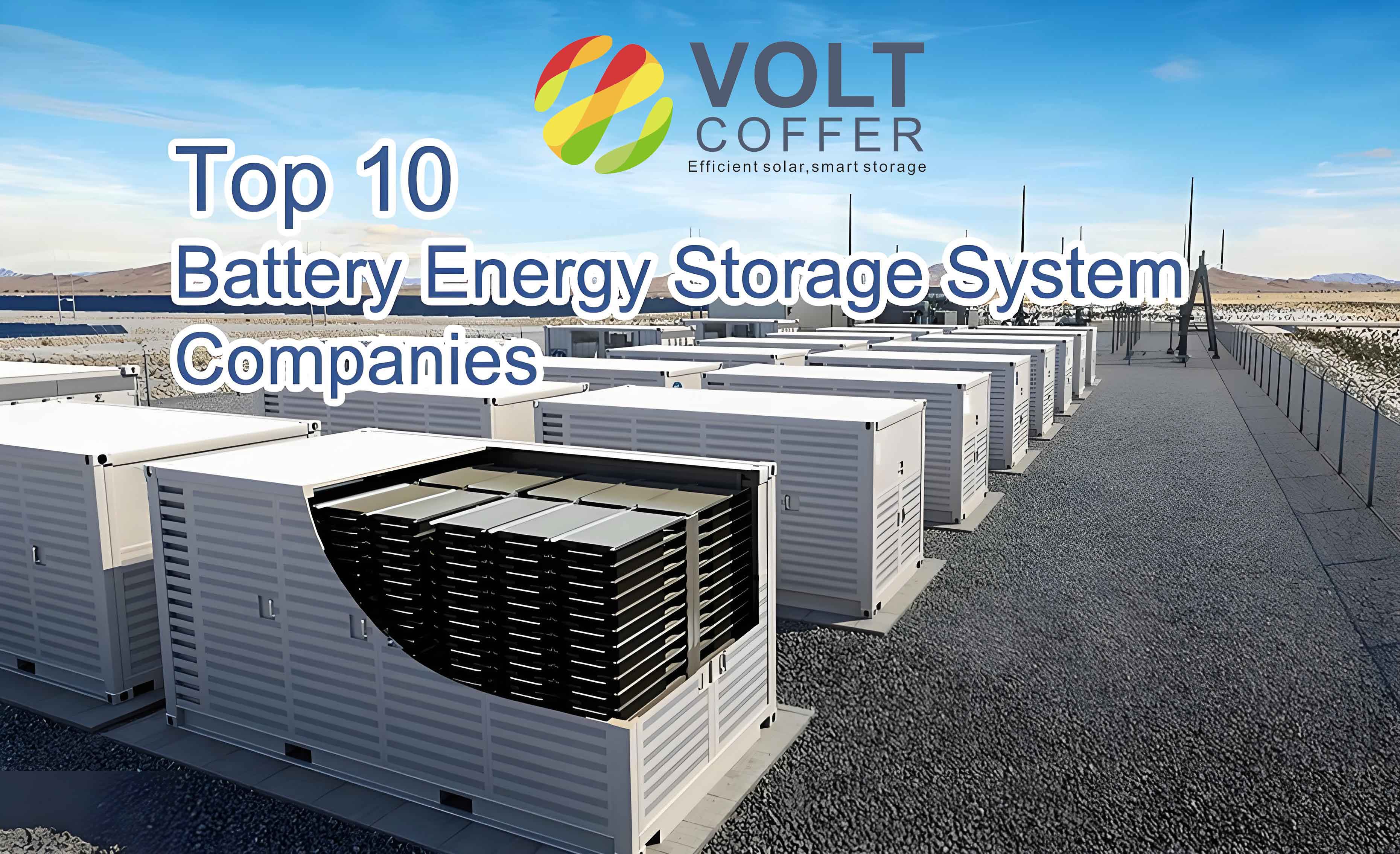
Technological diversity is a hallmark of the energy storage cell industry, with various battery types catering to different cost, lifespan, safety, energy density, and power requirements. Lithium-ion energy storage cells lead the market with high energy density, long cycle life, and a mature supply chain, but they face challenges related to safety risks like thermal runaway and dependency on critical resources such as lithium and cobalt. Sodium-ion energy storage cells offer advantages in resource abundance, lower cost potential, good low-temperature performance, and enhanced safety, making them a complementary option in cost-sensitive applications, though their energy density and cycle life currently lag behind lithium-ion counterparts. Flow batteries, including vanadium and zinc-based systems, provide high safety, long cycle life, and scalability for long-duration storage, but they suffer from lower energy density and higher initial investments. Lead-acid and lead-carbon energy storage cells remain relevant due to their maturity, low cost, and established recycling systems, with lead-carbon variants improving charge acceptance and cycle life through carbon material integration. Other technologies, such as zinc-based and sodium-sulfur energy storage cells, are evolving for niche applications. The table below summarizes the key characteristics of these energy storage cell technologies:
| Technology | Energy Density (Wh/kg) | Cycle Life (Cycles) | Safety | Cost (USD/kWh) | Key Applications |
|---|---|---|---|---|---|
| Lithium-ion | 150-250 | 3000-6000 | Moderate | 150-300 | Grid storage, EVs |
| Sodium-ion | 100-160 | 2000-4000 | High | 100-200 | Cost-sensitive storage |
| Flow Battery | 20-50 | 10000+ | High | 300-600 | Long-duration storage |
| Lead-acid | 30-50 | 500-1500 | Moderate | 50-150 | Backup power |
| Lead-carbon | 40-60 | 2000-4000 | Moderate | 80-180 | Cyclic applications |
The testing standards for energy storage cells have evolved to address these diverse technologies, but gaps remain in coverage and consistency. For lithium-ion energy storage cells, international standards like IEC 62619 and IEC 62620 specify safety and performance requirements for industrial and power storage applications, while IEC 63056 covers safety aspects such as insulation, overcharge protection, and short-circuit testing. In North America, UL 1973 is widely adopted for evaluating fixed energy storage systems. National standards, such as GB/T 36276-2023 in China, define requirements for appearance, dimensions, electrical performance, environmental adaptability, durability, and safety. Similarly, GB/T 43522-2023 provides guidelines for quality control during manufacturing. For lead-acid and lead-carbon energy storage cells, standards like IEC 61427 and GB/T 22473.1-2021 outline testing for capacity, consistency, sealing, and cycle life, with GB/T 36280-2023 specifically addressing lead-carbon variants. Flow battery standards, including IEC 62932 series and GB/T 33339-2016, focus on system-level performance, safety, and reliability, supplemented by standards for components like electrolytes and electrodes. The following table compares key international and national standards for energy storage cells:
| Battery Type | International Standards | National Standards | Key Testing Areas |
|---|---|---|---|
| Lithium-ion | IEC 62619, IEC 62620, IEC 63056, UL 1973 | GB/T 36276-2023, GB/T 43522-2023 | Safety, performance, environmental adaptability |
| Lead-acid/Lead-carbon | IEC 61427, IEC 60896 | GB/T 22473.1-2021, GB/T 36280-2023 | Capacity, cycle life, safety |
| Flow Battery | IEC 62932 series | GB/T 33339-2016, GB/T 43512-2023 | System performance, reliability, component testing |
To further optimize testing standards for energy storage cells, I propose several recommendations focused on safety, cycle life, and environmental adaptability. Safety performance standards require deepening and systematization to cover the entire lifecycle of energy storage cells, from transportation and installation to operation, maintenance, and recycling. This involves developing targeted testing methods for different chemical systems, battery forms, and integration levels, with an emphasis on quantifying the impact of aging on safety. For instance, thermal runaway models can be incorporated using formulas like the Arrhenius equation to predict failure rates under stress: $$ k = A e^{-E_a / RT} $$ where \( k \) is the rate constant, \( A \) is the pre-exponential factor, \( E_a \) is the activation energy, \( R \) is the gas constant, and \( T \) is temperature. System-level safety tests should also be enhanced to evaluate battery management, thermal management, and fire protection systems, ensuring functional safety and reliability through collaborative standards development and international alignment.
Cycle life and reliability testing standards need unification and acceleration to address the prolonged testing periods and methodological inconsistencies in evaluating energy storage cells. A standardized approach should define key parameters such as charge-discharge rates, depth of discharge, temperature conditions, and end-of-life criteria. For example, capacity fade can be modeled using a exponential decay formula: $$ C_n = C_0 \times (1 – \alpha)^n $$ where \( C_n \) is the capacity after \( n \) cycles, \( C_0 \) is the initial capacity, and \( \alpha \) is the degradation rate per cycle. Reliability metrics, including consistency, early failure probability, and fault rates, should be integrated into statistical assessment frameworks to provide comprehensive guarantees for long-term operation. The table below outlines proposed parameters for unified cycle life testing of energy storage cells:
| Parameter | Standard Value | Testing Condition |
|---|---|---|
| Charge/Discharge Rate | 0.5C-2C | Constant current/voltage |
| Depth of Discharge | 80-100% | Cyclic variation |
| Temperature | 25°C ± 5°C | Controlled environment |
| Cycle End Criteria | 80% of initial capacity | Measured periodically |
Environmental adaptability standards must be comprehensive and scenario-based to ensure the reliable operation of energy storage cells under diverse climatic and operational conditions. Existing standards cover basic factors like temperature and humidity, but they should be expanded to include salt spray for coastal areas, sand and dust for deserts, high altitude, mold, condensation, electromagnetic compatibility, vibration, and shock. Testing should simulate combined stress conditions, such as temperature-humidity cycles with mechanical vibrations, to reflect real-world applications. For instance, the degradation under combined stresses can be expressed as: $$ L = L_0 \prod_{i=1}^{n} (1 – \beta_i S_i) $$ where \( L \) is the lifespan under combined stresses, \( L_0 \) is the baseline lifespan, \( \beta_i \) is the stress factor, and \( S_i \) is the stress intensity for each environmental factor \( i \). By refining these standards, we can enhance the resilience of energy storage cells across various geographic and usage scenarios.
In conclusion, the energy storage cell industry is at a critical juncture of rapid development and technological innovation, where robust testing standards serve as the foundation for safe, efficient, and sustainable growth. While existing standards for mainstream technologies like lithium-ion, lead-carbon, and flow batteries provide a baseline, there is room for improvement in systematic coverage, specificity,前瞻性, and international harmonization. Future efforts should prioritize the deepening of safety performance standards across the lifecycle, the unification of cycle life and reliability assessments, and the expansion of environmental adaptability testing to complex scenarios. Continuous standard development and revision will not only ensure the quality and safety of energy storage cells but also drive technological progress and market standardization, ultimately amplifying the role of energy storage in the global energy transition. As I reflect on these aspects, it is clear that collaborative initiatives among stakeholders—including researchers, industry players, and regulatory bodies—are essential to advance the testing framework for energy storage cells and achieve a carbon-neutral future.
Throughout this analysis, I have emphasized the importance of energy storage cells in addressing contemporary energy challenges. The integration of advanced testing standards will undoubtedly propel the industry forward, enabling energy storage cells to meet the demands of diverse applications while upholding safety and reliability. As technology evolves, I anticipate further refinements in standards to accommodate emerging innovations, such as solid-state batteries or hybrid systems, ensuring that energy storage cells remain at the forefront of the energy revolution. By fostering a culture of continuous improvement and international cooperation, we can unlock the full potential of energy storage cells and contribute to a sustainable energy ecosystem.