
In the context of global energy transition, the integration of renewable energy sources such as solar and wind power into the grid has become a critical focus. However, these sources exhibit inherent volatility, intermittency, and randomness, which challenge the stability and reliability of power systems. To address this, energy storage systems, particularly those utilizing Lithium Iron Phosphate (LiFePO4) batteries, have emerged as a key solution. My research delves into the safety characteristics of LiFePO4 battery-based energy storage systems, with a specific emphasis on thermal management, fire protection, and electrical safety. This article presents a comprehensive study from a first-person perspective, leveraging simulation tools and experimental validations to optimize system design. The LiFePO4 battery, known for its high efficiency, energy density, and cycle life, is central to this exploration, and its safety features are crucial for large-scale deployment in renewable energy applications.
The fundamental system characteristics of LiFePO4 battery energy storage are rooted in their modular and scalable architecture. In a typical setup, the system comprises battery prefabricated cabins, power conversion systems, and energy management systems. The LiFePO4 battery packs serve as the core modular units, directly influencing the overall thermal and safety performance. For instance, in a liquid-cooled energy storage system, each battery pack (Pack) is designed with 52 series-connected 280 Ah LiFePO4 cells, resulting in a nominal voltage and capacity tailored for grid support. The topology of these systems, whether centralized or distributed, impacts their application in renewable energy stations. My analysis focuses on the liquid-cooled configuration due to its enhanced thermal control capabilities, which are vital for maintaining the LiFePO4 battery within optimal operational ranges.
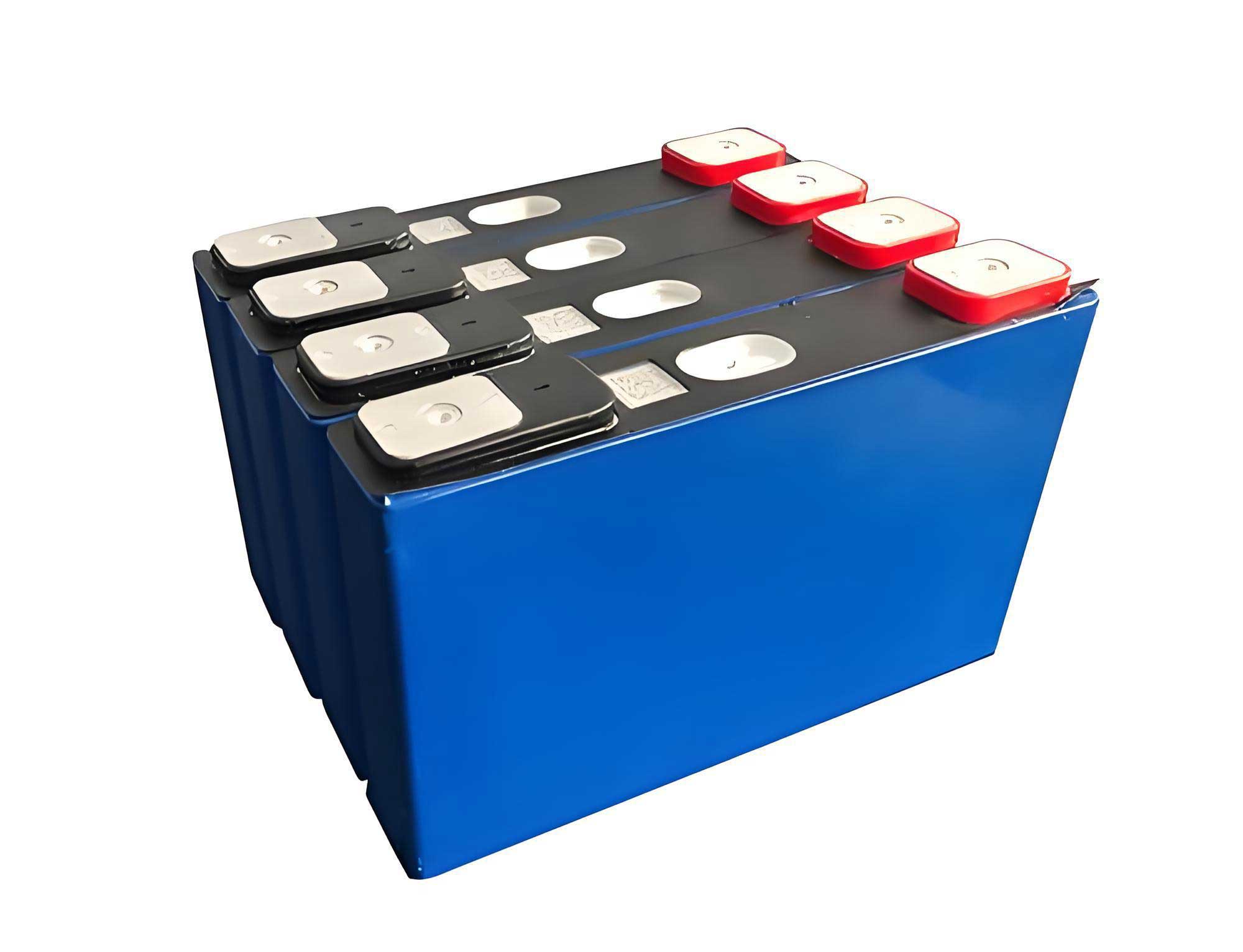
Thermal management is a cornerstone of ensuring the safety and longevity of LiFePO4 battery energy storage systems. In my study, I employed advanced thermal simulation techniques coupled with experimental calibration to optimize the heat dissipation design of liquid-cooled battery packs. The LiFePO4 battery pack’s thermal load is primarily governed by the heat generation during charge and discharge cycles, which can be quantified using fundamental thermodynamic principles. For a pack with 52 LiFePO4 cells, each with a weight $m = 5.4 \, \text{kg}$ and specific heat capacity $c_p = 1.0 \, \text{kJ/(kg·°C)}$, the theoretical heat generation power $P_1$ under a specific operating condition can be expressed as:
$$P_1 = n \cdot q$$
where $n$ is the number of cells (52), and $q$ is the average heat power per LiFePO4 cell. For example, at 0.5 times the rated power (0.5P), $q = 12.5 \, \text{W}$, leading to:
$$P_1 = 52 \times 12.5 = 650 \, \text{W}$$
To enhance thermal performance, I optimized the liquid cooling plate by incorporating micro-channel technology and using a 50% ethylene glycol solution as the coolant. Thermal interface materials, such as thermally conductive gel, were applied to fill gaps between cells and cooling plates, reducing thermal resistance. Using computational fluid dynamics (CFD) simulations with boundary conditions including a flow rate of 5 L/min, inlet coolant temperature of 20°C, and ambient temperature of 25°C, I modeled the temperature distribution within the LiFePO4 battery pack. The simulation results, summarized in Table 1, indicate that under 0.5P cycling, the maximum temperature difference within the pack is constrained to ≤2°C, and the peak temperature remains below 32°C, which aligns with the optimal operating range (15°C–35°C) for LiFePO4 batteries.
| Parameter | Value | Description |
|---|---|---|
| Pack Configuration | 1P52S | 52 series-connected LiFePO4 cells |
| Cell Capacity | 280 Ah | Nominal capacity per LiFePO4 cell |
| Rated Power (P) | 46,592 W | Calculated as $280 \times 3.2 \times 52$ |
| Heat Power at 0.5P | 650 W | Based on 12.5 W per LiFePO4 cell |
| Max Temperature at 0.5P | ≤32°C | From simulation and experiment |
| Temperature Difference | ≤2°C | Within the LiFePO4 battery pack |
Further experimental validations were conducted to calibrate the simulation outcomes. The LiFePO4 battery pack was subjected to charge-discharge cycles at 0.5P in a controlled environment, with continuous cooling. The data, as shown in Figure 5 of the original text, corroborates the simulation findings, demonstrating that the optimized thermal management system effectively maintains the LiFePO4 battery temperature within safe limits. Additionally, I investigated the thermal behavior under varying discharge rates, from 0.25P to 1P. The relationship between discharge rate and thermal load for the LiFePO4 battery pack can be modeled using an empirical equation:
$$q = a \cdot C^{\beta}$$
where $C$ is the discharge rate in multiples of rated power, and $a$ and $\beta$ are constants derived from experimental data. For instance, at 1P, the heat power per LiFePO4 cell increases to 32–40 W, leading to a pack-level heat generation of approximately 1,664–2,080 W. Despite this higher load, the cooling system managed to keep the maximum temperature below 45°C, with a temperature difference ≤5°C, as detailed in Table 2.
| Discharge Rate | Heat Power per Cell (W) | Total Pack Heat (W) | Max Temperature (°C) | Temperature Difference (°C) |
|---|---|---|---|---|
| 0.25P | ~6.25 | 325 | 24–31 | ≤1.5 |
| 0.5P | 12.5 | 650 | 27–32 | ≤2 |
| 0.75P | ~20 | 1,040 | 29–37 | ≤3 |
| 1P | 32–40 | 1,664–2,080 | 35–45 | ≤5 |
These results underscore the efficacy of the liquid-cooled design in managing the thermal stability of LiFePO4 battery systems, which is paramount for safety in renewable energy applications.
Beyond thermal management, fire protection is another critical aspect of LiFePO4 battery safety. My analysis of battery thermal runaway mechanisms reveals that triggers can be categorized into mechanical, electrical, and thermal abuse. For LiFePO4 batteries, internal short circuits due to factors like dendrite growth or separator collapse can lead to rapid heat generation and potential combustion. To mitigate this, I developed a Pack-level fire protection strategy that emphasizes early detection and suppression. The system integrates multi-sensor detectors (e.g., for smoke, temperature, CO, and volatile organic compounds) with each LiFePO4 battery pack, enabling real-time monitoring. Upon detecting anomalies, the system initiates a cascaded response: first-level alerts increase sampling frequency, second-level alerts trigger electrical isolation and ventilation, and third-level alerts activate a gas-based suppression system using agents like perfluorohexanone. This approach ensures that any thermal runaway in a LiFePO4 battery is contained at the pack level, preventing propagation and minimizing risk.
The fire protection logic can be formalized using a state-transition model. Let $S$ represent the system state, with $S_0$ as normal, $S_1$ as first-level alert, $S_2$ as second-level alert, and $S_3$ as third-level alert. The transition conditions depend on sensor inputs from the LiFePO4 battery pack, such that:
$$S_{i} \rightarrow S_{i+1} \quad \text{if} \quad \Phi(\text{sensors}) > \theta_i$$
where $\Phi$ is a detection function, and $\theta_i$ are threshold values for each alert level. This hierarchical design enhances the reliability of fire protection for LiFePO4 battery energy storage systems.
Electrical safety optimization is equally vital for LiFePO4 battery systems. My research addresses both internal and external short-circuit scenarios through redundant protection schemes. For internal short circuits, I designed a multi-layer fuse system with graded response times. Based on experimental data, a short-circuit current in a LiFePO4 battery cluster can reach up to 12,000 A. The selection of fuses involves calculating their interrupting capacity and melting time. For a fuse with a rated current $I_r = 250 \, \text{A}$, the melting time $t_m$ under a fault current $I_f$ can be approximated by:
$$t_m = \frac{K}{I_f^2}$$
where $K$ is a constant derived from the fuse’s time-current curve. For instance, with $I_f = 12,000 \, \text{A}$, the melting time for a high-voltage cabinet fuse is computed as 0.37 ms, while for a pack-level fuse, it is 1.64 ms. This differential ensures that the cabinet fuse operates first, isolating the fault before the LiFePO4 battery pack fuse activates, thereby providing graded protection. The coordination can be summarized using Table 3.
| Protection Level | Fuse Location | Rated Current (A) | Melting Time at 12 kA (ms) | Function |
|---|---|---|---|---|
| Primary | High-Voltage Cabinet | 250 | 0.37 | Fast isolation of cluster faults |
| Secondary | Battery Pack | 250 | 1.64 | Backup protection for LiFePO4 cells |
For external short circuits, the battery management system (BMS) plays a key role. The BMS continuously monitors parameters such as voltage, current, and temperature of the LiFePO4 battery. If thresholds are exceeded, it implements local fault isolation, disconnecting the affected battery cluster and communicating with the energy management system. This strategy, combined with hardware protections like relays and circuit breakers, forms a comprehensive safety net for LiFePO4 battery energy storage systems.
In conclusion, my research on the safety features of LiFePO4 battery-based energy storage systems highlights the importance of integrated design approaches. Through thermal management optimizations, fire protection strategies, and electrical safety enhancements, the reliability and security of these systems in renewable energy applications can be significantly improved. The LiFePO4 battery, with its inherent stability and performance, is well-suited for such deployments, but continuous innovation in safety design is essential. Future work may explore advanced materials for cooling, AI-driven fault prediction, and standardized safety protocols. By addressing these aspects, LiFePO4 battery energy storage can play a pivotal role in the sustainable energy landscape, supporting grid stability and facilitating the transition to a cleaner power system.
The findings from this study underscore that a holistic safety framework—encompassing thermal, fire, and electrical domains—is critical for the widespread adoption of LiFePO4 battery technology. As renewable energy penetration grows, the demand for robust energy storage solutions will only increase, making ongoing research into LiFePO4 battery safety an imperative for the industry. My contributions in this area aim to provide a foundation for further developments, ensuring that LiFePO4 battery systems operate efficiently and safely in diverse environmental conditions.