
In the current landscape of electrochemical energy storage, lithium-ion batteries dominate due to their high energy density and established technology. However, concerns over safety, resource limitations, and cost volatility have spurred interest in alternative technologies. Among these, sodium-ion batteries emerge as a promising candidate for large-scale energy storage systems. The abundance of sodium resources—approximately 423 times more prevalent than lithium in the Earth’s crust—along with their lower cost and enhanced safety profile, positions sodium-ion batteries as a viable solution for grid storage, renewable integration, and backup power applications. This article delves into the design, testing, and application of a novel sodium-ion battery cell and module tailored for energy storage, highlighting their performance metrics, safety features, and thermal management strategies.
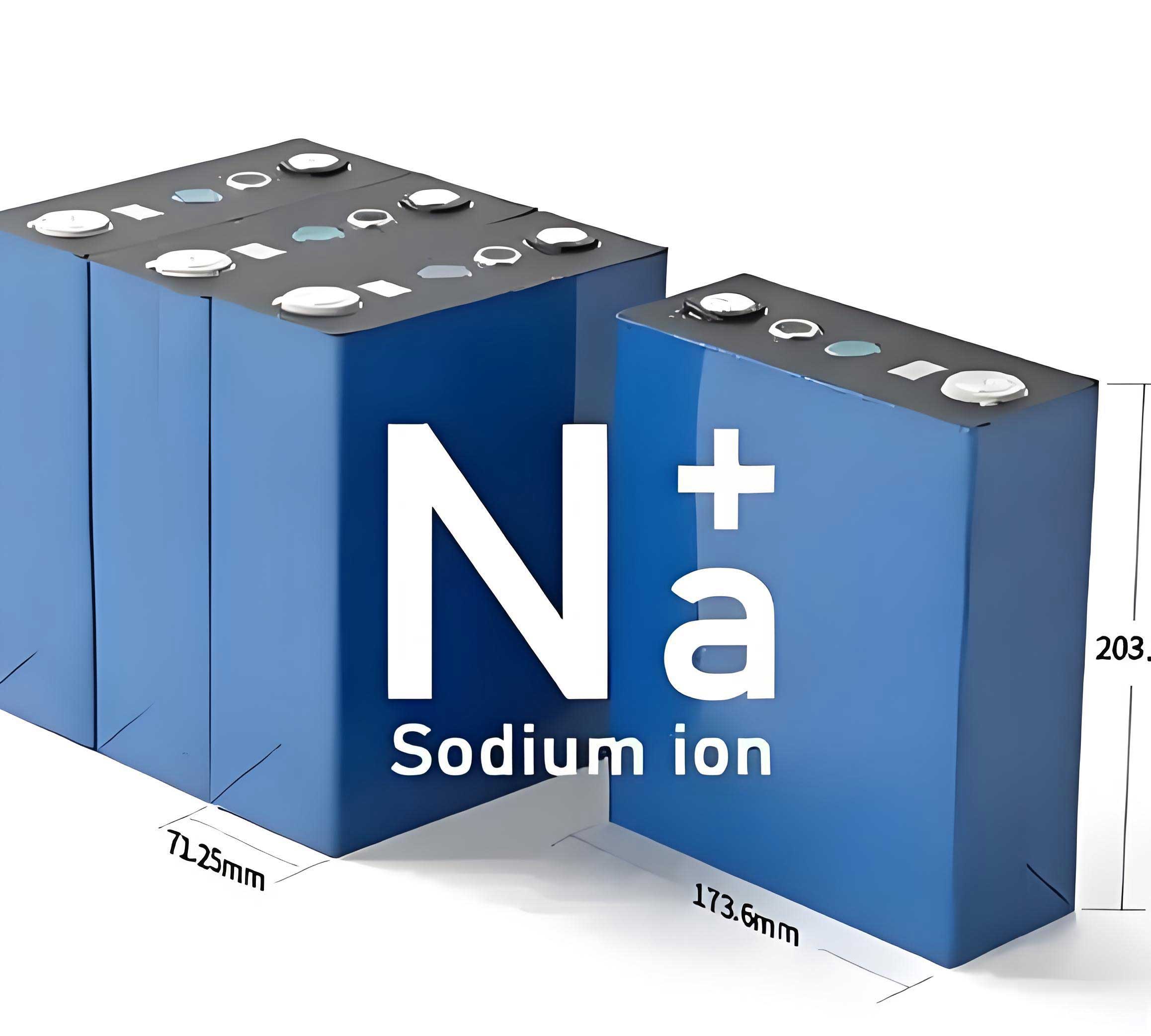
The core innovation lies in the use of a P2-type layered oxide cathode material, which offers a larger interlayer spacing facilitating rapid sodium-ion diffusion, thereby improving kinetics and rate capability. Coupled with a soft carbon anode, this sodium-ion battery design aims to achieve high energy efficiency, wide temperature operation, long cycle life, and robust safety. The development of a battery module with a 2P12S configuration (two cells in parallel and twelve in series) further demonstrates the practicality of sodium-ion batteries in real-world储能 deployments. This article presents a comprehensive analysis through experimental validation, covering cell-level characteristics such as capacity, energy efficiency, temperature tolerance, rate performance, cycling stability, and safety tests, followed by module-level evaluations under various operational conditions.
The transition to sodium-ion battery technology addresses critical challenges in the energy storage sector. Traditional lithium-ion systems often face thermal runaway risks, especially in high-density applications, and their reliance on scarce lithium reserves can lead to supply chain constraints. In contrast, sodium-ion batteries leverage widely available sodium, reducing geopolitical dependencies and material costs. Moreover, the inherent stability of sodium-based chemistries, particularly with carefully selected electrode materials, minimizes flammability and enhances operational safety. These attributes make sodium-ion batteries particularly attractive for stationary storage, where longevity, cost-effectiveness, and safety are paramount. This work explores these advantages through rigorous testing, providing data-driven insights into the viability of sodium-ion batteries for grid-scale energy storage.
To contextualize the performance, it is essential to understand key metrics. Energy efficiency, denoted as ηe, is a crucial parameter for storage systems, defined as the ratio of discharge energy to charge energy: $$ \eta_e = \frac{E_{\text{discharge}}}{E_{\text{charge}}} $$ where \( E_{\text{charge}} \) and \( E_{\text{discharge}} \) are measured in watt-hours (Wh). High energy efficiency indicates minimal energy loss during charge-discharge cycles, directly impacting the overall system economics. Similarly, capacity retention over cycles reflects durability, calculated as: $$ \text{Capacity Retention} = \left( \frac{C_n}{C_0} \right) \times 100\% $$ with \( C_0 \) being the initial capacity and \( C_n \) the capacity after n cycles. For rate capability, the C-rate describes the charge or discharge current relative to battery capacity; for instance, 0.33C implies a current that would fully charge or discharge the battery in approximately 3 hours. The power rating, or P-rate, relates to discharge power, with 0.33P derived from: $$ P = \frac{C \times V_{\text{platform}}}{t} $$ where \( C \) is discharge capacity, \( V_{\text{platform}} \) is the average discharge voltage, and \( t \) is discharge time. These formulas underpin the evaluation of sodium-ion battery performance throughout this study.
Experimental Design and Methodology
The sodium-ion battery cells were fabricated using a prismatic aluminum casing (model 42173205) with a stacked electrode structure. Each cell had a nominal capacity of 80 Ah, employing a proprietary P2-type layered transition metal oxide as the cathode and soft carbon as the anode. This combination was selected to optimize sodium-ion mobility and structural stability. The battery module was assembled in a 2P12S configuration, incorporating 24 cells to form a compact unit with dimensions of 670 mm × 528 mm × 243 mm. The module design prioritized thermal management through forced air cooling, with intake vents on the sides and rear to ensure uniform heat dissipation. Additionally, plastic spacer brackets were used between cells to enhance electrical insulation and mechanical integrity, while thermal interface pads at the base improved heat transfer. This design aimed to maintain temperature differentials within 3°C, comparable to liquid cooling systems, thereby ensuring reliability and safety in储能 operations.
Cell-level testing was conducted using specialized battery analyzers, with voltage ranges set between 2.0 V and 3.9 V for normal operation. Charging followed a constant-current constant-voltage (CC-CV) protocol, terminating at a cutoff current of 0.05C. Discharge tests at low temperatures (e.g., -30°C and -40°C) extended the lower voltage limit to 1.5 V to account for increased polarization. High-temperature storage tests were performed in a climatic chamber at 40°C, while safety assessments adhered to national standards, including overcharge, over-discharge, short circuit, extrusion, and nail penetration tests. Temperature monitoring involved multiple sensors placed on cell surfaces to capture thermal gradients. Module-level evaluations focused on energy efficiency under varying temperatures (5°C, 25°C, and 45°C) and discharge rates (0.33C and 0.33P), with energy calculated by integrating current and voltage over time. The module’s thermal profile was tracked using five sensors at strategic locations to validate cooling effectiveness.
| Test Parameter | Condition | Details |
|---|---|---|
| Cell Capacity | 0.33C, 25°C | Charge: CC-CV to 3.9V, discharge to 2.0V |
| Low-Temperature Discharge | 1C, -40°C to -10°C | Discharge cutoff at 1.5V (below -20°C) or 2.0V |
| High-Temperature Discharge | 1C, 45°C | Standard voltage range |
| Rate Capability | 0.33C to 5C, 25°C | Discharge at various C-rates |
| Cycle Life | 0.5C/0.5C, 25°C | 2000 cycles with capacity tracking |
| High-Temperature Storage | 40°C, 30 days | Residual and recovery capacity measurement |
| Safety Tests | Per GB/GJB standards | Overcharge, over-discharge, short circuit, extrusion, nail penetration |
| Module Energy Efficiency | 0.33C and 0.33P, 5°C to 45°C | Charge-discharge energy integration |
The selection of P2-type cathode materials for this sodium-ion battery is pivotal. These oxides, with their hexagonal layered structure, provide ample diffusion pathways for sodium ions, reducing internal resistance and enhancing low-temperature performance. The soft carbon anode, known for its disordered carbon layers, accommodates sodium insertion with minimal volume expansion, contributing to cycle stability. Electrolyte formulations were optimized for wide temperature operation, incorporating additives to improve ionic conductivity and interfacial stability. Cell assembly involved precision stacking of electrodes separated by ceramic-coated separators, ensuring uniform current distribution and mitigating hot spots. The module’s electrical design included copper busbars for low-resistance connections and a battery management system (BMS) for voltage, current, and temperature monitoring, though BMS details are beyond this scope. This holistic approach underscores the advancement of sodium-ion battery technology from material science to system integration.
Results and Discussion: Cell-Level Performance
The sodium-ion battery cells exhibited outstanding performance across multiple metrics. Initial capacity calibration at 0.33C and 25°C revealed a stable discharge capacity of approximately 83.3 Ah, aligning with the 80 Ah design target. The charge-discharge curves showed smooth voltage profiles without abrupt plateaus, indicating single-phase reactions and stable sodium (de)intercalation. Energy efficiency calculations for the first three cycles yielded an average of 97.18%, as summarized in Table 1. This high efficiency, attributable to low internal resistance and minimal parasitic reactions, positions sodium-ion batteries favorably for energy storage applications where round-trip efficiency directly impacts operational costs.
| Cycle Number | Charge Capacity (Ah) | Charge Energy (Wh) | Discharge Capacity (Ah) | Discharge Energy (Wh) | Energy Efficiency ηe (%) |
|---|---|---|---|---|---|
| 1 | 83.33 | 281.13 | 83.32 | 273.18 | 97.17 |
| 2 | 83.32 | 281.11 | 83.31 | 273.21 | 97.18 |
| 3 | 83.31 | 281.12 | 83.30 | 273.23 | 97.19 |
Temperature tolerance is a critical advantage of sodium-ion batteries. Discharge tests at 1C across a range from -40°C to 45°C demonstrated remarkable resilience. At -40°C, the cell retained 89.79% of its room-temperature capacity, while at -30°C, retention was 92.25%. This performance surpasses many lithium-ion counterparts, which often suffer severe capacity loss below -20°C. The underlying mechanism involves the favorable kinetics of sodium-ion transport in the P2 cathode and electrolyte, which remains sufficiently conductive at low temperatures. At elevated temperatures, such as 45°C, the cell delivered 101.29% of its nominal capacity, indicating enhanced ionic mobility without significant degradation. These results validate the wide operational window of sodium-ion batteries, enabling deployment in diverse climates from frigid regions to tropical areas.
Rate capability tests further highlighted the dynamic performance of the sodium-ion battery. Discharge capacities relative to the 0.33C baseline were 100% at 0.33C, 98.5% at 0.5C, 96.2% at 1C, 93.46% at 3C, and 90.49% at 5C. The minimal capacity drop at high rates underscores the fast charge-transfer processes and low polarization, essential for applications requiring rapid power delivery, such as frequency regulation in grids. The power density can be estimated using the formula: $$ P_{\text{discharge}} = \frac{C_{\text{discharge}} \times V_{\text{avg}}}{t} $$ For instance, at 5C discharge, with an average voltage of 3.2 V and capacity of 75.4 Ah (90.49% of 83.3 Ah), the power output approximates 1.2 kW per cell. This capability allows sodium-ion battery systems to respond quickly to load fluctuations, enhancing grid stability.
Long-term durability was assessed through cycling and storage tests. Under 0.5C charge-discharge cycling at 25°C, the cell maintained 86.65% capacity after 2,000 cycles. Extrapolating the degradation trend suggests a cycle life exceeding 2,500 cycles to 80% retention, competitive with commercial lithium-ion储能 batteries. The capacity fade rate per cycle can be modeled as: $$ C_n = C_0 \times (1 – \alpha)^n $$ where \( \alpha \) is the fade coefficient. For this sodium-ion battery, \( \alpha \) is approximately 7.2×10⁻⁵ per cycle, indicating slow degradation. High-temperature storage at 40°C for 30 days resulted in a residual capacity of 95.22% and a recovery capacity of 98.34% after a full recharge, demonstrating excellent calendar life and reversibility. These attributes ensure that sodium-ion batteries can provide reliable service over decades in stationary storage, reducing the levelized cost of storage (LCOS).
| Safety Test | Standard | Outcome | Observation |
|---|---|---|---|
| Overcharge | GB 38031-2020 | Pass | No fire, no explosion |
| Over-discharge | GB 38031-2020 | Pass | No fire, no explosion |
| Short Circuit | GB 38031-2020 | Pass | No fire, no explosion |
| Extrusion | GB 38031-2020 | Pass | No fire, no explosion |
| Nail Penetration | GJB 4477-2002 | Pass | No fire, no explosion |
| Thermal Exposure | GB 38031-2020 | Pass | No fire, no explosion |
Safety is paramount for energy storage systems, and sodium-ion batteries inherently reduce risks due to their stable chemistry. As shown in Table 2, the cells passed all stringent safety tests without thermal runaway or catastrophic failure. During overcharge testing, the cell voltage exceeded 4.5 V, but internal mechanisms such as electrolyte oxidation and gas generation were controlled, preventing rupture. In nail penetration, which simulates internal short circuits, the temperature rise was limited to below 100°C, and no fire occurred. This robustness stems from the lower reactivity of sodium compared to lithium and the use of non-flammable electrolyte components. Consequently, sodium-ion battery systems can be deployed with reduced safety infrastructure, lowering installation costs and enhancing public acceptance.
Module-Level Performance and System Integration
The assembled 2P12S sodium-ion battery module was evaluated under various operational scenarios to assess its suitability for储能 deployments. Energy efficiency tests at 25°C and 0.33C yielded a module-level ηe of 96.3%, slightly lower than the cell-level 97.18% due to interconnect losses and minor cell-to-cell variations. The charge energy was 6,377.27 Wh, and discharge energy was 6,140.23 Wh, demonstrating efficient energy conversion. At 0.33P and 25°C, the efficiency remained high at 95.75%, with charge and discharge energies of 6,162.57 Wh and 5,900.6 Wh, respectively. These results confirm that the module design minimizes parasitic losses, making sodium-ion battery technology competitive for large-scale storage where efficiency directly impacts economic returns.
Temperature effects on module performance were systematically studied. At 45°C and 0.33P, energy efficiency improved to 97.8%, attributed to reduced internal resistance and enhanced ionic conductivity at elevated temperatures. However, at 5°C, efficiency dropped to 87.3% relative to the 25°C baseline, equivalent to 90.08% of the room-temperature efficiency. This decline is expected due to slowed kinetics but remains acceptable for cold-climate operation. Importantly, thermal management via forced air cooling proved effective: during 0.33P discharges, temperature differentials among cells were maintained within 3°C, as monitored by five sensors. The cooling system’s design, with distributed intakes and thermal pads, ensured homogeneous heat dissipation, preventing hot spots that could accelerate degradation. This approach offers a cost-effective alternative to liquid cooling, simplifying maintenance and reducing system complexity.
| Temperature | Test Condition | Charge Energy (Wh) | Discharge Energy (Wh) | Energy Efficiency ηe (%) |
|---|---|---|---|---|
| 25°C | 0.33C | 6,377.27 | 6,140.23 | 96.3 |
| 25°C | 0.33P | 6,162.57 | 5,900.6 | 95.75 |
| 45°C | 0.33P | 6,325.14 | 6,185.53 | 97.8 |
| 5°C | 0.33P | 6,087.62 | 5,315.43 | 87.3 (90.08% of 25°C) |
The module’s electrical and thermal characteristics can be modeled using equivalent circuits. The internal resistance \( R_i \) influences energy loss: $$ E_{\text{loss}} = I^2 \times R_i \times t $$ where \( I \) is current and \( t \) is time. For the sodium-ion battery module, \( R_i \) is estimated at 2 mΩ per cell, resulting in low joule heating. Thermal dynamics follow: $$ \frac{dT}{dt} = \frac{I^2 R_i – hA(T – T_{\text{ambient}})}{mC_p} $$ with \( h \) as heat transfer coefficient, \( A \) surface area, \( m \) mass, and \( C_p \) specific heat. The air-cooling design achieves an \( h \) value sufficient to limit temperature rise to under 10°C during continuous operation. This balance between performance and thermal control underscores the module’s reliability for prolonged use in储能 systems.
In practice, the sodium-ion battery module has been deployed in a 200 kWh lithium-sodium hybrid储能 demonstration system, showcasing its interoperability and scalability. The system integrates multiple 2P12S modules with power conversion systems and grid interfaces, providing services such as peak shaving, renewable firming, and backup power. Field data indicate stable operation over months, with no safety incidents and minimal maintenance. The modular design allows easy expansion, supporting capacities from tens of kWh to MWh scale. Compared to lithium-ion counterparts, this sodium-ion battery system reduces upfront costs by 20-30% due to cheaper raw materials, while its safety profile lowers insurance and containment expenses. These economic advantages, coupled with technical performance, accelerate the adoption of sodium-ion batteries in the储能 market.
Future Prospects and Challenges
While this study highlights the maturity of sodium-ion battery technology for储能, ongoing research aims to further enhance energy density, cycle life, and cost reductions. Innovations in cathode materials, such as O3-type layered oxides or polyanionic compounds, could increase specific capacity beyond 160 mAh/g. Anode development focuses on hard carbon optimization to improve initial coulombic efficiency and rate capability. Electrolyte engineering, including solid-state sodium-ion conductors, may enable even safer and wider temperature operation. System-level advancements involve smart BMS algorithms for state-of-health estimation and adaptive thermal management, maximizing longevity. The global push for decarbonization and renewable integration will drive demand for sustainable storage solutions, positioning sodium-ion batteries as a key enabler. With continuous improvement, sodium-ion battery systems could capture a significant share of the stationary storage market, complementing or even replacing lithium-ion in many applications.
Challenges remain, including standardization of manufacturing processes, supply chain development for sodium-based materials, and competition from other emerging technologies like flow batteries or compressed air storage. However, the inherent advantages of sodium-ion batteries—abundance, safety, and low temperature performance—provide a strong foundation. Collaborative efforts among academia, industry, and policymakers are essential to establish testing protocols, safety codes, and recycling frameworks. As demonstrated in this work, sodium-ion batteries already meet critical performance benchmarks for储能, and with scaled production, economies of scale will further reduce costs. The transition to a sodium-based储能 ecosystem promises a more resilient and affordable energy future.
Conclusion
This comprehensive investigation validates the efficacy of sodium-ion batteries for energy storage applications. The developed sodium-ion battery cell, utilizing a P2-type cathode and soft carbon anode, delivers high energy efficiency (97.18% at 0.33C), excellent low-temperature performance (89.79% capacity at -40°C), superior rate capability (90.49% at 5C), long cycle life (86.65% retention after 2,000 cycles), and robust safety across standard tests. The 2P12S module design incorporates effective air-cooling thermal management, maintaining cell temperature differentials within 3°C and achieving module-level energy efficiencies up to 97.8% under optimal conditions. These attributes address the core requirements of grid-scale storage: reliability, cost-effectiveness, safety, and environmental adaptability. The successful deployment in a demonstration system underscores the practicality of sodium-ion battery technology. As the world seeks sustainable energy solutions, sodium-ion batteries offer a compelling alternative, leveraging abundant resources and inherent safety to support the transition to renewable energy. Future work will focus on scaling production and integrating advanced materials, solidifying the role of sodium-ion batteries in the global储能 landscape.
In summary, the advancements presented here illustrate a significant step forward for sodium-ion battery technology. From material synthesis to system integration, every aspect has been optimized to meet the rigorous demands of stationary storage. The data-driven analysis confirms that sodium-ion batteries are not merely a theoretical alternative but a viable, high-performance solution ready for widespread adoption. With continued innovation and investment, sodium-ion batteries will play a pivotal role in achieving a sustainable and resilient energy grid, powering the future with clean, safe, and affordable storage.