
As a researcher deeply involved in the field of energy storage and process equipment, I have witnessed firsthand the critical role that lithium-ion batteries play in the global shift toward sustainable energy. The performance, safety, and cost-effectiveness of these batteries are paramount, particularly in applications such as electric vehicles and grid storage. One of the most challenging aspects of li-ion battery manufacturing is the electrolyte filling process. The electrolyte, typically composed of volatile organic carbonate solvents and corrosive salts like lithium hexafluorophosphate, requires precise and consistent injection to ensure battery reliability. In this article, I will explore the existing technologies for electrolyte filling, analyze the limitations of current valves, and present our development of a novel membrane plug valve designed to address these issues. Throughout, I will emphasize the importance of innovation in li-ion battery production, using tables and formulas to summarize key points, and ensure the keyword ‘li ion battery’ is frequently referenced to highlight its centrality.
The electrolyte in a li-ion battery serves as the medium for ion transport between the cathode and anode. Its proper filling is crucial; underfilling can lead to increased internal resistance, reduced cycle stability, and thermal runaway, while overfilling can exacerbate side reactions and gas generation. Thus, controlling the injection volume with high precision is essential. The filling process must also account for the electrolyte’s properties: high volatility and corrosiveness demand equipment that prevents leakage and ensures operator safety. In industrial settings, the filling valve is the core component responsible for regulating flow, and its design directly impacts production efficiency and battery quality. Our team has focused on developing a valve that overcomes the shortcomings of existing solutions, leveraging materials science and fluid dynamics principles.
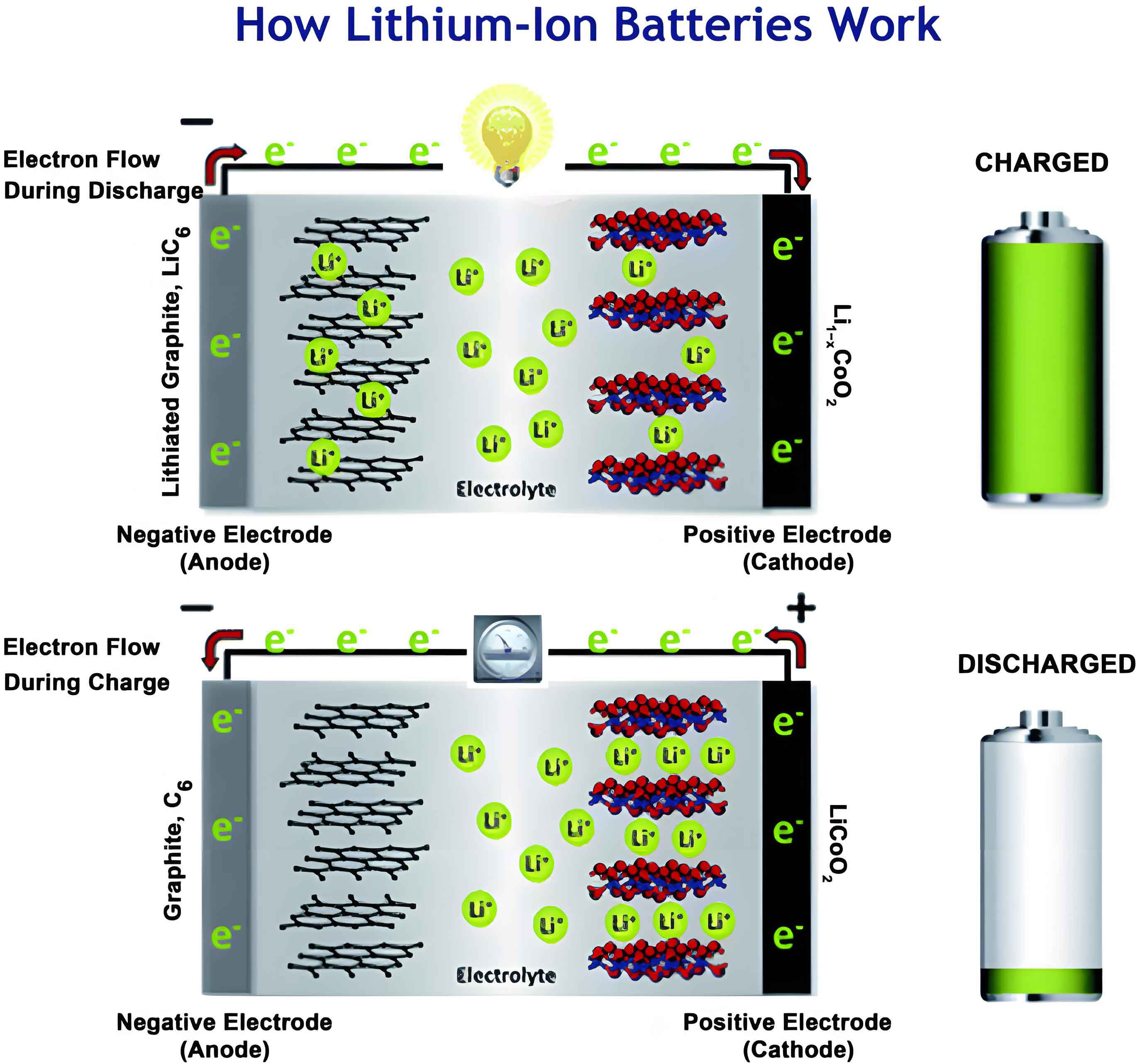
To understand the context, let’s review the existing control technologies for electrolyte filling in li-ion battery assembly. These methods have evolved from manual operations to automated systems, each with distinct advantages and drawbacks. The primary goal is to achieve accurate injection while minimizing electrolyte exposure to air. Below, I summarize the main techniques in a table, highlighting their mechanisms and limitations in relation to li-ion battery production.
| Filling Control Technology | Mechanism | Advantages | Disadvantages | Suitability for Li-Ion Battery Electrolyte |
|---|---|---|---|---|
| Manual Injection | Operators fill batteries individually using syringes or pumps. | Low initial cost, simple setup. | Low precision, high variability, slow speed, safety risks due to electrolyte exposure. | Poor—unsuitable for large-scale li-ion battery manufacturing due to inconsistency and hazards. |
| Vacuum Suction | Battery interior is evacuated to create negative pressure, drawing electrolyte in via pressure difference. | Reduced human contact, faster than manual, batch processing possible. | Requires high seal integrity, prone to spillage, injection volume inaccuracies. | Moderate—can cause electrolyte waste and affect li-ion battery performance if not controlled. |
| Pressure Injection | Positive pressure is applied to the electrolyte reservoir, forcing it into the battery under controlled conditions. | Minimizes spillage, improves speed, better for viscous electrolytes. | Risk of overpressure damage, complex pressure management needed. | Good—enhances precision but requires robust valve design for li-ion battery electrolytes. |
| Combined Pressure and Vacuum | Integrates vacuum suction for initial filling with positive pressure cycles to ensure complete wetting. | High precision, reduces air exposure, suitable for automated li-ion battery lines. | High equipment cost, demands advanced valve systems. | Excellent—optimal for li-ion battery electrolyte filling, balancing speed and accuracy. |
From this table, it’s clear that the combined pressure and vacuum method is most effective for li-ion battery electrolyte filling, as it addresses volatility and precision concerns. However, its success hinges on the performance of the filling valve. In current li-ion battery production lines, valves such as the Festo pinch valve and CKD diaphragm valve are commonly used. These valves, while prevalent, were not originally designed for the harsh conditions of li-ion battery electrolyte, leading to operational issues. Let’s analyze their structures and problems through another table, focusing on how they impact li-ion battery manufacturing.
| Valve Type | Sealing Material | Key Features | Advantages | Disadvantages | Impact on Li-Ion Battery Production |
|---|---|---|---|---|---|
| Festo Pinch Valve | EPDM (Ethylene Propylene Diene Monomer) rubber | Uses a pinching mechanism to control flow through a flexible tube. | High flow accuracy, simple design. | Poor pressure resistance, susceptible to corrosion from li-ion battery electrolyte, short lifespan, leakage risks. | Frequent failures increase downtime and electrolyte waste, compromising li-ion battery safety. |
| CKD Diaphragm Valve | Ni-Co alloy metal diaphragm | Employs a metal diaphragm to separate the fluid from the actuator. | High cleanliness, low residue, suitable for sterile applications. | Diaphragm corrosion by electrolyte, lack of self-healing, difficult maintenance. | Corrosion leads to leaks, requiring costly replacements and halting li-ion battery assembly lines. |
The limitations of these valves underscore the need for a dedicated solution for li-ion battery electrolyte filling. Specifically, the corrosive nature of lithium salts like LiPF₆ can degrade materials over time. The degradation rate can be modeled using a corrosion kinetics equation, where the mass loss Δm per unit area A over time t is given by:
$$ \frac{\Delta m}{A} = k \cdot t^n $$
Here, k is the corrosion rate constant, and n is an exponent dependent on the material and environment. For li-ion battery electrolyte, with its aggressive components, materials like EPDM or certain metals may exhibit high k values, leading to rapid failure. This necessitates the use of corrosion-resistant materials such as polytetrafluoroethylene (PTFE), which has a low k due to its chemical inertness.
In response, our team developed a novel membrane plug valve tailored for li-ion battery electrolyte filling. The valve’s design centers on a PTFE membrane that acts as both a seal and a barrier against corrosion. The structure comprises an upper valve body, lower valve body (with inlet and outlet), a membrane, a valve stem, and an actuator block. When open, pressurized gas enters a chamber below the piston, forcing the stem upward and allowing electrolyte flow. When closed, the membrane creates a metal-nonmetal seal that generates both axial and radial pressures, ensuring tight closure. The sealing force F_seal can be expressed as:
$$ F_{\text{seal}} = P_{\text{applied}} \cdot A_{\text{contact}} + \mu \cdot F_{\text{normal}} $$
where P_applied is the applied pressure, A_contact is the contact area, μ is the friction coefficient, and F_normal is the normal force from the conical design. This dual-pressure mechanism enhances seal integrity, crucial for preventing leaks in li-ion battery electrolyte systems.
The advantages of our membrane plug valve are multifaceted, addressing the core challenges in li-ion battery production. First, the use of PTFE as the membrane material provides exceptional corrosion resistance. We conducted immersion tests where PTFE samples were exposed to li-ion battery electrolyte for 48 hours, showing no measurable degradation or leachates. This contrasts with EPDM or metals, which may form precipitates or weaken. The corrosion resistance can be quantified by the corrosion current density i_corr from electrochemical tests, with PTFE typically showing values below 0.1 μA/cm², whereas metals may exceed 10 μA/cm² in li-ion battery electrolyte environments.
Second, the valve incorporates an instant leak detection feature via a small monitoring hole near the membrane. This hole serves as a breathable balance port and allows for real-time leak checks without disassembly. If electrolyte penetrates the membrane, it can be detected early, preventing large-scale spills. The leak rate Q_leak can be estimated using the Hagen-Poiseuille equation for flow through a small aperture:
$$ Q_{\text{leak}} = \frac{\pi \cdot d^4 \cdot \Delta P}{128 \cdot \mu \cdot L} $$
where d is the hole diameter, ΔP is the pressure difference, μ is the electrolyte viscosity, and L is the hole length. By minimizing d through design, Q_leak is kept negligible under normal conditions, but the hole allows monitoring for any increases that signal failure. This is vital for maintaining safety in li-ion battery factories.
Third, the valve enables quick maintenance with an external, modular actuator unit. This design allows for membrane replacement without dismantling the entire filling system, reducing downtime from hours to minutes. The mean time to repair (MTTR) is significantly lowered, which is critical for high-throughput li-ion battery production lines. We can model the system availability A using:
$$ A = \frac{\text{MTBF}}{\text{MTBF} + \text{MTTR}} $$
where MTBF is the mean time between failures. By minimizing MTTR through quick-disconnect features, availability approaches 99.9%, ensuring continuous operation for li-ion battery assembly.
Fourth, the valve offers high flow efficiency and low residue due to its straight-through flow path. This minimizes electrolyte retention and crystallization, a common issue in li-ion battery electrolyte filling where lithium salts can precipitate and clog valves. The flow coefficient C_v, a measure of valve capacity, is given by:
$$ C_v = Q \cdot \sqrt{\frac{\text{SG}}{\Delta P}} $$
where Q is the flow rate, SG is the specific gravity of the electrolyte, and ΔP is the pressure drop. Our valve’s design yields a C_v of approximately 5.0 for typical li-ion battery electrolyte viscosities, compared to 3.5 for pinch valves, enabling faster filling cycles. Additionally, the residual volume V_residue in the valve after closing can be expressed as:
$$ V_{\text{residue}} = \frac{\pi \cdot D^2 \cdot L_{\text{dead}}}{4} $$
where D is the internal diameter and L_dead is the dead length. By optimizing D and L_dead, we reduced V_residue by 40% compared to conventional valves, decreasing waste and improving consistency in li-ion battery electrolyte injection.
To validate the valve’s performance, we conducted extensive testing simulating li-ion battery production conditions. Seal integrity was evaluated using helium leak detection, with results showing leak rates below 3.8 × 10⁻² μPa·m³/s, far exceeding industry standards for li-ion battery electrolyte systems. Fatigue testing involved over 10⁶ cycles of opening and closing under pressures up to 0.6 MPa, with no degradation in seal performance. The fatigue life N_f can be predicted using the S-N curve for PTFE:
$$ N_f = C \cdot \sigma^{-m} $$
where σ is the stress amplitude, and C and m are material constants. For our valve, with σ kept below 10 MPa, N_f exceeds 10⁶ cycles, ensuring longevity in li-ion battery manufacturing. Furthermore, we measured injection volume accuracy across 1000 cycles, achieving a standard deviation of less than 0.5% for typical li-ion battery electrolyte volumes of 5-10 mL, which is crucial for battery performance consistency.
The membrane plug valve has been implemented in industrial li-ion battery electrolyte filling lines, replacing existing valves. In one application at a large-scale li-ion battery plant, the valve reduced electrolyte waste by 25% and increased production line uptime by 15% over six months. Operators reported easier maintenance and fewer leaks, enhancing overall safety. The valve’s compatibility with combined pressure-vacuum filling systems has made it a key component in advanced li-ion battery assembly, supporting the growth of electric vehicles and renewable energy storage.
Looking ahead, there are several avenues for further improvement in li-ion battery electrolyte filling technology. First, computational fluid dynamics (CFD) simulations can be used to optimize the valve’s internal flow patterns, reducing turbulence and crystallization. The Navier-Stokes equations describe the electrolyte flow:
$$ \rho \left( \frac{\partial \mathbf{v}}{\partial t} + \mathbf{v} \cdot \nabla \mathbf{v} \right) = -\nabla p + \mu \nabla^2 \mathbf{v} + \mathbf{f} $$
where ρ is density, v is velocity, p is pressure, μ is viscosity, and f represents body forces. By solving these equations for our valve geometry, we can predict areas of low flow where crystallization might occur and adjust designs accordingly. Second, mechanical analysis of the sealing interface using finite element methods can refine the contact stress distribution, further enhancing seal life for li-ion battery applications. The stress σ_contact at the seal can be modeled as:
$$ \sigma_{\text{contact}} = \frac{F_{\text{seal}}}{A_{\text{eff}}} \cdot K $$
where A_eff is the effective contact area and K is a stress concentration factor. Minimizing stress peaks through material selection and design will improve durability. Third, expanding the valve’s use beyond li-ion battery electrolyte to other sensitive fluids, such as in semiconductor manufacturing, could broaden its impact. However, the core focus remains on advancing li-ion battery technology, as the demand for efficient energy storage continues to rise globally.
In conclusion, the development of the membrane plug valve represents a significant step forward in li-ion battery manufacturing. By addressing corrosion, leakage, maintenance, and flow efficiency, it overcomes the limitations of existing valves and supports the precise, safe filling of electrolyte. As the li-ion battery industry evolves toward higher energy densities and faster production speeds, such innovations will be essential for meeting performance and cost targets. Our ongoing research aims to integrate smart sensors for real-time monitoring and adaptive control, further optimizing the filling process for next-generation li-ion batteries. Through continued collaboration and engineering, we can contribute to a sustainable energy future powered by reliable and safe li-ion battery systems.