
The performance, longevity, and safety of a lithium-ion battery are inextricably linked to the state of its electrolyte. Within the complex electrochemical system of a lithium-ion battery, the electrolyte—typically a mixture of lithium salts (e.g., LiPF6) in organic carbonate solvents—undergoes continuous and intricate chemical transformations throughout its operational life. These reactions include reductive decomposition at the anode to form the solid-electrolyte interphase (SEI), oxidative processes at the cathode leading to cathode-electrolyte interphase (CEI) formation, transesterification between carbonate solvents, and reactions with trace impurities or generated intermediates. Collectively, these processes alter the electrolyte’s composition, concentration, and total mass. A critical, yet often under-quantified, aspect of this degradation is the irreversible consumption of the electrolyte bulk. When the electrolyte mass depletes beyond a certain threshold, ionic transport is severely hampered, leading to rapid cell failure characterized by increased internal resistance, capacity fade, and potential safety risks. Therefore, accurately monitoring the residual electrolyte mass, not just its composition, is paramount for diagnosing cell aging, predicting end-of-life, and optimizing initial filling protocols to ensure reliability without compromising energy density.
Current analytical efforts for lithium-ion battery electrolytes predominantly focus on qualitative identification of decomposition products or quantitative analysis of specific solvent/ additive ratios using techniques like Gas Chromatography-Mass Spectrometry (GC-MS) or Liquid Chromatography-Mass Spectrometry (LC-MS). While these methods are excellent for understanding degradation pathways, they generally require knowledge of the initial electrolyte mass or volume to back-calculate absolute consumption, which is often not precisely known or constant across cells. Methods like direct weighing of cells before and after electrolyte filling are impractical for sealed, cycled cells. Other reported approaches using internal standards have been proposed but lack comprehensive validation regarding accuracy, precision, and robustness across different battery states and electrolyte formulations. There is a clear need for a reliable, accurate, and broadly applicable method to determine the absolute mass of electrolyte remaining inside a lithium-ion battery, particularly the ubiquitous pouch cell format, at any point in its lifecycle.
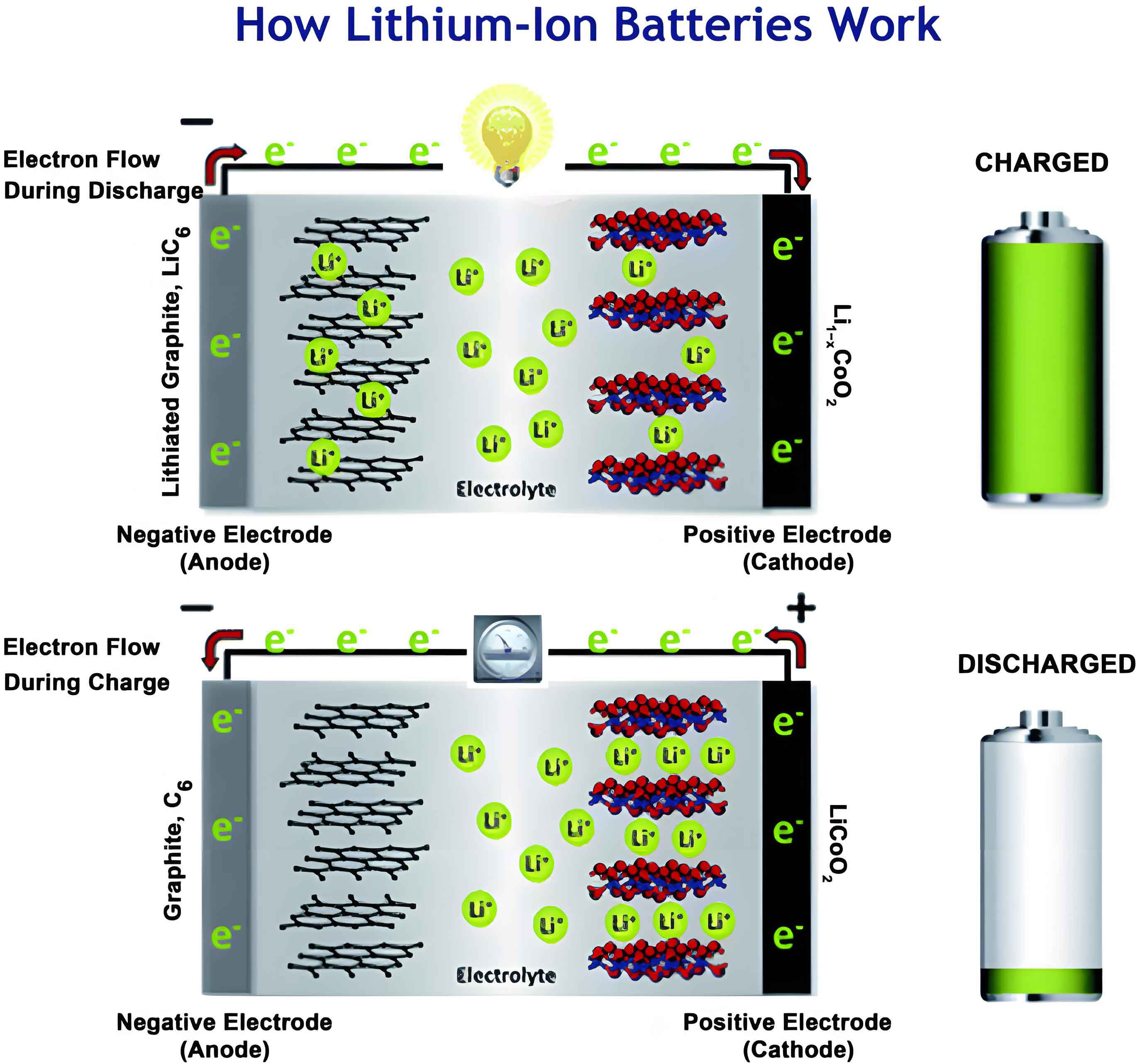
This work establishes and validates a robust analytical method based on Gas Chromatography with Flame Ionization Detection (GC-FID) to determine the residual electrolyte mass in soft-packaged (pouch) lithium-ion batteries. The core principle involves the introduction of a known mass of an internal standard (biphenyl) solution into the spent cell. After thorough mixing and extraction, the dilution of the internal standard by the resident electrolyte is measured by GC. The residual electrolyte mass is then calculated from this dilution factor, with a correction for the density of the extracted mixture. This report details the systematic optimization of the method parameters, demonstrates its accuracy and precision on cells with known electrolyte fill mass, validates it across different electrolyte formulations, and finally applies it to quantify electrolyte consumption in cycled lithium-ion batteries, providing crucial data for lifecycle analysis.
1. Method Principle and Theoretical Foundation
The foundational concept of this method is mass balance and dilution. A carefully chosen internal standard (IS), biphenyl, which is electrochemically inert and miscible with common carbonate-based electrolytes, is dissolved in a base solvent (DMC) to create a solution of known concentration (CIS,added). A precise mass (msol) of this IS solution is introduced into a pouch lithium-ion battery from which the residual electrolyte mass (melec) is unknown.
After a controlled period of immersion and mixing, the IS solution and the resident electrolyte homogenize. The total mass of biphenyl in the mixture remains constant and equal to the mass added: mIS,total = msol × CIS,added. However, its concentration in the final homogeneous extracted liquid is diluted by the presence of the original electrolyte. By measuring the biphenyl concentration in the extracted liquid (CIS,measured, in g/L) via GC-FID and the density (ρ, in g/L) of this extract, the total mass of the extract can be related to its volume and composition.
The core calculation proceeds as follows: The total mass of the extracted liquid (mextract) is the sum of the added IS solution mass and the resident electrolyte mass:
$$m_{\text{extract}} = m_{\text{sol}} + m_{\text{elec}}$$
The concentration of biphenyl in the extract is defined by:
$$C_{\text{IS,measured}} = \frac{m_{\text{IS,total}}}{V_{\text{extract}}} = \frac{m_{\text{sol}} \times C_{\text{IS,added}}}{V_{\text{extract}}}$$
The volume of the extract (Vextract) can be expressed in terms of its mass and density:
$$V_{\text{extract}} = \frac{m_{\text{extract}}}{\rho}$$
Substituting and solving for the unknown electrolyte mass (melec) yields the fundamental equation of the method:
$$m_{\text{elec}} = \frac{m_{\text{sol}} \times C_{\text{IS,added}} \times \rho}{C_{\text{IS,measured}}} – m_{\text{sol}}$$
The accuracy of the method is evaluated by testing cells with a known, precisely injected electrolyte mass (minjected). The percentage error (w) is calculated as:
$$w = \frac{m_{\text{elec}} – m_{\text{injected}}}{m_{\text{injected}}} \times 100\%$$
A well-optimized method should yield an average error (w) close to 0% with a low relative standard deviation (RSD), demonstrating both accuracy and precision.
2. Experimental Development and Optimization
2.1 Materials and Instrumentation
Commercial pouch-type lithium-ion batteries (LiFePO4 / Graphite, 1.5 Ah) were used. Three different electrolyte formulations (F1, F2, F3) based on mixtures of ethylene carbonate (EC), dimethyl carbonate (DMC), ethyl methyl carbonate (EMC), LiPF6, and vinylene carbonate (VC) were employed for method validation. Biphenyl (≥99.5%) and DMC (≥99.99%) served as the internal standard and solvent, respectively. Primary instrumentation included a GC-FID system equipped with a DB-VRX capillary column, a precision analytical balance, a centrifuge, a digital density meter, and a glovebox maintained under an argon atmosphere (<0.1 ppm H2O/O2).
2.2 GC Method Development and Calibration
A temperature-programmed GC method was developed to achieve baseline separation of biphenyl from the common electrolyte solvents (EC, DMC, EMC). The optimized program started at 50°C, followed by ramps to 80°C, 150°C, 200°C, and finally 240°C with appropriate hold times. The FID and inlet temperatures were set at 280°C. A six-point calibration curve was constructed using biphenyl standard solutions in DMC across a concentration range of 20 to 100 g/L. The linear regression yielded an excellent correlation coefficient (R = 0.99984), confirming the suitability of GC-FID for accurate biphenyl quantification in this matrix. The calibration relationship is shown in Table 1.
| Biphenyl Concentration (g/L) | Peak Area (Avg.) |
|---|---|
| 20.0 | 2,530 |
| 30.0 | 3,840 |
| 35.0 | 4,505 |
| 40.0 | 5,160 |
| 50.0 | 6,480 |
| 100.0 | 13,025 |
Linear Regression: y = 131.29x – 95.94 ; R = 0.99984
Where y = Peak Area, x = Biphenyl Concentration (g/L).
2.3 Sample Preparation Protocol
The general procedure, conducted inside an argon glovebox, was: 1) For a cell with known electrolyte mass (validation), or a cycled/aged cell (application), the cell was fully discharged to 0% State of Charge (SOC). 2) A precisely weighed mass (msol) of a 10 wt% biphenyl in DMC solution was injected into the cell. 3) The cell was sealed and placed in a temperature-controlled environment for a defined period to allow for complete infiltration and homogenization. 4) The cell was then opened, and the liquid contents were centrifuged to separate the liquid extract from the electrode stack. 5) The extract was filtered through a 0.22 μm organic-phase syringe filter. 6) The density (ρ) of the filtered extract was measured immediately. 7) The biphenyl concentration (CIS,measured) in the extract was determined by GC-FID against the calibration curve. 8) The residual electrolyte mass was calculated using the fundamental equation.
2.4 Optimization of Critical Parameters
The accuracy of the method depends critically on complete homogenization between the added IS solution and the resident electrolyte within the porous electrode stack. Three key parameters were systematically optimized using pouch lithium-ion batteries with a known injected electrolyte mass of 7.0 g.
2.4.1 Mass of Internal Standard Solution Added
The mass of the 10% biphenyl solution added (msol) must be sufficient to ensure good mixing and extraction efficiency but not so large as to cause leakage or excessive dilution beyond the calibration range. Five different addition masses were tested. The results, presented in Table 2, show that adding between 3.1 g and 3.4 g yielded the lowest average method error and the best precision (RSD < 2%). Amounts below 3.1 g led to higher negative errors, suggesting incomplete wetting and extraction of the electrolyte from the electrodes. Amounts above 3.4 g increased the risk of cell bulging and sample handling issues.
| Mass of IS Solution Added (g) | Average Method Error, w (%) | Relative Standard Deviation, RSD (%) (n=9) |
|---|---|---|
| 2.50 | -5.2 | 3.8 |
| 3.10 | -1.1 | 1.5 |
| 3.40 | +1.3 | 1.8 |
| 3.70 | +2.8 | 2.5 |
| 4.75 | +4.5 | 3.1 |
2.4.2 Infiltration Temperature and Duration
Temperature and time are crucial for the diffusion of the IS solution into the electrode pores and its mixing with the resident electrolyte. Conditions were tested at 30°C, 35°C, and 40°C for durations of 48, 72, and 96 hours. The results (Table 3) indicate that both increasing temperature and time generally reduce the absolute method error, promoting better homogenization. The combination of 40°C for 72 hours provided an optimal balance, yielding an average error of less than 1.5% with an RSD below 2%. Extending the time to 96 hours at 40°C showed a slight increase in error, potentially due to minor swelling and dissolution of polymeric cell components (separator, binder) into the extract, which would slightly alter the density and composition.
| Temperature (°C) | Duration (h) | Average Method Error, w (%) | RSD (%) (n=5) |
|---|---|---|---|
| 30 | 48 | -3.8 | 2.9 |
| 72 | -2.5 | 2.2 | |
| 96 | -2.0 | 2.0 | |
| 35 | 48 | -2.2 | 2.3 |
| 72 | -1.4 | 1.9 | |
| 96 | -0.7 | 1.8 | |
| 40 | 48 | -1.8 | 2.1 |
| 72 | +1.3 | 1.8 | |
| 96 | +1.9 | 2.1 |
因此,优化后的标准操作程序为:向软包锂离子电池中加入3.1-3.4 g的10%联苯(DMC)溶液,在40°C下静置浸润72小时,随后离心分离提取液进行测定。
3. Method Validation
3.1 Validation Across Different Electrolyte Formulations
To assess the general applicability of the method, it was tested on pouch lithium-ion batteries filled with three distinct electrolyte formulations (F1, F2, F3). The optimized protocol (3.1-3.4 g IS, 40°C, 72h) was followed. The results, compiled in Table 4, demonstrate robust performance. For all three formulations, the average method error was well below 3%, and the precision (as seen from the individual measurements) was consistently high. This confirms that the method is not sensitive to the specific ratios of common carbonate solvents (EC, DMC, EMC) and is applicable to a wide range of standard lithium-ion battery electrolytes.
| Electrolyte Formulation | Sample | Injected Electrolyte Mass (g) | Extract Density, ρ (g/L) | Measured Biphenyl Conc., CIS,measured (g/L) | Calculated Electrolyte Mass, melec (g) | Error, w (%) | Average Error (%) |
|---|---|---|---|---|---|---|---|
| F1 (EC/DMC/EMC) | 1 | 7.0285 | 1122.3 | 34.2547 | 7.1951 | +2.4 | 2.1 |
| 2 | 7.0382 | 1122.3 | 34.2831 | 7.2238 | +2.6 | ||
| 3 | 7.0266 | 1122.3 | 34.4410 | 7.1560 | +1.8 | ||
| 4 | 7.0355 | 1122.3 | 34.4518 | 7.1550 | +1.7 | ||
| 5 | 7.0238 | 1122.3 | 34.2677 | 7.1674 | +2.0 | ||
| F2 (EC/EMC) | 1 | 7.1327 | 1121.9 | 34.1354 | 7.0373 | -1.3 | 1.4 |
| 2 | 7.2048 | 1121.9 | 33.8291 | 7.1692 | -0.6 | ||
| 3 | 7.1391 | 1121.9 | 33.4130 | 7.3047 | +2.4 | ||
| 4 | 7.1461 | 1121.9 | 33.1035 | 7.3520 | +2.9 | ||
| 5 | 7.1318 | 1121.9 | 36.0431 | 7.1318 | 0.0 | ||
| F3 (EC/EMC, different ratio) | 1 | 7.0737 | 1117.6 | 33.0904 | 7.2466 | +2.4 | 2.9 |
| 2 | 7.0744 | 1117.6 | 33.4875 | 7.1864 | +1.6 | ||
| 3 | 7.0520 | 1117.6 | 34.7114 | 6.7871 | -3.7 | ||
| 4 | 7.0590 | 1117.6 | 33.7318 | 7.1854 | +1.9 | ||
| 5 | 7.0520 | 1117.6 | 32.7342 | 7.3800 | +4.6 |
4. Application: Quantifying Electrolyte Consumption in Cycled Lithium-ion Batteries
The ultimate purpose of this analytical method is to monitor electrolyte mass loss during the operation of a lithium-ion battery. The optimized protocol was applied to a batch of seven identical pouch lithium-ion batteries that had undergone 1,500 charge-discharge cycles under standard conditions. Each cell had an initial electrolyte fill mass of 6.5 g. The results, presented in Table 5, reveal significant and variable electrolyte consumption.
| Cell ID | Initial Electrolyte Mass (g) | Residual Electrolyte Mass (g) | Electrolyte Consumed (g) | Consumption (%) |
|---|---|---|---|---|
| 1 | 6.5 | 5.1557 | 1.3443 | 20.7 |
| 2 | 3.0032 | 3.4968 | 53.8 | |
| 3 | 5.3113 | 1.1887 | 18.3 | |
| 4 | 4.9712 | 1.5288 | 23.5 | |
| 5 | 5.3687 | 1.1313 | 17.4 | |
| 6 | 5.2244 | 1.2756 | 19.6 | |
| 7 | 5.4046 | 1.0954 | 16.9 | |
| Average ± Std. Dev. | 4.920 ± 0.82 | 1.580 ± 0.82 | 24.3 ± 12.5 | |
The data shows a wide distribution in electrolyte loss, ranging from approximately 17% to a dramatic 54% for Cell 2. This variability underscores the complex and potentially stochastic nature of degradation processes within a lithium-ion battery, which can be influenced by minor inconsistencies in electrode coating, separator wetting, or localized current densities. The average consumption was about 1.58 g, or 24% of the initial fill. This quantitative data is invaluable. It provides a direct metric for cell state-of-health and can be correlated with electrochemical performance data (capacity fade, impedance rise) to develop more accurate aging models. Understanding the extent of electrolyte depletion is critical for designing next-generation lithium-ion batteries with optimized electrolyte reserves, ensuring longevity without sacrificing energy density.
5. Discussion and Advantages of the Method
The developed GC-based internal standard method effectively addresses the challenge of quantifying residual electrolyte mass in sealed, operated pouch lithium-ion batteries. Its advantages are manifold:
1. Accuracy and Precision: Through systematic optimization, the method achieves an average accuracy error of less than 3% and a precision (RSD) better than 2% for validation cells. This level of reliability is sufficient for meaningful comparative studies and degradation analysis.
2. Direct Mass Determination: Unlike compositional analysis techniques, this method directly yields the absolute mass of electrolyte in the cell, which is the critical parameter for assessing consumption.
3. Density Correction: The incorporation of a density measurement for the final extract is a crucial step. It accounts for the fact that the extracted liquid is not a perfect mixture of the original electrolyte and the IS solution, but may have a slightly different density due to dissolved species, temperature, and minor component variations. This correction enhances accuracy significantly.
4. Wide Applicability: Validation across three different electrolyte formulations confirms the method’s robustness and general applicability to standard carbonate-based electrolytes used in most commercial lithium-ion batteries.
5. Practical Utility: The method uses standard laboratory equipment (GC, balance, centrifuge, density meter) and provides actionable data on electrolyte depletion, a key failure mode in aging lithium-ion batteries.
A potential limitation is the requirement to add a foreign compound (biphenyl) to the cell, which alters its chemical system and prevents further electrochemical testing on the same cell. Therefore, it is a destructive endpoint analysis. However, for post-mortem analysis, quality control of cycled cells, or scientific studies where quantitative consumption data is the final objective, this is an acceptable and powerful approach.
6. Conclusion
In conclusion, a reliable and accurate gas chromatographic method has been successfully developed for the determination of residual electrolyte mass in pouch-type lithium-ion batteries. The method is based on the dilution of a known internal standard, biphenyl, and incorporates a critical density correction step. After optimization, the best conditions involve adding 3.1-3.4 g of a 10% biphenyl solution and allowing for homogenization at 40°C for 72 hours. The method was validated to have an average error of less than 3% and an RSD below 2%, demonstrating excellent accuracy and precision. Its applicability was confirmed across different commercial electrolyte formulations.
Most importantly, the method was effectively applied to quantify electrolyte consumption in lithium-ion batteries subjected to 1,500 cycles, revealing significant and variable mass loss. This capability provides essential quantitative data for understanding one of the fundamental aging mechanisms in lithium-ion batteries. By enabling precise tracking of electrolyte mass throughout a battery’s lifecycle, this analytical technique offers strong support for research into degradation mechanisms, the development of more stable electrolyte systems, and the design of lithium-ion batteries with improved longevity and safety profiles.