
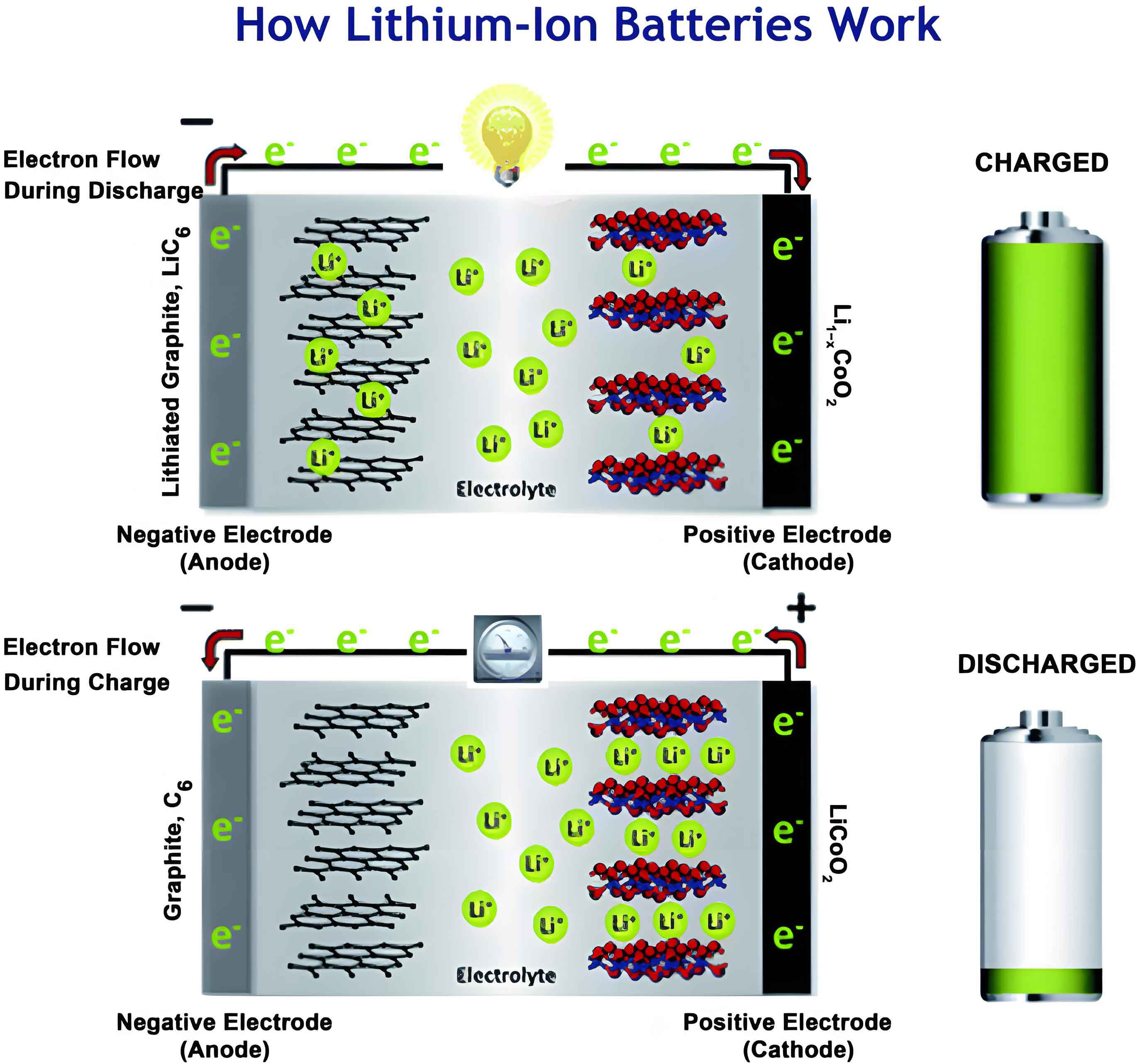
As a pivotal technology in modern energy storage, the lithium-ion battery has revolutionized portable electronics and electric mobility due to its high energy density, long cycle life, and environmental friendliness. However, its widespread adoption is hampered by a critical trade-off: slow charging leads to long downtimes, while aggressive fast charging accelerates battery degradation, compromising safety and longevity. Navigating this trilemma—balancing speed, safety, and sustainability—is the central challenge. Consequently, the design of intelligent fast charging strategies has emerged as a vital research frontier in battery management. This review synthesizes the extensive body of work in this field, structuring the discourse around the three core pillars of any charging strategy design framework: the problem formulation, the underlying battery models, and the optimization methodologies themselves.
The efficacy of a fast charging strategy is fundamentally dictated by how the design problem is framed. This involves the precise definition of optimization objectives, operational constraints, and the design variables—the levers we can adjust. User demands typically cluster into three, often competing, categories: Rapidity (minimizing charging time), Safety (adhering to voltage, current, and temperature limits), and Sustainability (maximizing energy efficiency and minimizing degradation per cycle). Researchers formulate multi-objective optimization problems that seek Pareto-optimal solutions balancing these needs. For instance, a common formulation is to minimize charging time while constraining the maximum cell voltage $V_{max}$, temperature $T_{max}$, and lithium plating potential $\eta_{lp,min}$:
$$
\begin{aligned}
\min_{I(t)} \quad & t_{charge} \\
\text{s.t.} \quad & V(t) \leq V_{max}, \\
& T(t) \leq T_{max}, \\
& \eta_{anode}(t) \geq \eta_{lp,min}, \\
& SOC(t_{charge}) = SOC_{target}.
\end{aligned}
$$
The choice of design variable is crucial. The input current profile $I(t)$ is the direct control signal. However, optimizing a continuous-time current trajectory is computationally intractable. Therefore, practical strategies are often parameterized using established charging protocols. Key protocols include the ubiquitous Constant Current Constant Voltage (CCCV), Multi-Stage Constant Current (MCC), and Pulse Charging (PC). In an MCC protocol with N stages, the design variables are the constant current values $I_1, I_2, …, I_N$ and their corresponding termination conditions (e.g., voltage thresholds or SOC windows). This parameterization drastically reduces the search space. Specialized scenarios like low-temperature charging necessitate integrated preheating strategies, while extreme fast charging demands co-design of advanced cooling structures to manage intense heat generation.
| Requirement Category | Specific Metric | Typical Role (Objective/Constraint) |
|---|---|---|
| Rapidity | Charging Time | Primary Objective |
| Charged Capacity | Secondary Objective | |
| Safety | Cell Voltage | Hard Constraint |
| Cell Temperature | Hard Constraint | |
| Sustainability | Energy Efficiency / Loss | Objective or Constraint |
| Degradation (SEI Growth, Li Plating) | Objective or Constraint | |
| State of Health (SOH) | Long-term Objective | |
| Other | Charging Cost, Current Smoothness | Objective |
The second pillar, accurate and computationally efficient battery modeling, is indispensable for evaluating strategies without exhaustive and destructive physical testing. Models for the lithium-ion battery can be categorized into physics-based and data-driven approaches. Physics-based models remain dominant in strategy design due to their interpretability and ability to extrapolate.
Electrical Models predict voltage response. Equivalent Circuit Models (ECMs) use resistors and capacitors to emulate dynamic behavior. A common second-order RC model is described by:
$$
\begin{aligned}
V(t) &= OCV(SOC) – I(t)R_0 – V_1(t) – V_2(t), \\
\dot{V}_1(t) &= -\frac{V_1(t)}{R_1 C_1} + \frac{I(t)}{C_1}, \\
\dot{V}_2(t) &= -\frac{V_2(t)}{R_2 C_2} + \frac{I(t)}{C_2}.
\end{aligned}
$$
While computationally light, ECMs lack insight into internal states critical for degradation modeling. In contrast, electrochemical models like the Pseudo-Two-Dimensional (P2D) model describe lithium-ion transport and reaction using coupled partial differential equations (PDEs), providing detailed internal state information (e.g., lithium concentration $c_s$, electrolyte potential $\phi_e$):
$$
\frac{\partial c_s}{\partial t} = \frac{D_s}{r^2} \frac{\partial}{\partial r}\left(r^2 \frac{\partial c_s}{\partial r}\right), \quad \text{in particle domain}.
$$
$$
\nabla \cdot (\kappa_{\text{eff}} \nabla \phi_e) + \nabla \cdot (\kappa_{D,\text{eff}} \nabla \ln c_e) + j^{\text{Li}} = 0, \quad \text{in electrolyte}.
$$
Their high fidelity comes at a high computational cost, prompting the use of Reduced-Order Models (ROMs) like the Single Particle Model (SPM) for control-oriented design.
Thermal Models, often coupled with electrical models, predict temperature rise $T(t)$ from joule and reaction heating. A lumped thermal model is:
$$
m C_p \frac{dT}{dt} = I(t)(V(t) – OCV(SOC)) – hA(T – T_{\infty}).
$$
Aging Models quantify capacity fade. Mechanism-based models predict losses from Solid Electrolyte Interphase (SEI) growth and Lithium Plating (LP). For example, SEI growth rate is often modeled as:
$$
\frac{d\delta_{\text{SEI}}}{dt} \propto \exp\left(-\frac{E_a}{RT}\right) \cdot \exp\left(\frac{\alpha n F}{RT} \eta_{\text{SEI}}\right).
$$
Empirical models, like a power-law relationship between capacity loss and charge throughput ($Q_{loss}=A\cdot (Ah)^{z}$), are simpler but less predictive.
The rise of machine learning offers data-driven alternatives. Techniques like Long Short-Term Memory (LSTM) networks can model voltage dynamics or predict remaining useful life (RUL) directly from data. However, their need for large datasets and limited physical interpretability have so far restricted their primary role in fast charging design to being auxiliary tools for early-life prediction or as surrogate models within broader optimization loops.
| Model Component | Typical Models Used | Role in Design | Computational Characteristic |
|---|---|---|---|
| Electrical Model | ECM, SPM, P2D | Predicts voltage, SOC, internal states (Li conc.) | ECM/SPM: Fast; P2D: Slow |
| Thermal Model | Lumped, 1D/2D PDE-based | Predicts temperature for safety constraint | Lumped: Fast; PDE-based: Slow |
| Aging Model | Empirical, SEI+LP Mechanism | Quantifies degradation for objective/constraint | Empirical: Fast; Mechanism: Medium |
The third pillar encompasses the optimization and control methodsoffline and online approaches.
Offline Methods compute an optimal strategy beforehand, which is then deployed. They are well-suited for protocol parameter optimization.
- Taguchi Optimization employs orthogonal arrays to efficiently explore the parameter space with a minimal number of experimental tests, analyzing the signal-to-noise ratio to find robust settings.
- Dynamic Programming (DP) is a powerful algorithm for multi-stage decision problems. It breaks the charging process (e.g., SOC from 0% to 100%) into discrete stages and works backward to find the optimal current sequence that minimizes a total cost function $J$, often defined as a sum of stage-wise costs $g_k$ related to time and degradation:
$$ J^*(x_k) = \min_{I_k} \left[ g_k(x_k, I_k) + J^*(x_{k+1}) \right]. $$ - Evolutionary Algorithms (EAs), such as Genetic Algorithms (GA) and Particle Swarm Optimization (PSO), are population-based metaheuristics. They evolve a set of candidate protocol parameters over generations through selection, crossover, and mutation, guided by a fitness function. Their strength lies in handling non-convex, multi-objective problems without gradient information.
- Bayesian Optimization (BO) is particularly effective for expensive black-box functions. It builds a probabilistic surrogate model (e.g., Gaussian Process) of the objective function and uses an acquisition function (e.g., Expected Improvement) to guide the search towards promising protocol parameters, dramatically reducing the number of required high-fidelity simulations or tests.
$$ I_{next} = \arg\max_{I} \text{EI}(I). $$
Online Methods compute the optimal charging current in real-time based on the battery’s instantaneous state, offering adaptability to changing conditions and initial states.
- Model Predictive Control (MPC) solves a finite-horizon optimal control problem at each time step. Using a model (often an ECM or ROM), it predicts future states over a horizon $N$ and computes an optimal current sequence, applying only the first step before re-optimizing. A typical formulation is:
$$
\begin{aligned}
\min_{I_{k|t}, …, I_{k+N-1|t}} & \quad \sum_{j=0}^{N-1} \left( \alpha \| I_{k+j|t} \|^2 + \beta (t_{charge}) \right) \\
\text{s.t.} & \quad x_{k+j+1|t} = f(x_{k+j|t}, I_{k+j|t}), \\
& \quad V_{min} \leq V_{k+j|t} \leq V_{max}, \\
& \quad T_{k+j|t} \leq T_{max}.
\end{aligned}
$$
It explicitly handles constraints but requires significant online computation and an accurate model. - Deep Reinforcement Learning (DRL) represents a paradigm shift. A neural network agent learns a policy $\pi_{\theta}(I_t | s_t)$ that maps battery states $s_t$ (e.g., SOC, voltage, temperature) to charging actions $I_t$ by interacting with a simulated battery environment. The goal is to maximize the cumulative reward $R_t$, which encodes the design objectives (e.g., negative reward for time, large penalty for constraint violation). Once trained, the policy network provides near-instantaneous optimal actions, but the training process is data-intensive and can lack robustness.
$$ \theta^* = \arg\max_{\theta} \mathbb{E}_{\tau \sim \pi_{\theta}}[\sum_{t} R(s_t, I_t)]. $$
| Method Category | Key Representatives | Core Idea | Pros | Cons | Suitable Battery Model Complexity |
|---|---|---|---|---|---|
| Offline | Taguchi, DP, EA, BO | Pre-compute optimal protocol parameters through systematic search/sampling. | Thorough search; No real-time computation needed. | Strategy fixed; Not adaptive to changes. | DP/EA: Low-Medium; BO: Can handle High. |
| Online | MPC, DRL | Compute optimal current in real-time based on feedback. | Adaptive to state/condition changes. | MPC: Needs fast model; DRL: Needs extensive training. | MPC: Low-Medium (ROM/ECM); DRL: Any (via simulator). |
Despite significant progress, the field of lithium-ion battery fast charging strategy design faces persistent challenges and opens exciting avenues for future work.
1. Dynamic Multi-Objective Trade-off: Real-world charging involves dynamically shifting priorities. A user might prioritize speed at a public station but longevity at home. Future strategies need to incorporate real-time user preference or grid signals into the optimization framework, dynamically reweighting objectives like time, cost, and degradation.
2. High-Fidelity, Yet Efficient, Digital Twins: The accuracy of model-based strategies is gated by model fidelity. Future research must focus on creating “digital twins” of the lithium-ion battery that are both high-fidelity (incorporating coupled electro-thermal-mechanical-degradation physics) and computationally lightweight enough for real-time control. Physics-informed machine learning and advanced model order reduction techniques are promising paths forward.
3. Advanced, Robust, and Transferable Algorithms: Designing algorithms that are robust to model inaccuracies, battery-to-battery variability, and aging is critical. Meta-learning or transfer learning approaches could enable a controller trained on one lithium-ion battery type or dataset to quickly adapt to another, reducing the need for extensive retraining or testing.
4. From Cell to Pack and System-Level Optimization: Most research focuses on single cells. In practice, lithium-ion batteries are used in packs where cell-to-cell variations in capacity, impedance, and temperature create imbalances. Future strategies must consider pack-level objectives, such as minimizing the spread of SOC/SOH, while performing fast charging. This extends to grid-integrated systems where charging strategies must also respond to electricity prices and grid stability needs.
In conclusion, the quest for the optimal fast charging strategy for the lithium-ion battery is a complex, multidisciplinary optimization problem sitting at the intersection of electrochemistry, control theory, and computer science. By carefully formulating the problem around user needs, leveraging increasingly sophisticated yet efficient battery models, and deploying advanced offline and online optimization algorithms, researchers are making steady progress in breaking the speed-safety-lifetime trilemma. The future lies in creating adaptive, intelligent, and robust charging systems that not only refuel our devices and vehicles rapidly but do so in a way that maximizes the value and lifespan of every lithium-ion battery, paving the way for a more efficient and sustainable electrified future.