
In recent years, as a critical component in the energy sector, cell energy storage systems have experienced rapid growth and technological innovation. The development of these systems is driven by increasing demands in areas such as electric vehicles, smart grids, and renewable energy integration. With the expansion of applications, the need for precise and reliable process data, particularly for insulation testing, has become paramount. Insulation testing ensures the safety and efficiency of cell energy storage systems by measuring parameters like positive and negative insulation resistance and withstand voltage values. To address this, I have designed an information management system specifically for insulation testing of cell energy storage systems, utilizing LabVIEW as the core development platform. This system facilitates data acquisition, storage, querying, and analysis, thereby enhancing the reliability and performance evaluation of cell energy storage systems in various industrial settings.
The significance of cell energy storage systems cannot be overstated in today’s energy landscape. They play a pivotal role in balancing supply and demand, integrating intermittent renewable sources like solar and wind, and providing backup power. As these systems become more widespread, their operational data, including insulation metrics, are crucial for predictive maintenance, quality control, and technological advancement. My system aims to streamline the collection and management of such data, leveraging LabVIEW’s graphical programming capabilities to create an intuitive and efficient tool. By focusing on insulation testing, which is essential for preventing electrical faults and ensuring longevity, this design contributes to the overall robustness of cell energy storage systems. Throughout this article, I will delve into the system’s architecture, functionality, and implementation details, emphasizing how it supports the evolving needs of cell energy storage system deployments.
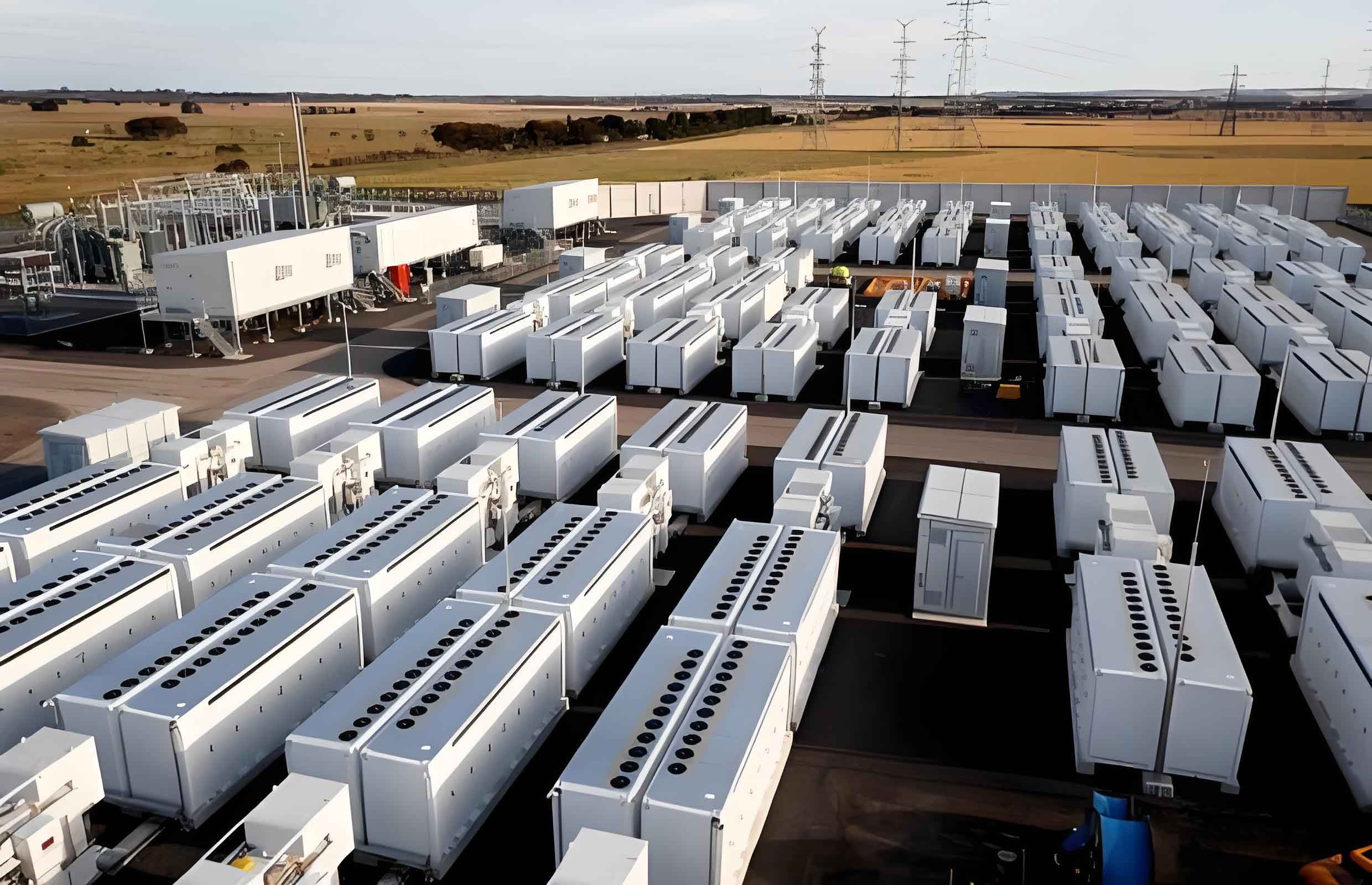
The architecture of the insulation test information management system is modular, consisting of four primary components: data acquisition, data query and export, data modification and deletion, and parameter setting. Each module is designed to handle specific tasks, ensuring comprehensive management of insulation test data for cell energy storage systems. Below is a table summarizing the key functions of these modules:
| Module Name | Function Description |
|---|---|
| Data Acquisition | Captures insulation test parameters such as positive insulation resistance, negative insulation resistance, positive withstand voltage, and negative withstand voltage from testing equipment via TCP/IP communication. |
| Data Query and Export | Allows users to retrieve stored data based on PACK barcode or time intervals, and export results to Excel for further analysis, supporting decision-making for cell energy storage system maintenance. |
| Data Modification and Deletion | Enables authorized users to replace, update, or delete records in the database, ensuring data integrity and accuracy for cell energy storage system logs. |
| Parameter Setting | Configures acceptable ranges for insulation test parameters, facilitating automated pass/fail judgments and quality control in cell energy storage system production. |
This structured approach ensures that all aspects of insulation testing for cell energy storage systems are covered, from real-time data collection to historical analysis. The system interacts with testing devices using the TCP/IP protocol, which provides reliable and fast data transmission, essential for high-volume environments like manufacturing lines for cell energy storage systems. Data is stored in a SQL Server database, chosen for its scalability and robustness, allowing seamless integration with other enterprise systems. By implementing these modules, I have created a cohesive platform that enhances the monitoring and management of cell energy storage systems, ultimately contributing to their safety and performance optimization.
In designing this system, I selected LabVIEW as the development language due to its numerous advantages for engineering applications. LabVIEW, or Laboratory Virtual Instrument Engineering Workbench, is a graphical programming environment that uses icons and wires instead of traditional text-based code. This paradigm offers several benefits, particularly for projects involving cell energy storage systems. First, its dataflow programming model makes logic visualization straightforward, allowing me to easily trace data paths and debug issues. For instance, during insulation testing, data flows from the test equipment through TCP/IP nodes to processing functions and finally to the database, a process that LabVIEW represents intuitively. Second, LabVIEW has an extensive library of functions for data acquisition, communication, and analysis, reducing development time. I leveraged these libraries to handle TCP/IP connections and database operations, which are critical for interfacing with cell energy storage system testing hardware. Third, LabVIEW supports modular design through Virtual Instruments (VIs), enabling code reusability and maintainability. Each module in my system, such as data acquisition or querying, is implemented as a separate VI, making updates and expansions easier as cell energy storage system technologies evolve.
The front-panel design of the system focuses on user-friendliness, with distinct interfaces for each module. For data acquisition, the panel includes areas for data reception, storage, and presentation. When test data is received via TCP/IP, it appears as strings in designated boxes; users can then parse and store it with a click, while a table displays recent entries. This real-time feedback is vital for operators monitoring cell energy storage system production lines. The query panel offers two search methods: by PACK barcode for specific cell energy storage system units, or by time range for batch analysis. Results are shown in a table, and export options allow data to be saved as Excel files for detailed reporting. The modification panel includes security features, requiring a password to alter or delete records, thus protecting the integrity of cell energy storage system data. Parameter setting panels use numeric controls to define thresholds, such as minimum insulation resistance, which can be expressed mathematically. For example, the insulation resistance \( R_{ins} \) must satisfy:
$$ R_{ins} \geq R_{min} $$
where \( R_{min} \) is the set lower limit for cell energy storage system safety. These interfaces are designed to minimize user error and maximize efficiency, catering to the fast-paced environments where cell energy storage systems are deployed.
The program block diagram, which represents the underlying code, is where LabVIEW’s power truly shines. For data acquisition, I implemented TCP/IP communication blocks to open connections, read data, and close sessions. The data flow can be described using a simple equation for data transmission rate:
$$ \text{Data Rate} = \frac{\text{Bytes Received}}{\text{Time}} $$
This ensures efficient handling of streaming data from cell energy storage system testers. Database operations use LabVIEW’s database connectivity toolkit to insert, query, update, and delete records. For instance, when storing insulation test results, the system constructs a SQL query like:
$$ \text{INSERT INTO InsulationTest (PACK_Barcode, Pos_Resistance, Neg_Resistance) VALUES (‘ABC123’, 1000, 950) $$
This query is executed via LabVIEW VIs, seamlessly integrating with SQL Server. In data querying, conditional statements are used to filter records, such as:
$$ \text{SELECT * FROM InsulationTest WHERE Timestamp BETWEEN ‘2025-01-01’ AND ‘2025-12-31’} $$
for time-based searches related to cell energy storage system performance over a period. Error handling is incorporated using case structures to manage exceptions, like invalid barcodes or network timeouts, ensuring robustness in real-world cell energy storage system applications.
To further elaborate on the technical implementation, the TCP/IP protocol is configured with specific IP addresses and ports to communicate with insulation test equipment. This protocol is chosen for its reliability in industrial networks where cell energy storage systems are tested. Data packets are parsed using string functions in LabVIEW to extract relevant parameters, which are then validated against set limits. The validation process can be modeled with logical expressions; for example, a pass condition for insulation resistance might be:
$$ (R_{pos} > R_{min}) \land (R_{neg} > R_{min}) $$
where \( R_{pos} \) and \( R_{neg} \) are positive and negative insulation resistances, respectively, and \( R_{min} \) is the minimum acceptable value for a cell energy storage system. If the condition fails, the system flags the unit for review. This automated checking enhances the quality assurance process for cell energy storage systems. Additionally, the database schema is optimized for quick queries, with indexes on fields like PACK barcode and timestamp, supporting efficient data retrieval for large-scale cell energy storage system fleets.
Parameter setting is a critical aspect, as it defines the criteria for evaluating cell energy storage system insulation integrity. The system allows users to input upper and lower bounds for each test parameter. These bounds can be represented in a table for clarity:
| Parameter | Lower Bound | Upper Bound | Unit |
|---|---|---|---|
| Positive Insulation Resistance | 1000 | ∞ | MΩ |
| Negative Insulation Resistance | 1000 | ∞ | MΩ |
| Positive Withstand Voltage | 0 | 5000 | V |
| Negative Withstand Voltage | 0 | 5000 | V |
These values are stored in configuration files or database tables and are accessed during testing to automatically judge results. For example, if a cell energy storage system unit’s insulation resistance falls below 1000 MΩ, it is marked as faulty. This standardization helps maintain consistency across different production batches of cell energy storage systems. The mathematical formulation for such judgments can be extended to include tolerance levels, such as:
$$ \text{Pass if } |R_{measured} – R_{nominal}| \leq \epsilon $$
where \( \epsilon \) is a tolerance factor, though in my system, simple range checks suffice for most cell energy storage system applications.
Data modification and deletion modules incorporate security measures to prevent unauthorized access. Password protection is implemented using hash functions, though in this version, a simple string match is used for simplicity. The process involves verifying user credentials before executing SQL commands like UPDATE or DELETE. For data replacement, the system checks if the new PACK barcode conforms to formatting rules, ensuring data consistency for cell energy storage system tracking. This is important because barcodes often follow specific patterns, such as starting with certain letters. The validation logic can be expressed as:
$$ \text{Valid Barcode} = (\text{Length}(barcode) = 10) \land (\text{FirstChar}(barcode) \in \{A, B, C\}) $$
If valid, the system proceeds with the update; otherwise, it returns an error. This safeguards against accidental corruption of cell energy storage system records.
In terms of scalability, the system is designed to handle increasing volumes of data as cell energy storage system adoption grows. LabVIEW’s ability to multithread allows concurrent data acquisition from multiple test stations, which can be modeled using queuing theory. For instance, if \( \lambda \) is the arrival rate of test data and \( \mu \) is the processing rate, the system’s stability condition is:
$$ \lambda < \mu $$
By optimizing database queries and using efficient algorithms, I ensure that \( \mu \) remains high, supporting real-time operations for cell energy storage system production lines. Additionally, the export functionality generates Excel files with formatted data, enabling further statistical analysis. Tools like mean, standard deviation, and trend analysis can be applied to insulation test data to monitor the health of cell energy storage systems over time. For example, the average insulation resistance \( \bar{R} \) over \( n \) samples can be calculated as:
$$ \bar{R} = \frac{1}{n} \sum_{i=1}^{n} R_i $$
where \( R_i \) represents individual measurements from cell energy storage system units. Such analyses help in identifying patterns and potential issues in cell energy storage system manufacturing.
The integration of this system into existing industrial workflows for cell energy storage systems has shown promising results. By automating data collection and management, it reduces manual errors and saves time. Operators can quickly query historical data to troubleshoot problems, such as sudden drops in insulation resistance, which might indicate defects in cell energy storage system components. Moreover, the parameter setting module allows for easy adjustments as standards evolve, ensuring compliance with new regulations for cell energy storage systems. As renewable energy deployments expand, the role of cell energy storage systems in grid stability becomes more critical, and reliable insulation testing is key to their safe operation. My system contributes to this by providing a robust platform for data-driven decision-making.
Looking ahead, there are opportunities to enhance the system further. For instance, incorporating machine learning algorithms could enable predictive maintenance for cell energy storage systems, using historical insulation data to forecast failures. This could involve regression models like:
$$ R_{future} = \alpha + \beta \cdot t + \epsilon $$
where \( R_{future} \) is predicted insulation resistance, \( t \) is time, and \( \alpha \), \( \beta \) are coefficients learned from data. Additionally, cloud integration could allow remote monitoring of cell energy storage systems across multiple sites, leveraging IoT technologies. LabVIEW’s support for web services makes this feasible, potentially transforming how cell energy storage system data is managed globally. The modular design of my system facilitates such upgrades, ensuring it remains relevant as cell energy storage system technologies advance.
In conclusion, the insulation test information management system I developed using LabVIEW offers a comprehensive solution for managing critical data in cell energy storage system production and maintenance. By leveraging graphical programming, TCP/IP communication, and SQL Server databases, it provides an efficient, user-friendly platform that addresses the growing needs of the energy storage industry. The system’s modules for data acquisition, querying, modification, and parameter setting ensure thorough coverage of insulation testing processes, enhancing the reliability and safety of cell energy storage systems. As the demand for cell energy storage systems continues to rise, tools like this will play an essential role in supporting their deployment and optimization, contributing to a more sustainable energy future. Through continuous improvement and adaptation, this system can evolve to meet new challenges, solidifying its value in the ecosystem of cell energy storage systems.