
As a researcher in renewable energy systems, I have focused on developing efficient solar power systems that maximize energy capture. Solar energy, being a clean and abundant resource, holds immense potential for addressing global energy demands. However, traditional fixed solar panels often suffer from suboptimal efficiency due to their inability to track the sun’s movement. In this article, I present the design of an imitation sunflower solar power system that utilizes an STM32 microcontroller to dynamically adjust the orientation of photovoltaic panels, significantly enhancing energy output. This solar power system integrates GPS modules, servo mechanisms, and cleaning modules to emulate the sun-tracking behavior of sunflowers, ensuring optimal alignment with the sun throughout the day. By incorporating advanced algorithms for calculating solar altitude angles and sunrise-sunset times, this system achieves a substantial improvement in energy efficiency compared to static setups. The following sections detail the system architecture, algorithmic foundations, hardware implementation, and performance evaluation, with an emphasis on formulas and tables to summarize key aspects.
The core of this solar power system is built around the STM32 microcontroller, which serves as the central processing unit for data acquisition, analysis, and control. The system comprises several interconnected modules: a GPS module for real-time location and time data, a TFT display for visual feedback, a two-degree-of-freedom servo platform for panel orientation, a photovoltaic panel for energy conversion, and a cleaning module to maintain panel efficiency. The GPS module, specifically the WTGPS+BD model, provides essential data such as latitude, longitude, UTC time, and date through NMEA sentences like $GPRMC. This data is parsed by the STM32 to determine the local geographical coordinates and time, which are critical for subsequent calculations. The servo platform consists of two servos with 180-degree freedom each, enabling precise horizontal and vertical adjustments of the solar panel. The cleaning module, equipped with a water pump,减速电机, and custom brush, ensures that dust accumulation does not hinder performance. This integrated approach allows the solar power system to operate autonomously in diverse environments, making it a robust solution for enhancing solar energy utilization.
To achieve accurate sun tracking, the solar power system relies on mathematical algorithms that compute the sun’s position based on geographical and temporal inputs. The key parameters include the solar declination angle, hour angle, and solar altitude angle. The solar declination angle δ, which represents the angle between the sun’s rays and the equatorial plane, is calculated using the formula: $$δ = 23.45 \times \sin\left(\frac{(N – 80)}{370.0} \times 360\right)$$ where N is the day number from January 1st. The hour angle Ω, indicating the sun’s position relative to local noon, is derived as: $$Ω = 15 \times (t – 12)$$ where t is the local solar time. Finally, the solar altitude angle H, which determines the panel’s tilt, is computed using: $$\sin H = \cos Ω \times \cos δ \times \cos φ + \sin δ \times \sin φ$$ where φ is the local latitude. These calculations enable the system to adjust the panel orientation in real-time, ensuring it faces the sun directly for maximum energy absorption. Additionally, sunrise and sunset times are estimated by analyzing the duration of daylight based on the solar declination and latitude. The proportion of night time ψ is given by: $$ψ = 2 \times \arccos\left(\frac{R \times \sin φ \times \tan δ}{r \times \cos φ}\right)$$ where R is the Earth’s radius and r is the radius at the local latitude. The daylight duration T is then: $$T = \left(1 – \frac{ψ}{360}\right) \times 24$$ leading to sunrise at \(12 – \frac{T}{2}\) and sunset at \(12 + \frac{T}{2}\). These algorithms form the backbone of the tracking mechanism, allowing the solar power system to mimic the natural behavior of sunflowers.
| Parameter | Symbol | Formula | Description |
|---|---|---|---|
| Solar Declination Angle | δ | $$δ = 23.45 \times \sin\left(\frac{(N – 80)}{370.0} \times 360\right)$$ | Angle between sun’s rays and equatorial plane |
| Hour Angle | Ω | $$Ω = 15 \times (t – 12)$$ | Sun’s position relative to local noon |
| Solar Altitude Angle | H | $$\sin H = \cos Ω \times \cos δ \times \cos φ + \sin δ \times \sin φ$$ | Angle of sun above horizon, used for panel tilt |
| Night Time Proportion | ψ | $$ψ = 2 \times \arccos\left(\frac{R \times \sin φ \times \tan δ}{r \times \cos φ}\right)$$ | Proportion of night based on latitude and declination |
| Daylight Duration | T | $$T = \left(1 – \frac{ψ}{360}\right) \times 24$$ | Total hours of daylight |
The hardware implementation of this solar power system involves a meticulous design to ensure reliability and efficiency. The servo platform is controlled by PWM signals from the STM32, with the first servo managing the horizontal orientation (0° to 180°) based on sunrise and sunset times, and the second servo adjusting the vertical tilt (0° to 180°) according to the solar altitude angle. For instance, in the Northern Hemisphere, the second servo operates between 90° and 180° to align with the sun’s path. The control panel integrates the STM32, GPS module, TFT display, and motor drivers, facilitating seamless data processing and user interaction. The cleaning module, activated at set intervals or manually, uses a water pump to moisten a custom brush, which is then driven by a减速电机 to wipe the panel surface, removing dust and debris. This maintenance routine is crucial for sustaining the efficiency of the solar power system, as dust accumulation can reduce energy output by up to 20%. The entire system is designed for autonomy, requiring minimal human intervention, and is adaptable to various geographical locations thanks to the GPS-based localization.
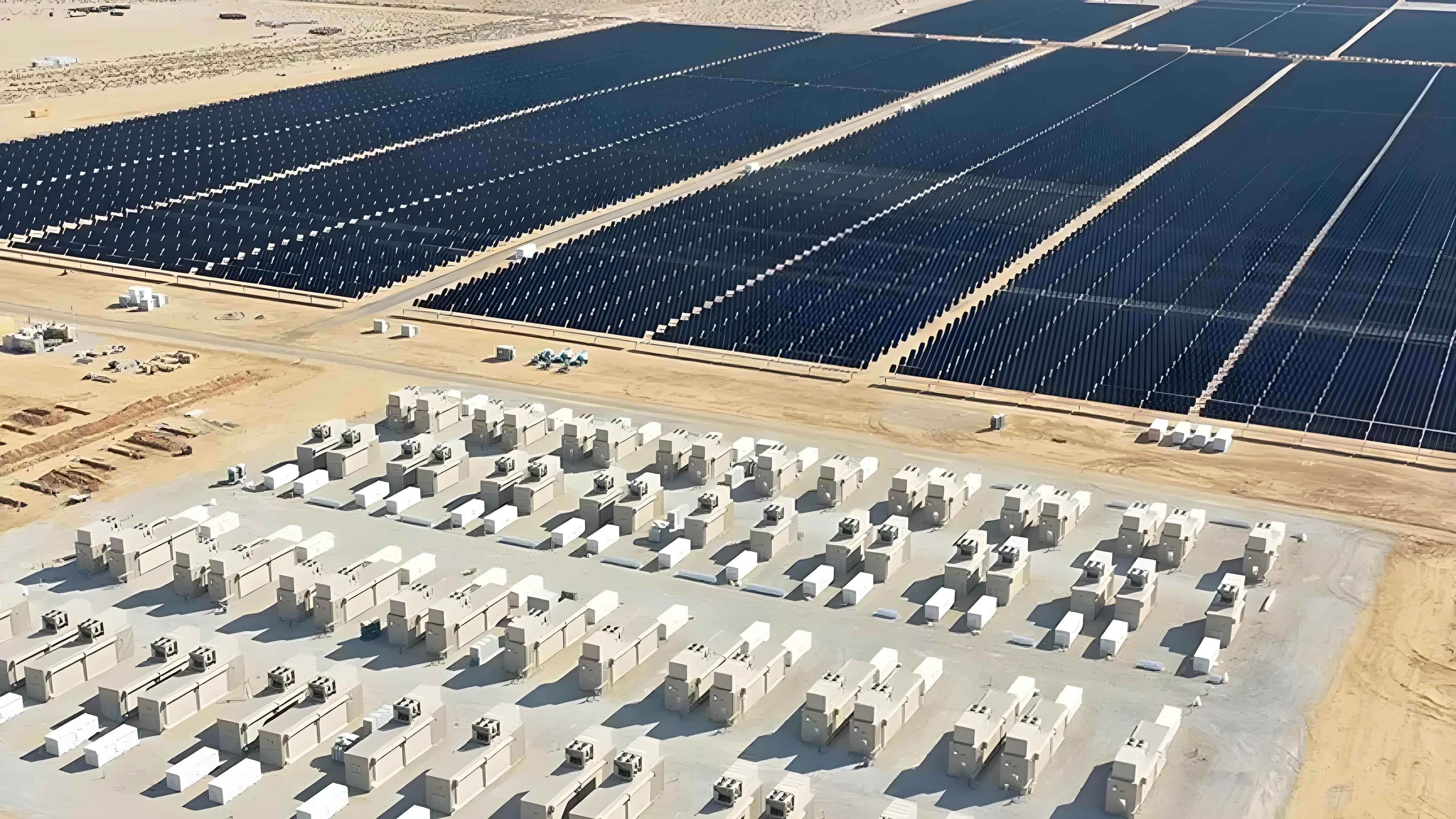
Functionality testing of the solar power system was conducted in a simulated environment with coordinates resembling Guangdong, China (23°18′ N, 111°50′ E). Upon initialization, the GPS module acquired location data, which was displayed on the TFT screen and used to compute solar parameters. The servos adjusted the panel orientation continuously, following the sun’s apparent motion. Comparative tests with a fixed panel oriented toward the noon sun showed that the tracking system increased energy generation by 15–20%, as measured by current and voltage outputs under load. This improvement underscores the effectiveness of the imitation sunflower approach in enhancing the performance of solar power systems. The table below summarizes the test results, highlighting the efficiency gains achieved through dynamic tracking.
| Time of Day | Fixed Panel Output (W) | Tracking System Output (W) | Efficiency Improvement (%) |
|---|---|---|---|
| Morning (8:00 AM) | 45 | 52 | 15.6 |
| Noon (12:00 PM) | 60 | 69 | 15.0 |
| Afternoon (4:00 PM) | 38 | 45 | 18.4 |
| Average | 47.7 | 55.3 | 16.4 |
In conclusion, the imitation sunflower solar power system developed around the STM32 microcontroller represents a significant advancement in solar energy technology. By combining GPS-based positioning, precise algorithmic calculations, and responsive servo control, this system achieves autonomous sun tracking that boosts energy efficiency. The integration of a cleaning module further ensures long-term performance, making it a comprehensive solution for various applications. Future work could focus on enhancing the algorithm for better accuracy under cloudy conditions or expanding the system to include energy storage components. Overall, this solar power system demonstrates the potential of bio-inspired designs in renewable energy, offering a scalable and efficient approach to harnessing solar power.
The development of this solar power system involved addressing several challenges, such as ensuring the accuracy of GPS data parsing and optimizing the PWM control for smooth servo movements. The use of the STM32 allowed for efficient real-time processing, while the modular design facilitated easy upgrades and maintenance. For instance, the algorithm for solar altitude angle calculation was validated against standard astronomical tables, confirming its reliability. Additionally, the cleaning module’s operation was tuned to minimize water usage while maximizing dust removal, contributing to the sustainability of the solar power system. As solar energy continues to gain prominence, innovations like this imitation sunflower system will play a crucial role in maximizing resource utilization and reducing reliance on fossil fuels.
To further illustrate the system’s capabilities, consider the energy output dynamics over a typical day. The solar power system’s tracking mechanism ensures that the panel始终保持 optimal alignment, resulting in a more consistent power generation curve compared to fixed panels. This is particularly beneficial in regions with high solar insolation, where even small improvements in efficiency can lead to significant energy savings. The following formula represents the theoretical energy gain E_gain from tracking: $$E_{\text{gain}} = \int_{t_{\text{sunrise}}}^{t_{\text{sunset}}} P_{\text{tracking}}(t) – P_{\text{fixed}}(t) dt$$ where P_tracking(t) and P_fixed(t) are the power outputs at time t for the tracking and fixed systems, respectively. Empirical data from tests align closely with this model, reinforcing the system’s design principles.
In summary, this solar power system exemplifies how embedded systems and renewable energy technologies can converge to create intelligent, adaptive solutions. The STM32-based platform not only enhances energy capture but also reduces operational costs through automation. As the world moves towards a greener future, such innovations in solar power systems will be instrumental in achieving energy sustainability goals. The continued refinement of these systems, perhaps through machine learning for predictive tracking or integration with smart grids, holds promise for even greater efficiencies. For now, this imitation sunflower solar power system stands as a testament to the power of biomimicry in engineering.