
In recent years, lithium battery technology has advanced rapidly, and LiFePO4 batteries, in particular, have gained widespread adoption due to their long lifespan, high capacity, lightweight nature, and environmental friendliness. However, the performance and longevity of a LiFePO4 battery are heavily influenced by temperature. Typically, the charging temperature range for a standard LiFePO4 battery is 0 to 45°C, while the discharging range is -40 to 60°C. This underscores the critical role temperature plays in the operation of a LiFePO4 battery. Key parameters such as capacity, internal resistance, and charge-discharge characteristics vary with temperature changes, and extremes of heat or cold can severely degrade the performance and lifespan of a LiFePO4 battery. Therefore, to enhance the temperature adaptability and stability of LiFePO4 battery packs, designing an intelligent charge-discharge protection circuit is paramount.
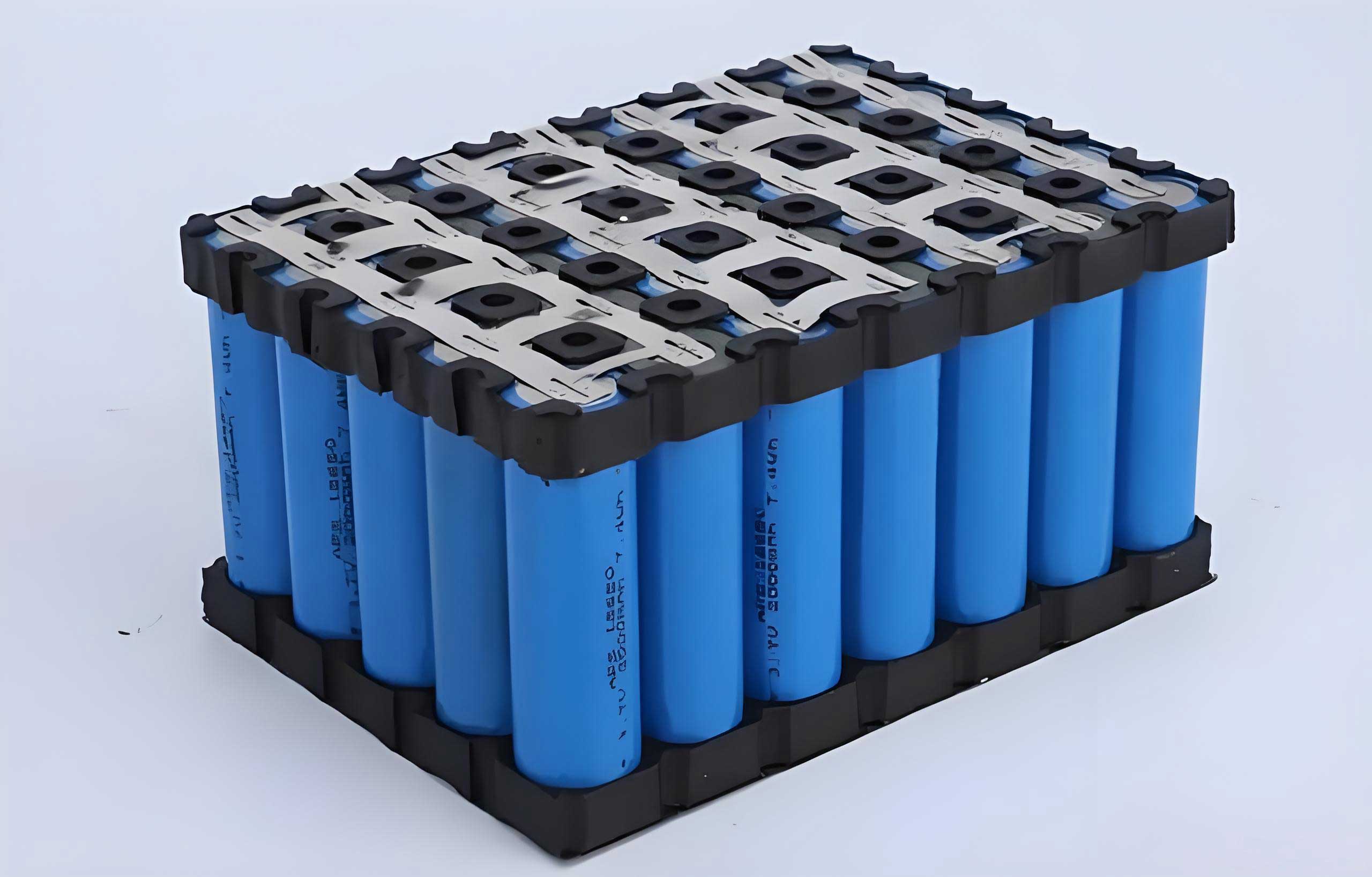
From my perspective as a researcher in energy storage systems, the primary challenge lies in ensuring that a LiFePO4 battery pack operates safely across a broad temperature spectrum. The core innovation in this work is a protection circuit that integrates real-time monitoring with micro-heating control, specifically tailored for LiFePO4 battery technology. The design philosophy centers on safeguarding each individual cell within a series-connected LiFePO4 battery pack, as inherent variations in capacity and internal resistance can lead to imbalances during cycling.
Overall System Architecture for the Wide-Temperature LiFePO4 Battery Pack
The foundational voltage of a single LiFePO4 cell is 3.2V. To meet practical voltage requirements, multiple LiFePO4 cells are connected in series. My design targets a 4-series (4S) LiFePO4 battery pack, resulting in a nominal voltage of 12.8V. The protection system must monitor and protect each LiFePO4 cell independently. The overall system block diagram conceptualizes the integration of two main modules: the core protection circuit and the intelligent heating control circuit. The protection circuit is responsible for preventing overcharge, over-discharge, overcurrent, short-circuit, and overtemperature conditions. Simultaneously, the heating circuit ensures the LiFePO4 battery pack can function effectively in sub-zero environments, a common limitation for standard LiFePO4 batteries.
The system’s operation can be summarized by the following high-level functional flow: During charging or discharging, the protection IC continuously samples the voltage of each LiFePO4 cell and the overall pack current. If any parameter deviates from the safe window, the relevant MOSFET switches are controlled to interrupt the path. Concurrently, a separate temperature-sensing and control module monitors the pack’s surface temperature. If it falls below a lower threshold, a heating element is activated using energy from the LiFePO4 battery pack itself, but only when the pack voltage is within a safe range for such operation.
Detailed Design of the LiFePO4 Battery Pack Protection Circuit
The heart of the protection circuit is the dedicated battery management IC, SH367003XBAAOO. This IC is chosen for its precision in monitoring series-connected cells, making it ideal for a LiFePO4 battery pack application. The schematic centers around this IC interfacing with four LiFePO4 cells (BT1 to BT4), two power MOSFETs (Q1 for charge control, Q2 for discharge control), and a network of peripheral resistors and capacitors for signal conditioning and timing.
Circuit Configuration and Voltage Sensing
The positive terminal of the entire LiFePO4 battery pack (BT4’s positive) connects to the IC’s power pin (VC1, pin 15). The negative terminal of the first cell (BT1’s negative) connects to the IC’s ground (VSS, pin 7) via a current-sensing resistor. The voltage of each individual LiFePO4 cell is fed to the IC through a balanced voltage divider network. For a 4S LiFePO4 pack, the cell voltages are:
- Cell 4 (BT4): $$V_{C4} = V_{pack} = 12.8V$$ (nominal)
- Cell 3 (BT3): $$V_{C3} = V_{pack} – V_{C4} = 9.6V$$
- Cell 2 (BT2): $$V_{C2} = V_{pack} – V_{C3} – V_{C4} = 6.4V$$
- Cell 1 (BT1): $$V_{C1} = V_{pack} – V_{C2} – V_{C3} – V_{C4} = 3.2V$$
These nodes are connected to pins VC4, VC3, VC2, and VC1 respectively via resistors R3, R8, R11, and R9. Decoupling capacitors (C1-C4) are placed at each sensing node to filter noise, crucial for the stable operation of the LiFePO4 battery monitoring system.
| Protection Function | Threshold Value (per LiFePO4 cell) | Control Action | Typical Delay (set by capacitor) |
|---|---|---|---|
| Overcharge Protection | $$V_{OC} = 3.75 \text{ V}$$ | Turn off charge MOSFET (Q1) | $$t_{OC} \propto C_{CCT}$$ |
| Over-discharge Protection | $$V_{OD} = 2.00 \text{ V}$$ | Turn off discharge MOSFET (Q2) | $$t_{OD} \propto C_{CDT}$$ |
| Charge Overcurrent | $$I_{COC} \text{ (set by } R_{01}, R_{02})$$ | Turn off charge MOSFET (Q1) | Milliseconds |
| Discharge Overcurrent/Short Circuit | $$I_{DOC} \text{ (set by } R_{01}, R_{02})$$ | Turn off discharge MOSFET (Q2) | Microseconds |
Overcharge Protection Mechanism
During normal charging, the IC’s COP pin (pin 1) outputs a signal to keep MOSFET Q1 in saturation, allowing current to flow into the LiFePO4 battery pack. The IC constantly compares each LiFePO4 cell’s voltage against the fixed overcharge threshold, $$V_{OC}$$. If any cell in the LiFePO4 battery pack exceeds this value, the IC’s internal logic triggers a change of state at the COP pin, driving Q1 into cut-off. This opens the charging path, preventing any further charge from entering the LiFePO4 battery pack. The delay capacitor C6 connected to the CCT pin (pin 6) filters transient voltage spikes, ensuring protection only activates for sustained overvoltage, which is vital for the health of the LiFePO4 battery. The delay time can be approximated by:
$$ t_{OC} \approx k_{OC} \times C_{CCT} $$
where $$k_{OC}$$ is an IC-specific constant.
Over-discharge and Under-Voltage Lockout
Similarly, during discharge, the DOP pin (pin 3) controls the discharge MOSFET Q2. The IC monitors for the condition where any LiFePO4 cell’s voltage drops below the over-discharge threshold, $$V_{OD}$$. Upon detection, the DOP pin deactivates Q2, disconnecting the load from the LiFePO4 battery pack. This prevents deep discharge, which can cause irreversible damage to the LiFePO4 battery chemistry. The delay for this function is set by capacitor C7 on the CDT pin (pin 5), with a relationship:
$$ t_{OD} \approx k_{OD} \times C_{CDT} $$
Overcurrent and Short-Circuit Protection
This is a two-tiered protection strategy essential for the safety of the LiFePO4 battery pack. The first tier uses the current-sensing resistors R01 and R02. The voltage drop across these resistors, proportional to the pack current $$I_{pack}$$, is fed to the VINI pin (pin 4).
$$ V_{VINI} = I_{pack} \times (R_{01} + R_{02}) $$
If $$V_{VINI}$$ exceeds an internal reference, the IC triggers an overcurrent fault. The second tier monitors the voltage between the CS pin (pin 2) and VDD pin (pin 16), which corresponds to the total drain-to-source voltage drop ($$V_{DS}$$) across MOSFETs Q1 and Q2. During a severe short circuit, $$V_{DS}$$ increases dramatically. If it surpasses a set limit, the IC immediately shuts down Q2. The combined response offers robust protection for both the power components and the LiFePO4 battery cells from catastrophic failure.
Overtemperature Protection
While the IC manages electrical faults, a separate hardware safety net is implemented for extreme high temperatures. A thermal protector (KT) with a fixed actuation point of 75°C is placed in series with the main power path. If the ambient or internal temperature of the LiFePO4 battery pack exceeds this limit, the protector opens physically, breaking the circuit entirely. This provides a fail-safe mechanism independent of the IC’s operation.
Intelligent Heating Control Circuit for Low-Temperature Operation
To address the low-temperature limitation of LiFePO4 batteries, I developed an autonomous heating control subsystem. This module allows a specially formulated low-temperature LiFePO4 battery pack to operate in environments below 0°C. The core principle is to use a fraction of the stored energy to gently warm the pack via a carbon fiber heating sheet, bringing it into a permissible temperature range for charging or high-efficiency discharging.
Design and Operating Principle
The heating circuit is powered directly from the protected output terminals of the main LiFePO4 battery pack (P+, P-). It employs voltage comparators (HT7050) to make decisions based on two parameters: pack temperature and pack voltage. A negative temperature coefficient (NTC) thermistor (RT1) is attached to the surface of the LiFePO4 battery pack to sense its temperature. The circuit’s state machine is designed as follows:
- Condition A (Temperature < 0°C): Comparator U2 detects the low temperature via the voltage divider (R8, R13, RT1). Its output goes high, turning on transistors Q1 and Q3. This simultaneously enables the power path for the heater (via Q4, controlled by U3) and illuminates an LED indicator (D1). However, a critical interlock exists: the heating circuit only activates if the LiFePO4 battery pack voltage, monitored by comparator U3, is above a minimum safe level (set by potentiometer W1, R1, R14). This prevents deep discharge during heating. In this state, the main charge path to the LiFePO4 battery pack is logically disabled.
- Condition B (0°C ≤ Temperature ≤ 7°C): U2’s output turns off, disabling Q1 and Q3. This cuts power to the heater and the LED. The charge path is now permitted, allowing the LiFePO4 battery pack to be charged as it warms up naturally from the charging current or ambient heat.
- Condition C (Temperature > 7°C): The system remains in a normal standby state with heating disabled. The LiFePO4 battery pack is free to charge and discharge normally through the main protection circuit.
The voltage check ensures the heating process does not compromise the LiFePO4 battery pack’s state of charge. The heater resistance ($$R_{heater}$$) and the applied voltage ($$V_{pack}$$) determine the heating power:
$$ P_{heater} = \frac{V_{pack}^2}{R_{heater}} $$
This power must be carefully calibrated to provide gentle, uniform warming without creating localized hot spots on the LiFePO4 battery pack.
| Pack Surface Temperature (T) | Heater State | Charge Path State | Primary LiFePO4 Battery Function |
|---|---|---|---|
| $$ T < 0^\circ C $$ | ON (if $$V_{pack} > V_{min}$$) | Disabled | Self-warming / Standby |
| $$ 0^\circ C \leq T \leq 7^\circ C $$ | OFF | Enabled | Charging / Discharging |
| $$ T > 7^\circ C $$ | OFF | Enabled | Normal Operation |
Performance Analysis and Design Considerations
Integrating these two circuits creates a comprehensive management system for a LiFePO4 battery pack. The protection circuit’s effectiveness hinges on the accuracy of the voltage sensing network. Any imbalance in the resistor dividers can lead to false tripping or, worse, a failure to protect a weak cell in the LiFePO4 battery pack. Therefore, using high-precision, low-temperature-coefficient resistors is recommended. The total system current draw during standby, which includes the protection IC and the monitoring comparators, must be minimized to avoid gradual discharge of the LiFePO4 battery pack during storage. This is especially critical for a LiFePO4 battery due to its inherently low self-discharge rate.
The heating circuit introduces an energy overhead. The trade-off between heating power, time to reach the target temperature, and the associated discharge of the LiFePO4 battery pack can be modeled. The energy ($$E_{heat}$$) required to raise the temperature of the LiFePO4 battery pack mass ($$m$$) by $$\Delta T$$ is:
$$ E_{heat} = m \cdot C_p \cdot \Delta T $$
where $$C_p$$ is the specific heat capacity of the LiFePO4 battery pack assembly. The available energy from the LiFePO4 battery pack for heating is limited by the minimum safe voltage threshold. This analysis is crucial for sizing the heating element and estimating the operational downtime in extreme cold for a LiFePO4 battery system.
Furthermore, the placement of the thermal sensor RT1 is critical. It must be in good thermal contact with the core of the LiFePO4 battery pack, not just the casing, to accurately represent the cells’ temperature. Insulation around the pack can significantly improve the heating efficiency, reducing the energy burden on the LiFePO4 battery.
Conclusion and Future Perspectives
In this design study, I have presented a holistic approach to protecting and enabling LiFePO4 battery packs in wide-temperature environments. The core protection circuit provides robust defense against common electrical hazards for the LiFePO4 battery, while the innovative micro-heating control circuit directly tackles the challenge of low-temperature operation, a key frontier for LiFePO4 battery technology. This dual-circuit strategy significantly extends the operational envelope and practical lifespan of a LiFePO4 battery pack, making it suitable for applications in automotive, renewable energy storage, and outdoor electronics where temperature fluctuations are severe.
The practical implementation of this design confirms its utility. However, as noted, there is room for optimization. The current design physically separates the high-temperature cut-off (thermal protector) from the low-temperature heating control. A more integrated approach could involve a single, sophisticated battery management system (BMS) microcontroller that handles all temperature monitoring, protection triggering, and heating control digitally for the LiFePO4 battery pack. This would allow for more adaptive algorithms, such as proportional-integral-derivative (PID) control of the heater power, and communication of the LiFePO4 battery pack’s status to a host system. Future iterations could also incorporate cell balancing circuitry to actively correct voltage imbalances between individual LiFePO4 cells during charging, further enhancing the longevity and capacity utilization of the entire LiFePO4 battery pack. The pursuit of such integrated, intelligent management systems remains essential for unlocking the full potential of LiFePO4 battery technology in an ever-demanding world.