
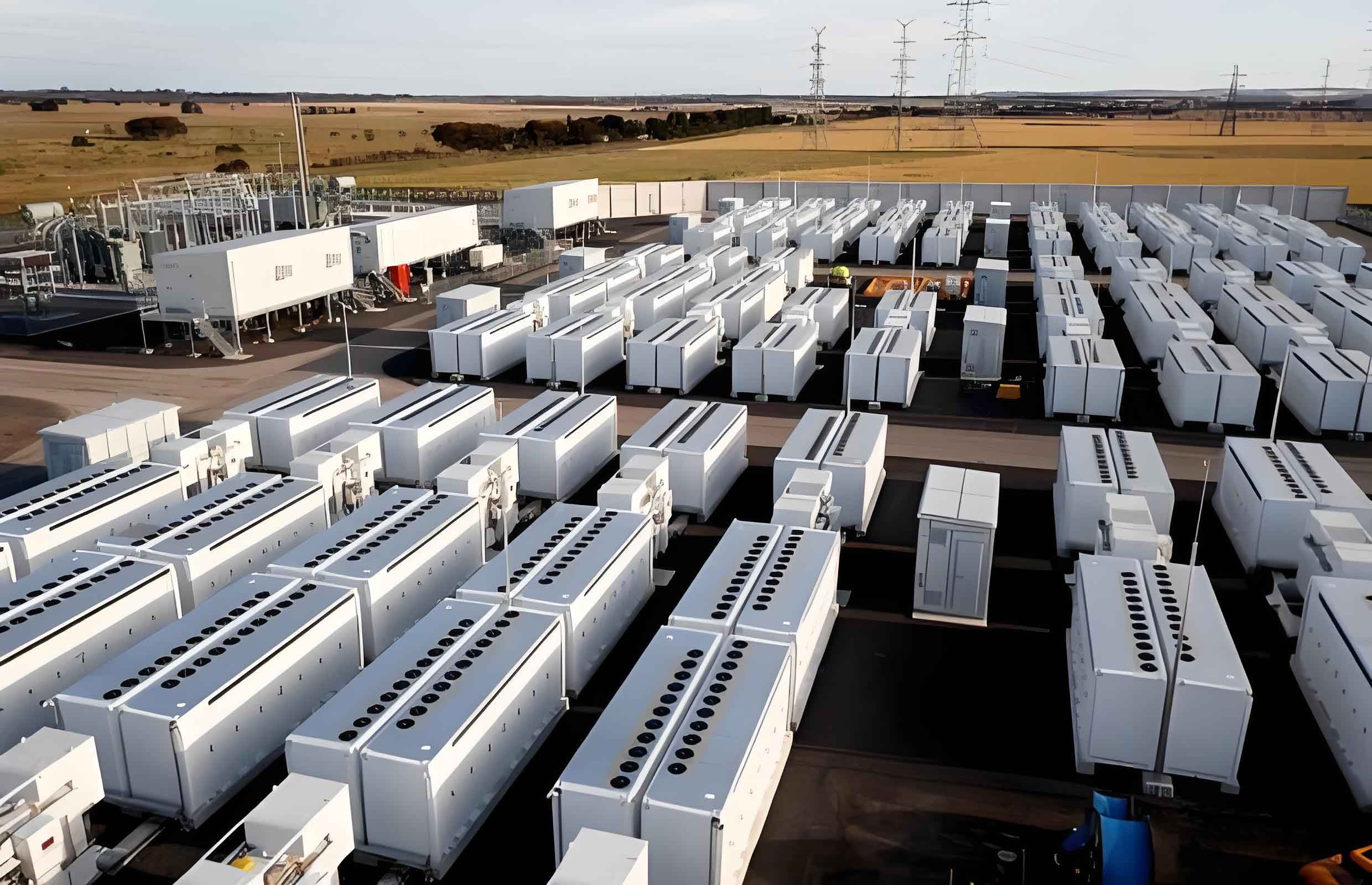
With the rapid development of the global economy, energy and environmental issues have become increasingly prominent. To address these challenges, experts and scholars worldwide have proposed various measures to conserve resources and protect the environment. Among these, the adoption of new energy sources is one of the most effective and widely used methods. However, new energy power generation technologies, such as solar and wind, exhibit randomness, volatility, and intermittency during operation. To mitigate these issues, energy storage technology has gained significant attention and development. Energy storage technology involves converting surplus electrical energy into chemical energy for storage, which can then be converted back to electrical energy when needed by the grid, ensuring a balance between supply and demand. Common energy storage technologies include electrochemical energy storage, electromagnetic energy storage, physical energy storage, and phase change energy storage. Electrochemical energy storage, particularly using lithium-ion energy storage cells, is favored due to its low cost, high efficiency, long lifespan, and excellent environmental adaptability. Lithium-ion energy storage cells offer advantages such as high energy density, low production costs, and high recyclability, making them widely applicable in new energy storage systems.
During operation, lithium-ion energy storage cells undergo electrochemical reactions that generate heat, leading to a rapid rise in temperature. This temperature increase can significantly reduce the lifespan and capacity of the energy storage cell. Research indicates that the optimal operating temperature for lithium-ion energy storage cells ranges from 20°C to 40°C. Therefore, effective thermal management systems, such as liquid cooling, are essential to maintain the performance and longevity of these energy storage cells. In liquid cooling systems, the layout of the cooling plate directly impacts the cooling efficiency. Common flow channel configurations for cooling plates include straight channels, serpentine channels, and C-shaped channels. While straight channels offer advantages like short flow paths and low pressure drops, they suffer from poor temperature uniformity. Serpentine channels, on the other hand, provide better temperature uniformity but involve longer flow paths and higher pressure drops, resulting in increased energy consumption. Thus, the design and optimization of serpentine channels are critical for effective thermal management of energy storage cells.
In this study, we focus on serpentine channel cooling plates for lithium-ion energy storage cells. We investigate the cooling performance of horizontally and vertically arranged serpentine channels and analyze the effects of coolant flow rate on the thermal behavior of the energy storage cell. Using computational fluid dynamics software ANSYS Fluent, we develop a numerical model for liquid cooling of lithium iron phosphate (LiFePO4) energy storage cells. The model incorporates key parameters such as flow channel dimensions, spacing, and cooling plate thickness. We also examine the impact of coolant flow direction and flow rate on the temperature distribution and pressure drop within the energy storage cell. Through orthogonal experimental methods, we aim to identify the optimal parameter combination for serpentine channels, providing insights for the design of thermal management systems for energy storage cells.
Model Establishment
To simulate the thermal behavior of the energy storage cell, we selected a lithium iron phosphate (LiFePO4) battery as the研究对象. The technical parameters of the energy storage cell are summarized in Table 1. Considering the repetitive structure of the energy storage cell, we simplified the model by selecting a single repeating unit as the研究对象. The cooling plate is placed on one side of the energy storage cell, and the heat generated during operation is absorbed by the coolant flowing through the plate. The serpentine flow channels on the cooling plate are arranged in two configurations: horizontal and vertical, as illustrated in Figure 1 and Figure 2, respectively. The total length of the horizontal flow channel is 1,776 mm, while that of the vertical flow channel is 1,898 mm.
| Parameter | Value |
|---|---|
| Positive Electrode Material | Lithium Iron Phosphate (LiFePO4) |
| Negative Electrode Material | Graphite |
| Electrolyte | LiPF6 |
| Capacity (Ah) | 24 |
| Rated Voltage (V) | 3.2 |
| Density (kg/m³) | 2,120 |
| Specific Heat Capacity (J/kg·K) | 3,660 |
| Thermal Conductivity (W/m·K) in x, y, z directions | 21.60, 21.60, 2.11 |
| Cell Dimensions (mm) | 204 × 174 × 72 |
The internal structure of the lithium-ion energy storage cell consists of stacked battery layers. During heat dissipation, various heat sources, including reaction heat and Joule heat, are involved. To model the heat generation rate of the energy storage cell, we employed the Bernardi battery heat generation model. The heat generation rate per unit volume is given by:
$$ q = \frac{1}{V_b} \left[ I(E_0 – U) – I^2 R – I T \frac{dE_0}{dT} \right] $$
where \( V_b \) is the volume of the energy storage cell (m³), \( E_0 \) is the open-circuit voltage (V), \( U \) is the operating voltage (V), \( T \) is the temperature (K), \( \frac{dE_0}{dT} \) is the temperature coefficient, and \( I \) is the current (A).
The flow of coolant within the cooling plate follows the conservation laws of mass, momentum, and energy. The governing equations are as follows:
Momentum conservation equation:
$$ \frac{\partial \mathbf{v}}{\partial t} + (\mathbf{v} \cdot \nabla) \mathbf{v} = -\frac{\nabla p}{\rho_w} + \frac{\mu}{\rho_w} \nabla^2 \mathbf{v} + \mathbf{g} $$
Mass conservation equation:
$$ \frac{\partial \rho_w}{\partial t} + \nabla \cdot (\rho_w \mathbf{v}) = 0 $$
Energy conservation equation for the coolant:
$$ \frac{\partial}{\partial t} (\rho_w c_{pw} T_w) + \nabla \cdot (-k_w \nabla T_w + \rho_w c_{pw} T_w \mathbf{v}) = 0 $$
Energy conservation equation for the cooling plate:
$$ \frac{\partial}{\partial t} (\rho_n c_{pn} T_n) + \nabla \cdot (-k_n \nabla T_n) = 0 $$
Energy conservation equation for the energy storage cell:
$$ \frac{\partial}{\partial t} (\rho_b c_{pb} T_b) + \nabla \cdot (-k_b \nabla T_b) = Q $$
where \( \mathbf{v} \) is the velocity vector, \( p \) is the pressure, \( \rho \) is the density, \( \mu \) is the dynamic viscosity, \( \mathbf{g} \) is the gravitational acceleration vector, \( c_p \) is the specific heat capacity, \( k \) is the thermal conductivity, and the subscripts \( w \), \( n \), and \( b \) denote the coolant, cooling plate, and energy storage cell, respectively. \( Q \) represents the heat source term from the energy storage cell.
To solve these equations, we set the following initial and boundary conditions based on actual operating scenarios: initial temperature of the energy storage cell is 30°C; inlet boundary condition is mass flow rate with values of 0.1 g/s, 0.2 g/s, 0.3 g/s, and 0.4 g/s; outlet boundary condition is pressure outlet with 0 Pa; no-slip boundary condition is applied to the channel walls; and natural convection is considered on the external surfaces of the energy storage cell and cooling plate with a heat transfer coefficient of 6 W/(K·m²).
Grid Independence Verification
To ensure the accuracy of the simulation results, we performed a grid independence test by evaluating the pressure drop across the fluid domain for five different mesh densities, as listed in Table 2. The relationship between mesh count and pressure drop is shown in Figure 3. The results indicate that the pressure drop varies by less than 5% across all mesh schemes, satisfying the grid independence criterion.
| Scheme | Mesh Count |
|---|---|
| 1 | 736,456 |
| 2 | 752,345 |
| 3 | 778,478 |
| 4 | 798,427 |
| 5 | 813,457 |
The pressure drop values for each scheme are nearly identical, with deviations within an acceptable range. This confirms that the simulation results are independent of the mesh density, and we proceeded with Scheme 3 for further analysis due to its balance between accuracy and computational efficiency.
Results and Discussion
Pressure Distribution
We simulated the pressure distribution within the serpentine flow channels for both horizontal and vertical arrangements. The results, depicted in Figure 4, show that the pressure decreases along the flow direction in both configurations. However, the magnitude of the pressure drop differs. For the horizontal arrangement, the pressure drop between the inlet and outlet is 31.240 Pa, while for the vertical arrangement, it is 31.923 Pa. The higher pressure drop in the vertical configuration is attributed to its longer flow path (1,898 mm compared to 1,776 mm for the horizontal arrangement), which increases flow resistance. This highlights the trade-off between cooling performance and energy loss in the design of energy storage cell cooling systems.
Temperature Distribution
The temperature distribution within the flow channels and the energy storage cell was analyzed for both configurations. Figure 5 illustrates the temperature variation along the flow channels. In both cases, the coolant temperature increases gradually along the flow path due to continuous heat absorption from the energy storage cell. The temperature rise for the horizontal arrangement is 0.411°C, while for the vertical arrangement, it is 0.436°C. The shorter flow path in the horizontal configuration results in less time for heat absorption, leading to a smaller temperature difference.
The temperature distribution on the surface of the energy storage cell is shown in Figure 6. The maximum temperature for the horizontal arrangement is 30.593°C, with a temperature difference of 0.593°C, whereas for the vertical arrangement, the maximum temperature is 30.500°C. This indicates that the vertical arrangement provides better cooling performance for the energy storage cell, albeit with a higher pressure drop. The improved cooling in the vertical configuration is due to the longer contact time between the coolant and the energy storage cell, allowing for more efficient heat transfer.
Effect of Flow Rate
To investigate the influence of coolant flow rate on the cooling performance of the energy storage cell, we varied the inlet flow rate from 0.1 g/s to 0.4 g/s. The relationship between flow rate and pressure drop is shown in Figure 7, while the effect on maximum temperature is depicted in Figure 8.
| Flow Rate (g/s) | Pressure Drop – Horizontal (Pa) | Pressure Drop – Vertical (Pa) | Max Temperature – Horizontal (°C) | Max Temperature – Vertical (°C) |
|---|---|---|---|---|
| 0.1 | 31.240 | 31.923 | 30.593 | 30.500 |
| 0.2 | 62.480 | 63.846 | 30.586 | 30.493 |
| 0.3 | 93.720 | 95.769 | 30.579 | 30.486 |
| 0.4 | 124.960 | 127.692 | 30.572 | 30.479 |
As the flow rate increases, the pressure drop rises significantly for both configurations, with the vertical arrangement consistently exhibiting higher values. This is described by the following relationship for pressure drop in laminar flow:
$$ \Delta p = f \frac{L}{D} \frac{\rho v^2}{2} $$
where \( f \) is the friction factor, \( L \) is the channel length, \( D \) is the hydraulic diameter, \( \rho \) is the density, and \( v \) is the velocity. Since velocity is proportional to flow rate, the pressure drop increases quadratically with flow rate.
Regarding temperature, the maximum temperature of the energy storage cell decreases with increasing flow rate, as higher flow rates enhance heat removal. However, the rate of temperature reduction diminishes at higher flow rates, indicating diminishing returns. This behavior can be modeled using the energy balance equation:
$$ \dot{m} c_p \Delta T = Q $$
where \( \dot{m} \) is the mass flow rate, \( c_p \) is the specific heat capacity, \( \Delta T \) is the temperature rise, and \( Q \) is the heat load. As flow rate increases, \( \Delta T \) decreases, but the effect becomes less pronounced due to the logarithmic relationship.
These results emphasize that while higher flow rates improve the cooling of the energy storage cell, they also lead to greater energy losses due to increased pressure drops. Therefore, optimizing the flow rate is crucial for balancing cooling efficiency and energy consumption in thermal management systems for energy storage cells.
Conclusion
In this study, we conducted a comprehensive simulation analysis of liquid cooling structures for lithium-ion energy storage cells, focusing on horizontally and vertically arranged serpentine flow channels. We also examined the impact of coolant flow rate on the thermal performance of the energy storage cell. Our findings indicate that the vertical arrangement of serpentine channels offers superior cooling performance for the energy storage cell, with lower maximum temperatures and better temperature uniformity. However, this configuration results in higher pressure drops, leading to increased energy consumption. Conversely, the horizontal arrangement provides lower pressure drops but less effective cooling. Furthermore, increasing the coolant flow rate enhances the cooling effect on the energy storage cell but exacerbates pressure losses. Therefore, designers must carefully balance flow channel geometry and flow rate to optimize the thermal management of energy storage cells, ensuring both efficiency and sustainability. Future work could explore hybrid cooling strategies or advanced materials to further improve the performance of energy storage cell systems.