
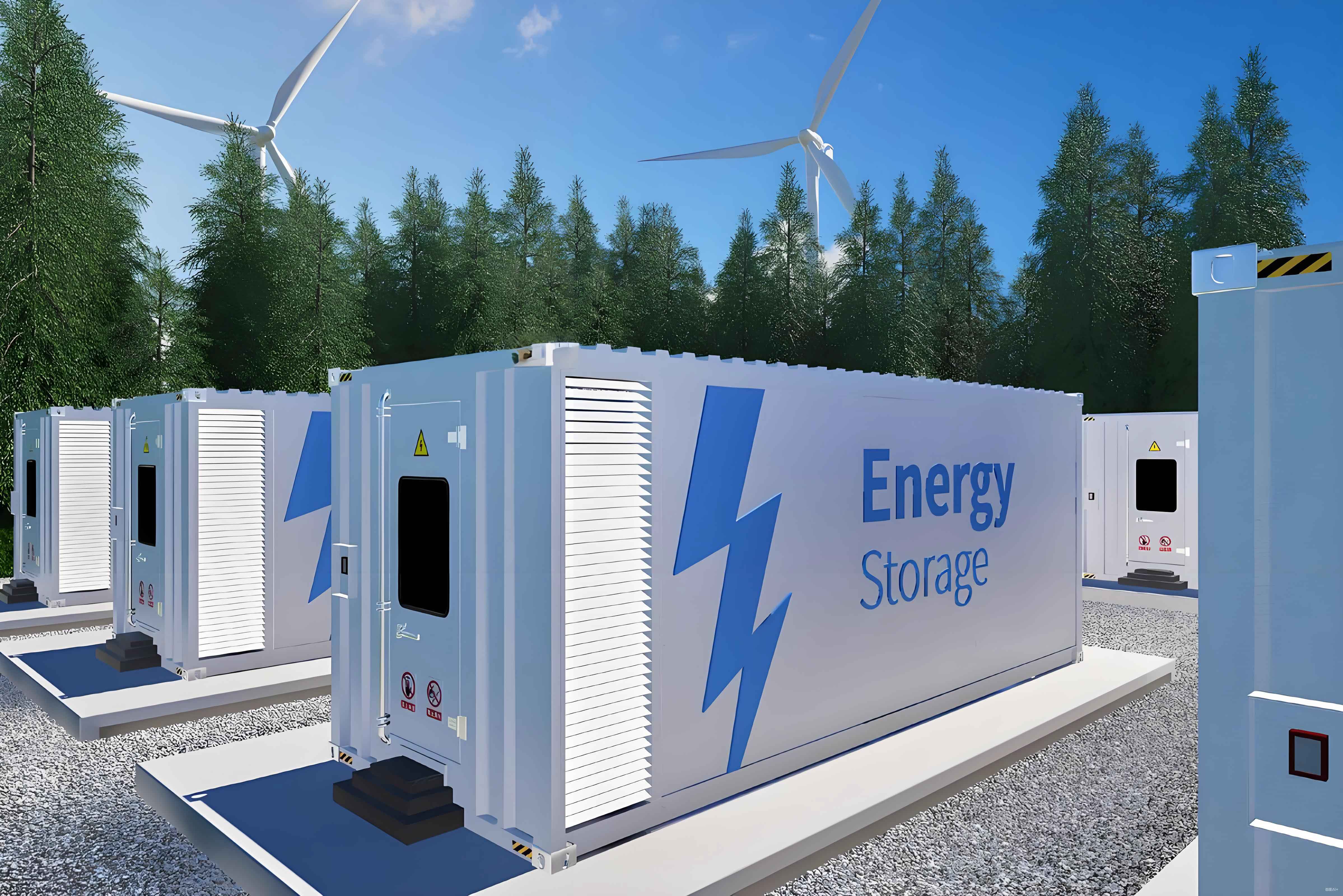
In recent years, with the continuous development of the global economy, energy and environmental issues have become increasingly severe. To address these challenges, experts and scholars worldwide have proposed various measures to conserve resources and protect the environment. Among these, the most widely used and effective approach is the adoption of new energy sources. However, new energy generation technologies, such as solar and wind power, often exhibit randomness, volatility, and intermittency during operation. To mitigate these issues, energy storage technology has rapidly advanced. Energy storage technology involves converting surplus electrical energy into chemical energy for storage using specific devices, and then converting it back to electrical energy when needed by the grid. This cyclic process helps maintain a balance between energy supply and demand. Currently, common energy storage technologies include electrochemical energy storage, electromagnetic energy storage, physical energy storage, and phase change energy storage. Electrochemical energy storage is widely used due to its low cost, high efficiency, long service life, and good environmental adaptability. Key electrochemical energy storage devices include lithium-ion batteries, lead-acid batteries, sodium-sulfur batteries, and nickel-cadmium batteries. Among these, the energy storage lithium battery, particularly lithium-ion batteries, stands out for their high energy storage efficiency, low production cost, and high recyclability, making them a preferred choice in new energy storage systems.
The operation of an energy storage lithium battery involves chemical reactions that generate heat, leading to a rapid rise in temperature. This temperature increase can significantly reduce the battery’s lifespan and capacity. Research indicates that the optimal operating temperature for an energy storage lithium battery ranges from 20°C to 40°C. To ensure stable performance, liquid cooling is commonly employed to manage the thermal conditions of these batteries. In liquid cooling systems, the layout of the cooling plate plays a critical role in determining cooling efficiency. Common flow channel configurations for cooling plates include straight channels, serpentine channels, and C-shaped channels. While straight channels offer advantages such as short flow paths, low pressure drops, and reduced energy consumption, they often suffer from poor temperature uniformity. In contrast, serpentine channels provide better temperature homogeneity but come with drawbacks like longer flow paths, higher pressure drops, and increased energy consumption. Therefore, optimizing the design and layout of serpentine channels is essential for enhancing the performance of energy storage lithium battery thermal management systems.
In this study, we focus on serpentine channel cooling plates for energy storage lithium batteries. We investigate the cooling effects of different serpentine channel arrangements, specifically comparing transverse and longitudinal layouts. Additionally, we analyze the impact of coolant flow rate on battery temperature distribution and channel pressure drop. Using computational fluid dynamics software ANSYS Fluent, we develop a numerical simulation model for a lithium iron phosphate (LiFePO4) battery with liquid cooling. Through detailed simulations, we evaluate the pressure and temperature distributions under various conditions and examine how flow rate influences cooling performance. Our goal is to identify optimal parameters for serpentine channels to improve the thermal management of energy storage lithium batteries, thereby extending their service life and enhancing overall efficiency.
Model Establishment
To simulate the thermal behavior of an energy storage lithium battery, we selected a lithium iron phosphate (LiFePO4) battery as the research object. The technical parameters of the battery are summarized in Table 1. Considering the repetitive structure of battery modules, we simplified the computational domain by focusing on a single repeating unit. The cooling plate was positioned adjacent to the battery, with the coolant flowing through the plate to absorb heat generated during operation, thereby cooling the energy storage lithium battery. The serpentine flow channels on the cooling plate were designed in two configurations: transverse and longitudinal layouts, as illustrated in the figures. The total length of the transverse serpentine channel is 1,776 mm, while the longitudinal serpentine channel measures 1,898 mm.
| Parameter | Value |
|---|---|
| Positive Electrode Material | Lithium Iron Phosphate (LiFePO4) |
| Negative Electrode Material | Graphite |
| Electrolyte | LiPF6 |
| Capacity (Ah) | 24 |
| Rated Voltage (V) | 3.2 |
| Density (kg/m³) | 2,120 |
| Specific Heat Capacity (J/kg·K) | 3,660 |
| Thermal Conductivity (W/m·K) in x, y, z directions | 21.60, 21.60, 2.11 |
| Battery Dimensions (mm) | 204 × 174 × 72 |
The internal structure of an energy storage lithium battery consists of stacked cells. During heat dissipation, various heat sources, including reaction heat and Joule heat, must be considered. To model the heat generation rate of the battery, we employed the Bernardi battery heat generation model. The heat generation rate per unit volume is given by the following equation:
$$q = \frac{1}{V_b} \left[ (E_0 – U) – T \frac{dE_0}{dT} \right] = \frac{I}{V_b} \left[ I^2 R – I T \frac{dE_0}{dT} \right]$$
where \( V_b \) is the volume of the energy storage lithium battery in m³, \( E_0 \) is the open-circuit voltage, \( U \) is the operating voltage in V, \( T \) is the operating temperature in K, \( \frac{dE_0}{dT} \) is the temperature coefficient, and \( I \) is the current in A.
The flow of coolant within the cooling plate adheres to the conservation laws of mass, momentum, and energy. The governing equations are as follows:
Momentum conservation equation:
$$\frac{\partial \mathbf{v}}{\partial t} + (\mathbf{v} \cdot \nabla) \mathbf{v} = -\frac{\nabla p}{\rho_w} + \frac{\mu}{\rho_w} \nabla^2 \mathbf{v} + \mathbf{g}$$
Mass conservation equation:
$$\frac{\partial \rho_w}{\partial t} + \nabla \cdot (\rho_w \mathbf{v}) = 0$$
Energy conservation equation for the coolant:
$$\frac{\partial}{\partial t} (\rho_w c_{pw} T_w) + \nabla \cdot (-k_w \nabla T_w + \rho_w c_{pw} T_w \mathbf{v}) = 0$$
Energy conservation equation for the cooling plate:
$$\frac{\partial}{\partial t} (\rho_n c_{pn} T_n) + \nabla \cdot (-k_n \nabla T_n) = 0$$
Energy conservation equation for the energy storage lithium battery:
$$\frac{\partial}{\partial t} (\rho_b c_{pb} T_b) + \nabla \cdot (-k_b \nabla T_b) = Q$$
where \( \mathbf{v} \) is the velocity vector, \( p \) is the pressure, \( \rho \) is density (subscript \( w \) for water/coolant, \( n \) for cold plate, \( b \) for battery), \( \mu \) is the dynamic viscosity of the coolant, \( \mathbf{g} \) is the gravity vector, \( c_p \) is the specific heat capacity, \( T \) is temperature, \( k \) is the thermal conductivity, and \( Q \) is the heat source term from the battery.
To solve these equations, we set initial and boundary conditions based on typical operating scenarios. The initial temperature of the energy storage lithium battery was set to 30°C. The inlet boundary condition was defined as a mass flow inlet with a flow rate of 0.1 g/s, and the outlet was set to a pressure boundary condition of 0 Pa. The channel walls were treated as no-slip boundaries. Natural convection was considered on the external surfaces of the battery and cooling plate, with a convection coefficient of 6 W/(K·m²).
To ensure the accuracy of our simulations, we performed a grid independence test. We computed the pressure drop across the fluid domain for five different mesh densities, as listed in Table 2. The relationship between mesh count and pressure drop is shown in Figure 3. The results indicate that the pressure drop variation across mesh schemes was within 5%, confirming grid independence and validating our computational approach.
| Scheme | Mesh Count |
|---|---|
| 1 | 736,456 |
| 2 | 752,345 |
| 3 | 778,478 |
| 4 | 798,427 |
| 5 | 813,457 |
The pressure drop values for each scheme were nearly identical, with deviations below 5%, satisfying the criteria for grid independence. This allows us to proceed with confidence in our simulation results for the energy storage lithium battery system.
Simulation Results and Analysis
Pressure Distribution
We conducted simulations for both transverse and longitudinal serpentine channel configurations to analyze the pressure distribution within the flow channels. The results, depicted in Figure 4, show that the pressure decreases gradually along the flow direction in both layouts, consistent with typical fluid dynamics behavior. However, the magnitude of the pressure drop differs between the two configurations. For the transverse serpentine channel, the pressure drop between the inlet and outlet was 31.240 Pa, while for the longitudinal channel, it was 31.923 Pa. This difference of 0.683 Pa is primarily attributed to the longer flow path in the longitudinal channel (1,898 mm compared to 1,776 mm for the transverse channel), which increases flow resistance and consequently raises the pressure drop. This higher pressure drop in the longitudinal layout implies greater energy consumption for pumping the coolant, which is a critical factor in the design of efficient thermal management systems for energy storage lithium batteries.
Temperature Distribution
The temperature distribution within the flow channels and the energy storage lithium battery was also evaluated. Figure 5 illustrates the temperature profile along the channel cross-sections for both configurations. As the coolant flows through the channels, it absorbs heat from the battery, leading to a gradual increase in temperature along the flow path. For the transverse serpentine channel, the temperature difference between the inlet and outlet was 0.411°C, while for the longitudinal channel, it was 0.436°C. The slightly higher temperature rise in the longitudinal channel is due to its longer flow path, which allows more time for heat absorption. Despite this, both configurations maintained relatively small temperature variations, indicating effective heat dissipation.
Figure 6 displays the temperature distribution on the surface of the energy storage lithium battery. The maximum battery temperature for the transverse layout was 30.593°C, with a temperature difference of 0.593°C across the battery. In contrast, the longitudinal layout achieved a lower maximum temperature of 30.500°C. This demonstrates that the longitudinal serpentine channel provides superior cooling performance for the energy storage lithium battery, as it results in a more uniform temperature distribution and lower peak temperatures. However, this improvement comes at the cost of a higher pressure drop, as discussed earlier, highlighting the trade-off between cooling efficiency and energy consumption in thermal management systems for energy storage lithium batteries.
Influence of Flow Rate
To further investigate the factors affecting the cooling performance of the energy storage lithium battery, we varied the inlet flow rate of the coolant. We tested flow rates of 0.1 g/s, 0.2 g/s, 0.3 g/s, and 0.4 g/s for both channel configurations. The relationship between flow rate and pressure drop is shown in Figure 7, while the impact on battery temperature is presented in Figure 8.
As shown in Figure 7, increasing the flow rate leads to a significant rise in the pressure drop for both channel layouts. This is expected because higher flow rates result in greater frictional losses and flow resistance. The pressure drop increase is more pronounced at higher flow rates, indicating a non-linear relationship. For instance, in the longitudinal channel, the pressure drop escalates rapidly from 31.923 Pa at 0.1 g/s to over 150 Pa at 0.4 g/s. This underscores the importance of balancing flow rate with energy efficiency in the design of cooling systems for energy storage lithium batteries.
Figure 8 reveals that higher flow rates improve the cooling effect on the energy storage lithium battery, as evidenced by a reduction in the maximum battery temperature. For example, in the transverse layout, the maximum temperature decreases from 30.593°C at 0.1 g/s to approximately 30.48°C at 0.4 g/s. Similarly, the longitudinal layout shows a temperature reduction from 30.500°C to around 30.47°C. However, the rate of temperature decrease diminishes as the flow rate increases, suggesting a point of diminishing returns. Beyond a certain flow rate, further increases yield minimal cooling benefits while substantially raising energy consumption due to the escalating pressure drop. This analysis emphasizes the need to optimize flow rates to achieve efficient thermal management without excessive energy losses in energy storage lithium battery systems.
Discussion on Optimization and Practical Implications
Our findings indicate that the longitudinal serpentine channel offers better cooling performance for energy storage lithium batteries, but at the expense of higher pressure drops. This trade-off necessitates a holistic approach to design optimization. One potential strategy is to modify the channel geometry, such as adjusting the width, depth, or spacing of the serpentine paths, to reduce flow resistance while maintaining effective heat transfer. Computational tools like ANSYS Fluent can facilitate parametric studies to identify optimal configurations.
Moreover, the choice of coolant properties can influence the thermal performance. For instance, coolants with higher specific heat capacities or thermal conductivities could enhance heat absorption and distribution, potentially allowing for lower flow rates and reduced energy consumption. Future work could explore the use of nanofluids or other advanced coolants in energy storage lithium battery thermal management systems.
In practical applications, the thermal management system must be integrated with the overall battery pack design. Factors such as battery spacing, module arrangement, and environmental conditions can affect heat dissipation. Additionally, real-world operating scenarios, including variable load conditions and ambient temperature fluctuations, should be considered to ensure robustness. Simulation models like the one developed in this study can be extended to full-scale battery packs to evaluate system-level performance and guide the design of efficient cooling solutions for energy storage lithium batteries.
Another aspect to consider is the long-term reliability of the cooling system. Repeated thermal cycles can lead to material degradation or leakage in cooling plates. Therefore, durability testing and material selection are crucial for ensuring the longevity of energy storage lithium battery systems. By combining simulation insights with experimental validation, designers can develop thermal management strategies that enhance both performance and safety.
Conclusion
In this study, we investigated the liquid cooling structure for energy storage lithium batteries, focusing on serpentine channel configurations. Through detailed simulations, we compared the transverse and longitudinal layouts and analyzed the effects of coolant flow rate on cooling performance and pressure drop. Our results demonstrate that the longitudinal serpentine channel provides superior cooling for the energy storage lithium battery, with lower maximum temperatures and better temperature uniformity. However, this configuration results in a higher pressure drop, leading to increased energy consumption. Additionally, we found that increasing the flow rate improves cooling effectiveness but exacerbates pressure losses, highlighting the need for careful optimization.
These insights contribute to the design of efficient thermal management systems for energy storage lithium batteries, which are critical for maximizing battery life and performance in various applications. Future research could explore hybrid cooling approaches, advanced materials, and dynamic control strategies to further enhance the efficiency and reliability of energy storage lithium battery systems.