
In my exploration of renewable energy solutions, I have focused extensively on solar power systems, which harness solar radiation through the photovoltaic effect to generate electricity. As global energy demands rise and environmental concerns intensify, the shift toward sustainable sources like solar energy has become imperative. This article delves into the design, components, and practical considerations of solar power systems, drawing from my research and experience in the field. I will discuss the key elements of these systems, including photovoltaic arrays, inverters, and grid integration, while incorporating tables and formulas to summarize critical data. Throughout this discussion, I aim to emphasize the importance of optimizing solar power system designs for reliability and efficiency, as they play a pivotal role in reducing carbon footprints and promoting energy independence. By examining parameters such as component efficiency, installation requirements, and economic factors, I hope to provide a comprehensive guide that underscores the transformative potential of solar power systems in modern energy infrastructures.
The core of a solar power system lies in its ability to convert sunlight directly into electrical energy using photovoltaic cells. A typical solar power system comprises several interconnected components: the solar array, battery storage, charge controller, inverter, and load management units. In my analysis, I have found that the solar array, composed of multiple photovoltaic modules, serves as the primary energy harvester. These modules are often arranged in series or parallel configurations to achieve desired voltage and current levels. For instance, the power output of a solar array can be modeled using the formula: $$ P = I \times V $$ where \( P \) is the power in watts, \( I \) is the current in amperes, and \( V \) is the voltage in volts. Additionally, the efficiency of a solar power system is influenced by factors like irradiance and temperature, which can be expressed as: $$ \eta = \frac{P_{\text{output}}}{G \times A} \times 100\% $$ where \( \eta \) is the efficiency, \( P_{\text{output}} \) is the useful power output, \( G \) is the solar irradiance in W/m², and \( A \) is the area of the solar panels. To illustrate the typical parameters of solar modules, I have compiled data from various studies into the following table, which summarizes key electrical characteristics of multicrystalline silicon cells commonly used in solar power systems.
| Parameter | Value |
|---|---|
| Peak Power (Wp) | 550 (+5) |
| Open Circuit Voltage (Voc) in V | 49.8 |
| Short Circuit Current (Isc) in A | 18.52 |
| Working Voltage (Vmppt) in V | 41.95 |
| Maximum System Voltage in V | 100/1500 DC |
| Working Current (Imppt) in A | 17.4 |
| Dimensions (Length × Width × Height) in mm | 2256 × 1133 × 35 |
| Mass in kg | 27.2 |
| Peak Power Temperature Coefficient in %/°C | -0.34 |
| Open Circuit Voltage Temperature Coefficient in %/°C | -0.25 |
| Short Circuit Current Temperature Coefficient in %/°C | -0.42 |
| Annual Degradation Rate in % | -0.7 |
In designing a solar power system, I prioritize factors such as site-specific conditions, component selection, and integration with existing electrical grids. The placement of the photovoltaic array is critical; for optimal performance, I recommend an inclination angle between 28° and 30° facing south, as this maximizes exposure to solar irradiance. Shading from obstructions like buildings or trees must be minimized to avoid efficiency losses. The inverter, a key component in any solar power system, converts DC power from the panels to AC power for grid connection. In my designs, I specify inverters with protection ratings of at least IP65 and functionalities such as overvoltage and anti-islanding protection. The efficiency of an inverter can be calculated using: $$ \eta_{\text{inv}} = \frac{P_{\text{AC}}}{P_{\text{DC}}} \times 100\% $$ where \( \eta_{\text{inv}} \) is the inverter efficiency, \( P_{\text{AC}} \) is the AC output power, and \( P_{\text{DC}} \) is the DC input power. For grid-tied solar power systems, I incorporate AC distribution boxes that facilitate seamless integration, often using low-voltage connections at 220 V for residential applications. These boxes are designed with materials like hot-dip galvanized steel and include features for monitoring and surge protection.
When selecting cables for a solar power system, I emphasize safety and durability. DC cables should be PV1-F type with irradiated cross-linked polyolefin insulation, while AC cables use flame-retardant cross-linked polyethylene. Proper installation in metallic conduits or trays ensures longevity and reduces maintenance needs. Lightning protection and grounding are equally vital; I integrate existing building lightning measures with the solar power system by connecting metal frames to grounding networks via galvanized flat steel. This approach mitigates risks from surges, and I often install surge protective devices at critical points like inverter outputs. The resistance in grounding systems can be assessed with: $$ R = \frac{\rho L}{A} $$ where \( R \) is the resistance in ohms, \( \rho \) is the soil resistivity, \( L \) is the length of the conductor, and \( A \) is its cross-sectional area. Additionally, operational management of a solar power system involves regular inspections, cleaning of panels to remove debris, and monitoring performance metrics. I advocate for automated systems that track parameters like irradiance and temperature to preempt issues.
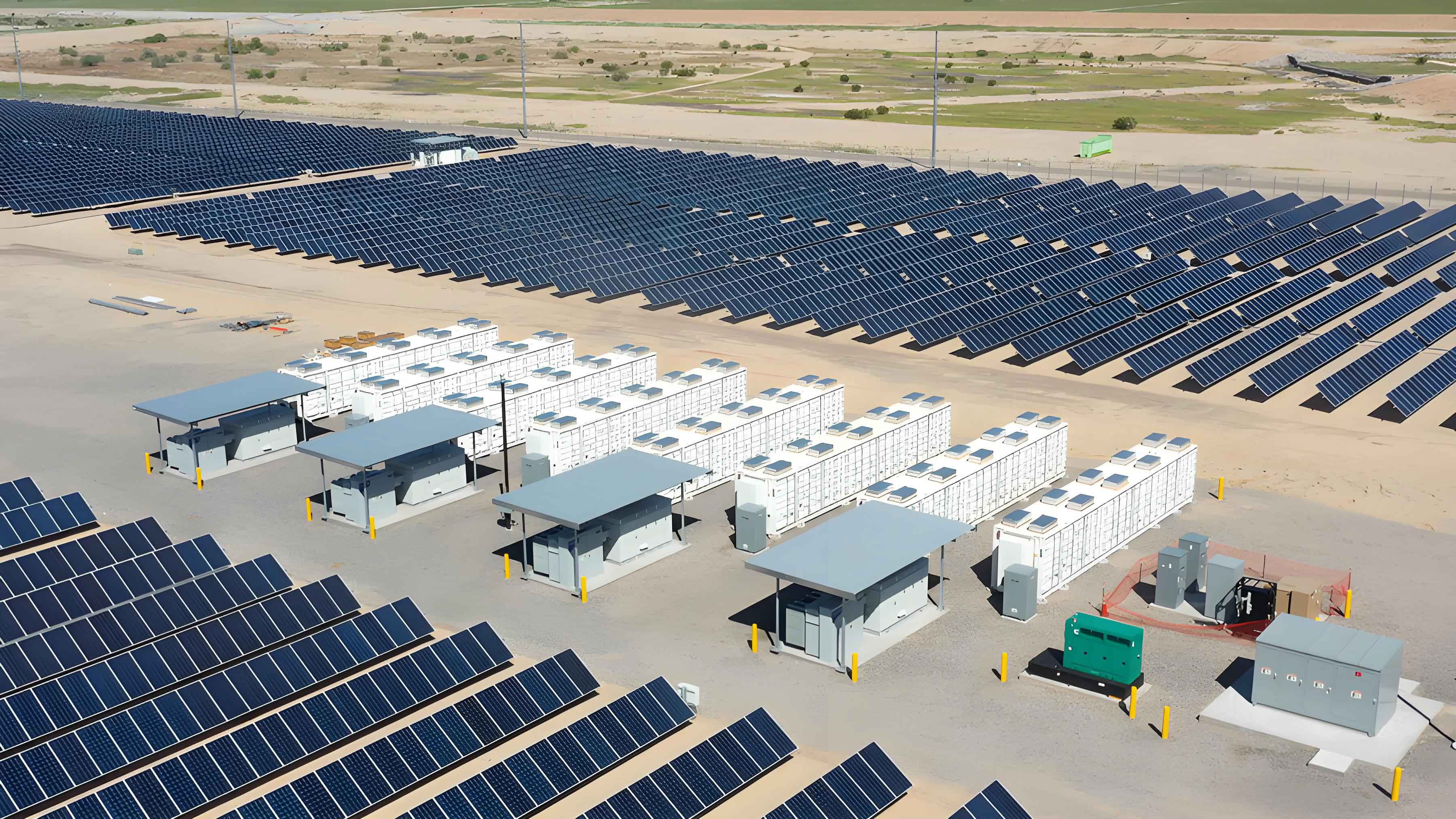
Another aspect I consider in solar power system design is the degradation and lifespan of components. Multicrystalline silicon modules, for example, typically have a service life exceeding 25 years, with an initial degradation rate of less than 2.5% in the first year and an annual rate below 0.7% thereafter. This degradation can be modeled exponentially: $$ P(t) = P_0 \times (1 – d)^t $$ where \( P(t) \) is the power at time \( t \), \( P_0 \) is the initial power, and \( d \) is the annual degradation rate. To enhance reliability, I recommend using components certified under standards like the “Golden Sun” certification, which ensures quality and performance. In grid-connected solar power systems, the operation mode often involves self-consumption with excess power fed back into the grid. This requires bidirectional meters for accurate energy accounting, and I design these systems to comply with local grid codes, including voltage and frequency synchronization. The economic viability of a solar power system can be evaluated using levelized cost of energy (LCOE) calculations: $$ \text{LCOE} = \frac{\sum_{t=1}^{n} \frac{I_t + M_t}{(1 + r)^t}}{\sum_{t=1}^{n} \frac{E_t}{(1 + r)^t}} $$ where \( I_t \) is the investment in year \( t \), \( M_t \) is maintenance cost, \( E_t \) is energy generated, \( r \) is the discount rate, and \( n \) is the system lifetime.
In terms of advantages, a solar power system offers numerous benefits, such as inexhaustible energy sources, reduced greenhouse gas emissions, and low operational noise. For instance, the environmental impact can be quantified by the carbon offset: $$ \text{CO}_2 \text{ savings} = E_{\text{annual}} \times EF $$ where \( E_{\text{annual}} \) is the annual energy output and \( EF \) is the emission factor of displaced fossil fuels. However, solar power systems also face challenges, including intermittency due to weather conditions and higher initial costs compared to conventional energy sources. The energy payback time (EPBT) is a useful metric: $$ \text{EPBT} = \frac{E_{\text{embedded}}}{E_{\text{annual}}} $$ where \( E_{\text{embedded}} \) is the energy consumed in manufacturing. To address this, I explore hybrid systems that combine solar with storage or other renewables, improving reliability. The table below summarizes key performance indicators for a typical residential solar power system, based on my design experiences.
| Indicator | Value |
|---|---|
| Annual Energy Generation (kWh) | 6000-8000 |
| System Efficiency (%) | 15-20 |
| Initial Cost (USD per kW) | 1200-1800 |
| Operational Lifetime (years) | 25+ |
| Carbon Reduction (tons CO₂/year) | 4-6 |
| Maintenance Frequency | Bi-annual |
Looking ahead, I believe that innovations in solar power system technology will drive down costs and enhance efficiency. For example, perovskite solar cells are showing promise with efficiencies exceeding 25% in lab settings, though commercialization hurdles remain. The future of solar power systems lies in integration with smart grids and energy storage, enabling better load management and resilience. In my research, I have observed that policies supporting distributed generation are accelerating adoption, making solar power systems a cornerstone of the energy transition. As we advance, continuous improvement in design methodologies and component materials will ensure that solar power systems contribute significantly to global sustainability goals.