
The imperative to achieve carbon neutrality has catalyzed unprecedented growth in the electrochemical energy storage sector globally. Within this landscape, lithium-ion battery technology stands out for its high energy density, extended cycle life, and low self-discharge rate, making it a cornerstone for modern battery energy storage system installations. However, the performance, longevity, and safety of these batteries are intrinsically linked to their thermal environment. Operating temperatures outside the ideal window of 25–40 °C can accelerate degradation, while excessive heat generation during charge-discharge cycles poses significant safety risks, including potential thermal runaway. Crucially, temperature uniformity across individual cells and modules within a battery energy storage system is equally vital; excessive temperature gradients can lead to cell imbalance, reduced usable capacity, and shortened overall system lifespan. Effective thermal management, therefore, is not a luxury but a fundamental requirement for reliable and safe battery energy storage system operation.
This work focuses on the design and experimental analysis of liquid cooling plates, a key component for direct cooling in many battery energy storage system configurations. Liquid cooling offers superior heat transfer coefficients compared to air cooling, enabling more compact and powerful systems. The cooling plate serves the dual function of a heat exchanger and a structural support element within the battery pack. Consequently, its design must simultaneously optimize thermal performance—controlling maximum temperature and ensuring uniformity—and mechanical integrity to support the pack’s weight. We propose and investigate three distinct liquid cooling plate designs, evaluating their thermal characteristics under operational cycling and their structural deformation under load. The goal is to provide a comprehensive comparison to guide the design optimization of thermal management solutions for battery energy storage system applications.
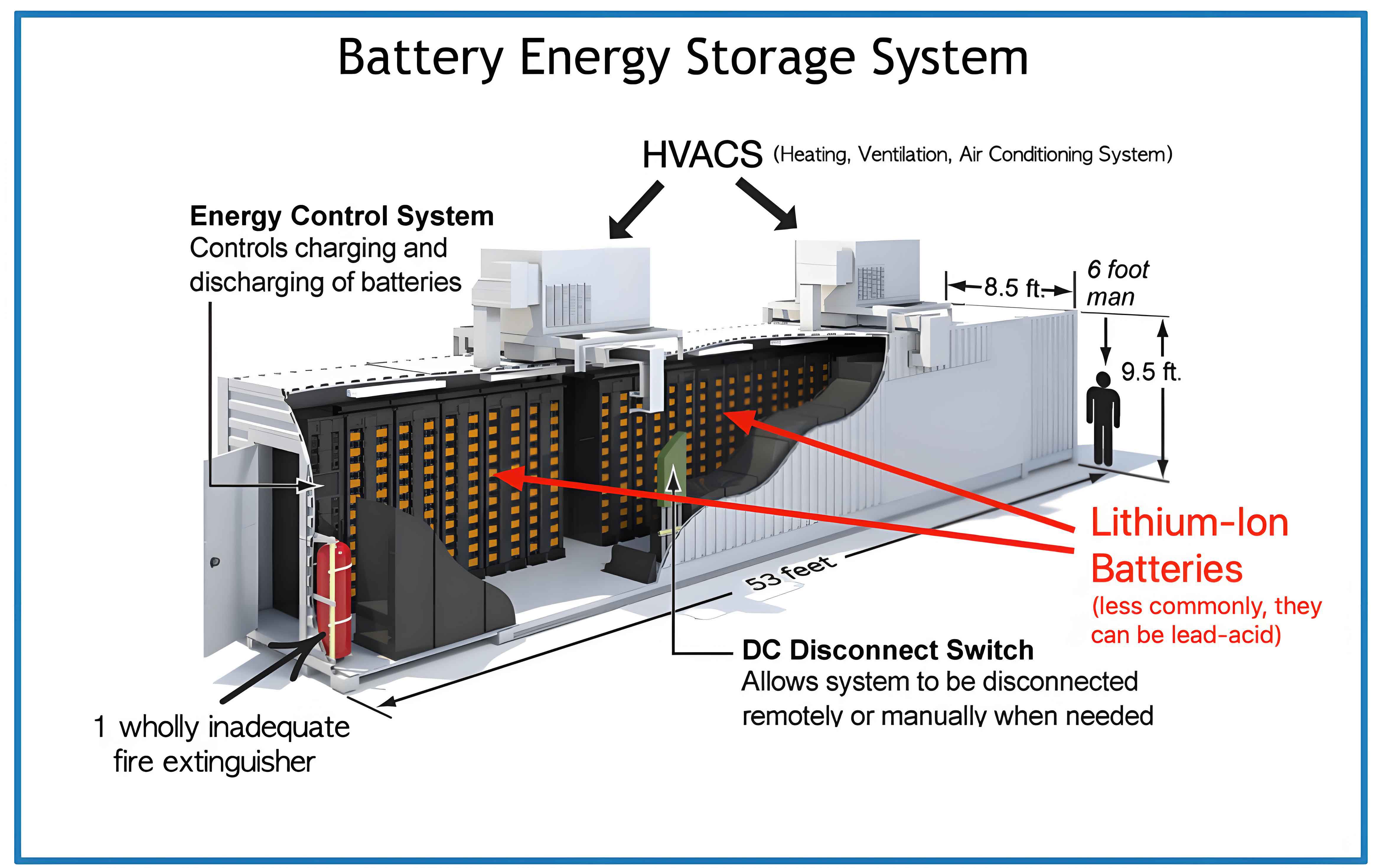
The battery energy storage system module under study utilizes a bottom-cooling approach. Cells are placed atop the liquid cooling plate with a layer of thermally conductive structural adhesive (1–1.5 mm thick) in between to enhance heat transfer and electrical insulation. Insulating pads are placed between cells to mitigate thermal propagation in case of a single-cell failure. During operation at a 0.5C rate, heat generated within the cells is conducted through the adhesive to the cooling plate, where it is absorbed by the circulating coolant. Furthermore, the cooling plate is required to bear the substantial weight of the entire battery pack, typically ranging from 300 to 400 kg, making structural rigidity a critical design parameter alongside thermal performance.
We developed three design schemes, differing in internal flow channel geometry, load-bearing strategy, and manufacturing process. The performance metrics of primary interest are the maximum cell temperature ($T_{max}$), the temperature uniformity (quantified by the temperature difference $\Delta T$), the hydraulic pressure drop across the plate ($\Delta P$), and the surface deformation under load ($\Delta D$).
| Scheme | Flow Channel Pattern | Load-Bearing Strategy | Manufacturing Process |
|---|---|---|---|
| Scheme 1 | Parallel-Serial (U-type) | External Support Beams | Stamping & Conventional Brazing |
| Scheme 2 | Serpentine (W-type) | Integrated (with internal fins) | Stamping & Fin Insertion & Conventional Brazing |
| Scheme 3 | Counter-flow Labyrinth | Integrated (with reinforced fins & thick walls) | Vacuum Brazing |
The thermal performance evaluation was conducted on a complete battery energy storage system module. The test setup comprised a chiller unit to provide temperature-controlled coolant, a charge/discharge cycler, an environmental chamber, flow meters, and temperature sensors. The Battery Management System (BMS) recorded temperature data from multiple points on the cells. The module was subjected to a standard charge-discharge cycle at a 0.5C rate under controlled ambient conditions. The coolant was a 50/50 mixture of deionized water and ethylene glycol.
| Parameter | Value |
|---|---|
| Charge/Discharge Rate | 0.5 C |
| Coolant | 50% Deionized Water / 50% Ethylene Glycol |
| Coolant Flow Rate | 5 L/min |
| Coolant Inlet Temperature | 18 °C |
| Ambient Temperature | 25 °C |
Key thermal metrics were calculated from the experimental data. The temperature uniformity, or temperature spread, across the module at any given time is defined as:
$$
\Delta T = T_{max} – T_{min}
$$
where $T_{max}$ and $T_{min}$ are the highest and lowest cell temperatures recorded by the BMS, respectively. The pressure drop across the cooling plate, a critical parameter for system pump selection, is:
$$
\Delta P = P_{in} – P_{out}
$$
where $P_{in}$ and $P_{out}$ are the pressures at the coolant inlet and outlet.
The structural performance was evaluated through a static load-bearing test. The cooling plate was mounted on a support frame simulating the rack structure of a battery energy storage system. A distributed load of approximately 312 kg, representing the mass of the battery cells and associated components, was applied. Surface deformation was measured at multiple predefined points using precision straightedges and feeler gauges before and after load application. The deformation at any point is given by:
$$
\Delta D = |D_1 – D_2|
$$
where $D_1$ and $D_2$ are the initial and post-load measurements, respectively.
| Parameter | Value |
|---|---|
| Applied Mass | 312 kg |
| Measurement Tool (Straightedge) | 900 mm |
| Ambient Temperature | 25 °C |
The experimental results for the thermal performance are summarized in the table below. All three cooling plate designs successfully maintained the maximum cell temperature below 35°C, meeting the fundamental heat dissipation requirement for the battery energy storage system. However, significant differences were observed in temperature uniformity and system pressure drop.
| Scheme | Mode | $T_{max}$ (°C) | $T_{min}$ (°C) | $\Delta T$ (K) | $\Delta P$ (kPa) |
|---|---|---|---|---|---|
| Scheme 1 | Charge | 33 | 28 | 5 | 10.3 |
| Discharge | 35 | 31 | 4 | ||
| Scheme 2 | Charge | 31 | 28 | 3 | 15.6 |
| Discharge | 32 | 29 | 3 | ||
| Scheme 3 | Charge | 32 | 31 | 1 | 18.3 |
| Discharge | 33 | 32 | 1 |
The data reveals a clear positive correlation between the pressure drop ($\Delta P$) and the temperature uniformity ($\Delta T$). Scheme 1, with the simplest U-type flow path, exhibited the largest temperature difference (4-5 K) and the lowest pressure drop. Scheme 3, featuring a complex counter-flow labyrinth channel, achieved exceptional temperature uniformity (1 K) but at the cost of the highest pressure drop. Scheme 2 offered a middle ground. This relationship can be understood through the principles of convective heat transfer. A higher pressure drop generally indicates greater flow resistance, which, in a well-designed manifold system, can promote more uniform flow distribution across the plate’s width. Furthermore, complex channels like the labyrinth design increase flow disruption (higher turbulence) and effective heat transfer area, enhancing lateral heat spreading and reducing temperature gradients on the plate surface. The thermal resistance network for heat transfer from the cell to the coolant can be simplified as:
$$
R_{total} = R_{cell} + R_{contact} + R_{plate} + R_{conv}
$$
where $R_{conv} = 1/(hA)$ is the convective resistance. Designs that increase the effective heat transfer coefficient ($h$) and area ($A$) through complex flow paths reduce $R_{conv}$ and improve lateral heat conduction, directly benefiting temperature uniformity in a battery energy storage system.
The load-bearing test results, focusing on the maximum deformation measured at the central column of points (area of maximum bending moment), are as follows:
| Scheme | Maximum Measured Deformation, $\Delta D_{max}$ (mm) | Assessment |
|---|---|---|
| Scheme 1 | 1.55 | Highest deformation, requires external support. |
| Scheme 2 | 1.15 | Moderate deformation, integrated structure. |
| Scheme 3 | 0.85 | Lowest deformation, robust integrated structure. |
Scheme 1, constrained by stamping工艺 to thin-gauge material, lacked inherent stiffness and showed the largest deformation. Its dependence on external support beams introduces assembly tolerances and potential gaps that compromise performance. Scheme 2, incorporating internal fins that act as stiffeners, showed improved mechanical performance, fulfilling the dual role of heat transfer enhancement and structural reinforcement. Scheme 3, with its thick walls and dense network of internal fins brazed in a vacuum furnace, demonstrated the best structural integrity with minimal deformation, making it a robust standalone component for a battery energy storage system.
In a comprehensive evaluation for battery energy storage system applications, each scheme presents a distinct set of trade-offs. Scheme 1 offers adequate peak temperature control with low pressure drop, suitable for cost-sensitive, high-volume production where temperature uniformity is a secondary concern. However, its need for auxiliary support structures adds complexity and potential thermal interface issues. Scheme 2 provides a balanced improvement in temperature uniformity and integrated load-bearing capability. While still involving stamping tooling costs, it presents a viable upgrade path from Scheme 1 for designs requiring better thermal consistency without a significant pump power penalty. Scheme 3 excels in both thermal uniformity and structural rigidity, making it ideal for high-performance or long-life battery energy storage system applications where minimizing cell-to-cell temperature variation is paramount. The trade-off comes in the form of higher pressure drop (requiring a more powerful pumping system) and reliance on vacuum brazing, which may have different scalability considerations compared to conventional brazing.
The selection of an optimal liquid cooling plate design for a battery energy storage system is a multi-criteria decision problem involving thermal performance, structural requirements, manufacturability, and lifecycle cost. This experimental study quantifies the inherent compromises. The pursuit of superior temperature uniformity, a key driver for battery longevity and safety, consistently leads to designs with more complex internal流道 that increase flow resistance. Conversely, meeting stringent structural demands within a compact form factor pushes designs toward integrated, thick-walled constructions with internal reinforcement. Future work will involve multi-objective optimization to mathematically balance these factors and explore advanced designs like topology-optimized flow channels or hybrid cooling strategies, aiming to further elevate the efficiency and reliability of thermal management in battery energy storage system technology.