
With the global shift in energy structure, smart grid technologies have become the main trend in the power industry. In this context, battery energy storage systems play a critical role as key components of smart distribution networks, enhancing grid stability, optimizing energy distribution, and improving power quality. The rapid advancement of lithium-ion battery technology enables efficient energy storage and release, providing robust support for peak shaving and valley filling. Leveraging advanced power conversion and intelligent control strategies, battery energy storage systems can respond quickly to grid demands, balance loads, and optimize operation. Additionally, integrated remote monitoring and smart dispatching functionalities significantly improve management efficiency. This paper presents our design methodology and implementation approach for battery energy storage systems in smart distribution networks, offering valuable theoretical and practical guidance for researchers and practitioners, and driving the evolution of smart grid technologies.
Our study focuses on the integration of advanced battery management, power conversion, and intelligent control to enhance supply reliability and power quality. We adopt lithium-ion batteries as the primary storage medium, utilize bidirectional converters for grid interaction, and implement a control strategy based on real-time pricing, load forecasting, and grid status. The system supports peak shaving, demand response, and emergency backup. Experimental results demonstrate that our approach effectively balances grid loads and improves stability, providing new insights for battery energy storage systems applications.
Distribution Network and Battery Energy Storage System Models
Smart Distribution Network with Battery Energy Storage Systems
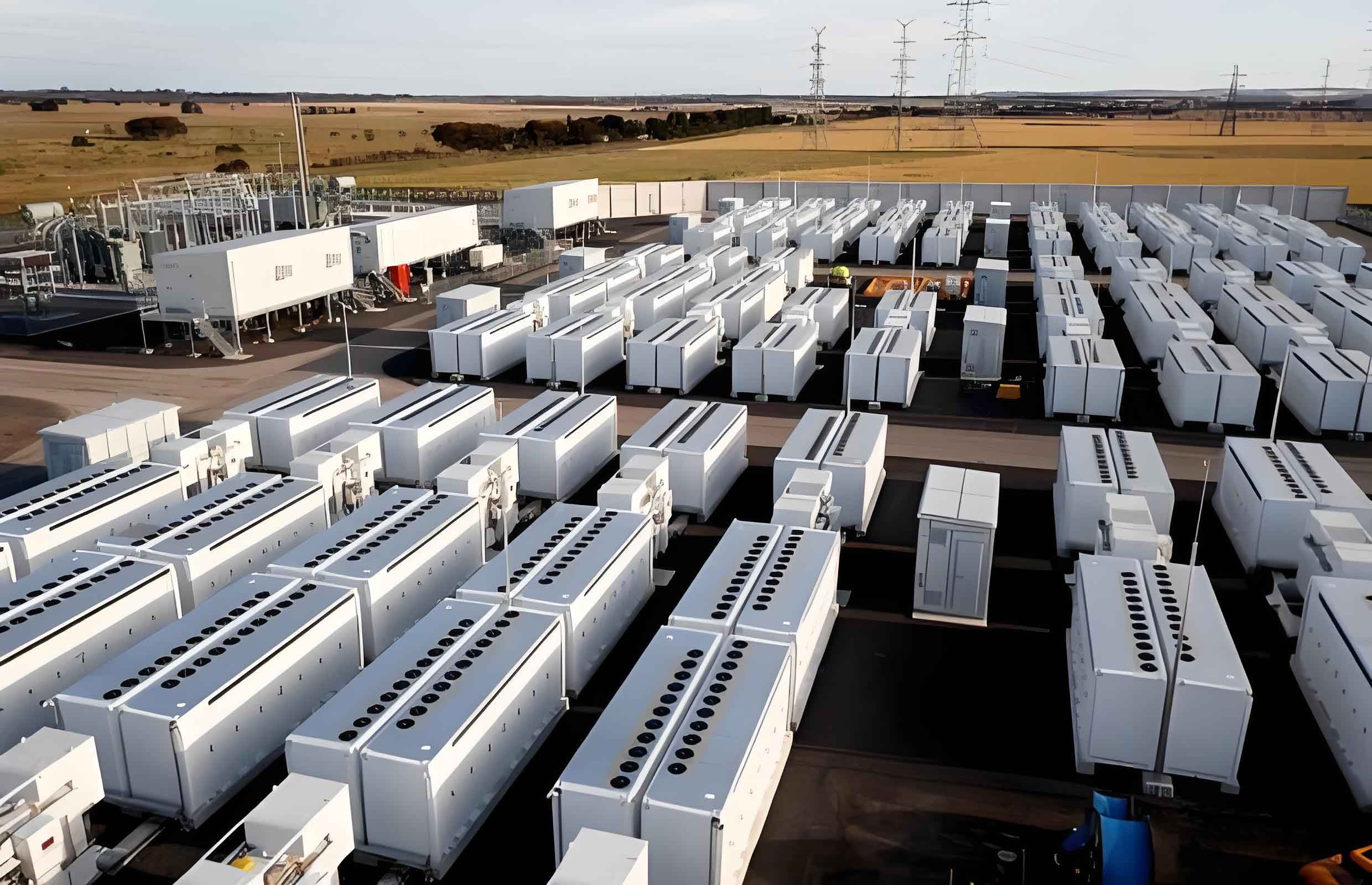
Battery energy storage systems are essential in modern distribution networks. They store excess energy during low demand and release it during peak periods, effectively balancing supply and demand, and increasing grid reliability. These systems also enhance the integration of renewable energy sources, reducing dependence on fossil fuels. The architecture of a typical smart distribution network with battery energy storage systems is illustrated below (the figure shows a schematic of the system).
Distribution Network Operation Model
Voltage stability is a key performance indicator for distribution networks. To quantify the impact of distributed generation (DG) integration, we adopt a voltage deviation index. The average voltage deviation level, denoted as \(U_{\text{lev}}\), is calculated using the following model:
$$
U_{\text{lev}} = \frac{1}{T} \sum_{t=1}^{T} \left( \frac{1}{N} \sum_{i=1}^{N} \left| \frac{U_i(t) – U_i^*}{\Delta U_{i,\max}} \right| \right)
$$
where \(T\) is the total time intervals, \(N\) is the number of load nodes, \(U_i(t)\) is the phase voltage at node \(i\) at time \(t\), \(U_i^*\) is the reference voltage, and \(\Delta U_{i,\max}\) is the maximum allowable voltage deviation at node \(i\). This metric provides a clear measure of voltage variation caused by DG integration.
Another critical indicator is the line loss rate. When substantial DG is connected, reverse power flow may increase active power losses. The line loss rate is defined as:
$$
p_{\text{loss}} = \frac{ \sum_{t=1}^{T} \sum_{ij=1}^{M} 3 I_{ij}(t)^2 R_{ij} }{ \sum_{t=1}^{T} \sum_{ij=1}^{M} \left( P_{ij}(t) + jQ_{ij}(t) \right) } \times 100\%
$$
where \(I_{ij}(t)\) is the RMS current on line \(ij\) at time \(t\), \(R_{ij}\) is the equivalent resistance, \(P_{ij}(t)\) and \(Q_{ij}(t)\) are the active and reactive loads, and \(M\) is the total number of branches. This indicator helps optimize network operation and reduce energy waste.
Battery Energy Storage System Configuration Model
The configuration model aims to minimize total cost while satisfying operational constraints. The objective function is:
$$
\text{Minimize } C_{\text{total}} = C_{\text{inv}} + C_{\text{o\&m}} – B_{\text{sav}}
$$
where \(C_{\text{inv}}\) is the investment cost (dependent on storage capacity \(E_{\text{storage}}\) and charge/discharge power \(P_{\text{charge/discharge}}\)), \(C_{\text{o\&m}}\) is the operation and maintenance cost, and \(B_{\text{sav}}\) is the savings from using the battery energy storage system.
Constraints include:
- Capacity constraint: \(0 \leq E_{\text{storage}} \leq E_{\max}\).
- Power constraint: \(P_{\min} \leq P_{\text{charge/discharge}} \leq P_{\max}\).
- Energy balance: The energy change must satisfy physical laws and operating conditions.
Integrating battery energy storage systems with the distribution network model allows flexible energy management, storing excess energy during low demand and releasing it during peak periods, thereby improving stability and renewable energy accommodation.
Control Strategy for Battery Energy Storage Systems Using Multi-Objective Marine Predator Algorithm
The multi-objective marine predator algorithm (MTOPA) is combined with battery energy storage systems to optimize charging/discharging strategies, cost, and efficiency. The standard MPA algorithm has three phases but suffers from slow initial convergence and randomness in step size, leading to limited diversity in multi-objective optimization. To address these issues, we modify the step size formulation to reduce randomness and enhance information exchange among the population:
$$
\begin{aligned}
\text{step}_i^d &= Br \cdot (x_i^d – p_i^d) \\
\text{step}_i^d &= Le \cdot (x_i^d – p_i^d)
\end{aligned}
$$
where \(\text{step}_i^d\) is the step size for prey position, \(Br\) is Brownian motion based on standard normal distribution, \(x_i^d\) is the predator position, \(p_i^d\) is the prey position, and \(Le\) is Lévy flight. These modifications improve convergence speed and solution diversity.
For three-objective optimization problems, we divide each dimension into three equal parts. The reference points distribution on the normalized hyperplane is shown in the following conceptual description. This generates 10 uniformly distributed reference points, guiding the population toward a well-distributed Pareto front. Our proposed MTOPA algorithm effectively explores the Pareto-optimal set, enhancing robustness and applicability.
Experimental Results and Analysis
We validate the proposed approach by constructing a smart distribution network model with multiple energy sources and battery energy storage systems. The MTOPA algorithm optimizes the charging/discharging strategy and capacity configuration. The algorithm iteratively finds the best trade-off among economic cost, system efficiency, and supply reliability. The comprehensive evaluation metrics, storage planning schemes, and distribution network operation results for different scenarios are summarized in the following table.
| Scenario | Comprehensive Metric | Installation Node | Capacity (kWh) | Platform Cost (×10^4 RMB) | Voltage Deviation (V) | Line Loss Rate (%) |
|---|---|---|---|---|---|---|
| 1 | 12.15 | – | – | – | 6.28 | – |
| 2 | 5.846 | 18 | 2000 | 0.360 | 11.16 | 6.00 |
| 3 | 5.711 | 18 | 2311 | 0.413 | 10.80 | 5.90 |
| 4 | 5.700 | 18 | 2774 | 0.494 | 10.71 | 5.87 |
The voltage profiles of the system nodes over 24 hours for each scenario are described below. In Scenario 1, the initial voltage is 1.02 p.u., gradually decreasing over time but remaining relatively high. Scenario 2 starts at 1.01 p.u. with a similar declining trend but a smoother curve. Scenario 3 begins at 1.00 p.u., shows a slow initial decline, then accelerates after the middle period. Scenario 4 starts at 0.99 p.u. and exhibits a steady, continuous decrease. These variations reflect different levels of grid stability and power quality under various conditions.
To further verify the rationality of the optimized charging/discharging power and the impact on renewable energy integration, we analyze the relationship between battery power and state of charge (SOC). The battery power and SOC curves over a full operating cycle show dynamic balance. When renewable generation exceeds load demand, the battery stores energy (positive power, SOC rises). When generation is insufficient, the battery discharges (negative power, SOC falls). SOC remains within safe limits, preventing overcharge or deep discharge, thus extending battery life and ensuring system security.
| Time (h) | Battery Power (kW) | SOC (%) |
|---|---|---|
| 0 | 0 | 50 |
| 4 | 200 | 65 |
| 8 | 150 | 78 |
| 12 | -100 | 60 |
| 16 | -250 | 40 |
| 20 | -50 | 35 |
| 24 | 50 | 45 |
The results confirm that the MTOPA-based control strategy effectively balances grid loads, improves voltage stability, and reduces line losses. The battery energy storage systems operate efficiently, responding to dynamic grid conditions while maintaining SOC within safe bounds.
Conclusion
This paper presents a comprehensive design and implementation methodology for battery energy storage systems in smart distribution networks. By integrating advanced lithium-ion battery technology, bidirectional power converters, and intelligent control strategies, the proposed system enhances power supply reliability and quality. The multi-objective marine predator algorithm optimizes storage capacity and charging/discharging schedules, achieving significant cost savings and operational efficiency. Experimental results demonstrate that our approach effectively balances grid loads, stabilizes voltages, and reduces line losses. The system’s remote monitoring and smart dispatching capabilities further improve management effectiveness. As technology advances and costs decrease, battery energy storage systems will play an increasingly vital role in future smart grids, contributing to a more sustainable and resilient energy infrastructure.