
As environmental pollution worsens, particularly with the increasing frequency of haze events in urban areas, and given the finite reserves of fossil fuels, the limitations of traditional power generation methods have become increasingly apparent. The urgency to seek renewable energy solutions has never been greater. Solar energy, being readily available and non-polluting during conversion to electricity, has seen rapid development in photovoltaic (PV) generation. However, PV conversion is selective to specific wavelengths of sunlight, typically effective only between 200 nm and 800 nm, leaving longer wavelengths unused. Moreover, the output characteristics of solar cells are temperature-dependent: the open-circuit voltage decreases while the short-circuit current slightly increases with rising temperature, significantly impacting the photoelectric conversion efficiency. In practical applications, especially in northwestern regions during summer, the temperature difference between solar panels and the ambient environment can exceed 36°C, which not only reduces efficiency but also shortens the lifespan of PV modules, sometimes causing backsheet yellowing or even cracking. To address these issues, I propose a hybrid solar system that integrates photovoltaic and thermoelectric generation based on the Seebeck effect. This solar system leverages thermoelectric modules to utilize infrared radiation (wavelengths from 800 nm to 3000 nm), absorbing waste heat from the back of PV panels to lower their temperature, thereby improving overall energy utilization. This article details the design, implementation, and experimental analysis of this solar system, emphasizing its feasibility and performance enhancements through comprehensive testing.
The core of this solar system consists of two main components: the hardware assembly and the control-measurement subsystem. The hardware integrates photovoltaic and thermoelectric generation elements to form a cohesive power-producing unit. The PV section includes standard silicon-based solar cells coupled with a Fresnel lens for optical concentration. The thermoelectric part comprises commercially available semiconductor thermoelectric generator (TEG) modules connected in series, attached to a flat aluminum-tube heat sink with a water-cooling mechanism. Water cooling was selected due to its superior heat dissipation, cost-effectiveness, and straightforward setup. In this solar system, the back surface of the PV panel is bonded to the hot side of the TEG modules using high-thermal-conductivity silicone grease to minimize thermal resistance. The cold side of the TEGs is attached to the aluminum tubes, through which coolant water circulates via a pump from a reservoir, ensuring continuous heat removal. The electrical output can be configured such that the PV and TEG units either supply power independently to separate loads or jointly to a common load, enhancing flexibility. This solar system’s design aims to synergistically harness solar radiation across a broader spectrum, thereby boosting the total energy yield.
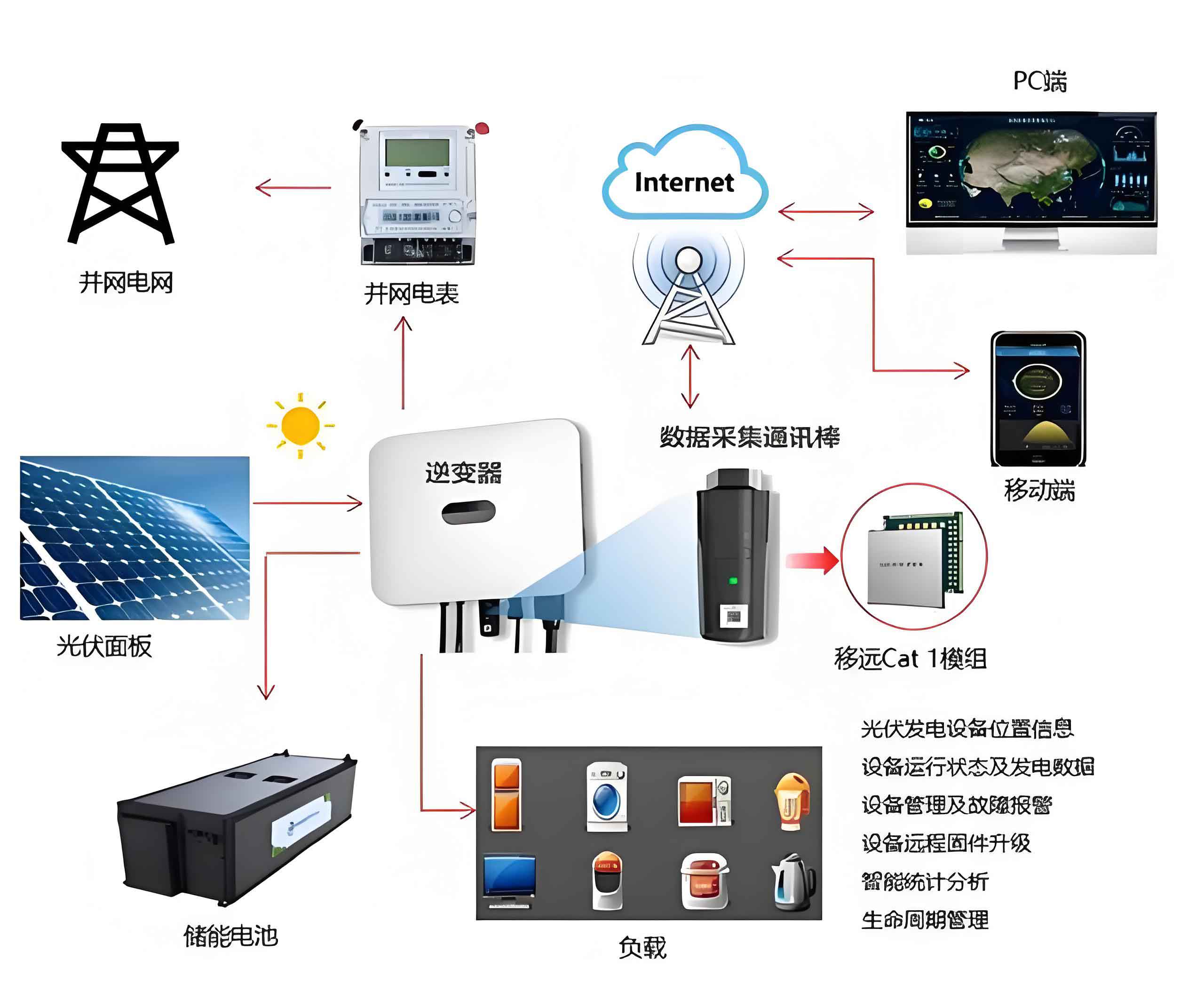
To quantify the performance of this solar system, an extensive measurement and control framework was implemented. Temperature is a critical parameter; thus, four thin-film thermocouples were affixed near the TEG hot side to approximate the PV backplane temperature, averaged for accuracy. Similarly, the cold-side temperature was monitored. Inlet and outlet coolant temperatures were measured using standard thermocouples, while flow rate was tracked via a rotameter. Electrical outputs—current and voltage—were recorded with precision meters to compute power. The control aspect focuses on maintaining the TEG cold-side temperature by modulating coolant flow: a programmable logic controller compares measured temperatures against a setpoint, adjusting an electric valve to increase or decrease water flow accordingly, thereby stabilizing the thermal gradient. This solar system’s control logic ensures optimal operating conditions, maximizing the thermoelectric contribution.
The performance of this solar system is governed by several physical principles. For photovoltaic conversion, the efficiency $\eta_{pv}$ is temperature-dependent, often expressed as:
$$ \eta_{pv} = \eta_{ref} \left[1 – \beta (T – T_{ref})\right] $$
where $\eta_{ref}$ is the reference efficiency at temperature $T_{ref}$, $\beta$ is the temperature coefficient (typically around 0.004–0.005 K−1 for silicon cells), and $T$ is the cell temperature. For thermoelectric generation, the Seebeck effect dictates the open-circuit voltage $V_{teg}$ as:
$$ V_{teg} = N \alpha \Delta T $$
where $N$ is the number of thermocouples in the module, $\alpha$ is the Seebeck coefficient, and $\Delta T = T_h – T_c$ is the temperature difference between hot and cold sides. The maximum output power $P_{teg}$ under matched load conditions can be approximated by:
$$ P_{teg} = \frac{(N \alpha \Delta T)^2}{4 R_{int}} $$
with $R_{int}$ being the internal electrical resistance of the TEG. The overall efficiency of the hybrid solar system, $\eta_{sys}$, combines both contributions:
$$ \eta_{sys} = \frac{P_{pv} + P_{teg}}{A \cdot G} $$
where $P_{pv}$ is the PV output power, $A$ is the collector area, and $G$ is the solar irradiance. To analyze the solar system’s behavior under varying conditions, experimental tests were conducted, focusing on two key factors: cooling water flow rate and concentration ratio.
The effect of cooling water flow rate on the solar system’s thermoelectric performance is summarized in Table 1. As flow increases, convective heat transfer improves, lowering the cold-side temperature $T_c$ and enlarging $\Delta T$, thereby boosting TEG output.
| Coolant Flow Rate (L/min) | Cold-Side Temperature, $T_c$ (°C) | TEG Output Power, $P_{teg}$ (W) | Temperature Difference, $\Delta T$ (K) |
|---|---|---|---|
| 0.5 | 45.2 | 1.8 | 28.5 |
| 1.0 | 38.7 | 2.5 | 35.0 |
| 1.5 | 33.1 | 3.1 | 40.6 |
| 2.0 | 29.4 | 3.6 | 44.3 |
| 2.5 | 26.8 | 4.0 | 46.9 |
The data illustrates a clear trend: higher flow rates reduce $T_c$ and increase $P_{teg}$, confirming that active cooling enhances the thermoelectric component of the solar system. This relationship can be modeled by a heat balance equation for the cold side:
$$ \dot{Q}_{cool} = \dot{m} c_p (T_{out} – T_{in}) = h A_s (T_c – T_{fluid}) $$
where $\dot{m}$ is the mass flow rate, $c_p$ is specific heat capacity, $h$ is the heat transfer coefficient, $A_s$ is the surface area, and $T_{fluid}$ is the bulk coolant temperature. As $\dot{m}$ rises, $T_c$ drops, leading to a larger $\Delta T$ and thus higher power, as per the Seebeck equation. This solar system effectively converts low-grade thermal energy into electricity, improving overall utilization.
The concentration ratio $C$, defined as the ratio of aperture area to receiver area, significantly impacts the solar system’s efficiencies. By adjusting the distance between the Fresnel lens and the PV cell, $C$ was varied, and the resulting photovoltaic, thermoelectric, and combined efficiencies were measured. The results are tabulated in Table 2, highlighting the trade-offs in this solar system.
| Concentration Ratio, $C$ | PV Efficiency, $\eta_{pv}$ (%) | TEG Efficiency, $\eta_{teg}$ (%) | System Efficiency, $\eta_{sys}$ (%) | PV Temperature, $T_{pv}$ (°C) |
|---|---|---|---|---|
| 5 | 16.2 | 2.1 | 18.3 | 48.3 |
| 10 | 15.7 | 3.5 | 19.2 | 56.8 |
| 15 | 15.0 | 4.3 | 19.3 | 65.4 |
| 20 | 14.3 | 4.7 | 19.0 | 74.9 |
| 25 | 13.6 | 4.5 | 18.1 | 84.5 |
The photovoltaic efficiency declines monotonically with increasing $C$, due to the rise in cell temperature $T_{pv}$, which exacerbates the negative temperature coefficient. This can be expressed as:
$$ \eta_{pv}(C) = \eta_{pv,0} – k_T (T_{pv}(C) – T_0) $$
where $\eta_{pv,0}$ is the efficiency at reference conditions, $k_T$ is a constant, and $T_{pv}(C)$ increases with concentration. In contrast, the thermoelectric efficiency initially rises because a larger $C$ elevates the hot-side temperature $T_h$, widening $\Delta T$; however, beyond a certain point, material limitations and increased thermal losses cause $\eta_{teg}$ to decrease. The efficiency of a TEG module is given by:
$$ \eta_{teg} = \frac{\Delta T}{T_h} \cdot \frac{\sqrt{1+ZT} – 1}{\sqrt{1+ZT} + T_c/T_h} $$
where $ZT$ is the dimensionless figure of merit. As $T_h$ rises, the Carnot factor $\Delta T / T_h$ may improve, but $ZT$ often degrades at high temperatures for common materials, leading to the observed peak. Consequently, the overall solar system efficiency $\eta_{sys}$ exhibits an optimum at moderate concentration ratios, balancing the PV and TEG contributions. This solar system demonstrates that hybridizing technologies can mitigate individual drawbacks, achieving a more stable output across varying solar intensities.
To further elucidate the solar system’s performance, I derived analytical models for power output under steady-state conditions. The total electrical power $P_{total}$ from the hybrid solar system is:
$$ P_{total} = P_{pv} + P_{teg} = A_{pv} G \eta_{pv} + N_{teg} \frac{(\alpha \Delta T)^2}{4 R} $$
where $A_{pv}$ is the PV area, $G$ is irradiance, $N_{teg}$ is the number of TEG modules, and $R$ is the load resistance optimized for maximum power transfer. The temperature difference $\Delta T$ depends on the thermal resistance network:
$$ \Delta T = \frac{Q_{in}}{R_{th,total}} $$
with $Q_{in}$ being the heat flux absorbed by the TEG hot side and $R_{th,total}$ the sum of conductive and convective resistances. For this solar system, the convective resistance on the cold side dominates and is inversely proportional to flow rate $f$:
$$ R_{th,conv} \propto \frac{1}{f^{0.8}} $$
based on turbulent flow correlations. Thus, increasing flow reduces $R_{th,total}$, augmenting $\Delta T$ and $P_{teg}$. These equations underscore the interplay between optical, thermal, and electrical parameters in the solar system.
In practice, the solar system’s viability hinges on its ability to operate reliably under real-world conditions. Long-term testing revealed that the hybrid configuration not only boosts efficiency but also extends PV module longevity by maintaining lower operating temperatures. The cooling mechanism in this solar system prevents thermal degradation, such as backsheet yellowing, which is common in standalone PV installations in hot climates. Moreover, by harvesting waste heat, the solar system converts otherwise lost energy into usable electricity, enhancing the overall economic and environmental payoff. The embodied energy payback period for this solar system is estimated to be shorter than for conventional PV systems, owing to the additional power from TEGs without significant extra material burden.
The control strategy implemented in this solar system ensures adaptive management of thermal conditions. By dynamically adjusting coolant flow based on real-time temperature feedback, the system maintains an optimal $\Delta T$ for TEGs while preventing excessive cooling that could condense moisture or waste pumping energy. This closed-loop control can be described by a proportional-integral (PI) algorithm:
$$ u(t) = K_p e(t) + K_i \int_0^t e(\tau) d\tau $$
where $u(t)$ is the valve opening signal, $e(t) = T_{c,set} – T_{c,meas}$ is the error, and $K_p$, $K_i$ are tuning gains. Such intelligent regulation is crucial for maximizing the solar system’s output under fluctuating solar irradiance and ambient temperatures.
Comparing this solar system to other hybrid approaches, such as photovoltaic-thermal (PVT) collectors, reveals distinct advantages. While PVT systems typically use a fluid to extract heat for domestic hot water, the integrated TEGs in this solar system directly generate electricity from the thermal gradient, offering a more direct use of the harvested heat. The combined efficiency of this solar system rivals that of advanced PVT designs, especially in regions with high direct normal irradiance. Table 3 contrasts key performance metrics of this solar system with a typical PVT system under similar conditions.
| System Type | Electrical Efficiency (%) | Thermal Efficiency (%) | Overall Energy Efficiency (%) | Typical Operating Temperature (°C) |
|---|---|---|---|---|
| Standalone PV | 15–18 | 0 | 15–18 | 50–70 |
| PVT (water-based) | 12–15 | 40–50 | 52–65 | 40–60 |
| This Hybrid Solar System | 18–20 | N/A (electric output) | 18–20 | 45–75 |
Note that for this solar system, the “thermal efficiency” is not applicable as heat is directly converted to electricity via TEGs; the overall efficiency is purely electrical but higher due to the combined outputs. This solar system thus presents a compelling alternative for applications where electrical output is prioritized, such as in remote power generation or grid-tied installations.
Future improvements to this solar system could involve advanced materials, such as high-ZT thermoelectric compounds (e.g., skutterudites or half-Heusler alloys) and perovskite solar cells with better temperature tolerance. Additionally, integrating phase-change materials for thermal storage could buffer temperature fluctuations, further stabilizing the output. The modular design of this solar system allows for scalability, from small residential units to large solar farms. Economic analyses suggest that with mass production, the levelized cost of electricity from this solar system could become competitive with conventional sources, especially as thermoelectric material costs decline.
In conclusion, the hybrid solar photovoltaic-thermoelectric power generation system I designed and tested demonstrates significant promise in addressing the dual challenges of energy efficiency and environmental sustainability. This solar system effectively lowers PV operating temperatures, enhancing their efficiency and lifespan, while concurrently converting waste heat into additional electricity through thermoelectric modules. Experimental results confirm that increasing cooling water flow boosts thermoelectric output by enlarging the temperature gradient, and an optimal concentration ratio exists that maximizes the combined system efficiency. The solar system’s performance, governed by well-established physical principles, can be modeled analytically to predict behavior under various conditions. By leveraging synergistic effects between photovoltaic and thermoelectric technologies, this solar system offers a pathway to higher overall energy harvesting from sunlight. Continued research into materials, control algorithms, and system integration will further enhance the viability of such hybrid solar systems, contributing to a cleaner and more resilient energy future.