
In recent years, the adoption of renewable energy sources has gained significant momentum, with solar power systems standing out as a key technology for sustainable electricity generation. As an individual deeply involved in the analysis and implementation of such systems, I have explored various aspects of designing and constructing efficient solar power systems. This article delves into the critical elements of system circuit design, component selection and configuration, distribution system planning, and practical installation techniques. By incorporating detailed tables, mathematical formulations, and real-world considerations, I aim to provide a comprehensive guide that emphasizes the importance of optimizing solar power systems for reliability and performance. Throughout this discussion, I will repeatedly reference the term “solar power system” to underscore its centrality in modern energy solutions.
The fundamental principle behind a solar power system lies in the photovoltaic effect, where sunlight is converted directly into electrical energy. This process involves solar panels composed of semiconductor materials that generate direct current (DC) electricity when exposed to light. A typical solar power system includes not only these panels but also inverters, charge controllers, batteries for storage, and distribution components. The efficiency of a solar power system depends on numerous factors, such as the quality of components, system design, and environmental conditions. In the following sections, I will elaborate on each aspect, starting with system circuit design, to illustrate how a well-planned solar power system can maximize energy output and ensure long-term viability.
System Circuit Design
Designing the circuit for a solar power system requires a thorough understanding of electrical principles and the specific requirements of photovoltaic (PV) modules. The primary goal is to achieve stable power transmission and high efficiency, which involves selecting appropriate components and configuring them correctly. A typical solar power system circuit includes solar panels connected in series or parallel to achieve the desired voltage and current, followed by an inverter to convert DC to alternating current (AC) for grid connection or standalone use. Key considerations in circuit design include voltage matching, current handling, and protection mechanisms.
One critical aspect is the selection of an inverter, which must align with the system’s capacity and load demands. The inverter’s efficiency, denoted as η_inv, can be calculated using the formula: $$ \eta_{\text{inv}} = \frac{P_{\text{out}}}{P_{\text{in}}} \times 100\% $$ where P_out is the output AC power and P_in is the input DC power. For instance, if a solar power system has an input DC power of 5 kW and an output AC power of 4.75 kW, the inverter efficiency would be: $$ \eta_{\text{inv}} = \frac{4.75}{5} \times 100\% = 95\% $$ This highlights the importance of choosing high-efficiency inverters to minimize energy losses in a solar power system.
Additionally, the overall system efficiency must account for losses in cables, connectors, and other components. The total system efficiency η_sys can be expressed as: $$ \eta_{\text{sys}} = \eta_{\text{pv}} \times \eta_{\text{inv}} \times \eta_{\text{other}} $$ where η_pv is the efficiency of the PV modules, and η_other includes factors like temperature losses and shading. To ensure reliability, components such as diodes, fuses, and circuit breakers are integrated into the design to protect against overcurrent, short circuits, and reverse polarity. Below is a table summarizing key parameters in system circuit design for a typical solar power system:
| Parameter | Description | Typical Value |
|---|---|---|
| Inverter Efficiency | Ratio of AC output to DC input power | 95-98% |
| System Voltage | Operating voltage of the PV array | 12V, 24V, or 48V |
| Maximum Power Point Tracking (MPPT) | Optimizes power extraction from panels | Integrated in charge controllers |
| Temperature Coefficient | Effect of temperature on PV performance | -0.3% to -0.5% per °C |
In practice, I have found that using simulation tools can aid in optimizing the circuit design for a solar power system. For example, by modeling the I-V characteristics of solar panels, one can determine the optimal configuration to minimize losses. The current-voltage relationship for a PV cell is given by: $$ I = I_{\text{ph}} – I_0 \left( e^{\frac{V + I R_s}{n V_t}} – 1 \right) $$ where I_ph is the photocurrent, I_0 is the reverse saturation current, V is the voltage, R_s is the series resistance, n is the ideality factor, and V_t is the thermal voltage. This equation helps in predicting the performance of a solar power system under varying conditions, ensuring that the design meets the required specifications.
Component Selection and Configuration
Choosing the right components is crucial for the success of a solar power system. This involves evaluating photovoltaic panels, inverters, mounting structures, and balance-of-system components. The selection process should prioritize efficiency, durability, and cost-effectiveness to ensure that the solar power system operates reliably over its lifespan. Photovoltaic panels, in particular, are the heart of the system, and their performance directly impacts overall energy generation.
When selecting PV panels for a solar power system, key factors include conversion efficiency, quality, and brand reputation. Conversion efficiency, η_pv, is defined as: $$ \eta_{\text{pv}} = \frac{P_{\text{max}}}{A \times G} \times 100\% $$ where P_max is the maximum power output of the panel, A is the surface area, and G is the solar irradiance (typically 1000 W/m² under standard test conditions). For instance, a panel with P_max = 300 W, A = 1.6 m², and G = 1000 W/m² would have an efficiency of: $$ \eta_{\text{pv}} = \frac{300}{1.6 \times 1000} \times 100\% = 18.75\% $$ Higher efficiency panels are desirable but may come at a higher cost, so a balance must be struck based on the specific needs of the solar power system.
In terms of configuration, panels can be connected in series to increase voltage or in parallel to increase current. The total power P_total of a solar power system array is given by: $$ P_{\text{total}} = N_s \times N_p \times P_{\text{panel}} $$ where N_s is the number of panels in series, N_p is the number in parallel, and P_panel is the power rating per panel. This configuration must align with the inverter’s input voltage and current limits to avoid inefficiencies or damage. Below is a table illustrating typical configuration scenarios for a solar power system:
| Configuration | Voltage Effect | Current Effect | Use Case |
|---|---|---|---|
| Series | Increases | Same as single panel | Systems with high voltage inverters |
| Parallel | Same as single panel | Increases | Systems with high current demands |
| Series-Parallel | Balanced increase | Balanced increase | Large-scale solar power systems |
Moreover, the degradation rate of panels over time should be considered. A typical solar power system might experience a degradation of 0.5-1% per year, which can be modeled as: $$ P(t) = P_0 \times (1 – d)^t $$ where P(t) is the power at time t, P_0 is the initial power, and d is the annual degradation rate. For example, after 25 years, a system with P_0 = 5 kW and d = 0.008 would have: $$ P(25) = 5000 \times (1 – 0.008)^{25} \approx 5000 \times 0.817 = 4085 \text{ W} $$ This emphasizes the need for high-quality components to maintain performance in a solar power system.
Distribution System Design
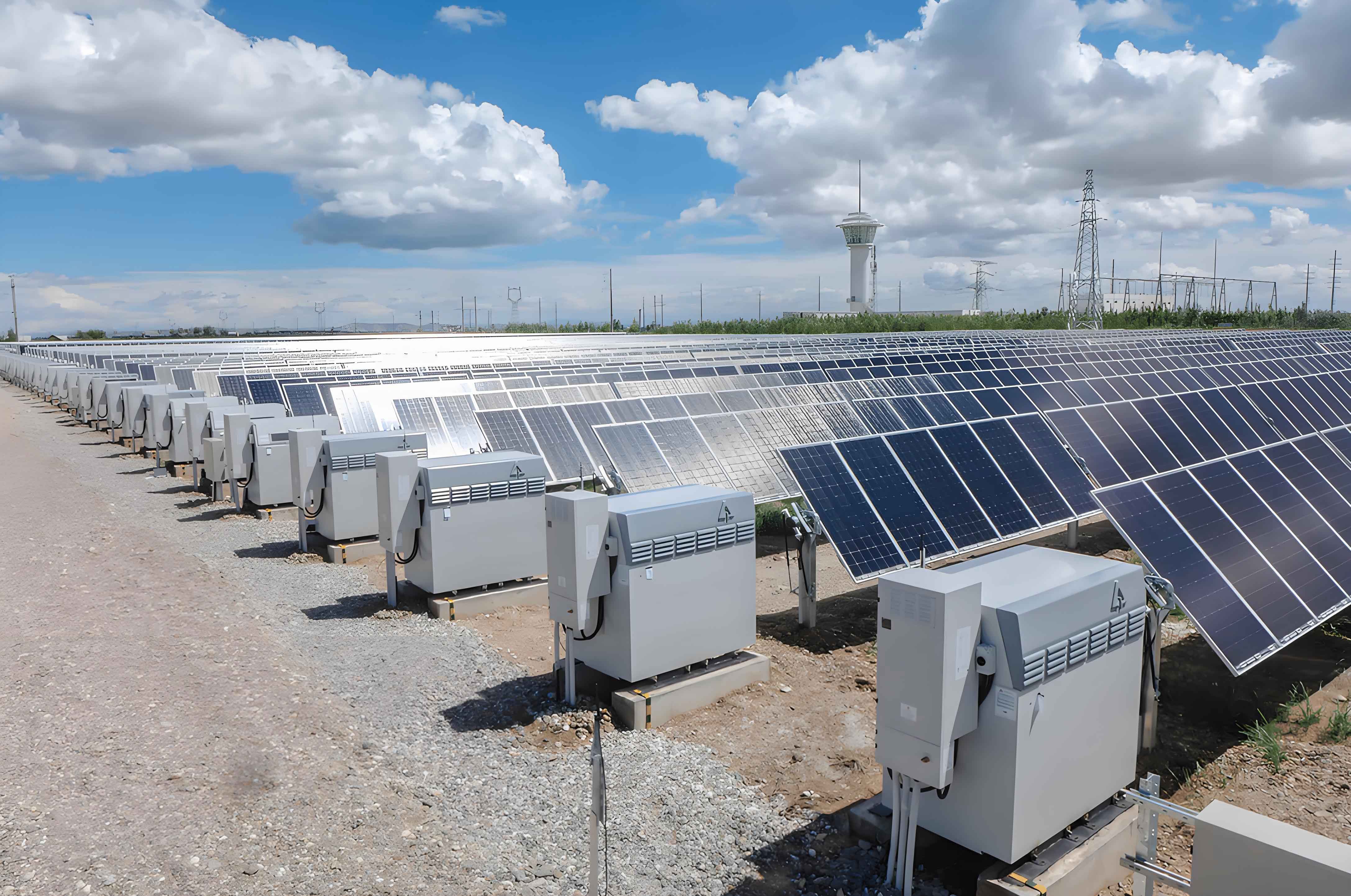
The distribution system in a solar power system is responsible for transmitting electricity from the PV array to the load or grid, incorporating safety features and efficiency enhancements. This includes wiring, protection devices, grounding, and grid interconnection components. A well-designed distribution system ensures that the solar power system operates safely, with minimal losses, and complies with regulatory standards.
Wiring design focuses on minimizing voltage drop and power losses. The voltage drop ΔV in a cable can be calculated using: $$ \Delta V = I \times R \times L $$ where I is the current, R is the resistance per unit length, and L is the length of the cable. For a solar power system with a current of 10 A, cable resistance of 0.02 Ω/m, and length of 50 m, the voltage drop would be: $$ \Delta V = 10 \times 0.02 \times 50 = 10 \text{ V} $$ If the system voltage is 240 V, this represents a 4.17% drop, which should be kept below 3% for optimal performance. Therefore, selecting cables with lower resistance or shorter runs is essential in a solar power system.
Protection design involves incorporating fuses, circuit breakers, and surge protectors to safeguard against faults. For instance, the rating of a fuse in a solar power system should be slightly higher than the maximum current to avoid nuisance tripping but low enough to disconnect during overloads. The fault current I_fault can be estimated as: $$ I_{\text{fault}} = \frac{V_{\text{oc}}}{R_{\text{internal}}} $$ where V_oc is the open-circuit voltage of the array and R_internal is the internal resistance. This helps in selecting appropriate protection devices.
Grounding design is critical for safety, ensuring that all metallic components are earthed to prevent electric shock. The grounding resistance R_ground should be as low as possible, typically below 5 Ω, and can be calculated using: $$ R_{\text{ground}} = \frac{\rho}{2 \pi L} \ln\left(\frac{4L}{d}\right) $$ where ρ is the soil resistivity, L is the length of the grounding electrode, and d is its diameter. For example, with ρ = 100 Ω·m, L = 2 m, and d = 0.02 m, R_ground ≈ 15.9 Ω, which may require multiple electrodes in parallel for a solar power system.
Grid interconnection design must adhere to standards for voltage, frequency, and power quality. The power factor PF, given by: $$ \text{PF} = \frac{P}{S} $$ where P is real power and S is apparent power, should be close to unity to avoid penalties. Inverters in a grid-tied solar power system often include power factor correction to achieve this. Below is a table summarizing key distribution system parameters:
| Component | Function | Design Consideration |
|---|---|---|
| Cables | Transmit electricity | Minimize voltage drop and use UV-resistant materials |
| Fuses/Circuit Breakers | Protect against overcurrent | Rated for DC applications in solar power systems |
| Grounding Electrodes | Provide earth connection | Low resistance and corrosion-resistant |
| Grid-Tie Inverter | Convert DC to AC and synchronize with grid | Comply with IEEE 1547 standards |
In my experience, conducting a load flow analysis can optimize the distribution system of a solar power system. This involves calculating the power flow through each component to identify bottlenecks and ensure balanced operation. For a solar power system with multiple branches, the power balance equation is: $$ \sum P_{\text{generation}} = \sum P_{\text{load}} + \sum P_{\text{loss}} $$ where P_generation is the power from PV panels, P_load is the power consumed, and P_loss is the total losses. This analysis helps in sizing components appropriately for a reliable solar power system.
Installation Site Selection and Preparation
Selecting and preparing the installation site is a foundational step in deploying a solar power system. The site must offer optimal solar exposure, minimal shading, and a stable foundation to support the system for decades. I have found that thorough site assessment can prevent future issues and enhance the efficiency of the solar power system.
Key factors in site selection include orientation, tilt angle, and shading analysis. The optimal tilt angle θ for fixed-mounted panels can be approximated based on latitude φ: $$ \theta = \phi \pm 15^\circ $$ depending on the season (e.g., +15° for winter, -15° for summer in the Northern Hemisphere). For a location at 40°N latitude, the annual average tilt might be 40°, but adjustable mounts can optimize seasonal performance. Shading from trees, buildings, or other obstacles should be minimized, as even partial shading can significantly reduce the output of a solar power system. The percentage power loss due to shading can be estimated using: $$ \text{Loss} = \frac{A_{\text{shaded}}}{A_{\text{total}}} \times 100\% $$ where A_shaded is the shaded area and A_total is the total panel area.
Site preparation involves clearing debris, leveling the ground, and ensuring structural integrity. For rooftop installations, a structural analysis is necessary to verify that the roof can support the weight of the solar power system. The load L_total can be calculated as: $$ L_{\text{total}} = W_{\text{panels}} + W_{\text{mounting}} + W_{\text{snow/wind}} $$ where W_panels is the weight of panels, W_mounting is the mounting system weight, and W_snow/wind accounts for environmental loads. For example, if panels weigh 20 kg/m², mounting adds 5 kg/m², and snow load is 50 kg/m², the total load might be 75 kg/m², which must be within the roof’s capacity.
Additionally, safety measures during site preparation include fencing off the area and conducting soil tests for ground-mounted systems. Soil resistivity tests help in designing the grounding system, as mentioned earlier. Below is a table outlining site selection criteria for a solar power system:
| Criterion | Ideal Condition | Impact on Solar Power System |
|---|---|---|
| Orientation | South-facing (Northern Hemisphere) | Maximizes solar irradiance capture |
| Tilt Angle | Equal to latitude | Optimizes annual energy production |
| Shading | None between 9 AM and 3 PM | Prevents significant power drops |
| Soil Type | Stable and low resistivity | Facilitates grounding and mounting |
In practice, I use tools like solar pathfinders or software simulations to analyze the site before installation. For instance, the solar insolation H at a site can be modeled as: $$ H = H_0 \times \cos(\theta_z) \times \tau $$ where H_0 is the extraterrestrial irradiance, θ_z is the zenith angle, and τ is the atmospheric transmissivity. This helps in predicting the energy yield of the solar power system and justifying the investment.
Photovoltaic Module Installation and Commissioning
Installing photovoltaic modules is a meticulous process that involves mechanical mounting, electrical wiring, and initial testing to ensure the solar power system functions as intended. I have overseen numerous installations where attention to detail during this phase prevented future failures and optimized performance.
The mechanical installation includes securing panels to mounting structures using bolts, clamps, or rails. The mounting system must withstand environmental loads such as wind and snow. The wind load F_wind can be calculated using: $$ F_{\text{wind}} = \frac{1}{2} \times \rho_{\text{air}} \times v^2 \times A \times C_d $$ where ρ_air is air density (approximately 1.2 kg/m³), v is wind velocity, A is the projected area, and C_d is the drag coefficient (around 1.2 for flat plates). For a panel with A = 2 m² in a region with v = 30 m/s, F_wind ≈ 1296 N, which the mounts must resist without deformation.
Electrical installation involves connecting panels in the predetermined series-parallel configuration and routing cables to the inverter. All connections should be tight and protected from moisture using weatherproof connectors. The total resistance R_total of the wiring in a solar power system can be minimized by using thicker cables and shorter paths, as per: $$ R_{\text{total}} = \sum \frac{\rho_c \times L}{A_c} $$ where ρ_c is the resistivity of copper (1.68 × 10^{-8} Ω·m), L is the length, and A_c is the cross-sectional area. For example, a 10 m cable with A_c = 6 mm² has R_total ≈ 0.028 Ω, which is acceptable for most systems.
Commissioning includes testing the open-circuit voltage V_oc and short-circuit current I_sc of the array to verify that it matches the specifications. The expected V_oc for a series string is: $$ V_{\text{oc, total}} = N_s \times V_{\text{oc, panel}} $$ and I_sc for parallel strings is: $$ I_{\text{sc, total}} = N_p \times I_{\text{sc, panel}} $$ Any deviations could indicate faulty connections or panels. Additionally, insulation resistance tests should be conducted to ensure there are no ground faults in the solar power system.
Below is a table summarizing key installation steps and checks for a solar power system:
| Step | Activity | Verification |
|---|---|---|
| Mounting | Secure panels to structure | Check for stability and alignment |
| Wiring | Connect panels and route cables | Measure V_oc and I_sc |
| Inverter Connection | Link array to inverter | Ensure polarity and voltage match |
| Initial Test | Power on and monitor output | Confirm inverter operation and data logging |
During commissioning, I also calibrate sensors and monitoring systems that track the performance of the solar power system. For example, pyranometers measure solar irradiance, and their readings should correlate with the power output using: $$ P_{\text{expected}} = \eta_{\text{sys}} \times A \times G $$ where G is the measured irradiance. Discrepancies might indicate soiling or other issues that need addressing.
Distribution System Installation and Testing
The installation of the distribution system in a solar power system involves setting up switchgear, protection devices, and grid interconnection equipment. This phase requires strict adherence to electrical codes and safety protocols to ensure reliable operation. I have documented best practices that minimize risks and enhance the longevity of the solar power system.
First, components such as DC combiner boxes, AC distribution panels, and meters are installed in accessible locations. The DC combiner box consolidates outputs from multiple strings and includes fuses for each string. The rating of these fuses should be based on the maximum current I_max of the strings, which can be calculated as: $$ I_{\text{max}} = I_{\text{sc, panel}} \times N_p \times 1.25 $$ where the 1.25 factor accounts for safety margins. For a string with I_sc,panel = 8 A and N_p = 3, I_max = 30 A, so a 32 A fuse might be used in the solar power system.
Wiring between components must be sized appropriately to handle the current without excessive heating. The ampacity A_amp of a cable is given by: $$ A_{\text{amp}} = I_{\text{max}} \times K $$ where K is a derating factor for temperature and installation conditions (typically 0.8-1.0). For example, if I_max = 40 A and K = 0.9, a cable with ampacity of at least 36 A is required. Using undersized cables in a solar power system can lead to overheating and fire hazards.
Testing the distribution system involves insulation resistance tests, continuity checks, and functional tests of protection devices. The insulation resistance R_ins should be greater than 1 MΩ for DC circuits, measured using a megohmmeter. The test voltage V_test is usually 500 V or 1000 V DC, and the resistance is calculated as: $$ R_{\text{ins}} = \frac{V_{\text{test}}}{I_{\text{leakage}}} $$ where I_leakage is the leakage current. High leakage indicates potential faults in the solar power system.
Grid interconnection testing includes verifying synchronization with the utility grid. The inverter must match the grid’s voltage, frequency, and phase. The frequency f_grid is typically 50 Hz or 60 Hz, and the inverter’s output should be within ±0.5 Hz. The voltage synchronization can be checked using: $$ \Delta V = |V_{\text{inv}} – V_{\text{grid}}| $$ which should be less than 5% of V_grid. Additionally, anti-islanding protection must be tested to ensure the solar power system disconnects during grid outages.
Below is a table outlining distribution installation steps for a solar power system:
| Component | Installation Step | Test Procedure |
|---|---|---|
| DC Combiner Box | Mount and connect string inputs | Check fuse ratings and string voltages |
| Inverter | Connect DC input and AC output | Verify startup and grid synchronization |
| AC Distribution Panel | Wire to inverter and load/grid | Test circuit breakers and meters |
| Grounding System | Install electrodes and bonding | Measure grounding resistance |
After installation, I perform a full load test to simulate real-world conditions. This involves connecting dummy loads or using the actual load to measure the response of the solar power system. The energy output E over time t can be integrated as: $$ E = \int_0^t P(t) \, dt $$ where P(t) is the power at time t. This test helps identify any inefficiencies or faults before the solar power system is handed over for operation.
System Operation Testing and Debugging
Once the solar power system is installed, comprehensive testing and debugging are essential to validate its performance and address any issues. I have developed a systematic approach that includes functional tests, performance monitoring, and troubleshooting to ensure the solar power system meets design specifications.
Initial operation testing involves measuring key parameters under standard conditions. The performance ratio PR is a critical metric for a solar power system, defined as: $$ \text{PR} = \frac{E_{\text{actual}}}{E_{\text{theoretical}}} \times 100\% $$ where E_actual is the measured energy output and E_theoretical is the expected output based on irradiance and system rating. For example, if a 5 kW solar power system produces 20 kWh in a day with an average irradiance of 5 kWh/m², the theoretical output might be 25 kWh, giving PR = 80%. A low PR could indicate shading, soiling, or component failures.
Debugging often involves identifying and rectifying faults such as module mismatches, inverter errors, or wiring issues. The fill factor FF of a PV module, given by: $$ \text{FF} = \frac{V_{\text{mp}} \times I_{\text{mp}}}{V_{\text{oc}} \times I_{\text{sc}}} $$ where V_mp and I_mp are the voltage and current at maximum power point, can reveal degradation. A significant drop in FF might require replacing modules in the solar power system.
Long-term monitoring uses data loggers or SCADA systems to track performance trends. The degradation rate d_actual can be calculated from historical data: $$ d_{\text{actual}} = 1 – \left( \frac{P_{\text{year}_n}}{P_{\text{year}_0}} \right)^{\frac{1}{n}} $$ where P_year_0 and P_year_n are the power outputs in the first and n-th year. This helps in planning maintenance for the solar power system.
Below is a table summarizing common tests and their purposes in a solar power system:
| Test Type | Parameters Measured | Acceptance Criteria |
|---|---|---|
| I-V Curve Tracing | Current vs. voltage of array | Match manufacturer’s specifications |
| Insulation Resistance | Resistance between conductors and ground | >1 MΩ for DC circuits |
| Grid Compliance | Voltage, frequency, harmonic distortion | Within utility standards (e.g., IEEE 1547) |
| Energy Yield | Daily/monthly energy production | Within 90-95% of projected values |
In my experience, simulating fault scenarios, such as partial shading or grid failures, is crucial for testing the robustness of the solar power system. For example, shading one panel in a string can reduce the current, and the system’s response should be monitored to ensure that bypass diodes activate properly. The power loss due to shading can be modeled as: $$ P_{\text{loss}} = P_{\text{max}} \times \left(1 – \frac{I_{\text{shaded}}}{I_{\text{unshaded}}}\right) $$ where I_shaded and I_unshaded are the currents with and without shading. This proactive approach ensures that the solar power system remains reliable under various conditions.
Conclusion
In summary, the design and construction of a solar power system involve a multifaceted approach that integrates electrical engineering, mechanical installation, and rigorous testing. From circuit design and component selection to site preparation and commissioning, each stage requires careful planning and execution to maximize efficiency and reliability. The use of mathematical models, such as those for efficiency calculations and performance ratios, alongside practical tables, provides a solid foundation for optimizing solar power systems. As renewable energy adoption grows, advancements in technology will continue to enhance the viability of solar power systems, making them a cornerstone of global energy solutions. Through continuous improvement and adherence to best practices, we can ensure that solar power systems contribute significantly to a sustainable future.