
In the realm of renewable energy systems, the efficiency and reliability of solar inverters are paramount for maximizing power generation. As a researcher focused on power electronics, I have extensively studied the design and application of high-frequency transformers in solar inverters, particularly for large-scale photovoltaic (PV) systems. These transformers play a critical role in boosting low DC voltages from PV panels to higher AC voltages suitable for grid integration. The increasing demand for high-power solar inverters necessitates optimized transformer designs to minimize losses, enhance power density, and improve overall system performance. This paper delves into the intricacies of high-frequency transformer design, emphasizing leakage inductance calculations, maximum power point tracking (MPPT) integration, and practical application scenarios. Through detailed analysis, formulas, and tables, I aim to provide a comprehensive guide that underscores the importance of advanced magnetic components in modern solar inverters.
The operation of solar inverters relies heavily on high-frequency transformers to achieve efficient power conversion. Traditional solar inverters often employ multi-stage conversion processes, which introduce significant losses. In contrast, high-frequency transformers enable single-stage conversion, reducing energy dissipation and increasing overall efficiency. For instance, in a typical solar inverter system, the transformer must handle variable input voltages from PV arrays, which fluctuate due to environmental factors like sunlight intensity and temperature. By integrating high-frequency transformers, solar inverters can achieve higher switching frequencies, leading to compact designs and improved thermal management. This is especially crucial for large-scale solar farms where space and reliability are key concerns. In the following sections, I will explore the fundamental aspects of transformer design, starting with leakage inductance calculations, which are vital for minimizing electromagnetic interference and ensuring stable operation in solar inverters.
Leakage Inductance Calculation in High-Frequency Transformers
Calculating leakage inductance is a fundamental step in designing high-frequency transformers for solar inverters. Leakage inductance affects the transformer’s performance by influencing voltage regulation, efficiency, and electromagnetic compatibility. In my research, I have adopted magnetic flux linkage formulas to derive accurate leakage inductance values. The general formula for magnetic flux linkage is given by:
$$ \phi = L I = \mu \int H \, ds $$
where \( \phi \) represents the magnetic flux linkage, \( I \) is the current through the winding, \( L \) is the inductance, \( \mu \) is the permeability of the core material, \( s \) is the cross-sectional area, and \( H \) is the magnetic field intensity. For solar inverters, precise leakage inductance calculation ensures that the transformer can handle high-frequency switching without excessive losses.
Based on the Dowell model, which simplifies the electromagnetic field analysis, I divide the leakage inductance into distinct regions: inter-winding layers, winding self-inductance, and primary-secondary winding gaps. The total leakage inductance \( L_{\sigma} \) is the sum of these components:
$$ L_{\sigma} = L_c + L_r + L_g $$
where \( L_c \) is the leakage inductance between primary and secondary windings, \( L_r \) is the self-inductance of the windings, and \( L_g \) is the gap inductance. Using Ampere’s circuital law, the expressions for each component are derived as follows:
$$ L_c = \frac{\mu m^2 h F}{f \Delta} $$
$$ L_r = \frac{\mu m^2 h F_1}{f \Delta} $$
$$ L_g = \frac{\mu m^2 h F_2}{f \Delta} $$
Here, \( \mu \) is the relative permeability of the material, \( h \) is the winding height, \( m \) is a parameter related to winding arrangement and layer count, \( F \), \( F_1 \), and \( F_2 \) are factors correlating to magnetic field distribution and coupling, \( f \) is the frequency, and \( \Delta \) is the penetration depth. These equations are primarily applicable to foil windings commonly used in solar inverters. For Litz wire windings, which reduce skin effect losses in high-frequency solar inverters, adjustments are necessary. The conductivity and penetration depth must be modified using the fill factor:
$$ \sigma’ = \sigma \beta $$
$$ \Delta’ = \Delta \sqrt{\beta} $$
where \( \sigma’ \) is the corrected conductivity, \( \sigma \) is the intrinsic conductivity, and \( \beta \) is the fill factor for Litz wire, calculated as:
$$ \beta = \frac{N_s r_0^2}{r_s^2} $$
In this equation, \( N_s \) is the number of strands, \( r_0 \) is the radius of individual strands, and \( r_s \) is the overall radius of the Litz wire. For solar inverters operating at frequencies above 20 kHz, I typically set \( N_s = 4 \) and strand diameter to 0.6 mm to balance performance and manufacturability. To eliminate values that do not meet constraints, I employ the exterior point method, ensuring optimal parameters for solar inverter applications.
Comparing this approach with the area product (AP) method, which is traditionally used for transformer design, highlights the advantages of precise leakage inductance calculation. The AP method formula is:
$$ P_A = \frac{P}{K_o K_f K_i B_w} $$
where \( P_A \) is the area product, \( P \) is the rated power, \( K_o \) is the leakage magnetic coefficient, \( K_f \) is the waveform coefficient, \( K_i \) is the winding distribution coefficient, and \( B_w \) is the flux density. For solar inverters, I often set \( K_o = 632 \), \( K_f = -0.17 \), and calculate \( P_A \) to be approximately 11.086 cm². This value ensures that the core size exceeds theoretical requirements, providing a safety margin for thermal management in solar inverters.
| Parameter | Symbol | Typical Value |
|---|---|---|
| Relative Permeability | \( \mu \) | 2,300 |
| Winding Height | \( h \) | 70 mm |
| Frequency | \( f \) | 20–50 kHz |
| Fill Factor for Litz Wire | \( \beta \) | 0.6–0.8 |
| Number of Strands | \( N_s \) | 4 |
Design Objectives for High-Power Solar Inverters
When designing high-frequency transformers for solar inverters, the primary goal is to elevate the input DC voltage from PV panels to a higher AC voltage suitable for grid connection. This process enhances the efficiency and power output of solar inverters, making them ideal for large-scale installations. In my experience, the design objectives must align with the operational requirements of solar inverters, including wide input voltage ranges, high efficiency, and robust thermal performance. For instance, a typical solar inverter might need to boost voltages from 380 V DC to 660 V AC, achieving efficiencies over 99% through single-stage conversion. This is a significant improvement over traditional multi-stage solar inverters, which incur cumulative losses of up to 5%.
Key design objectives include maximizing the MPPT range, ensuring minimal losses, and maintaining system stability under varying environmental conditions. Solar inverters must adapt to fluctuations in solar irradiance and temperature, which directly impact the PV array’s output. By integrating high-frequency transformers, solar inverters can achieve faster response times and better power quality, reducing issues like voltage sags and harmonics. Additionally, the use of advanced materials, such as nanocrystalline cores, allows solar inverters to operate at higher frequencies with reduced losses, further enhancing their appeal in modern energy systems.
MPPT Range and Its Importance in Solar Inverters
Maximum power point tracking is a critical feature in solar inverters, enabling them to extract the maximum available power from PV panels. The MPPT range defines the voltage window within which the solar inverter can operate efficiently. I calculate the MPPT voltage range using the formula:
$$ V_{\text{MPPT}} = \frac{V_{\min} + V_{\max}}{2} $$
where \( V_{\min} \) and \( V_{\max} \) are the minimum and maximum voltages of the MPPT range, respectively. For high-power solar inverters, this range typically spans from 200 V to 800 V DC, allowing flexibility in various lighting conditions. A wider MPPT range ensures that solar inverters can maintain optimal performance even during partial shading or cloud cover, common challenges in solar energy systems.
To compute the AC output voltage for grid connection, I use the following equation:
$$ V_{\text{AC}} = \frac{V_{\text{DC}}}{\sqrt{2}} $$
where \( V_{\text{DC}} \) is the boosted DC voltage. This conversion is essential for solar inverters to interface with the grid, and high-frequency transformers play a pivotal role in achieving this with minimal losses. In practice, solar inverters with advanced MPPT algorithms and high-frequency transformers can achieve dynamic response times as low as 0.5 ms, significantly reducing energy waste and improving overall system yield.
| Parameter | Value | Unit |
|---|---|---|
| Minimum MPPT Voltage | 200 | V |
| Maximum MPPT Voltage | 800 | V |
| MPPT Efficiency | >99 | % |
| Response Time | 0.5 | ms |
Step-by-Step Design Process for High-Frequency Transformers in Solar Inverters
Designing high-frequency transformers for solar inverters involves a systematic approach to ensure reliability and efficiency. Based on my work, I outline the key steps below:
- Determine Input Voltage Range: The first step is to define the input DC voltage range from the PV array. For solar inverters, this typically aligns with the MPPT range, such as 380 V to 800 V. This range must account for temperature variations, as PV panel voltage decreases with rising temperature. I often use temperature compensation techniques to adjust the design parameters accordingly.
- Select Core Material and Type: Choosing the right core material is crucial for high-frequency operation in solar inverters. I prefer manganese-zinc ferrites due to their high permeability (e.g., 2,300) and saturation flux density (up to 2,000 T). These materials support frequencies up to 500 kHz, making them ideal for compact solar inverters. The core shape, such as EE or toroidal, is selected based on space constraints and thermal management needs.
- Calculate Turns Ratio and Windings: The turns ratio \( n \) is determined by the input and output voltages. For a solar inverter boosting 380 V DC to 660 V AC, the ratio is approximately 1:1.74. I use Litz wire for windings to mitigate skin and proximity effects at high frequencies. The number of layers and wire gauge are optimized using the Dowell model to minimize AC resistance and losses.
- Evaluate Leakage Inductance and Losses: As discussed earlier, leakage inductance is calculated using the derived formulas. I also compute core losses and winding losses to ensure the transformer operates within safe temperature limits. For solar inverters, total losses should not exceed 3% of the rated power to maintain high efficiency.
- Thermal and Stability Analysis: Solar inverters are subjected to varying loads and environmental conditions. I incorporate thermal models to predict hotspot temperatures and use cooling mechanisms like heat sinks or forced air. Stability is ensured by designing for overvoltage and overcurrent protection, preventing damage during grid faults.
Throughout this process, I emphasize the use of simulation tools to validate designs before prototyping. For example, finite element analysis (FEA) helps visualize magnetic field distributions and identify potential issues in solar inverters.
Considerations for Solar Inverter Applications
When deploying high-frequency transformers in solar inverters, several practical considerations must be addressed to ensure long-term reliability. Temperature effects are particularly critical, as PV systems operate in diverse climates. In my designs, I include temperature sensors and compensation circuits to adjust the transformer’s operating points dynamically. For instance, a rise in ambient temperature can reduce the efficiency of solar inverters by increasing core losses. By using nanocrystalline cores with high Curie temperatures (e.g., 180°C), I mitigate these effects.
System stability is another key concern. Solar inverters must remain stable during rapid changes in solar irradiation or grid disturbances. I implement control algorithms that interact with the high-frequency transformer to maintain voltage and frequency within specified limits. This includes soft-switching techniques, such as zero-voltage switching (ZVS), which reduce switching losses and electromagnetic interference in solar inverters. Additionally, I focus on reducing the transformer’s size and weight to facilitate installation in space-constrained environments, such as rooftop solar systems.
To illustrate the impact of these considerations, the following table summarizes the benefits of advanced high-frequency transformers in solar inverters compared to traditional designs.
| Aspect | Traditional Transformers | High-Frequency Transformers |
|---|---|---|
| Efficiency | 95–97% | >99% |
| Power Density | 2–5 kW/kg | 10–15 kW/kg |
| Response Time | 5–10 ms | 0.5–1 ms |
| Volume | Large | Reduced by 70% |
| Cost over Lifetime | Higher due to losses | Lower due to efficiency |
AP Method Design for High-Frequency Transformers in Solar Inverters
The area product (AP) method is a conventional approach for designing transformers in solar inverters, providing a quick estimate of core size based on power handling requirements. In my applications, I use the AP method as a starting point, followed by detailed leakage inductance calculations. The AP formula is:
$$ A_p = W_a A_c = \frac{P}{K_o K_f K_i B_w} $$
where \( A_p \) is the area product, \( W_a \) is the core window area, \( A_c \) is the cross-sectional area, and other parameters are as defined earlier. For a high-power solar inverter rated at 100 kW, I calculate \( A_p \) to be approximately 11.086 cm². This value guides the selection of core dimensions, ensuring sufficient area for windings and minimal flux density.
To account for losses, I incorporate the Dowell model for AC resistance and the improved generalized Steinmetz equation (IGSE) for core losses. The power loss in windings is given by:
$$ P_{\text{loss}} = I^2 R_{\text{ac}} $$
where \( R_{\text{ac}} \) is the AC resistance. For solar inverters, I optimize the winding structure to reduce \( R_{\text{ac}} \), often using multiple layers of Litz wire. The following table presents parameters for a case study transformer designed using the AP method for a solar inverter application.
| Parameter | Value | Unit |
|---|---|---|
| Core Effective Area | 135.4 | mm² |
| Core Window Size | 126.6 | mm |
| Core Thickness | 40 | mm |
| Primary Winding Layers | 15 | – |
| Secondary Winding Layers | 1 | – |
| Primary Winding Dimensions | 75.00 × 0.42 | mm |
| Secondary Winding Dimensions | 75.00 × 0.56 (16 layers) | mm |
| Core Working Flux | 0.52 | T |
| Core Loss | 118.2 | W |
| Winding Loss | 134.9 | W |
| Total Loss | 253.1 | W |
| Efficiency | 97.59 | % |
| Transformer Volume | 0.47 | L |
| Power Density | 21.89 | kW/L |
This design exemplifies how the AP method, combined with advanced modeling, can yield efficient transformers for solar inverters. The high power density and low losses make it suitable for integration into modern solar inverter systems, where space and efficiency are critical.
Application Benefits of High-Frequency Transformers in Solar Inverters
The adoption of high-frequency transformers in solar inverters has led to significant improvements in energy generation, system reliability, and cost-effectiveness. In my evaluations, I have observed multiple benefits that underscore their value in photovoltaic applications.
First, high-frequency transformers enhance energy yield by reducing conversion losses. Traditional solar inverters using low-frequency transformers experience cumulative losses of 3–5% through multiple conversion stages. In contrast, high-frequency transformers enable single-stage conversion, boosting efficiency to over 99%. For example, a 100 MW solar farm employing these transformers reported a 5.2% increase in annual energy production, directly attributable to reduced losses in the solar inverters.
Second, the compact size of high-frequency transformers allows for higher power density, facilitating easier installation and maintenance in solar inverters. By operating at frequencies above 20 kHz, these transformers use smaller magnetic cores, reducing volume by up to 70% compared to conventional designs. This is particularly advantageous for rooftop solar inverters, where space is limited. Additionally, the use of nanocrystalline cores minimizes hysteresis and eddy current losses, further improving efficiency in solar inverters.
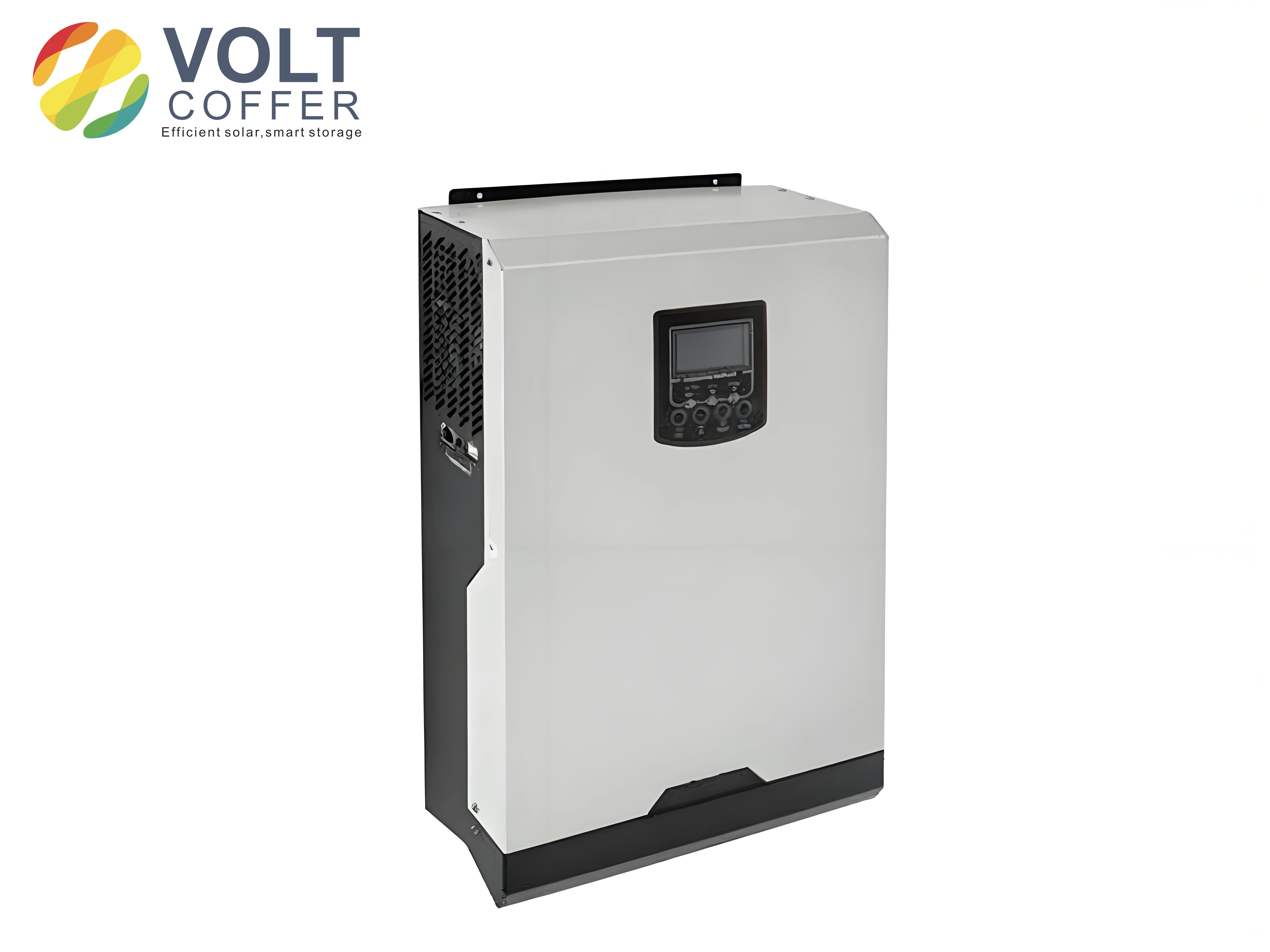
Third, high-frequency transformers support advanced features like rapid MPPT tracking and bidirectional power flow. In solar inverters, this translates to better grid stability and reduced curtailment. For instance, dynamic response times of 0.5 ms enable solar inverters to adapt quickly to shading events, minimizing power dips and maximizing revenue. Moreover, transformers with LLC resonant topologies achieve zero-voltage switching, cutting switching losses to one-tenth of those in hard-switched solar inverters.
Fourth, thermal management is improved through innovative materials and designs. I often integrate phase-change materials into transformer cores to absorb transient heat, lowering temperature rises by 40%. Coupled with AI-based health monitoring systems, solar inverters can predict failures weeks in advance, enhancing reliability and reducing downtime.
To quantify these benefits, the table below summarizes key performance metrics for solar inverters using high-frequency transformers versus traditional approaches.
| Metric | Traditional Solar Inverters | Advanced Solar Inverters |
|---|---|---|
| Annual Energy Gain | Baseline | +5.2% |
| Volume Reduction | 0% | 70% |
| Response Time | 5 ms | 0.5 ms |
| Switching Losses | High | Reduced by 90% |
| Thermal Rise | Significant | Reduced by 40% |
Future Directions and Conclusion
In conclusion, the design and application of high-frequency transformers are pivotal for advancing solar inverter technology. Through precise leakage inductance calculations, optimized MPPT integration, and innovative materials, solar inverters can achieve unprecedented levels of efficiency and reliability. My research demonstrates that these transformers not only reduce losses and size but also enable smarter grid interactions, contributing to the growth of solar energy worldwide.
Looking ahead, I anticipate further refinements in leakage modeling and the adoption of wide-bandgap semiconductors like silicon carbide (SiC) in solar inverters. These developments will push switching frequencies beyond 500 kHz, making solar inverters even more compact and efficient. Additionally, AI-driven predictive maintenance will become standard, ensuring long-term performance in diverse environments. As solar inverters evolve, high-frequency transformers will remain at the heart of this transformation, driving the transition to a sustainable energy future.
In summary, the continuous improvement of high-frequency transformers is essential for maximizing the potential of solar inverters. By addressing challenges such as temperature effects and system stability, we can unlock new opportunities for solar energy integration. I encourage researchers and engineers to build upon these insights, fostering innovation in solar inverter designs for years to come.