
In our extensive research on energy storage lithium battery systems, we have dedicated significant efforts to understanding the complex mechanisms underlying thermal runaway, a critical safety concern that can lead to catastrophic failures in high-energy-density applications. Our work focuses particularly on high-nickel cathodes, which offer superior energy density but pose substantial thermal stability challenges. Through systematic investigation, we have uncovered novel insights that challenge conventional wisdom and provide actionable pathways for enhancing the safety of energy storage lithium battery technologies.
The fundamental issue with energy storage lithium battery systems lies in the delicate balance between energy density and thermal stability. As we push the boundaries of energy storage lithium battery capacity through higher nickel content in cathodes, the thermal management becomes increasingly critical. Our research approach involved multi-scale characterization techniques, combining material-level analysis with battery-level performance evaluation to establish quantitative relationships between microscopic structural changes and macroscopic thermal behavior.
We began our investigation by examining the thermal runaway behavior of energy storage lithium battery cells with varying nickel content, specifically comparing systems with nickel concentrations ranging from 60% to 90%. The experimental framework incorporated both fresh cells and those subjected to extensive cycling to simulate aging effects. Our methodology integrated in-situ and ex-situ characterization techniques, including accelerated rate calorimetry, differential scanning calorimetry, and X-ray diffraction analysis.
The thermal runaway process in energy storage lithium battery systems can be mathematically described using reaction kinetics models. The overall heat generation rate during thermal runaway follows an Arrhenius-type relationship:
$$ \frac{dQ}{dt} = A \exp\left(-\frac{E_a}{RT}\right) \prod_i C_i^{n_i} $$
where Q represents the cumulative heat release, t is time, A is the pre-exponential factor, E_a is the activation energy, R is the universal gas constant, T is the absolute temperature, C_i represents the concentration of reacting species, and n_i denotes the reaction order for each species.
Our analysis revealed that the traditional model emphasizing oxygen release from cathode bulk material as the primary driver of thermal runaway requires significant revision for high-nickel energy storage lithium battery systems. Instead, we identified that exothermic reactions at the cathode-electrolyte interface dominate the thermal runaway initiation and propagation.
The following table summarizes our key findings regarding the dominant thermal runaway mechanisms across different nickel content ranges in energy storage lithium battery systems:
| Nickel Content Range | Primary Thermal Runaway Driver | Secondary Contributors | Characteristic Activation Temperature | Recommended Mitigation Strategy |
|---|---|---|---|---|
| ≤70% (Low-Nickel) | Lattice oxygen release and subsequent reactions | Interface side reactions, SEI decomposition | 180-220°C | Enhance bulk structural stability |
| 71-85% (Medium-Nickel) | Mixed mechanism: Oxygen release and interface reactions | Electrolyte decomposition, cation mixing | 160-200°C | Combined bulk and interface optimization |
| ≥86% (High-Nickel) | Cathode-electrolyte interface exothermic reactions | Surface phase transitions, oxygen evolution | 140-180°C | Focus on interface protection |
We developed a comprehensive quantitative framework to analyze the contribution of different exothermic processes during thermal runaway in energy storage lithium battery systems. The total heat flow during thermal runaway can be expressed as the sum of individual reaction contributions:
$$ \dot{Q}_{total} = \dot{Q}_{interface} + \dot{Q}_{oxygen} + \dot{Q}_{SEI} + \dot{Q}_{anode} $$
where $\dot{Q}_{interface}$ represents heat generation from cathode-electrolyte interface reactions, $\dot{Q}_{oxygen}$ denotes heat from oxygen release and subsequent reactions, $\dot{Q}_{SEI}$ accounts for solid-electrolyte interphase decomposition, and $\dot{Q}_{anode}$ includes anode-related reactions.
Our experimental results demonstrated that for high-nickel energy storage lithium battery systems, the interface reaction term dominates the early stages of thermal runaway:
$$ \frac{\dot{Q}_{interface}}{\dot{Q}_{total}} \approx 0.65-0.80 $$
This finding represents a paradigm shift from the conventional understanding that prioritized bulk oxygen release as the primary concern. The interface-dominated mechanism explains why traditional approaches focusing solely on bulk stabilization have shown limited success in improving the safety of high-nickel energy storage lithium battery systems.
The kinetics of the interface reactions follow complex multi-step mechanisms. We modeled the primary interface reaction as:
$$ \text{Cathode Surface} + \text{Electrolyte} \xrightarrow{k_1} \text{Intermediate} \xrightarrow{k_2} \text{Products} + \text{Heat} $$
with the rate constants given by:
$$ k_1 = A_1 \exp\left(-\frac{E_{a1}}{RT}\right) $$
$$ k_2 = A_2 \exp\left(-\frac{E_{a2}}{RT}\right) $$
Our measurements revealed that the activation energy for the interface reaction (E_{a1}) ranges from 80-110 kJ/mol, significantly lower than that for bulk oxygen release (typically 140-180 kJ/mol), explaining why interface reactions initiate at lower temperatures in energy storage lithium battery systems.
We further investigated the role of cycling aging on thermal stability of energy storage lithium battery cells. The table below shows how key parameters evolve with cycling and their impact on thermal runaway characteristics:
| Cycling Condition | Interface Resistance Increase | Onset Temperature Decrease | Maximum Heating Rate | Total Heat Release |
|---|---|---|---|---|
| Fresh Cells | Baseline | Baseline | 25-35°C/min | 750-850 J/g |
| 200 cycles | 45-60% | 15-20°C | 40-55°C/min | 800-900 J/g |
| 500 cycles | 80-120% | 25-35°C | 60-80°C/min | 850-950 J/g |
The degradation of interface stability with cycling accelerates the thermal runaway process in energy storage lithium battery systems. We quantified this relationship using a modified Arrhenius equation that incorporates cycling-dependent parameters:
$$ k_{eff} = A_{eff} \exp\left(-\frac{E_{a,eff}}{RT}\right) \cdot (1 + \alpha N) $$
where N represents the number of cycles, and α is a cycling acceleration factor determined experimentally to be approximately 0.002-0.004 per cycle for high-nickel energy storage lithium battery systems.
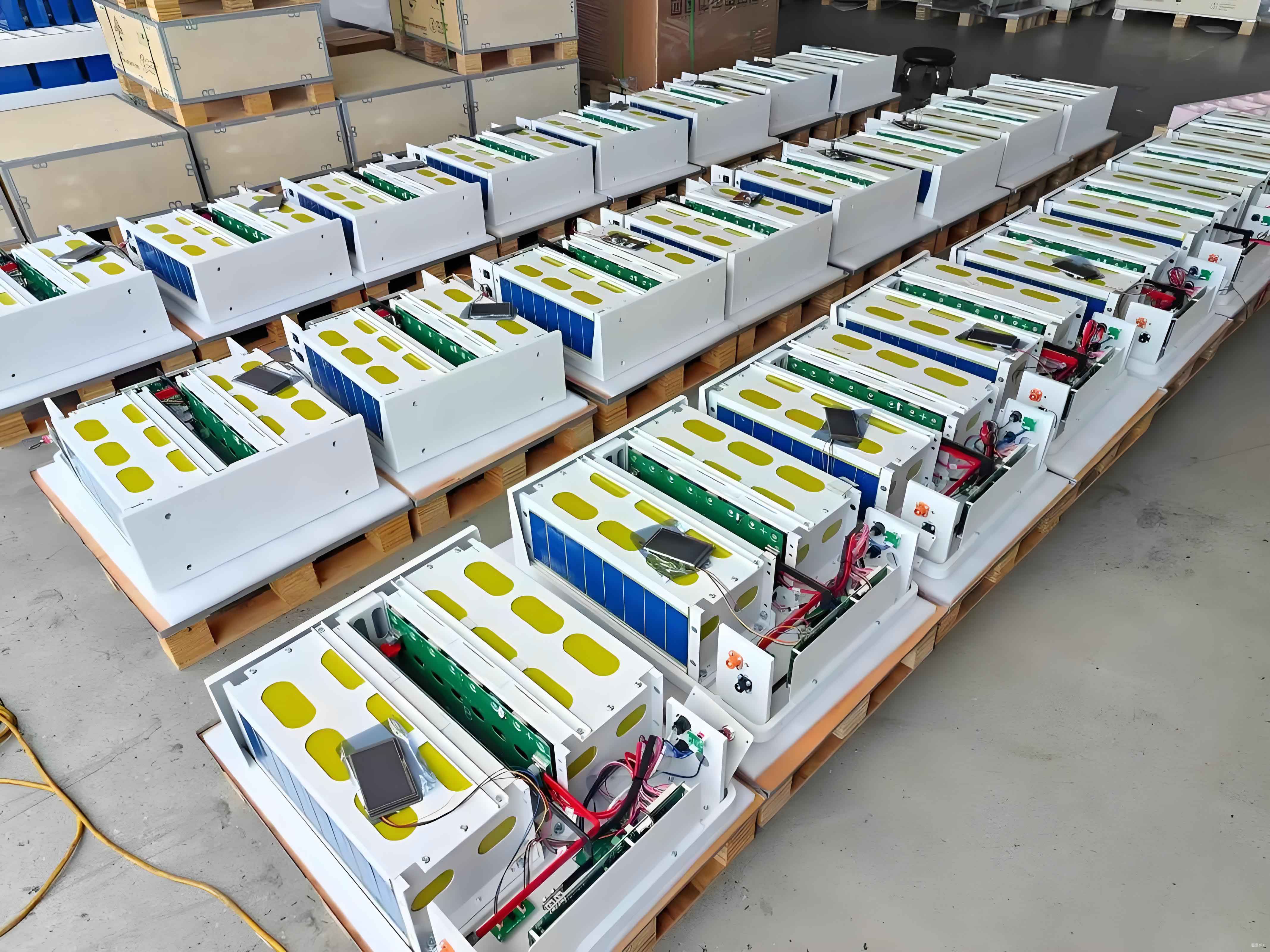
Our research methodology incorporated advanced characterization techniques to probe the interface reactions in energy storage lithium battery systems. We employed synchrotron-based X-ray absorption spectroscopy to monitor the evolution of nickel oxidation states during heating, revealing that surface reduction precedes bulk structural changes. The rate of surface reduction follows the equation:
$$ \frac{d[Ni^{3+}]}{dt} = -k_{red}[Ni^{3+}][EC] $$
where [Ni^{3+}] represents the concentration of trivalent nickel at the surface, [EC] is the ethylene carbonate concentration, and k_{red} is the reduction rate constant.
We developed a comprehensive safety design framework for energy storage lithium battery systems based on our findings. The optimal safety strategy depends on the nickel content, as summarized in the following design principles table:
| Battery Type | Primary Safety Focus | Recommended Materials Engineering | Electrolyte Formulation | Expected Safety Improvement |
|---|---|---|---|---|
| Low-Nickel Energy Storage Lithium Battery | Bulk structural stability | Gradient doping, single-crystal particles | Conventional carbonate-based | 20-30% increase in onset temperature |
| Medium-Nickel Energy Storage Lithium Battery | Balanced approach | Core-shell structures, moderate coating | Additive-enhanced formulations | 15-25% improvement in thermal stability |
| High-Nickel Energy Storage Lithium Battery | Interface protection | Conformal coatings, surface passivation | Advanced oxidation-resistant electrolytes | 30-40% reduction in heating rates |
The effectiveness of interface protection strategies can be quantified using a protection efficiency parameter:
$$ \eta = 1 – \frac{\dot{Q}_{protected}}{\dot{Q}_{unprotected}} $$
where $\dot{Q}_{protected}$ and $\dot{Q}_{unprotected}$ represent the heat generation rates for coated and uncoated cathodes, respectively. Our optimized coating strategies achieved protection efficiencies of 0.4-0.6 for high-nickel energy storage lithium battery systems.
We also investigated the coupling between different failure mechanisms in energy storage lithium battery systems. The interaction between anode and cathode during thermal runaway follows a complex feedback loop described by:
$$ \frac{dT}{dt} = \frac{1}{mC_p} \left( \dot{Q}_{cat} + \dot{Q}_{an} + \dot{Q}_{elec} \right) $$
where m is the battery mass, C_p is the specific heat capacity, and the subscripts denote cathode, anode, and electrolyte contributions, respectively.
Our research has significant implications for the development of next-generation energy storage lithium battery technologies. By shifting the focus from bulk stabilization to interface engineering for high-nickel systems, we can achieve simultaneous improvements in both energy density and safety. The proposed framework enables rational design of energy storage lithium battery systems tailored to specific application requirements.
We further extended our analysis to practical battery pack design considerations for energy storage lithium battery systems. The propagation of thermal runaway between cells in a module follows a heat transfer equation:
$$ \rho C_p \frac{\partial T}{\partial t} = \nabla \cdot (k \nabla T) + \dot{q}_{gen} $$
where ρ is density, k is thermal conductivity, and $\dot{q}_{gen}$ is the volumetric heat generation rate. Our simulations incorporating the new understanding of interface-dominated thermal runaway provide more accurate predictions of failure propagation in energy storage lithium battery packs.
The development of advanced electrolytes represents a crucial direction for improving the safety of energy storage lithium battery systems. We evaluated numerous electrolyte formulations using our established testing protocol. The performance of different electrolyte systems in suppressing interface reactions can be characterized by an interface stability index:
$$ ISI = \frac{T_{onset} – T_{ref}}{ΔH_{rxn}} $$
where T_{onset} is the onset temperature of significant interface reactions, T_{ref} is a reference temperature (typically 25°C), and ΔH_{rxn} is the enthalpy change of the primary interface reaction.
Our comprehensive study establishes a new foundation for the safety design of energy storage lithium battery systems. The quantitative relationships we derived between material properties, interface characteristics, and thermal behavior enable predictive modeling and accelerated development of safer high-energy-density batteries. The implementation of these principles will facilitate the widespread adoption of advanced energy storage lithium battery technologies in electric vehicles and grid storage applications.
Future work will focus on refining the quantitative models and extending them to other advanced battery chemistries. The fundamental understanding of interface-dominated thermal runaway mechanisms provides a universal framework for addressing safety challenges in next-generation energy storage lithium battery systems. Through continued research and development, we anticipate significant advancements in both the performance and safety of energy storage lithium battery technologies, enabling their broader implementation in critical energy infrastructure applications.