
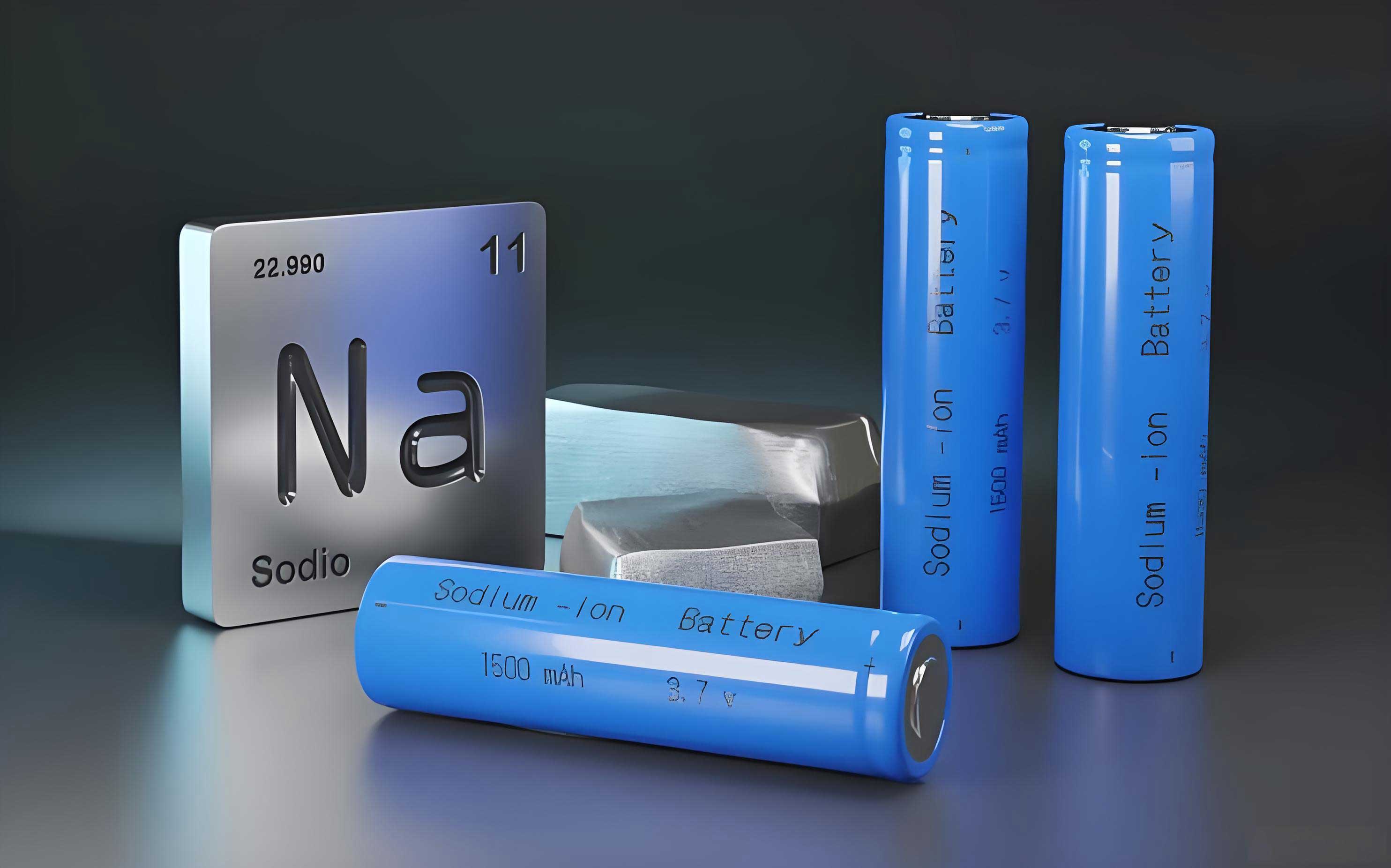
The search for sustainable and cost-effective energy storage solutions is a paramount challenge of our time. While lithium-ion batteries (LIBs) have dominated the landscape for portable electronics and electric vehicles, concerns regarding lithium resource scarcity and cost are driving intensive research into alternative chemistries. Among these, sodium-ion batteries (SIBs) present a highly promising avenue due to the natural abundance and low cost of sodium. The working principle of a sodium-ion battery is analogous to that of its lithium-based counterpart, revolving around the shuttling of sodium ions between the cathode and anode during charge and discharge cycles. However, the larger ionic radius and higher redox potential of sodium pose significant challenges for electrode material design, particularly for the anode, where efficient insertion and extraction of Na+ must occur. Developing high-performance, stable anode materials is therefore a critical step toward realizing practical sodium-ion battery technology.
Transition metal oxides (TMOs) have attracted considerable attention as anode materials due to their high theoretical specific capacities based on conversion reaction mechanisms. Copper oxide (CuO), with a high theoretical capacity of approximately 670 mAh g-1, natural abundance, and low toxicity, stands out as a compelling candidate for sodium-ion battery anodes. The electrochemical reaction of CuO with sodium generally follows a conversion mechanism, which can be represented as:
$$
\text{CuO} + 2\text{Na}^+ + 2\text{e}^- \rightleftharpoons \text{Cu} + \text{Na}_2\text{O}
$$
Despite this advantage, the practical application of CuO in sodium-ion batteries is severely hampered by two intrinsic drawbacks. First, the significant volume expansion and contraction during the repeated sodiation/desodiation processes lead to mechanical degradation, particle pulverization, and loss of electrical contact, resulting in rapid capacity fade. Second, the inherently low electronic conductivity of CuO impedes charge transfer kinetics, leading to poor rate capability. A widely adopted and effective strategy to mitigate these issues is the construction of nanocomposites with conductive carbon matrices. Carbon materials, such as graphene, carbon nanotubes, or amorphous carbon coatings, can enhance overall conductivity, buffer volume changes, and prevent aggregation of active particles. This work focuses on the fabrication and evaluation of a CuO/C composite film directly integrated on a current collector, aiming to create a binder-free anode with enhanced structural and electrochemical properties for sodium-ion battery applications.
Material Synthesis and Structural Design
The synthesis of the electrode material involves a two-step process designed to create a well-adhered, composite structure directly on a conductive substrate. This integrated approach eliminates the need for polymeric binders and conductive additives, which are typically inactive components that dilute the overall energy density of the electrode.
Step 1: In-situ Growth of CuO Film. A pure copper foil serves as both the reactant and the current collector. The foil is first meticulously cleaned to remove surface impurities and oxides. It is then immersed in an alkaline oxidative solution containing sodium hydroxide (NaOH) and ammonium persulfate ((NH4)2S2O8). The chemical reactions at the copper surface in this solution lead to the sequential formation of Cu(OH)2 and its subsequent thermal decomposition to CuO during drying. This wet-chemical method results in the direct growth of a CuO film composed of interconnected nanostructures firmly anchored to the copper substrate. This direct growth ensures excellent electrical connection and mechanical stability.
Step 2: Magnetron Sputtering of Carbon Layer. To address the conductivity issue, a conformal carbon layer is deposited onto the pre-formed CuO film using the DC magnetron sputtering technique. This method allows for a uniform, thin, and controllable coating of amorphous carbon over the complex nano-architecture of the CuO film. The sputtering process is conducted under high vacuum to ensure purity and good adhesion. The key synthesis parameters are summarized in the table below.
| Step | Method | Key Parameters | Function |
|---|---|---|---|
| Substrate Prep | Chemical Etching & Cleaning | HCl, NaHCO3, Acetone, DI Water | Remove native oxide & contaminants |
| CuO Growth | Wet Chemical Oxidation | Solution: NaOH + (NH4)2S2O8; Time: 30 min; Temp: Ambient; Drying: 60°C | In-situ formation of nanostructured CuO film |
| C Coating | DC Magnetron Sputtering | Target: Graphite; Power: 50 W; Time: 30 min; Atmosphere: Argon | Deposit conductive amorphous carbon layer |
This design yields a CuO/C composite film where the carbon coating acts as a conductive web, facilitating electron transport throughout the electrode, while simultaneously constraining the volume changes of the CuO during cycling. The integrated film is directly used as the working electrode in sodium-ion battery cells.
Morphological and Crystalline Phase Characterization
The morphology of the as-synthesized materials was examined to understand the structural implications of the composite design. The pristine CuO film exhibits a porous network architecture comprised of numerous interwoven nanowires and a smaller fraction of nanoflower-like structures. This three-dimensional, open framework is highly beneficial for an electrode material as it provides a large surface area for electrolyte infiltration and shortens the diffusion path for sodium ions. After the magnetron sputtering process, the overall nano-architecture of the CuO film is well-preserved. The conformal carbon coating does not alter the fundamental morphology but forms a thin, continuous layer over the CuO nanostructures, as intended.
Energy-dispersive X-ray spectroscopy (EDS) mapping confirms the successful integration of carbon. The maps show a homogeneous distribution of Cu, O, and C elements across the scanned area of the CuO/C composite, verifying that the carbon coating uniformly encapsulates the CuO framework.
X-ray diffraction (XRD) analysis was performed to identify the crystalline phases. The diffraction pattern for the CuO film shows distinct peaks that can be indexed to the monoclinic phase of CuO (space group C2/c). Peaks corresponding to the metallic copper substrate are also present. For the CuO/C composite film, the XRD pattern is nearly identical to that of the pure CuO film. The characteristic peaks of crystalline carbon (e.g., graphite) are absent, indicating that the sputtered carbon exists in an amorphous state. This amorphous carbon is typically highly conductive and beneficial for enhancing the electrochemical performance of the composite in sodium-ion batteries.
Electrochemical Performance in Sodium-ion Battery Cells
The electrochemical properties of the CuO and CuO/C film electrodes were evaluated in half-cell configurations against sodium metal. The performance metrics critical for sodium-ion battery anodes, including specific capacity, cycling stability, and rate capability, were systematically investigated.
Cycling Stability and Reaction Mechanism
Galvanostatic charge-discharge cycling was conducted at a current density of 100 mA g-1 within a voltage window of 0.01-3.0 V. The initial discharge (sodiation) and charge (desodiation) profiles reveal the complex reaction mechanism of CuO with sodium. For both electrodes, the first discharge curve displays several plateaus. The long plateau around 0.5-0.6 V is associated with the irreversible formation of a solid-electrolyte interphase (SEI) layer and the stepwise reduction of CuO to Cu through intermediate phases (e.g., Cu2O), ultimately forming metallic Cu nanoparticles dispersed in a Na2O matrix. The corresponding charge curve shows plateaus near 1.4 V and 2.3 V, corresponding to the reversible oxidation of Cu back to Cu2O and then to CuO. The reactions can be more precisely described as a multi-step process:
$$
\begin{aligned}
\text{CuO} + x\text{Na}^+ + x\text{e}^- &\rightarrow \text{Cu}_{1-x}^{II}\text{Cu}_{x}^{I}\text{O}_{1-x/2} + \frac{x}{2}\text{Na}_2\text{O} \quad \text{(Step 1)} \\
2\text{Cu}_{1-x}^{II}\text{Cu}_{x}^{I}\text{O}_{1-x/2} + (2-2x)\text{Na}^+ + (2-2x)\text{e}^- &\rightarrow \text{Cu}_2\text{O} + (1-x)\text{Na}_2\text{O} \quad \text{(Step 2)} \\
\text{Cu}_2\text{O} + 2\text{Na}^+ + 2\text{e}^- &\rightleftharpoons 2\text{Cu} + \text{Na}_2\text{O} \quad \text{(Step 3)}
\end{aligned}
$$
The initial discharge capacity of the CuO/C composite electrode (1031.4 mAh g-1) is higher than that of the pristine CuO electrode (937.9 mAh g-1). The irreversible capacity loss in the first cycle, common to conversion-type anodes, is attributed to SEI formation and electrolyte decomposition. More importantly, the CuO/C electrode demonstrates significantly improved cycling stability. After 100 cycles, the CuO/C composite retains a discharge capacity of 443.2 mAh g-1, corresponding to a capacity retention of 67.6% from the second cycle onward. In contrast, the pristine CuO electrode retains only 339.1 mAh g-1, with a retention rate of 57.6%. The carbon matrix plays a crucial role in maintaining structural integrity by buffering the volume strain and preventing the aggregation and detachment of active material, which is essential for long-term operation in a sodium-ion battery.
| Electrode Material | 1st Discharge Capacity (mAh g-1) | 1st Charge Capacity (mAh g-1) | Initial Coulombic Efficiency (%) | Capacity after 100 cycles (mAh g-1) | Capacity Retention* (%) |
|---|---|---|---|---|---|
| CuO Film | 937.9 | 580.2 | 61.8 | 339.1 | 57.6 |
| CuO/C Composite Film | 1031.4 | 639.2 | 61.9 | 443.2 | 67.6 |
*Capacity retention calculated from the 2nd cycle discharge capacity.
Rate Capability Assessment
The rate performance, which indicates how well an electrode can deliver capacity at high charging/discharging speeds, is vital for applications requiring high power. The electrodes were tested at increasing current densities from 50 mA g-1 to 2000 mA g-1 and then back to 50 mA g-1. The results are compelling. At the highest current density of 2000 mA g-1, the CuO/C composite film delivers a discharge capacity of 270.7 mAh g-1, substantially higher than the 227.9 mAh g-1 delivered by the pristine CuO film. When the current density is returned to 50 mA g-1, the CuO/C electrode recovers 95.2% of its initial capacity at that rate, compared to 90.3% for the CuO electrode. This superior rate capability of the composite is directly attributable to the enhanced electronic conductivity provided by the carbon coating. The conductive network ensures rapid electron transport to and from the active CuO sites, enabling faster electrochemical reaction kinetics even at high rates, a key requirement for advanced sodium-ion batteries.
| Current Density (mA g-1) | Average Discharge Capacity – CuO (mAh g-1) | Average Discharge Capacity – CuO/C (mAh g-1) |
|---|---|---|
| 50 | ~520 | ~620 |
| 100 | ~430 | ~530 |
| 200 | ~360 | ~460 |
| 500 | ~290 | ~380 |
| 1000 | ~260 | ~320 |
| 2000 | ~228 | ~271 |
| Return to 50 | ~470 (90.3% recovery) | ~590 (95.2% recovery) |
Kinetic Analysis via Electrochemical Spectroscopy
To gain deeper insight into the electrochemical kinetics and interfacial properties, electrochemical impedance spectroscopy (EIS) and cyclic voltammetry (CV) were employed. The CV curves of both electrodes exhibit characteristic redox peaks corresponding to the multi-step conversion reactions described earlier. The CV integrated area for the CuO/C composite is consistently larger than that for pure CuO at the same scan rate, visually confirming its higher capacity.
EIS analysis provides quantitative data on the resistances within the sodium-ion battery cell. The Nyquist plots consist of a semicircle in the high-medium frequency region, representing the charge-transfer resistance (Rct) at the electrode/electrolyte interface, and a sloping line in the low-frequency region, representing Warburg diffusion impedance (Zw) related to sodium ion diffusion in the solid electrode. The fitted Rct value for the CuO/C composite electrode (694 Ω) is significantly lower than that for the pristine CuO electrode (932 Ω). This reduction in charge-transfer resistance is a direct consequence of the improved electronic conductivity imparted by the carbon coating. Furthermore, the steeper slope of the Warburg region for the CuO/C composite indicates faster solid-state sodium ion diffusion, likely due to the maintained porous nanostructure and better electrical wiring of active particles. These improved kinetic parameters collectively explain the enhanced rate performance and cycling stability of the CuO/C composite anode.
Theoretical Insights from First-Principles Calculations
To complement the experimental findings and understand the fundamental interaction at the atomic level, first-principles calculations based on density functional theory (DFT) were conducted. The primary goal was to evaluate and compare the sodium ion affinity of CuO and the CuO/C composite structure. Models of the CuO (111) surface and a composite model with a graphene layer representing the carbon coating on CuO were constructed. The adsorption energy (Eads) of a single sodium atom on these surfaces was calculated using the formula:
For CuO: $$
E_{\text{ads}}^{\text{CuO}} = E_{\text{Na@CuO}} – E_{\text{CuO}} – E_{\text{Na}}
$$
For CuO/C: $$
E_{\text{ads}}^{\text{CuO/C}} = E_{\text{Na@CuO/C}} – E_{\text{CuO/C}} – E_{\text{Na}}
$$
where \(E_{\text{Na@system}}\) is the total energy of the system with an adsorbed Na atom, \(E_{\text{system}}\) is the energy of the pristine system, and \(E_{\text{Na}}\) is the energy of an isolated Na atom. A more negative adsorption energy signifies a stronger and more spontaneous adsorption process. The calculation results are summarized below.
| Model System | Calculated Adsorption Energy, Eads (eV) | Interpretation |
|---|---|---|
| CuO (111) Surface | -2.486 | Moderate sodium affinity |
| CuO/C Composite Model | -3.935 | Strong, enhanced sodium affinity |
The computed adsorption energy for the CuO/C composite model (-3.935 eV) is substantially more negative than that for the pure CuO surface (-2.486 eV). This indicates a thermodynamically more favorable and stronger interaction between sodium and the composite material. The enhanced sodium affinity in the CuO/C system can be attributed to the synergistic effect between CuO and the carbon layer. The carbon matrix may facilitate electron transfer during the initial sodium interaction, modify the local electronic structure at the interface, and potentially provide additional active sites for sodium binding. This theoretical finding strongly supports the experimental observation of higher initial capacity and improved performance, suggesting that the carbon coating not only improves conductivity and stability but also intrinsically promotes a stronger interfacial interaction with sodium ions, which is highly beneficial for the anode function in a sodium-ion battery.
Conclusion and Perspective
In this work, a binder-free CuO/C composite film anode for sodium-ion batteries was successfully fabricated through a combination of wet-chemical synthesis and magnetron sputtering. The composite design strategically addresses the major limitations of CuO: the conformal carbon coating significantly enhances electronic conductivity and provides a resilient matrix to accommodate volume changes during cycling. Electrochemical testing confirms the superiority of the CuO/C composite. It delivers a higher specific capacity (1031.4 mAh g-1 initially), significantly improved cycling stability (67.6% capacity retention after 100 cycles), and excellent rate capability (270.7 mAh g-1 at 2000 mA g-1) compared to the pristine CuO film. First-principles calculations provide a fundamental rationale for the performance enhancement, revealing a stronger sodium adsorption energy for the CuO/C composite (-3.935 eV) than for pure CuO (-2.486 eV), indicating enhanced sodium affinity due to the synergistic effect.
This study demonstrates that the integration of a nano-architectured active material with a conductive carbon coating via direct fabrication on a current collector is a highly effective strategy for developing high-performance anodes for sodium-ion batteries. The CuO/C composite film presents a promising candidate that balances capacity, stability, and rate performance. Future work could focus on optimizing the thickness and microstructure of the carbon layer, exploring different carbon sources or doping the carbon to further enhance conductivity and catalytic activity, and assembling full sodium-ion battery cells with compatible cathodes to evaluate practical energy and power density. The principles explored here contribute to the ongoing effort to develop viable, high-performance electrode materials for the next generation of sustainable energy storage systems based on abundant sodium resources.