
In today’s rapidly evolving global energy landscape, photovoltaic (PV) enterprises are at the forefront of driving sustainable development and green energy adoption. As a key player in this industry, I believe that effective cost management is not just a operational necessity but a strategic imperative for any company aspiring to become the best solar panel company. The challenges we face—ranging from volatile raw material prices to intense market competition—demand a proactive and integrated approach to cost control. In this article, I will delve into the core issues plaguing cost management in PV enterprises and propose actionable strategies, supported by data, tables, and formulas, to enhance efficiency and competitiveness. By focusing on these areas, we can not only survive but thrive, positioning ourselves as the best solar panel company in a crowded marketplace.
The importance of cost management in photovoltaic enterprises cannot be overstated. It directly influences profitability, operational stability, and long-term growth. For instance, as we strive to be the best solar panel company, we must recognize that cost control extends beyond mere expense reduction; it involves optimizing resource allocation, improving process efficiencies, and fostering innovation. Consider the following formula that highlights the relationship between cost management and profitability: $$ \text{Profit} = \text{Revenue} – \text{Total Cost} $$ where Total Cost includes variable costs like raw materials and fixed costs such as R&D investments. By minimizing Total Cost through strategic measures, we can maximize Profit, thereby reinforcing our position as a leading player. Moreover, effective cost management enables us to respond swiftly to market changes, ensuring that we remain agile and resilient. In my experience, companies that excel in this area often leverage data-driven insights to monitor key performance indicators (KPIs), such as cost per watt: $$ \text{Cost per Watt} = \frac{\text{Total Production Cost}}{\text{Total Energy Output (in Watts)}} $$ This metric helps us benchmark against competitors and identify areas for improvement, ultimately driving us toward becoming the best solar panel company.
However, photovoltaic enterprises face several significant challenges in cost management that hinder progress. One of the most pressing issues is the volatility of raw material costs. Key inputs like silicon, copper, and aluminum are subject to global supply-demand imbalances, trade policies, and speculative activities, leading to unpredictable price swings. For example, silicon prices have shown fluctuations of up to 50% over five years, as per industry reports. This volatility can be modeled using a stochastic equation: $$ P_t = P_0 + \sigma \cdot W_t $$ where \( P_t \) is the price at time \( t \), \( P_0 \) is the initial price, \( \sigma \) represents volatility, and \( W_t \) is a Wiener process capturing random market movements. Such instability forces us to constantly adapt our procurement strategies, making it difficult to maintain consistent cost structures. Additionally, reliance on imported materials exposes us to currency exchange risks, further complicating cost predictability. As we aim to be the best solar panel company, addressing this requires a multifaceted approach, including diversifying suppliers and hedging against price risks.
| Material | Average Price Fluctuation (%) | Impact on Component Cost (%) | Mitigation Strategies |
|---|---|---|---|
| Silicon | 50 | 30-40 | Long-term contracts, supplier diversification |
| Copper | 25 | 15-20 | Inventory management, futures trading |
| Aluminum | 20 | 10-15 | Recycling initiatives, local sourcing |
Another critical challenge is the high cost associated with technological updates and research and development (R&D). The PV industry is characterized by rapid technological advancements, such as improvements in cell efficiency and the development of perovskite solar cells. To stay competitive and become the best solar panel company, we must invest heavily in R&D, which can account for 5-10% of annual revenue. This investment, while essential, imposes a significant financial burden, especially when considering the risk of obsolescence. The cost of technology adoption can be expressed as: $$ C_{\text{tech}} = I_{\text{R&D}} + D_{\text{equipment}} $$ where \( C_{\text{tech}} \) is the total technology cost, \( I_{\text{R&D}} \) is R&D investment, and \( D_{\text{equipment}} \) is depreciation from outdated equipment. For instance, if a company invests $10 million in R&D annually and faces a 20% depreciation rate on equipment, the effective cost could escalate quickly, straining resources. Balancing these investments with cost efficiency is crucial; we must prioritize innovations that offer the highest return on investment (ROI), such as those that reduce material usage or enhance energy conversion rates. As I see it, a disciplined approach to R&D portfolio management can help us mitigate these costs while advancing our goal of becoming the best solar panel company.
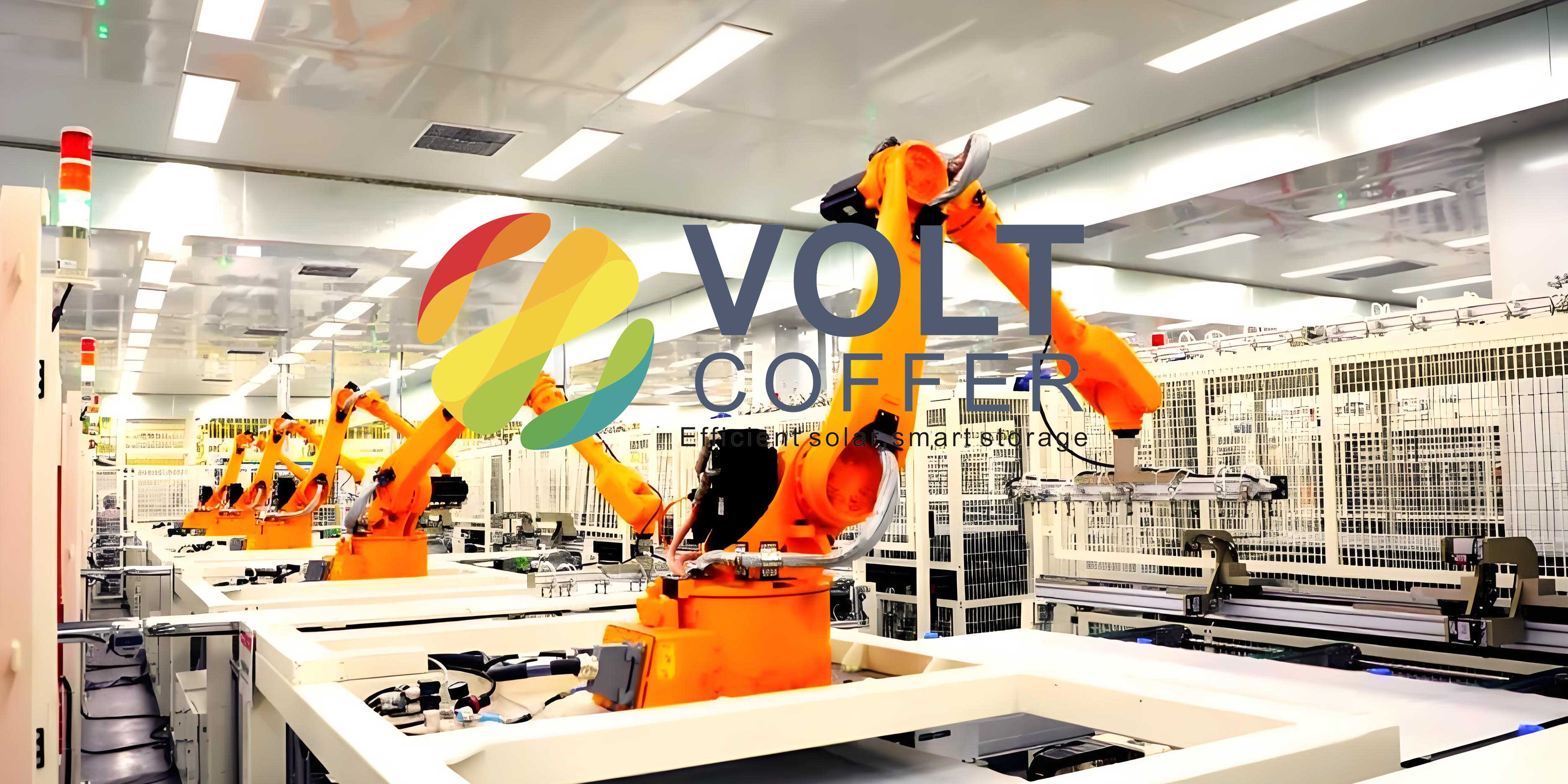
Furthermore, inefficiencies in production and operational processes pose a major hurdle. PV manufacturing involves complex steps like wafer slicing, cell assembly, and module encapsulation, each requiring precise control over energy, labor, and equipment. Any deviation from optimal performance can lead to wasted resources and increased costs. For example, the overall equipment effectiveness (OEE) is a key metric we use: $$ \text{OEE} = \text{Avaliability} \times \text{Performance} \times \text{Quality} $$ where Availability refers to uptime, Performance to speed efficiency, and Quality to defect rates. A low OEE score, say below 85%, indicates significant room for improvement, often resulting in higher operational costs. In my analysis, many enterprises struggle with automation integration and energy consumption management, leading to suboptimal outcomes. By addressing these issues, we can not only reduce costs but also enhance our reputation as the best solar panel company through superior product quality and reliability.
Market competition and price pressures add another layer of complexity. As more players enter the PV sector, driven by falling technology costs and government incentives, the competitive landscape intensifies. This often leads to price wars, squeezing profit margins and forcing companies to innovate or perish. To illustrate, the average selling price of PV modules has declined by over 80% in the past decade, according to industry data. This can be modeled using a competitive pricing formula: $$ P_{\text{market}} = MC + \pi $$ where \( P_{\text{market}} \) is the market price, \( MC \) is the marginal cost, and \( \pi \) is the profit margin. In highly competitive environments, \( \pi \) tends toward zero, emphasizing the need for cost leadership. As we strive to be the best solar panel company, we must differentiate our offerings through value-added services, such as extended warranties or integrated energy solutions, rather than competing solely on price. This requires a deep understanding of customer needs and market trends, enabling us to capture niche segments and maintain profitability.
| Enterprise Type | Average R&D Investment (% of Revenue) | Key Innovation Outcomes | Impact on Cost Reduction (%) |
|---|---|---|---|
| Leading Best Solar Panel Company | 8-10 | High-efficiency cells, automated production | 20-30 |
| Mid-sized Enterprise | 5-7 | Process optimization, material substitutes | 10-15 |
| Small Start-up | 3-5 | Incremental improvements, pilot projects | 5-10 |
Policy and subsidy uncertainties further complicate cost management. Government policies, such as feed-in tariffs or tax incentives, play a pivotal role in shaping the economic viability of PV projects. However, these policies are often subject to change due to political shifts or budgetary constraints, creating an environment of risk. For instance, a sudden reduction in subsidies can render projects unprofitable, as seen in various markets. We can quantify this risk using a policy impact score: $$ \text{Risk Score} = \sum (P_i \times I_i) $$ where \( P_i \) is the probability of policy change and \( I_i \) is the impact on costs. A high risk score necessitates contingency planning, such as diversifying into regions with stable policies or developing in-house capabilities to absorb shocks. In my view, a proactive approach to policy monitoring and engagement can help us navigate these uncertainties, solidifying our status as the best solar panel company by ensuring long-term stability.
To address these challenges, I propose a series of targeted strategies that can transform cost management in photovoltaic enterprises. First, strengthening supply chain collaboration is essential to smooth out raw material price fluctuations. By forming strategic alliances with suppliers and leveraging collective bargaining power, we can secure stable pricing and reduce dependency on volatile markets. For example, joint procurement initiatives can be optimized using an economic order quantity (EOQ) model: $$ Q^* = \sqrt{\frac{2DS}{H}} $$ where \( Q^* \) is the optimal order quantity, \( D \) is annual demand, \( S \) is ordering cost, and \( H \) is holding cost. This minimizes total inventory costs while ensuring timely availability of materials. Additionally, implementing real-time price monitoring systems allows us to anticipate market shifts and adjust procurement strategies accordingly. As we integrate these practices, we move closer to becoming the best solar panel company by ensuring cost predictability and resilience.
Second, optimizing technology pathways is crucial to balance innovation with cost control. Rather than pursuing every new technology, we should focus on those with the highest potential for cost reduction and efficiency gains. A technology adoption matrix can help prioritize investments based on factors like ROI and market readiness: $$ \text{Priority Score} = \frac{\text{Expected Cost Savings} \times \text{Probability of Success}}{\text{Investment Required}} $$ Technologies with high priority scores, such as bifacial panels or advanced inverters, should be prioritized. Moreover, fostering in-house R&D capabilities through partnerships or acquisitions can reduce reliance on external technologies, lowering long-term costs. In my experience, this selective approach not only conserves resources but also accelerates our journey to becoming the best solar panel company by focusing on impactful innovations.
Third, enhancing production management and operational efficiency is vital. Implementing lean manufacturing principles, such as just-in-time (JIT) production and 5S methodology, can significantly reduce waste and improve throughput. For instance, the overall production efficiency can be enhanced by automating key processes, which reduces labor costs and minimizes errors. A practical formula to measure efficiency gains is: $$ \text{Efficiency Gain} = \frac{\text{Old Cycle Time} – \text{New Cycle Time}}{\text{Old Cycle Time}} \times 100\% $$ By targeting a 15-20% efficiency gain, we can lower operational costs and increase capacity. Additionally, digital tools like Manufacturing Execution Systems (MES) enable real-time monitoring and data analytics, facilitating continuous improvement. As we adopt these measures, we reinforce our commitment to excellence, positioning ourselves as the best solar panel company through superior operational performance.
| Strategy | Key Actions | Expected Cost Reduction (%) | Implementation Timeline (Months) |
|---|---|---|---|
| Lean Manufacturing | JIT, waste reduction, 5S | 10-15 | 6-12 |
| Automation | Robotic assembly, AI monitoring | 15-25 | 12-18 |
| Digitalization | MES, IoT sensors, predictive maintenance | 10-20 | 9-15 |
Fourth, expanding market share and increasing product附加值 are key to sustaining growth. By targeting high-value segments like residential rooftop installations or mobile solar applications, we can differentiate our offerings and command premium prices. This aligns with our goal of becoming the best solar panel company, as it emphasizes quality and innovation over commoditization. A market penetration model can guide this expansion: $$ \text{Market Share} = \frac{\text{Our Sales}}{\text{Total Market Sales}} \times 100\% $$ To increase market share, we should invest in brand building and distribution networks, enhancing customer loyalty and pricing power. Furthermore, exploring international markets, especially in regions with supportive policies, can diversify revenue streams and reduce dependence on domestic competition. In my opinion, a balanced portfolio of domestic and international ventures ensures stability and growth, cementing our reputation as the best solar panel company.
Fifth, improving risk management to counter policy uncertainties is imperative. Establishing a dedicated policy analysis team can help us monitor regulatory changes and adapt quickly. We can use scenario planning to assess potential impacts: $$ \text{Expected Loss} = \sum (\text{Probability of Scenario} \times \text{Loss in Scenario}) $$ By quantifying risks, we can develop contingency plans, such as flexible financing options or insurance products. Additionally, fostering agility in organizational structures enables faster decision-making, reducing vulnerability to external shocks. As we implement these measures, we not only protect our bottom line but also demonstrate leadership, furthering our ambition to be the best solar panel company.
In conclusion, cost management is a multifaceted endeavor that requires a holistic approach in photovoltaic enterprises. By addressing raw material volatility, technological investments, production inefficiencies, market pressures, and policy risks, we can build a resilient and competitive organization. The strategies outlined—ranging from supply chain collaboration to risk mitigation—provide a roadmap for sustained improvement. As we continue to innovate and adapt, I am confident that we can overcome these challenges and achieve our vision of becoming the best solar panel company. The future of the PV industry holds immense promise, and through diligent cost management, we can harness this potential for long-term success, contributing to a sustainable energy ecosystem.