
The global energy landscape is undergoing a profound transformation, driven by the urgent need for sustainable and clean power sources. Photovoltaic (PV) power generation stands at the forefront of this transition. A critical component enabling the integration of solar energy into the existing AC power infrastructure is the grid-tied inverter. This sophisticated power electronic interface is responsible for converting the direct current (DC) produced by PV arrays into grid-compatible alternating current (AC), while ensuring synchronization, power quality, and system safety. Modern PV systems are no longer simple, isolated units but complex, coordinated systems where the grid-tied inverter acts as the intelligent heart, managing power flow, stability, and interaction with the utility network.
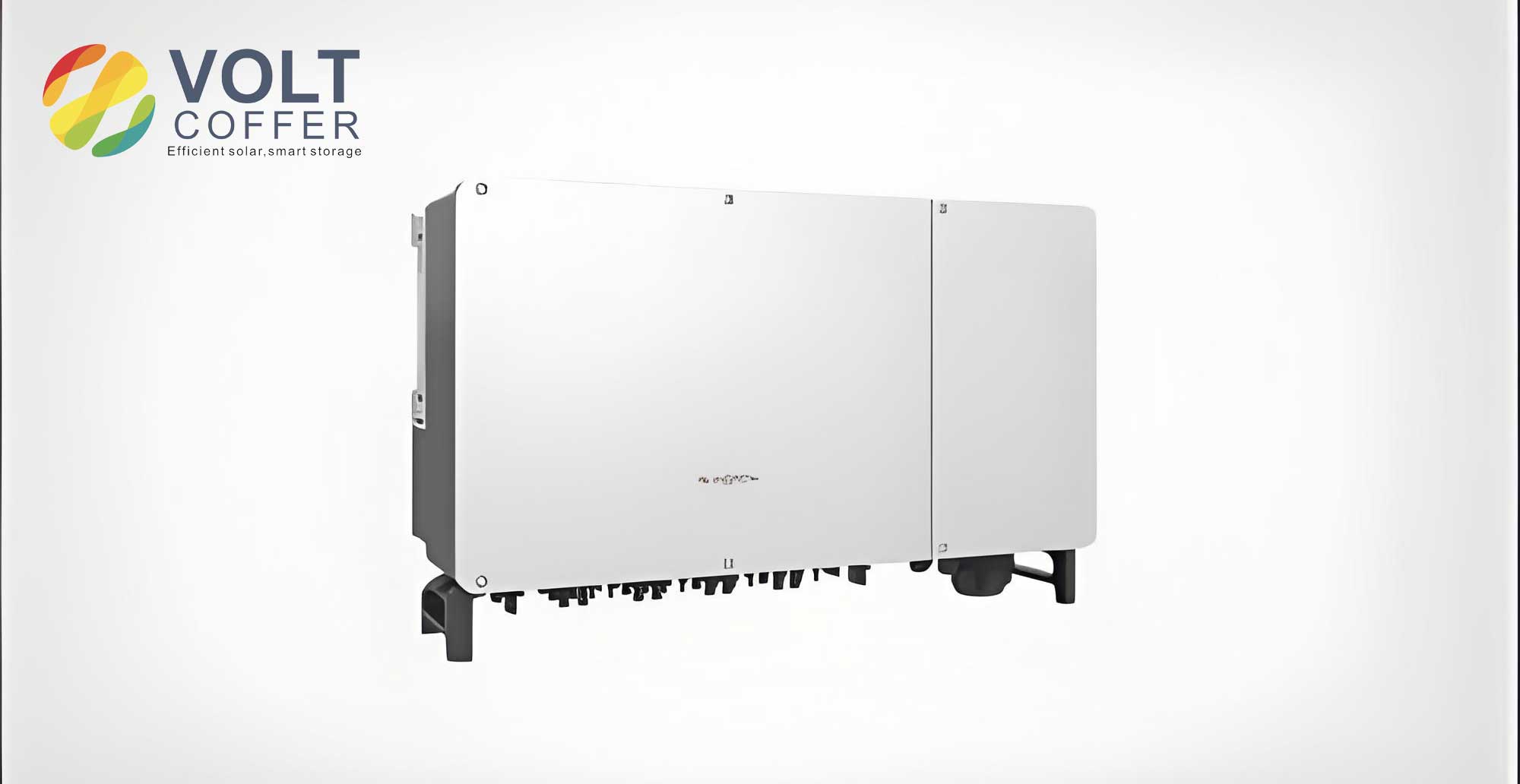
The core function of a photovoltaic grid-tied inverter extends beyond mere DC-to-AC conversion. Its control system must address several key challenges: maximum power point tracking (MPPT) from the PV array, generating high-quality sinusoidal currents that are perfectly synchronized with the grid voltage, managing reactive power, and ensuring safe operation under grid faults. This article delves into the comprehensive design of the control system for a three-phase photovoltaic grid-tied inverter, focusing on mathematical modeling, advanced modulation techniques, and closed-loop control strategies.
System Architecture and Topology of a Grid-Tied Inverter
The standard topology for a medium- to high-power three-phase PV system is the two-level voltage source inverter (VSI). The primary power circuit, as illustrated, consists of a DC-link capacitor, a three-phase IGBT (Insulated Gate Bipolar Transistor) bridge, and an L or LCL output filter. The PV array, often through a DC-DC boost converter for MPPT, feeds power to the DC-link. The inverter bridge synthesizes an AC voltage from this DC source. The output filter is crucial for attenuating the high-frequency switching harmonics generated by the inverter, ensuring that the current injected into the grid meets stringent harmonic standards like IEEE 519 or IEC 61727.
The performance and intelligence of the entire system are governed by the digital control system, typically implemented on a DSP (Digital Signal Processor) or FPGA. This system performs several critical tasks in real-time:
- Measurement: Sampling grid voltages ($$v_{ga}, v_{gb}, v_{gc}$$) and inverter output currents ($$i_a, i_b, i_c$$).
- Synchronization: Using a Phase-Locked Loop (PLL) to accurately detect the grid voltage phase angle ($$\theta$$) and frequency.
- Control Algorithm Execution: Computing the required voltage commands to achieve the desired current output.
- Modulation: Generating the Pulse Width Modulation (PWM) signals for the IGBTs based on the control algorithm’s output.
- Protection: Monitoring for faults such as over-current, over-voltage, or islanding conditions.
Mathematical Modeling in Different Reference Frames
Effective control design begins with a precise mathematical model of the inverter and its connection to the grid. We start with the model in the three-phase stationary abc frame.
Model in the ABC Stationary Frame
Applying Kirchhoff’s voltage law to the equivalent circuit of the inverter output with an L filter yields:
$$ v_{inv, a} = L \frac{di_a}{dt} + R i_a + v_{g,a} $$
$$ v_{inv, b} = L \frac{di_b}{dt} + R i_b + v_{g,b} $$
$$ v_{inv, c} = L \frac{di_c}{dt} + R i_c + v_{g,c} $$
Where:
- $$v_{inv,abc}$$ are the inverter bridge output phase voltages.
- $$i_{abc}$$ are the line currents.
- $$v_{g,abc}$$ are the grid phase voltages.
- $$L$$ and $$R$$ are the inductance and resistance of the filter and grid connection.
This three-phase, time-varying model is complex to control directly. Transformations are applied to simplify it.
Clarke Transformation (ABC to αβ)
The Clarke transform converts the three-phase quantities into a two-phase orthogonal system (αβ) stationary frame. The transformation matrix is:
$$
\begin{bmatrix}
x_{\alpha} \\
x_{\beta} \\
x_{0}
\end{bmatrix}
= \frac{2}{3}
\begin{bmatrix}
1 & -\frac{1}{2} & -\frac{1}{2} \\
0 & \frac{\sqrt{3}}{2} & -\frac{\sqrt{3}}{2} \\
\frac{1}{2} & \frac{1}{2} & \frac{1}{2}
\end{bmatrix}
\begin{bmatrix}
x_{a} \\
x_{b} \\
x_{c}
\end{bmatrix}
$$
For balanced systems, the zero-sequence component $$x_0$$ is zero. Applying this to the voltage equations simplifies the model to:
$$ v_{inv,\alpha} = L \frac{di_{\alpha}}{dt} + R i_{\alpha} + v_{g,\alpha} $$
$$ v_{inv,\beta} = L \frac{di_{\beta}}{dt} + R i_{\beta} + v_{g,\beta} $$
This removes the phase dependency but the quantities are still sinusoidal at grid frequency.
Park Transformation (αβ to dq)
The Park transform rotates the αβ frame at the synchronous grid frequency $$\omega$$, aligning it with the grid voltage vector. If the d-axis is aligned with the grid voltage vector, then $$v_{gd} = V_m$$ (the voltage magnitude) and $$v_{gq} = 0$$. The transformation is:
$$
\begin{bmatrix}
x_{d} \\
x_{q}
\end{bmatrix}
=
\begin{bmatrix}
\cos\theta & \sin\theta \\
-\sin\theta & \cos\theta
\end{bmatrix}
\begin{bmatrix}
x_{\alpha} \\
x_{\beta}
\end{bmatrix}
$$
Where $$\theta = \omega t$$ is the grid angle provided by the PLL. Applying this transformation yields the fundamental model for vector control:
$$ v_{inv,d} = L \frac{di_{d}}{dt} + R i_{d} – \omega L i_{q} + v_{g,d} $$
$$ v_{inv,q} = L \frac{di_{q}}{dt} + R i_{q} + \omega L i_{d} + v_{g,q} $$
In this synchronous rotating dq frame, the AC sinusoidal quantities become DC values in steady state, vastly simplifying control design using Proportional-Integral (PI) regulators. The terms $$-\omega L i_{q}$$ and $$+\omega L i_{d}$$ represent cross-coupling between the d and q axes.
Control Strategy: Voltage-Oriented Vector Control (VOC)
The dominant control strategy for high-performance grid-tied inverters is Voltage-Oriented Control (VOC) in the dq frame. The primary control objective is to regulate the active (P) and reactive (Q) power injected into the grid. The instantaneous power theory in the dq frame (with d-axis aligned to grid voltage) gives:
$$ P = \frac{3}{2} (v_{gd} i_d + v_{gq} i_q) = \frac{3}{2} V_m i_d $$
$$ Q = \frac{3}{2} (v_{gq} i_d – v_{gd} i_q) = -\frac{3}{2} V_m i_q $$
This reveals a crucial decoupling: active power P is directly proportional to the d-axis current $$i_d$$, and reactive power Q is proportional to the q-axis current $$i_q$$. Therefore, independent control of P and Q is achieved by independently controlling $$i_d$$ and $$i_q$$.
Current Controller Design
From the dq model, the plant for the current loop is essentially a first-order system with a coupling disturbance. Rewriting the equations:
$$ L \frac{di_d}{dt} = v_{inv,d} – v_{g,d} – R i_d + \omega L i_q $$
$$ L \frac{di_q}{dt} = v_{inv,q} – v_{g,q} – R i_q – \omega L i_d $$
To achieve independent control, a decoupling network is used. The inverter output voltage references are computed as:
$$ v_{inv,d}^{*} = \left( K_{p} + \frac{K_{i}}{s} \right) (i_d^{*} – i_d) – \omega L \hat{i}_q + \hat{v}_{gd} $$
$$ v_{inv,q}^{*} = \left( K_{p} + \frac{K_{i}}{s} \right) (i_q^{*} – i_q) + \omega L \hat{i}_d + \hat{v}_{gq} $$
Where:
- $$K_p$$ and $$K_i$$ are the PI controller gains.
- $$i_d^{*}$$ and $$i_q^{*}$$ are the reference currents.
- $$\hat{i}_d, \hat{i}_q, \hat{v}_{gd}, \hat{v}_{gq}$$ are measured/estimated values.
The PI terms generate the voltage needed to force the current to follow its reference. The terms $$-\omega L \hat{i}_q$$ and $$+\omega L \hat{i}_d$$ cancel the inherent cross-coupling. The terms $$+\hat{v}_{gd}$$ and $$+\hat{v}_{gq}$$ are feedforward voltages that compensate for the grid voltage disturbance, improving dynamic response. The block diagram of this inner current control loop is fundamental to the grid-tied inverter operation.
The reference currents are determined by the outer loops or setpoints:
- $$i_d^{*}$$: Typically comes from the DC-link voltage controller (regulating active power flow to maintain a stable DC bus) or directly from an MPPT algorithm’s power command.
- $$i_q^{*}$$: Usually set to zero for unity power factor operation, or can be set to a non-zero value to provide reactive power support (volt-VAR function) as required by modern grid codes.
PI Tuning and Performance
The decoupled plant for each current axis is $$ G_p(s) = \frac{1}{Ls + R} $$. A standard method for tuning the PI controller $$ G_c(s) = K_p + \frac{K_i}{s} $$ is the Internal Model Control (IMC) or pole placement technique. The closed-loop transfer function for current control can be designed to behave like a first-order low-pass filter with a desired bandwidth $$\omega_{bw}$$. Approximate tuning formulas are:
$$ K_p = \alpha L \quad \text{,} \quad K_i = \alpha R $$
Where $$\alpha$$ is the desired closed-loop bandwidth (rad/s). A higher bandwidth provides faster response but increases sensitivity to noise and switching harmonics. Typical bandwidths range from 500 Hz to 1500 Hz, which is a fraction of the switching frequency (e.g., 8-16 kHz).
| Parameter | Symbol | Typical Value/Range | Design Impact |
|---|---|---|---|
| Switching Frequency | $$f_{sw}$$ | 8 kHz – 20 kHz | Higher frequency allows smaller filters but increases switching losses. |
| Grid Frequency | $$f_g$$ | 50 Hz / 60 Hz | Fundamental frequency for PLL synchronization. |
| Filter Inductance | $$L_f$$ | 0.5 mH – 5 mH | Limits current ripple. Larger L gives lower ripple but slower dynamic response and higher voltage drop. |
| DC-Link Voltage | $$V_{dc}$$ | 600 V – 1000 V (for 400V grid) | Must be greater than peak line-to-line grid voltage for proper modulation. |
| Current Control Bandwidth | $$\alpha$$ | 1000 rad/s – 5000 rad/s | Determines speed of current reference tracking and disturbance rejection. |
| PLL Bandwidth | $$\omega_{PLL}$$ | 10 Hz – 50 Hz | Lower bandwidth filters grid harmonics but slows synchronization. |
Space Vector Pulse Width Modulation (SVPWM)
The voltage references $$v_{inv,d}^{*}$$ and $$v_{inv,q}^{*}$$ generated by the current controllers are transformed back to the stationary αβ frame via the inverse Park transform:
$$
\begin{bmatrix}
v_{\alpha}^{*} \\
v_{\beta}^{*}
\end{bmatrix}
=
\begin{bmatrix}
\cos\theta & -\sin\theta \\
\sin\theta & \cos\theta
\end{bmatrix}
\begin{bmatrix}
v_{d}^{*} \\
v_{q}^{*}
\end{bmatrix}
$$
These reference voltage vectors are then realized by the inverter bridge using Space Vector PWM. SVPWM is preferred over sinusoidal PWM for its superior DC-link voltage utilization (approximately 15% higher) and lower harmonic distortion.
The operation of a two-level three-phase grid-tied inverter can be represented by eight switching states, resulting in eight basic voltage vectors ($$V_0$$ to $$V_7$$), as shown in the space vector diagram. The six active vectors ($$V_1$$-$$V_6$$) have a magnitude of $$\frac{2}{3}V_{dc}$$ and are spaced 60 degrees apart. The two zero vectors ($$V_0, V_7$$) are at the origin.
The SVPWM algorithm involves the following steps:
- Sector Identification: Determine the sector (1 to 6) in which the reference voltage vector $$V_{ref}$$ lies based on $$v_{\alpha}^{*}$$ and $$v_{\beta}^{*}$$.
- Duty Cycle Calculation: Calculate the dwell times ($$T_1, T_2$$) for the two adjacent active vectors bounding the sector, and the zero vector time ($$T_0$$). For a switching period $$T_s$$:
$$ T_1 = \frac{\sqrt{3} T_s}{V_{dc}} \left( v_{\alpha}^{*} \sin(\frac{\pi}{3} – \gamma) – v_{\beta}^{*} \cos(\frac{\pi}{3} – \gamma) \right) $$
$$ T_2 = \frac{\sqrt{3} T_s}{V_{dc}} \left( v_{\beta}^{*} \cos(\gamma) – v_{\alpha}^{*} \sin(\gamma) \right) $$
$$ T_0 = T_s – T_1 – T_2 $$
Where $$\gamma$$ is the angle of $$V_{ref}$$ within the identified sector (0 ≤ $$\gamma$$ < 60°). - Switching Sequence Generation: Apply the vectors in a symmetric sequence (e.g., $$V_0 \rightarrow V_1 \rightarrow V_2 \rightarrow V_7 \rightarrow V_2 \rightarrow V_1 \rightarrow V_0$$ for sector I) to minimize switching losses. The dwell times determine the pulse widths for the IGBT gate signals.
This method efficiently synthesizes the desired average output voltage from the grid-tied inverter over each switching period.
System Design Considerations and Software Implementation
The digital control system for a photovoltaic grid-tied inverter is implemented via a software routine executed at the switching frequency or a multiple thereof. The main control interrupt service routine (ISR) follows a strict sequence:
- Analog-to-Digital Conversion (ADC): Sample the three-phase grid voltages and output currents.
- Phase-Locked Loop (PLL): Execute a PLL algorithm (e.g., Synchronous Reference Frame PLL) on the sampled grid voltages to obtain the precise grid angle $$\theta$$ and frequency $$\omega$$.
- Coordinate Transformations:
- Transform the measured currents $$i_{abc}$$ to the dq frame using Clarke and Park transforms with the angle $$\theta$$.
- Transform the grid voltages $$v_{g,abc}$$ to $$v_{gd}$$ and $$v_{gq}$$.
- Outer Loop Calculations: Update the reference currents. $$i_d^{*}$$ may come from a slower DC-link voltage PI controller, while $$i_q^{*}$$ is set by the reactive power command.
- Current Control Loop: Execute the PI controllers with decoupling and feedforward as per the equations for $$v_{d}^{*}$$ and $$v_{q}^{*}$$.
- Inverse Park Transform: Calculate the stationary αβ reference voltages $$v_{\alpha}^{*}$$ and $$v_{\beta}^{*}$$.
- SVPWM Module: Execute the SVPWM algorithm to compute the duty cycles ($$T_a, T_b, T_c$$) for the three phases.
- PWM Update: Load the calculated compare values into the PWM peripheral registers (e.g., ePWM on a TI DSP) to generate the actual gate drive signals for the next period.
The performance of the grid-tied inverter is highly dependent on the accuracy and speed of this digital control loop. Key non-idealities that must be addressed include:
- Computational and PWM Delays: A total delay of ~1.5 switching periods exists between sampling and actuation, which can limit stability and bandwidth. This is often modeled and compensated for in advanced designs.
- Measurement Noise and Harmonics: Grid voltages often contain harmonics. The PLL and current controllers must be designed to reject these disturbances while accurately tracking the fundamental component.
- Parameter Variations: The filter inductance $$L$$ and resistance $$R$$ can vary with temperature and aging. Adaptive or robust control techniques may be employed to maintain performance.
Advanced Control Functions and Grid Support
Modern grid codes require photovoltaic grid-tied inverters to act as active grid participants, not just passive generators. This necessitates advanced control functionalities beyond basic current regulation:
| Function | Description | Control Implementation |
|---|---|---|
| Low Voltage Ride-Through (LVRT) | Must remain connected and inject reactive current during grid voltage dips. | Modify $$i_q^{*}$$ reference based on the depth of the voltage sag, often according to a specified characteristic curve (e.g., inject up to 100% $$I_n$$ for a 50% voltage dip). |
| Frequency-Watt / Frequency Droop | Reduce active power output in response to rising grid frequency. | Add a frequency-dependent reduction term to the active power reference $$P^{*}$$ or directly to $$i_d^{*}$$. |
| Volt-VAR Control | Adjust reactive power output based on local grid voltage. | Define $$Q^{*}=f(V_{grid})$$ curve, which directly sets the $$i_q^{*}$$ reference. |
| Active Power Ramp Rate Control | Limit the rate of change of power output to prevent grid instability. | Apply a rate limiter to the outer loop power or $$i_d^{*}$$ reference. |
| Harmonic Compensation | Inject currents to cancel specific harmonics in the grid. | Implement multiple resonant controllers tuned to 5th, 7th, etc., harmonics in parallel with the fundamental PI controller. |
Implementing these functions transforms the photovoltaic grid-tied inverter into a crucial tool for grid stability and power quality management.
Simulation and Performance Verification
Before hardware implementation, the complete control system for the photovoltaic grid-tied inverter is rigorously tested in simulation environments like MATLAB/Simulink or PLECS. A typical simulation model includes:
- PV array model (or a simplified DC source).
- DC-link capacitor.
- Three-phase IGBT inverter bridge.
- L or LCL filter model.
- Grid voltage source with possible impedance.
- Detailed models of the control blocks: PLL, transforms, PI controllers, SVPWM generator.
- Measurement and scope blocks for waveforms and FFT analysis.
Key performance metrics to validate include:
- Steady-State Performance:
- Total Harmonic Distortion (THD) of the output current. A well-designed system should achieve THD < 3-5% under full load.
- Power factor at the point of common coupling (PCC). Should be adjustable from leading to lagging, typically set to unity.
- Precise tracking of active and reactive power setpoints.
- Dynamic Performance:
- Response to a step change in active power reference (e.g., from 50% to 100% power). The current should track the new reference within a few milliseconds with minimal overshoot.
- Response to a grid voltage sag (LVRT test). The inverter should stay synchronized and inject the required reactive current profile.
- Stability: The system must remain stable under all expected operating conditions, including weak grid conditions (high grid impedance).
The simulation results conclusively demonstrate the efficacy of the dq-frame vector control combined with SVPWM. The output currents are sinusoidal, in phase with the grid voltage for unity power factor operation, and can rapidly track reference changes. The DC-link voltage remains stable, confirming proper power balance. These simulations provide the essential confidence to proceed to prototyping and experimental validation of the grid-tied inverter control system.
Conclusion and Future Trends
The design of the control system for a photovoltaic grid-tied inverter is a multidisciplinary challenge involving power electronics, control theory, and grid integration standards. The Voltage-Oriented Control (VOC) strategy in the synchronous dq reference frame, enhanced with decoupling and feedforward terms, provides a robust and effective method for independent control of active and reactive power. The use of Space Vector PWM optimizes the utilization of the DC bus and improves the harmonic performance of the output current.
The evolution of the photovoltaic grid-tied inverter continues. Future trends point towards:
- Wide-Bandgap Semiconductors: Adoption of SiC and GaN devices allows for higher switching frequencies, leading to smaller filters, higher efficiency, and increased power density.
- Advanced Control Algorithms: Model Predictive Control (MPC) is gaining traction for its fast dynamic response and ability to handle multiple constraints directly.
- Grid-Forming Inverters: For systems with high renewable penetration, inverters that can operate without a strong grid reference (forming voltage and frequency) are being developed, requiring fundamentally different control paradigms.
- Artificial Intelligence: AI and machine learning are being explored for predictive maintenance, adaptive control under varying conditions, and optimization of system-level performance.
The grid-tied inverter remains the key enabling technology for the continued growth and integration of solar photovoltaic energy, and its control system design is central to achieving a reliable, efficient, and smart power grid.