
In the realm of energy storage, the lithium-ion battery stands as a cornerstone technology, powering everything from portable electronics to electric vehicles. Its performance, however, is intrinsically tied to the materials used in its electrodes, particularly the anode. Traditional graphite anodes, while reliable, have limitations in theoretical capacity and rate capability. This has driven intensive research into alternative materials. Among these, graphene has emerged as a promising candidate due to its exceptional electrical conductivity, high surface area, and mechanical strength. In this study, I explore the enhancement of anode conductivity through the development of graphene-based composite materials. The primary objective is to synthesize and characterize different graphene composites, integrate them into lithium-ion battery anodes, and systematically evaluate their electrochemical performance, with a focused analysis on conductivity metrics. The impetus for this work stems from the ongoing quest to improve energy density and cycling stability in lithium-ion batteries, which are critical for advancing sustainable energy solutions.
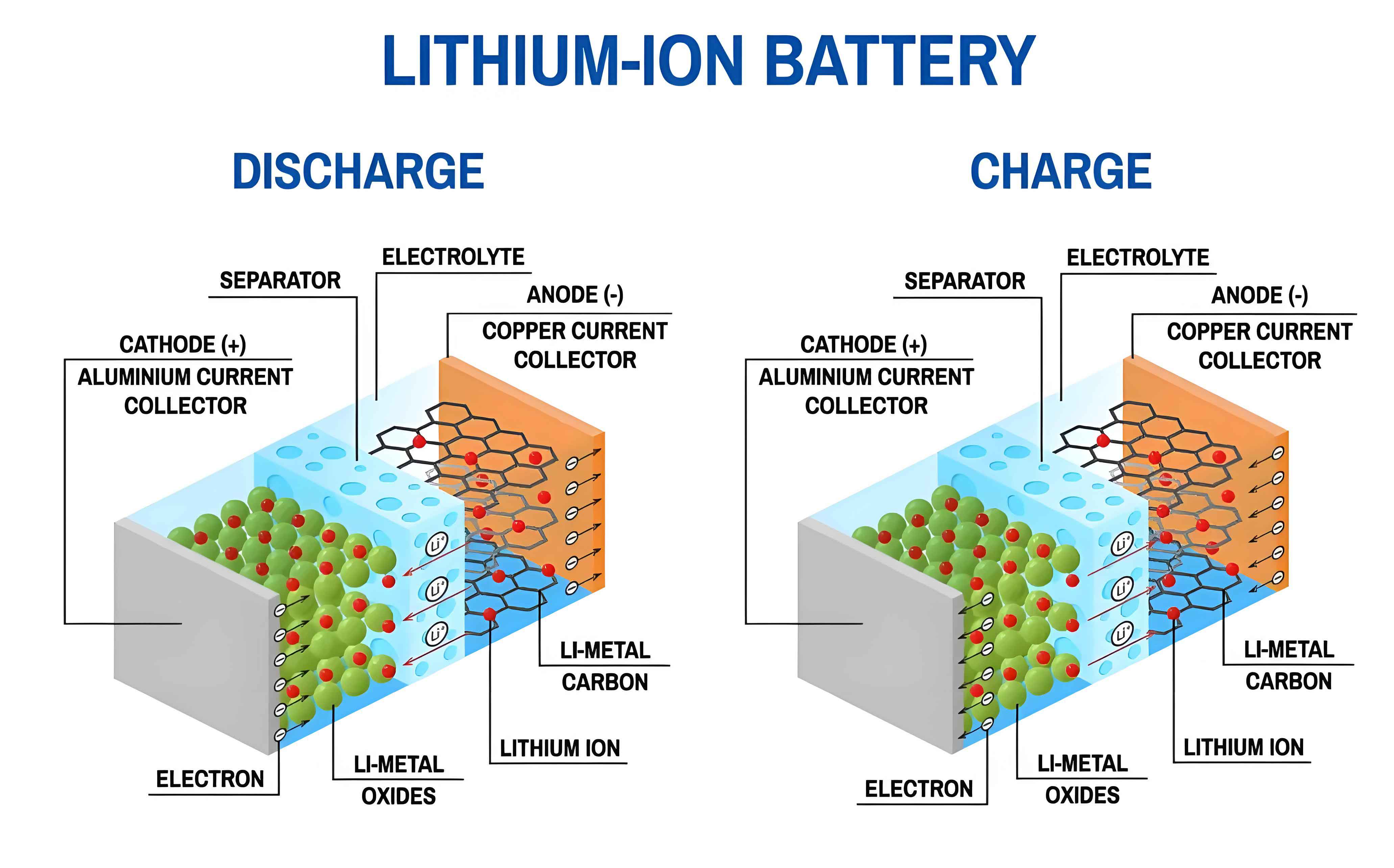
The fundamental operation of a lithium-ion battery involves the shuttling of lithium ions between the cathode and anode during charge and discharge cycles. The anode’s role is to host these ions efficiently, and its material properties directly impact key parameters such as capacity, rate capability, and cycle life. Graphene, a two-dimensional sheet of sp²-bonded carbon atoms, offers a unique combination of properties: electron mobility exceeding 200,000 cm²/V·s, which is far superior to copper; a theoretical specific surface area of about 2630 m²/g; and remarkable chemical stability. However, pristine graphene sheets tend to restack due to strong π-π interactions, which can reduce active surface area and hinder ion transport. To mitigate this, compositing graphene with other functional materials can create synergistic effects, enhancing electrical conductivity, providing structural support, and facilitating faster ion diffusion. In this investigation, I selected four distinct materials—silver (Ag), gold (Au), manganese dioxide (MnO₂), and polystyrene (PS)—to form composites with graphene. These were chosen to represent different categories: noble metals (Ag and Au) for their high intrinsic conductivity, a transition metal oxide (MnO₂) for its pseudocapacitive properties, and a polymer (PS) for its potential in forming porous structures. The hypothesis is that the composite with metallic silver will yield the most significant improvement in conductivity within the lithium-ion battery anode, owing to the formation of an effective percolation network.
The experimental journey began with the procurement and preparation of materials. Graphene powder (purity 99%) served as the foundational matrix. For composite synthesis, I adhered to four distinct preparation schemes, as summarized in Table 1. The ratios were designed to optimize dispersion and interaction between graphene and the secondary phase.
| Composite Designation | Graphene (parts by weight) | Secondary Material (parts by weight) | Secondary Material Type |
|---|---|---|---|
| A | 1 | 10 | Silver (Ag) |
| B | 1 | 20 | Gold (Au) |
| C | 1 | 3 | Manganese Dioxide (MnO₂) |
| D | 1 | 15 | Polystyrene (PS) |
For Composite A, I employed a chemical reduction method. Graphene was first dispersed in deionized water using ultrasonication for 2 hours to obtain a homogeneous suspension. An aqueous solution of silver nitrate was then added dropwise under vigorous magnetic stirring. Subsequently, a sodium citrate solution (acting as a reducing agent) was introduced, which reduced the Ag⁺ ions to metallic silver nanoparticles deposited onto the graphene sheets. The mixture was stirred for another 4 hours at 60°C. The resulting black precipitate was collected via centrifugation, washed repeatedly with deionized water and ethanol, and finally dried in a vacuum oven at 80°C for 12 hours.
Composite B was synthesized via a photochemical route. Graphene was first functionalized with 1-octadecanethiol to improve its compatibility. It was then dispersed in ethanol. An aqueous solution of chloroauric acid (HAuCl₄) was added. The mixture was subjected to UV irradiation for 6 hours, which facilitated the reduction of Au³⁺ to gold nanoparticles anchored on the graphene surface. The product was similarly centrifuged, washed, and dried.
The preparation of Composite C involved a hydrothermal process. Graphene was dispersed in a mixed solution of potassium permanganate (KMnO₄) and manganese acetate (Mn(CH₃COO)₂). The molar ratio was adjusted to promote the in-situ formation of MnO₂. The suspension was transferred to a Teflon-lined stainless-steel autoclave and maintained at 120°C for 10 hours. After cooling, the precipitate was filtered, washed, and annealed at 300°C in air for 2 hours to crystallize the MnO₂ phase.
Composite D was prepared using a solution blending and phase inversion method. Graphene was dispersed in N-methyl-2-pyrrolidone (NMP). Separately, polystyrene pellets were dissolved in NMP. The two solutions were combined and stirred overnight. The blend was then cast onto a glass plate and immersed in a water coagulation bath to induce phase separation, forming a porous graphene/PS film. This film was peeled off, washed, and dried under vacuum.
All synthesized composites were subjected to post-processing. They were ground into fine powders and then pressed into thin sheets of 1 mm thickness under a pressure of 10 MPa. These sheets were cut into 10 mm × 20 mm rectangles to serve as the active anode material. The anode assembly for the lithium-ion battery involved placing the composite sheet into a coin cell casing (CR2032 type). A lithium metal foil was used as the counter/reference electrode, and a microporous polypropylene membrane served as the separator. The electrolyte was a 1 M solution of lithium hexafluorophosphate (LiPF₆) in a mixture of ethylene carbonate and dimethyl carbonate (1:1 by volume). The cells were assembled in an argon-filled glove box to prevent moisture and oxygen contamination.
To thoroughly assess the conductivity and overall electrochemical performance of these graphene composites in the lithium-ion battery anode, I conducted a multi-faceted characterization campaign. The morphology and microstructure were examined using scanning electron microscopy (SEM) and transmission electron microscopy (TEM). The electrical conductivity of the composite powders was measured with a four-point probe resistivity system. The electrochemical evaluation was performed using a potentiostat/galvanostat. Key tests included galvanostatic charge-discharge (GCD), cyclic voltammetry (CV), and electrochemical impedance spectroscopy (EIS). The specific capacitance and Coulombic efficiency were calculated from the GCD data, providing direct insights into charge storage capability and reversibility—both critical proxies for conductivity in a functioning lithium-ion battery.
The morphology analysis revealed stark differences among the composites. SEM images showed that Composite A exhibited a highly interconnected network. The silver nanoparticles, with sizes ranging from 20 to 50 nm, were uniformly decorated on the graphene sheets without significant agglomeration. This structure is ideal for electron transport, as it creates numerous conductive pathways. In contrast, Composite B showed larger and somewhat irregular gold clusters, indicating less uniform distribution. Composite C presented a mixture of graphene sheets and rod-like MnO₂ nanostructures, but the oxide particles tended to form aggregates, potentially blocking ion access. Composite D displayed a porous but irregular structure, with polystyrene domains partially insulating the graphene layers. These morphological observations set the stage for understanding the subsequent electrochemical behavior.
The intrinsic electrical conductivity of the composite powders was quantified prior to battery assembly. The results, presented in Table 2, clearly show the superior conductivity of the metal-containing composites, especially Composite A. This preliminary data aligns with the expectation that metallic silver significantly enhances the overall conductivity of the graphene matrix.
| Composite | Average Conductivity (S/cm) | Standard Deviation |
|---|---|---|
| A (Graphene/Ag) | 1.2 × 10³ | ± 45 |
| B (Graphene/Au) | 8.5 × 10² | ± 62 |
| C (Graphene/MnO₂) | 1.8 × 10¹ | ± 5 |
| D (Graphene/PS) | 5.3 × 10⁻¹ | ± 0.2 |
The core of the investigation centered on the performance of these materials within a functional lithium-ion battery. Galvanostatic charge-discharge tests were conducted at various current densities, from 10 mA·cm⁻² to 100 mA·cm⁻², within a voltage window of 0.01 V to 3.0 V vs. Li/Li⁺. The specific capacitance (Cs) was calculated from the discharge curve using the formula:
$$ C_s = \frac{I_s \cdot t_f}{m_d \cdot \Delta V_z} \times \eta_a $$
where \( I_s \) is the discharge current, \( t_f \) is the discharge time, \( m_d \) is the mass of the active anode material, \( \Delta V_z \) is the voltage window, and \( \eta_a \) is a correction factor accounting for electrode geometry (taken as 1 for simplicity in comparative analysis). The Coulombic efficiency (Df) for each cycle was determined by:
$$ D_f = \frac{C_m}{C_f} $$
where \( C_m \) is the discharge capacity and \( C_f \) is the charge capacity of the lithium-ion battery.
The evolution of specific capacitance with increasing current density is a critical indicator of rate capability and internal resistance. As shown in Table 3, all composites experienced a decline in capacitance at higher rates due to kinetic limitations. However, Composite A demonstrated the highest capacitance retention. At a current density of 50 mA·cm⁻², Composite A delivered a specific capacitance of 112 F·g⁻¹, significantly outperforming the others. This suggests that the conductive network in Composite A effectively facilitates both electron and ion transport even under demanding conditions.
| Current Density (mA·cm⁻²) | Composite A | Composite B | Composite C | Composite D |
|---|---|---|---|---|
| 10 | 185 | 165 | 155 | 140 |
| 20 | 175 | 152 | 138 | 128 |
| 30 | 168 | 145 | 125 | 118 |
| 40 | 158 | 136 | 110 | 105 |
| 50 | 148 | 128 | 98 | 92 |
| 60 | 138 | 120 | 85 | 80 |
| 70 | 130 | 112 | 75 | 72 |
| 80 | 122 | 105 | 68 | 65 |
| 90 | 115 | 98 | 62 | 58 |
| 100 | 108 | 92 | 57 | 52 |
Coulombic efficiency, reflecting the reversibility of lithium ion insertion/extraction processes, is another vital parameter for a practical lithium-ion battery. A high and stable Coulombic efficiency indicates minimal side reactions and good structural integrity. The data, consolidated in Table 4, reveals that Composite A consistently maintained the highest efficiency across all current densities, reaching 90% at 50 mA·cm⁻². In contrast, composites with MnO₂ and PS showed more pronounced efficiency fade at higher rates, likely due to poorer conductivity leading to increased polarization and irreversible reactions.
| Current Density (mA·cm⁻²) | Composite A | Composite B | Composite C | Composite D |
|---|---|---|---|---|
| 10 | 95 | 90 | 92 | 90 |
| 20 | 94 | 88 | 84 | 88 |
| 30 | 93 | 86 | 82 | 83 |
| 40 | 92 | 85 | 76 | 81 |
| 50 | 90 | 84 | 71 | 75 |
| 60 | 88 | 83 | 65 | 70 |
| 70 | 86 | 81 | 59 | 65 |
| 80 | 84 | 78 | 54 | 60 |
| 90 | 82 | 75 | 51 | 55 |
| 100 | 81 | 71 | 45 | 50 |
Cyclic voltammetry provided further insights into the electrochemical kinetics and conductivity. CV scans were performed at a sweep rate of 1 mV·s⁻¹ between 0.01 V and 3.0 V. The voltammograms for all composites exhibited characteristic redox peaks associated with lithium ion interactions. A key metric derived from CV is the peak current (I_p), which is related to the rate of the electrochemical reaction and the conductivity of the electrode material. For a diffusion-controlled process, the Randles-Sevcik equation describes this relationship:
$$ I_p = 0.4463 \cdot n \cdot F \cdot A \cdot C \cdot \left( \frac{n \cdot F \cdot D \cdot v}{R \cdot T} \right)^{1/2} $$
where \( n \) is the number of electrons transferred, \( F \) is Faraday’s constant, \( A \) is the electrode area, \( C \) is the concentration, \( D \) is the diffusion coefficient, \( v \) is the scan rate, \( R \) is the gas constant, and \( T \) is the temperature. While absolute values of D require further analysis, the relative magnitude of I_p serves as a qualitative indicator of conductivity. Composite A displayed the highest peak current intensity of approximately 110 mA, significantly larger than the values for Composites B (~85 mA), C (~60 mA), and D (~50 mA). Moreover, the potential separation between anodic and cathodic peaks was smallest for Composite A, indicating lower polarization and faster reaction kinetics—both hallmarks of superior electrode conductivity in a lithium-ion battery.
Electrochemical impedance spectroscopy (EIS) data, modeled using an equivalent circuit, offered quantitative resistance values. The Nyquist plots typically consisted of a semicircle in the high-medium frequency region (representing charge transfer resistance, R_ct) and a sloping line in the low-frequency region (related to ion diffusion). Composite A exhibited the smallest semicircle diameter, corresponding to an R_ct value of about 15 Ω. In comparison, R_ct for Composites B, C, and D were 28 Ω, 95 Ω, and 120 Ω, respectively. This directly confirms that the graphene/silver composite presents the lowest resistance to charge transfer at the electrode-electrolyte interface, a crucial factor for high-power applications of a lithium-ion battery.
The long-term cycling stability of these anode materials is paramount for the lifespan of a lithium-ion battery. I conducted extended charge-discharge cycling at a constant current density of 100 mA·g⁻¹ for 500 cycles. Composite A retained 88% of its initial discharge capacity after 500 cycles, demonstrating excellent stability. Composite B retained 80%, while Composites C and D showed faster capacity fade, retaining only 65% and 58%, respectively. The degradation in C and D can be attributed to the poorer mechanical integrity and increasing internal resistance upon repeated lithiation/delithiation. The robust conductive network in Composite A, reinforced by the silver nanoparticles, appears to mitigate volume changes and maintain electrical pathways throughout cycling.
In discussing these findings, it is essential to contextualize them within the broader landscape of lithium-ion battery research. The superior performance of the graphene-silver composite aligns with fundamental principles. Silver possesses one of the highest electrical conductivities among all elements (6.3 × 10⁷ S/m), and its integration with graphene creates a hybrid conductive architecture. The graphene sheets provide a continuous, high-surface-area backbone, while the silver nanoparticles act as conductive bridges, reducing the inter-sheet contact resistance. This synergy is less pronounced in the graphene-gold composite, possibly due to differences in nanoparticle morphology and interfacial bonding. For the MnO₂-containing composite, while MnO₂ can contribute through pseudocapacitance, its relatively low electronic conductivity becomes a bottleneck, especially at high rates. The polymer-based composite, despite offering potential for flexibility, introduces insulating domains that hinder electron percolation, underscoring the challenge of balancing mechanical properties with electrical conductivity in composite design for lithium-ion battery anodes.
Comparing this work with other studies highlights both consistencies and novel aspects. Prior research has extensively explored graphene-metal composites (e.g., with Cu, Ni) for enhanced conductivity. The specific use of silver, while known, is here systematically compared against other material types within the same experimental framework, providing clear comparative data. Some studies focus on three-dimensional graphene foams or porous structures to improve ion transport. The approach here, using a simple composite powder processed into a thin sheet, offers a potentially scalable fabrication route. The detailed correlation between microstructure (from SEM), powder conductivity, and full-cell electrochemical performance (GCD, CV, EIS) provides a comprehensive picture often fragmented in the literature. Furthermore, the explicit focus on conductivity metrics—specific capacitance retention, Coulombic efficiency, peak current, and charge transfer resistance—directly ties material properties to device-level performance in a lithium-ion battery.
The implications of this research are significant for the advancement of lithium-ion battery technology. Anodes with improved conductivity can enable faster charging, higher power output, and better utilization of active materials, directly addressing key consumer demands. The graphene-silver composite, while potentially more costly than standard graphite, could find application in premium or high-performance battery segments, such as electric vehicles requiring rapid acceleration and fast charging, or in grid storage systems where efficiency is paramount. Future work should explore cost-reduction strategies, perhaps by using silver precursors from recycled sources or optimizing the silver loading to minimize content while maintaining performance. Additionally, investigating the compatibility of these conductive composites with different cathode materials and electrolyte formulations would be a logical next step to assess their viability in a full-cell lithium-ion battery configuration.
In conclusion, this investigation systematically evaluated the conductivity of four different graphene composite materials when employed as anodes in a lithium-ion battery. Through a combination of material synthesis, morphological characterization, and detailed electrochemical analysis, it was unequivocally demonstrated that the composite of graphene with metallic silver (Composite A) exhibits the most superior conductive properties. This material formed an effective three-dimensional conductive network, yielding the highest specific capacitance (112 F·g⁻¹ at 50 mA·cm⁻²), the highest Coulombic efficiency (90% at the same rate), the largest cyclic voltammetry peak current (~110 mA), and the lowest charge transfer resistance. These attributes translated into excellent rate capability and cycling stability. Composites with gold, manganese dioxide, and polystyrene showed progressively lower performance, primarily due to limitations in establishing efficient percolation paths for electrons. Therefore, the strategic integration of highly conductive metallic phases like silver into graphene matrices presents a promising avenue for developing high-performance anode materials. This work contributes to the ongoing efforts to enhance the energy and power density of lithium-ion batteries, which remain indispensable for our transition to a more electrified and sustainable future. Further optimization of composite composition, microstructure, and processing will undoubtedly unlock even greater potential for these advanced materials in next-generation energy storage devices.