
As a researcher in marine engineering, I have observed that traditional vessels primarily rely on fossil fuels, posing significant challenges to global carbon neutrality goals. Consequently, electric propulsion ships have emerged as a focal point in the shipping industry. Compared to conventional propulsion systems, electric propulsion offers enhanced safety, economic efficiency, operational flexibility, and contributes to reduced emissions and vibration noise. With the expanding application of ship electric propulsion systems, they are poised to power more new-generation green vessels. Regulatory frameworks, such as those issued by classification societies, have facilitated this transition by setting standards for lithium battery usage in marine动力. In electric propulsion ships, lithium batteries can serve as energy storage units integrated with diesel generators in hybrid systems or form standalone pure battery power systems. Among lithium batteries, the LiFePO4 battery has gained prominence due to its superior characteristics for maritime applications.
In this analysis, I will delve into the parameters, advantages, and working性能 of lithium batteries, with a particular emphasis on the LiFePO4 battery. To begin, let’s compare common lithium battery types based on their cathode materials. The following table summarizes key parameters:
| Parameter | LiFePO4 (Lithium Iron Phosphate) | LiMn2O4 (Lithium Manganese Oxide) | LiCoO2 (Lithium Cobalt Oxide) | LiNiO2 (Lithium Nickel Oxide) |
|---|---|---|---|---|
| Main Material | LiFePO4 | LiMn2O4 | LiCoO2 | LiNiO2 |
| Nominal Voltage (V) | 3.2–3.7 | 3.8–3.9 | 3.6 | 2.5–4.1 |
| Energy Density (Wh/kg) | 170 | 148 | 274 | 274 |
| Cycle Life (cycles) | >2000 | >500 | >300 | Poor |
| Transition Metal Abundance | Very abundant | Abundant | Scarce | Abundant |
| Operating Temperature Range (°C) | -20 to 75 | -20 to 50 | -20 to 55 | -20 to 55 |
| Safety Performance | Excellent | Good | Poor | Poor |
| Environmental Impact | Non-toxic | Non-toxic | Cobalt radioactive | Nickel toxic |
From this comparison, it is evident that LiFePO4 batteries and LiMn2O4 batteries exhibit good safety and environmental profiles. However, the LiFePO4 battery outperforms in terms of energy density, cycle life, and thermal stability, making it a more promising cathode material for electric propulsion ships. The robust P-O bonds in LiFePO4 crystals enhance structural stability, reducing risks of thermal runaway. Moreover, the LiFePO4 battery’s wide operating temperature range and high thermal peak (350–500°C) contribute to its reliability in marine environments.
The adoption of LiFePO4 batteries in electric propulsion ships offers several distinct advantages. Firstly, it improves the safety and reliability of the ship’s power system energy storage单元. The LiFePO4 battery’s long cycle life, exceeding 2000 cycles, ensures durable performance. Secondly, the LiFePO4 battery demonstrates excellent high-temperature resistance, crucial for marine applications where temperature fluctuations occur. Thirdly, the compact size and lightweight nature of LiFePO4 batteries save valuable space onboard. Fourthly, LiFePO4 batteries provide high capacity and output efficiency, with单体 capacities ranging from 5 to 1000 Ah and discharge rates up to 10 C continuously. Lastly, LiFePO4 batteries are environmentally friendly, containing no heavy or rare metals, thus aligning with green shipping initiatives.
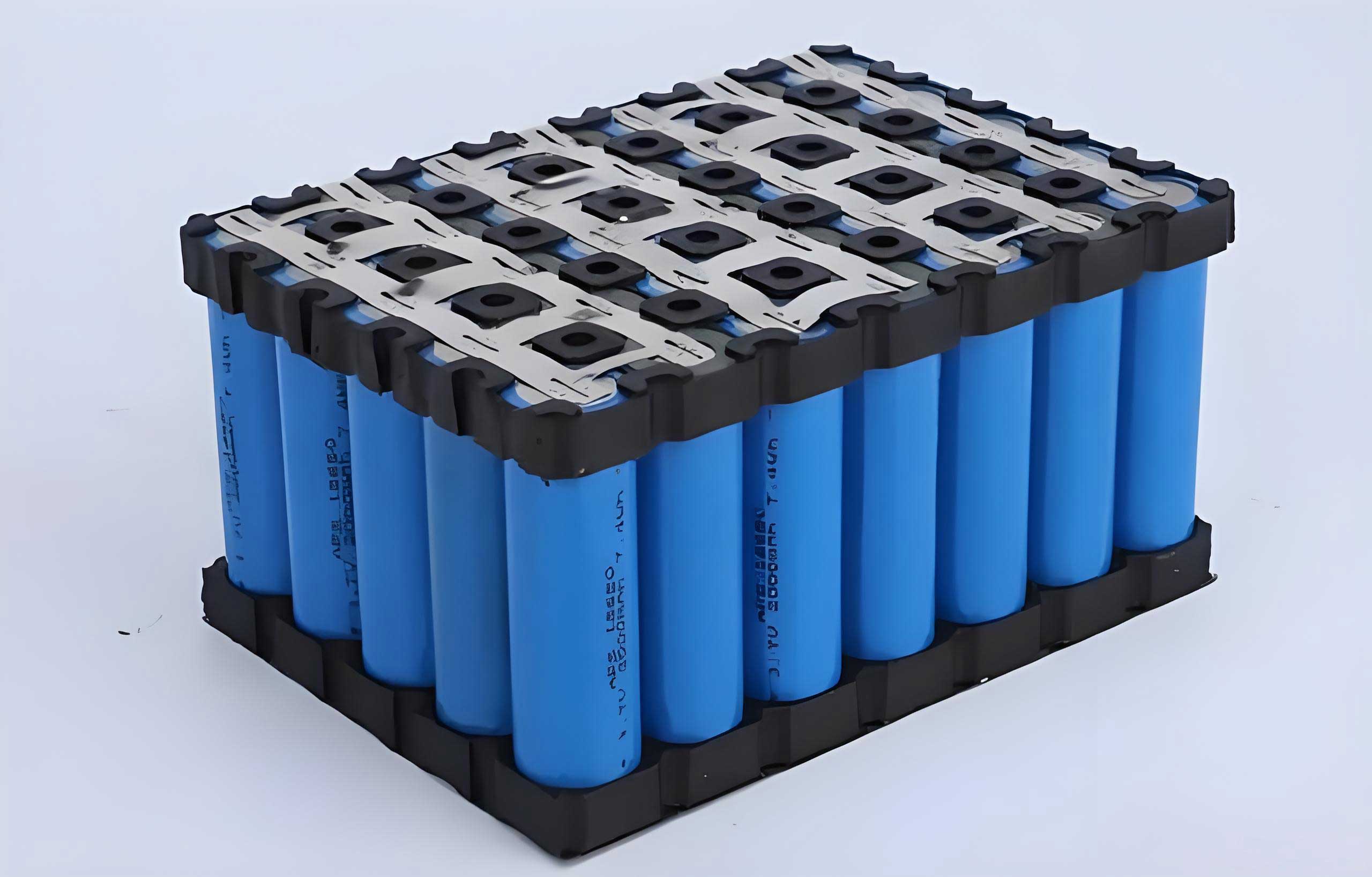
To thoroughly understand the LiFePO4 battery’s performance, I conducted experiments focusing on its capacity characteristics, charge-discharge characteristics, and open-circuit voltage (OCV)特性. The LiFePO4 battery’s capacity, denoted as Q, represents the total电量 it can deliver when fully charged. It includes theoretical capacity, rated capacity, and actual capacity. The actual capacity under constant current discharge is given by:
$$ Q = I t $$
where I is the current and t is the time. For varying current, it integrates as:
$$ Q = \int_{t_0}^{t} I(t) dt $$
In my experiments, I used a LiFePO4 battery cell with a nominal capacity of 11 Ah and nominal voltage of 3.7 V. The procedure involved cycling charge-discharge tests at 25°C. The battery was charged at 1 C rate to a cutoff voltage of 4.2 V, followed by constant voltage charging until current dropped below 0.05 C. After a 30-minute rest, it was discharged at 1 C rate to 2.75 V, followed by another rest. This cycle was repeated five times. The results showed that the discharge capacity was consistently lower than the charge capacity in each cycle, primarily due to energy dissipation from internal resistance. This underscores the importance of considering efficiency losses in LiFePO4 battery systems.
Regarding charge-discharge characteristics, the electrochemical reactions in a LiFePO4 battery involve lithium ion movement between electrodes. During charging, lithium ions de-intercalate from the positive electrode and intercalate into the negative electrode, described as:
$$ \text{LiFePO}_4 – x\text{Li}^+ – x e^- \rightarrow x\text{FePO}_4 + (1-x)\text{LiFePO}_4 $$
During discharging, the reverse occurs:
$$ \text{LiFePO}_4 + x\text{Li}^+ + x e^- \rightarrow \text{LiFePO}_4 + (1-x)\text{FePO}_4 $$
Experimental charge curves revealed a rapid constant current phase until voltage上限 (4.2 V), followed by a constant voltage phase where current gradually decreases to 0.05 C. Discharge tests at various rates (0.2 C, 0.5 C, 3.0 C) demonstrated that higher discharge rates lead to steeper voltage drops and reduced usable capacity. For instance, at 3.0 C, the voltage declines rapidly, limiting the energy output. Nonetheless, all discharges terminated around 2.8 V, indicating a safe cutoff to prevent battery damage. These characteristics highlight the need for careful management of discharge rates in LiFePO4 battery applications to optimize performance.
The open-circuit voltage (OCV) characteristic is vital for state-of-charge (SOC) estimation in LiFePO4 batteries. OCV represents the terminal voltage after prolonged rest, correlating closely with SOC. I designed an OCV-SOC experiment where the LiFePO4 battery was charged fully, then discharged in steps with rests at SOC points from 1.00 to 0.10. After each discharge increment, the battery rested for 30 minutes to stabilize, and the OCV was recorded. The data拟合 yielded an OCV-SOC curve, showing that OCV decreases as SOC diminishes. The curve is relatively flat in the mid-SOC range but exhibits significant changes at low and high SOC levels. This nonlinear relationship implies that small OCV variations can indicate substantial SOC shifts near full or empty states, which is critical for accurate battery management systems in ships.
To further elaborate on LiFePO4 battery performance, let’s consider additional aspects such as thermal management, aging effects, and integration into marine power grids. The LiFePO4 battery’s thermal stability allows for simpler cooling systems compared to other lithium types, reducing overall system complexity. Aging studies show that LiFePO4 batteries experience gradual capacity fade over cycles, influenced by factors like temperature and charge depth. A model for capacity fade can be expressed as:
$$ Q_{\text{loss}} = A \cdot e^{-E_a/(RT)} \cdot t^n $$
where $Q_{\text{loss}}$ is capacity loss, $A$ is a pre-exponential factor, $E_a$ is activation energy, $R$ is gas constant, $T$ is temperature, $t$ is time, and $n$ is an exponent. For LiFePO4 batteries, the fade rate is lower, enhancing longevity in maritime use.
In terms of application cases, LiFePO4 batteries have been deployed in various electric propulsion ships worldwide. The following table summarizes some examples, illustrating the versatility of LiFePO4 battery systems:
| Ship Name | Country | Dimensions (Length × Width) / m | Battery Capacity / kWh |
|---|---|---|---|
| Ampere Ferry | Norway | 79.0 × 21 | 1040 |
| Tycho Brahe Ferry | Sweden | 111.2 × 28.2 | 4160 |
| Guangzhou Electric Cargo Ship | China | 70.5 × 13.9 | 2400 |
| Gloppefjord Ferry | Norway | 106.2 × 16.8 | 2000 |
| Aurora Ferry | Sweden | 111.2 × 28.2 | 4160 |
These案例 demonstrate the scalability of LiFePO4 battery technology, from smaller ferries to larger vessels. The LiFePO4 battery’s ability to handle high-power demands and repeated cycles makes it suitable for diverse marine operations, including short-haul ferries and cargo ships. Moreover, the LiFePO4 battery’s compatibility with renewable energy sources, such as solar or wind, enables hybrid systems that further reduce carbon footprints. For instance, integrating LiFePO4 batteries with photovoltaic panels on ships can provide auxiliary power, enhancing overall energy efficiency.
From a technical perspective, the LiFePO4 battery’s voltage profile during discharge is crucial for power electronics design. The discharge curve can be modeled using a simplified equivalent circuit, where the battery voltage V is given by:
$$ V = OCV(SOC) – I \cdot R_{\text{int}} $$
where $R_{\text{int}}$ is internal resistance, which varies with SOC and temperature. For a LiFePO4 battery, $R_{\text{int}}$ tends to be low, minimizing voltage sag under load. This characteristic supports stable power delivery in electric propulsion systems, where sudden load changes are common. Additionally, the LiFePO4 battery’s flat discharge plateau in the mid-SOC range ensures consistent voltage output, simplifying motor control.
Safety considerations for LiFePO4 batteries in marine environments cannot be overstated. The LiFePO4 battery’s inherent safety stems from its olivine structure, which prevents oxygen release during abuse. However, proper battery management systems (BMS) are essential to monitor parameters like voltage, current, and temperature. A BMS for LiFePO4 batteries typically includes algorithms for SOC estimation, often based on coulomb counting and OCV correction. The SOC can be estimated as:
$$ SOC(t) = SOC_0 – \frac{1}{Q_{\text{nom}}} \int_0^t \eta I(\tau) d\tau $$
where $SOC_0$ is initial SOC, $Q_{\text{nom}}$ is nominal capacity, $\eta$ is coulombic efficiency, and $I$ is current. For LiFePO4 batteries, $\eta$ is close to 1, enhancing estimation accuracy.
Furthermore, the LiFePO4 battery’s lifecycle cost analysis reveals economic benefits. Despite higher initial costs compared to some alternatives, the long cycle life and low maintenance of LiFePO4 batteries reduce total cost of ownership. In marine applications, where downtime is costly, the reliability of LiFePO4 batteries translates to operational savings. Additionally, the LiFePO4 battery’s recyclability supports circular economy goals, as materials like iron and phosphate can be recovered and reused.
Looking ahead, advancements in LiFePO4 battery technology continue to emerge. Research focuses on improving energy density through nanotechnology, such as carbon-coated LiFePO4 particles, which enhance conductivity. Moreover, solid-state LiFePO4 batteries are under development, promising even greater safety and energy density. These innovations could further propel the adoption of LiFePO4 batteries in electric propulsion ships, enabling longer ranges and higher power outputs.
In conclusion, the LiFePO4 battery stands out as a robust and efficient energy storage solution for marine electric propulsion systems. My experimental and analytical findings confirm its excellent capacity retention, stable charge-discharge behavior, and reliable OCV-SOC correlation. The LiFePO4 battery’s advantages in safety, temperature tolerance, space efficiency, and environmental impact make it a cornerstone for green shipping. As the maritime industry strides towards decarbonization, the LiFePO4 battery will undoubtedly play a pivotal role in powering the next generation of vessels. Continued research into LiFePO4 battery performance under real-world marine conditions will further optimize its application, ensuring sustainable and reliable propulsion for years to come.