
As a frontline fire rescue operative with extensive experience in handling industrial accidents, I have witnessed a significant rise in incidents involving the lithium-ion battery industry chain. The rapid expansion of this sector, driven by global commitments to carbon neutrality and peak carbon emissions, has led to increased production, storage, transportation, application, and recycling of lithium-ion batteries. Consequently, the probability of fire accidents has escalated annually, necessitating urgent improvements in safety protocols. From my perspective, it is crucial to identify fire risk points across the entire lithium-ion battery lifecycle, from raw material sourcing to end-of-life disposal. This article aims to analyze risk assessment and safety control measures, enriching the knowledge base for firefighting and rescue operations, and formulating corresponding technical and tactical strategies. By sharing insights gained from real-world incidents, I hope to provide valuable experience for fellow rescue personnel in managing lithium-ion battery-related emergencies.
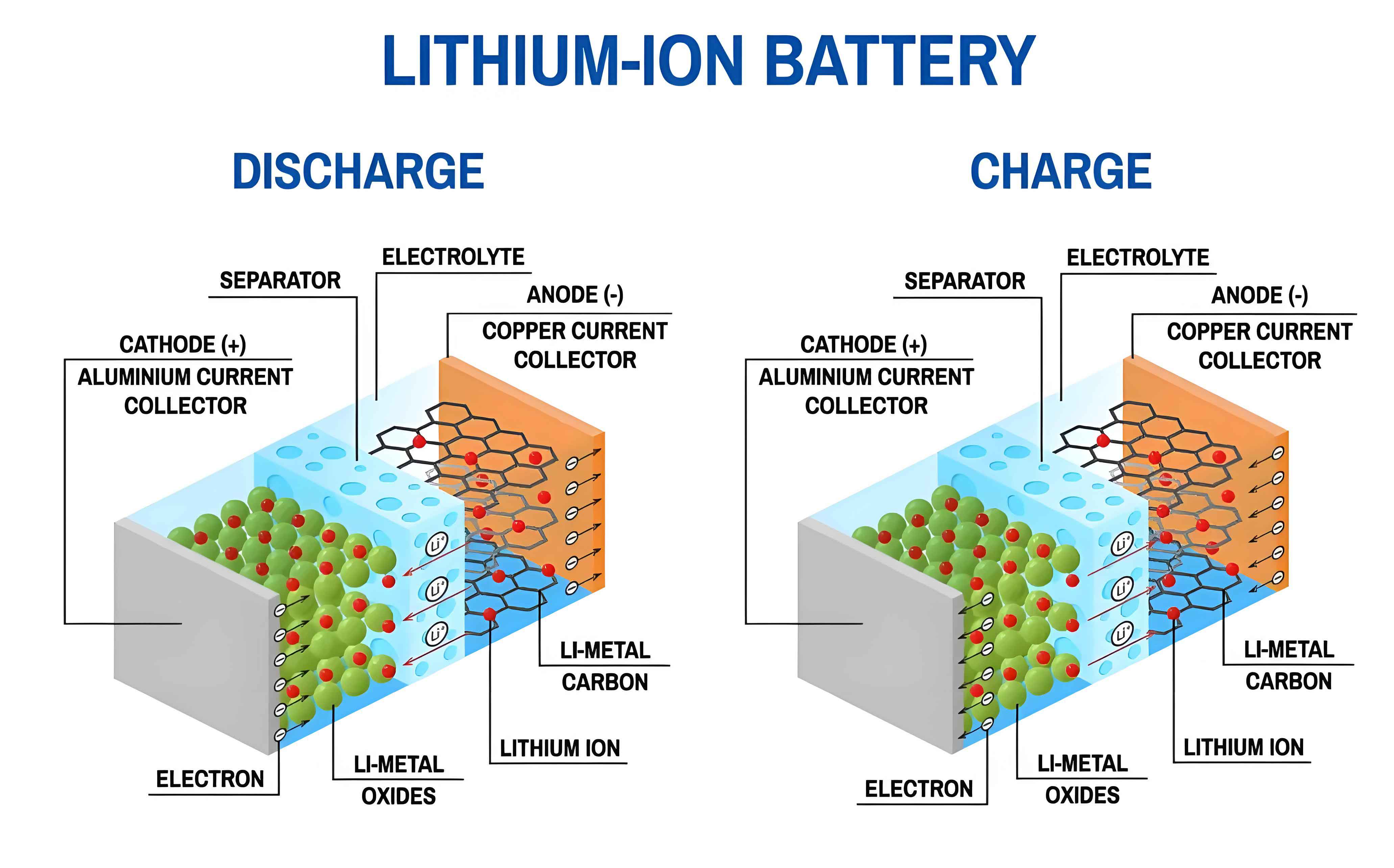
The lithium-ion battery industry chain is complex, spanning from raw material extraction to manufacturing, integration into products like electric vehicles and energy storage systems, transportation, usage, and eventual recycling. Each phase presents distinct hazards that can lead to fires, explosions, or toxic releases. My observations indicate that as the demand for lithium-ion batteries grows, so does the frequency and severity of accidents, making it imperative for rescue teams to adopt specialized approaches. This article delves into risk management and operational formations, drawing from hands-on experiences to enhance safety outcomes. Lithium-ion battery incidents are particularly challenging due to their potential for thermal runaway, a self-sustaining exothermic reaction that can release immense energy and hazardous gases. Understanding these dynamics is key to effective response.
Risk Management in Manufacturing Processes of Lithium-ion Batteries
In the manufacturing of lithium-ion batteries, various stages involve hazardous materials and processes that pose significant risks. From cathode and anode material production to electrolyte formulation, each step requires meticulous safety controls. Based on my field engagements, I will outline the key risks and corresponding safety measures for these processes.
Cathode Material Production
The production of cathode materials for lithium-ion batteries involves substances like sulfur dioxide, hydrogen, liquid ammonia, and strong acids. These materials introduce risks of electric shock, poisoning, explosion, and combustion. During incidents, if rescue personnel lack adequate protection, they may suffer chemical burns, corrosion, or poisoning. For instance, leaks in tail gas absorption units or nitrogen within furnaces can lead to asphyxiation in confined spaces. Thermal runaway in associated equipment can exacerbate these hazards, especially when lithium-ion battery components are present.
Safety controls must prioritize dual protection for respiratory and torso safety. Upon arrival, teams should wear Level A or B protective suits, with oxygen respirators for ammonia leaks. Parking distances should be at least 300 meters for minor leaks and 500 meters for major ones, with operational safety distances of 150 meters. Gas dispersion models can aid in determining safe zones; for example, the Gaussian plume model for continuous point sources:
$$C(x,y,z) = \frac{Q}{2\pi u \sigma_y \sigma_z} \exp\left(-\frac{y^2}{2\sigma_y^2}\right) \exp\left(-\frac{(z-H)^2}{2\sigma_z^2}\right)$$
where \(C\) is concentration, \(Q\) is emission rate, \(u\) is wind speed, \(\sigma_y\) and \(\sigma_z\) are dispersion parameters, and \(H\) is release height. This helps assess toxic gas spread from lithium-ion battery manufacturing leaks.
Anode Material Production
Anode materials, often graphite-based, involve high-temperature furnaces, nitrogen atmospheres, and dust hazards. Risks include furnace eruptions, nitrogen leakage causing asphyxiation, and dust explosions. In fires, transformer oil can lead to flowing fires, complicating suppression efforts. Lithium-ion battery anode production sites require full respiratory and body protection, with levels adjusted based on radiation heat. For example, reflective suits may be necessary near high-temperature zones to mitigate thermal exposure.
Electrolyte Production
Electrolytes for lithium-ion batteries contain flammable and toxic solvents, posing explosion and poisoning risks. Incidents in storage areas can be managed by depressurizing via safety valves and using nitrogen for suffocation. Safety protocols mandate dual protection, including anti-gas masks and oxygen respirators for extended operations. Decontamination is critical; agents like defluorination rinsing solutions must be on hand. Additionally, water application should be avoided in areas with fluorinated compounds to prevent hydrofluoric acid formation, which could worsen lithium-ion battery-related incidents.
| Manufacturing Process | Primary Hazards | Key Safety Measures | Relevance to Lithium-ion Battery |
|---|---|---|---|
| Cathode Material Production | Toxic gas leaks (e.g., SO₂, NH₃), explosions, fires | Dual respiratory/torso protection; minimum parking distance of 300 m; use of dispersion models for safe zones | Directly involves materials for lithium-ion battery cathodes; thermal runaway risks in processing |
| Anode Material Production | High-temperature eruptions, nitrogen asphyxiation, dust explosions | Full-body heat-resistant suits; respiratory protection; monitoring for flowing fires from oils | Graphite anodes are critical for lithium-ion battery function; dust hazards can ignite battery components |
| Electrolyte Production | Flammable solvent fires, toxic fume releases, chemical reactions | Nitrogen inerting for fire suppression; specialized decontamination agents; avoidance of water in certain areas | Electrolytes are essential for lithium-ion battery operation; mishandling can trigger thermal runaway |
Risk Management in Application Fields of Lithium-ion Batteries
Lithium-ion batteries are widely used in electric vehicles and energy storage systems, where accidents have become more common. Thermal runaway is a primary concern, as it can lead to fires or explosions if energy is not dissipated. My experience shows that application-specific risks require tailored responses.
New Energy Vehicle Accidents
Electric vehicles powered by lithium-ion batteries present unique hazards, such as high-voltage electric shock. Even after disconnecting the battery, capacitors may retain charge, necessitating a 5-10 minute wait before intervention. Thermal runaway releases toxic gases like CO, CO₂, SO₂, and THC, which can explode in confined spaces. The state of charge (SOC) greatly influences severity; higher SOC leads to more intense reactions. Studies indicate that the energy released during thermal runaway can be equated to TNT for safety calculations. For a lithium-ion battery, the TNT equivalent \(W\) is:
$$W = \frac{Q_r}{4184} \text{ kg}$$
where \(Q_r\) is the released energy in kJ. Safety distances \(d\) can be estimated using the cube-root scaling law:
$$d = k \cdot \sqrt[3]{W}$$
with \(k\) as a scenario-dependent constant (e.g., \(k \approx 10\) for open-air incidents). Based on research, safety distances for various lithium-ion battery configurations are:
| Number of Lithium-ion Batteries | Total Capacity (A·h) | TNT Equivalent (kg) | Minimum Safety Distance (m) |
|---|---|---|---|
| 1,000 | 2,000 | 5.5 | 14.8 |
| 5,000 | 10,000 | 27.3 | 25.3 |
| 10,000 | 20,000 | 54.5 | 31.8 |
| 20,000 | 40,000 | 109.0 | 40.1 |
| 50,000 | 100,000 | 272.5 | 54.4 |
| 100,000 | 200,000 | 545.0 | 68.5 |
These distances are crucial for positioning during lithium-ion battery vehicle fires. Additionally, gas toxicity must be monitored; for instance, CO levels can surge during thermal runaway, requiring respiratory protection.
Energy Storage Station Accidents
Energy storage stations using lithium-ion battery stacks face risks from overcharging, short circuits, or thermal propagation. Fires may manifest as smoke, explosions, or open flames. When accessing battery cabins, personnel should follow building fire tactics, as internal conditions can be unpredictable. After opening doors, CO concentrations can rise from ambient \(2.4 \times 10^{-6}\) to over \(190 \times 10^{-6}\), necessitating gas detection. Safety distances should exceed 50 meters, with avoidance of pressure relief vents. In unknown scenarios, delaying approach can prevent injury from sudden lithium-ion battery failures.
The energy release from a lithium-ion battery in thermal runaway can be modeled empirically. For lithium iron phosphate batteries, the released energy \(Q_r\) correlates with SOC:
$$Q_r = \alpha \cdot \text{SOC} + \beta$$
where \(\alpha\) and \(\beta\) are constants derived from testing. This helps predict fire intensity and water requirements for suppression.
Risk Management in Lithium-ion Battery Recycling
Recycling of lithium-ion batteries involves disassembly and material recovery, which can release hazardous residues. Burned lithium iron phosphate batteries, for example, contain benzene derivatives, polycyclic aromatic hydrocarbons, and other toxins. Thermal runaway experiments have detected carcinogens like acrolein, emphasizing the need for stringent controls. My experience in recycling facility incidents shows that airborne toxins pose long-term health risks to responders.
Safety measures include using drones for aerial reconnaissance to assess fire zones and determine safe distances. Water quality analyzers and pH strips should test leakage fluids for acidity and harmful components. Personal protective equipment must be worn throughout, as exposure to lithium-ion battery residues can cause respiratory or dermal damage. Decontamination protocols are essential post-operation to remove toxic particulates.
Risk Management in Road Transportation of Lithium-ion Batteries
Transport accidents involving lithium-ion batteries are concerning due to potential thermal runaway during transit. The energy released varies with SOC, affecting suppression strategies. For lithium iron phosphate batteries, the energy and water consumption are:
| SOC | Released Energy \(Q_r\) (kJ) | TNT Equivalent (kJ) | Water Required for Suppression (kg) |
|---|---|---|---|
| 100% | 1911–2342 | 0.46–0.56 | 6.1–7.5 |
| 50% | 1182–1339 | 0.28–0.32 | 3.8–4.3 |
| 0% | 673–778 | 0.16–0.19 | 2.1–2.5 |
Commanders must factor these values into safety distances and resource allocation. For highway or tunnel incidents, bidirectional road closure is vital, with attention to structural integrity near bridges. The risk of lithium-ion battery explosion necessitates standoff distances calculated from TNT equivalents, as previously discussed.
Operational Formation Strategies for Lithium-ion Battery Incidents
Effective response to lithium-ion battery accidents requires tailored vehicle and personnel formations. Based on incident types, I recommend specific compositions to balance firefighting, rescue, and safety.
Vehicle Formations for Different Scenarios
The choice of vehicles depends on the lithium-ion battery context, such as manufacturing, storage, or transportation. Key formations include:
| Scenario | Recommended Vehicle Composition | Primary Tasks |
|---|---|---|
| Finished Lithium-ion Battery Warehouses | Heavy water tankers, rescue vehicles, chemical decontamination vehicles | Aggressive fire suppression, battery evacuation, post-incident decontamination |
| Lithium-ion Battery Production Plants | Liquid supply vehicles, aerial ladder trucks, fire robots, wall demolition vehicles, chemical decontamination vehicles | Ensuring water supply, close-range firefighting, ventilation via demolition, reducing interior personnel exposure |
| Lithium-ion Battery Recycling Facilities | Foam trucks, aerial ladder trucks, wall demolition vehicles, chemical decontamination vehicles | Foam coverage for flammable liquids, smoke extraction, toxin reduction, decontamination |
Support and Specialized Formations
Given the prolonged nature of lithium-ion battery fires, support formations are crucial. These should include equipment support vehicles, mobile air charging units, heavy water tankers, and long-range water supply systems. Technical personnel can assist with water and air logistics. For toxic environments, specialized vehicles like detection cars and chemical decontamination units enhance reconnaissance and protection.
Typical specialized formations for lithium-ion battery incidents are:
- Production enterprises: Water tanker + ordinary foam truck + long-range water supply system + aerial ladder truck + rescue vehicle + chemical decontamination vehicle + air supply vehicle + wall demolition vehicle.
- Recycling enterprises: Water tanker + ordinary foam truck + high-expansion foam truck + long-range water supply system + aerial ladder truck + chemical decontamination vehicle + air supply vehicle + wall demolition vehicle.
- Lithium-ion battery electric vehicles: Water tanker + compressed air foam truck / ordinary foam truck + rescue vehicle.
Tactical Principles and Safety Protocols
From my experience, core principles for lithium-ion battery incident response include: adequate personal protection, rapid victim extraction, and safe fire suppression. Thermal runaway dynamics necessitate cooling strategies; for example, water application must consider battery chemistry to avoid exacerbation. The heat release rate during lithium-ion battery fires can be modeled as:
$$\dot{Q} = \chi \cdot \dot{m} \cdot \Delta H_c$$
where \(\dot{Q}\) is heat release rate, \(\chi\) is combustion efficiency, \(\dot{m}\) is mass loss rate, and \(\Delta H_c\) is heat of combustion. This informs water flow requirements. Personnel should maintain distances based on explosive potential, using the TNT equivalent formula for lithium-ion batteries: \(W = \frac{Q_r}{4184}\). Regular drills focusing on lithium-ion battery hazards can improve team readiness.
Conclusion
Lithium-ion battery industry chain accidents pose complex challenges that demand specialized risk management and operational formations. As a fire rescue professional, I emphasize the importance of identifying hazards across manufacturing, application, recycling, and transportation stages. Safety controls, such as dual protection and calculated standoff distances, are vital for personnel safety. Operational formations must be adaptable, with vehicles and support systems tailored to specific lithium-ion battery scenarios. By enhancing training, equipment, and interdisciplinary coordination, rescue teams can better mitigate the risks associated with lithium-ion batteries. Ultimately, a proactive approach, grounded in empirical data and real-world experience, will reduce casualties and improve outcomes in lithium-ion battery-related emergencies. Continuous learning and adaptation are key, as the lithium-ion battery landscape evolves with technological advancements.