
The widespread adoption of lithium-ion batteries in electric vehicles, grid-scale energy storage, and portable electronics has underscored the critical need for reliable and safe battery management. A core challenge in ensuring system longevity and preventing catastrophic failures lies in accurately estimating the State of Health (SOH) of the li ion battery. Unlike parameters like voltage or temperature, SOH is an internal, intangible metric that quantifies the battery’s degradation relative to its fresh condition. It primarily manifests as capacity fade and power degradation, driven by intricate internal electrochemical side reactions and structural changes, all accelerated by external operating conditions like temperature, charge/discharge rates, and depth of discharge. Precise SOH knowledge is indispensable for battery diagnosis, lifespan prediction, and the formulation of effective maintenance strategies. Consequently, developing robust, accurate, and practical SOH estimation methods has become a focal point of research in both academia and industry.
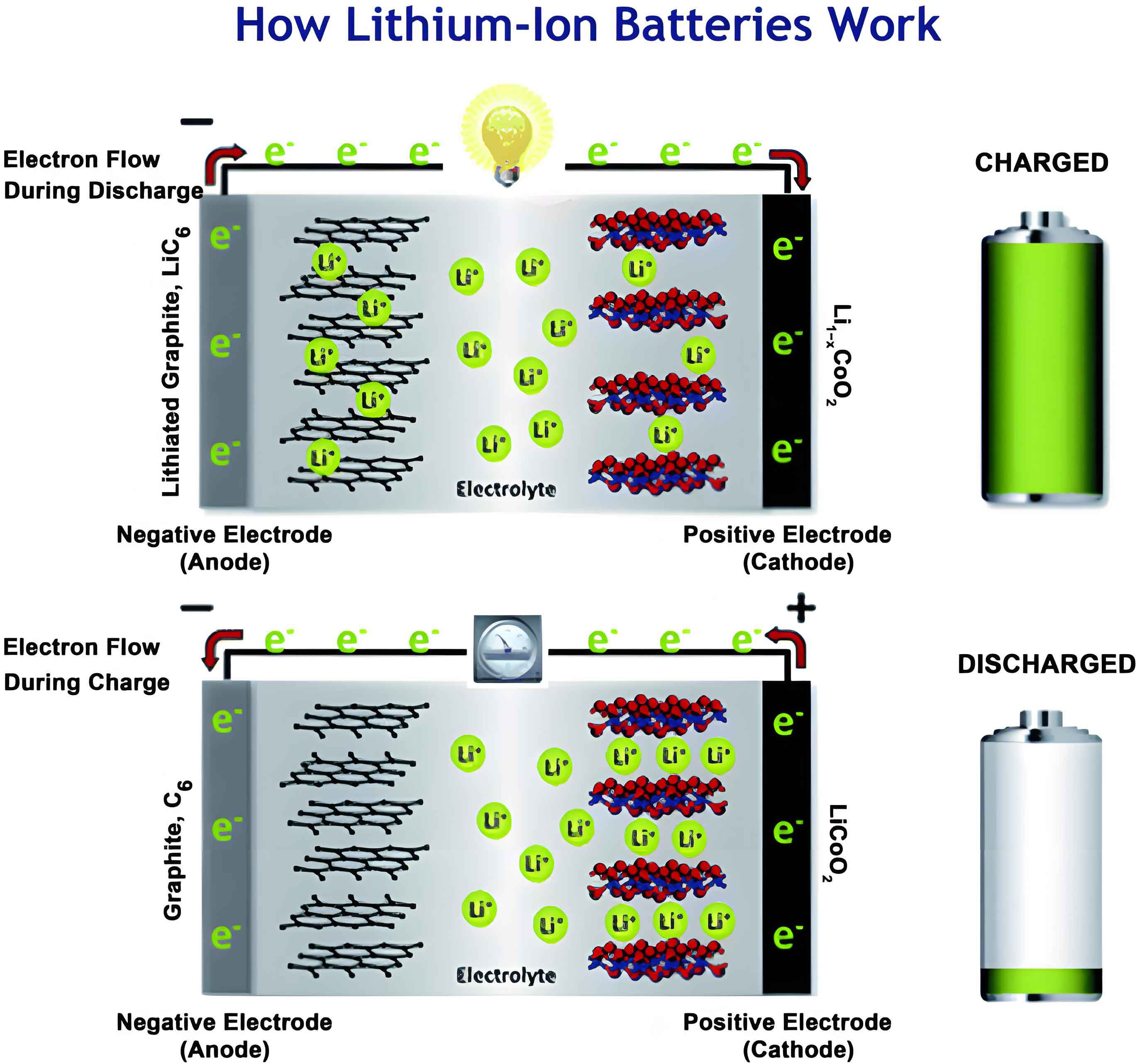
This review aims to provide a comprehensive overview of the contemporary methodologies for SOH estimation in li ion battery systems. I will first briefly discuss the fundamental aging mechanisms and the definition of SOH. Subsequently, I will categorize and delve into the four primary classes of estimation techniques: experimental methods, model-based approaches, data-driven strategies, and hybrid fusion methods. For each category, I will elucidate the underlying principles, detail the implementation process, and critically analyze their respective strengths and limitations. The discussion will be supported by comparative tables and mathematical formulations. Finally, I will conclude with perspectives on prevailing challenges and future research directions in this dynamic field.
1. Lithium-ion Battery Aging and SOH Definition
The degradation of a li ion battery is a complex process governed by the interplay of internal material failures and external stress factors. Internally, continuous physical and chemical changes occur in the cathode, anode, electrolyte, and other components. These irreversible processes lead to a decline in performance metrics. Externally, operating conditions such as ambient temperature, charge/discharge current magnitude (C-rate), depth of discharge (DOD), voltage limits, and cycling frequency significantly influence the rate of aging. Research, including orthogonal aging tests, consistently identifies temperature and C-rate as the most influential stressors on capacity loss.
Aging mechanisms are typically classified into three main modes: Loss of Lithium Inventory (LLI), Loss of Active Material (LAM) at the anode (LAMNE) or cathode (LAMPE), and Conductivity Loss (CL). LLI involves the irreversible consumption of cyclable lithium ions, often due to Solid Electrolyte Interface (SEI) layer growth and decomposition, or electrolyte reduction. LAM refers to the physical or chemical degradation of electrode active materials, rendering them electrochemically inactive. CL results from increased impedance in electrodes or electrolytes due to factors like corrosion or contact loss.
SOH is a quantitative measure of a battery’s current condition relative to its pristine state. While several definitions exist, the most prevalent is based on capacity fade:
$$ \text{SOH}_{\text{cap}} = \frac{C_{\text{current}}}{C_{\text{rated}}} \times 100\% $$
where \( C_{\text{current}} \) is the present maximum available capacity and \( C_{\text{rated}} \) is the nominal capacity. Alternative definitions use internal resistance or power capability:
$$ \text{SOH}_{\text{res}} = \frac{R_{\text{EOL}} – R_{\text{current}}}{R_{\text{EOL}} – R_{\text{new}}} \times 100\%, \quad \text{SOH}_{\text{pow}} = \frac{P_{\text{current}} – P_{\text{min}}}{P_{\text{new}} – P_{\text{min}}} \times 100\% $$
where \( R \) and \( P \) represent resistance and power, respectively, and the subscripts denote End-of-Life (EOL), current, and new conditions. The capacity-based definition is most common due to the direct correlation with energy storage capability and the relative difficulty in accurately measuring resistance or power under varying operational states.
2. SOH Estimation Methodologies
The landscape of SOH estimation techniques is diverse, evolving from direct laboratory measurements to sophisticated online algorithms. They can be broadly classified into four groups, as illustrated in the conceptual framework below.
Each class offers distinct advantages and faces specific challenges, which I will explore in detail.
2.1 Experimental (Direct Measurement) Methods
These methods rely on controlled laboratory tests to measure parameters intrinsically linked to li ion battery health. They are often considered the ground truth but are generally offline and impractical for real-time management.
2.1.1 Ampere-hour (Ah) Integration
This is the most straightforward method, directly adhering to the capacity-based SOH definition. A fully charged battery is discharged at a constant, low current until the cut-off voltage is reached. The discharged capacity is integrated from the current profile:
$$ C_{\text{curr}} = \int_{t_1}^{t_2} I(t) \, dt $$
While highly accurate, this method is time-consuming, accelerates aging if performed frequently, and is unsuitable for online application. It is primarily used for calibration and validation of other estimation techniques.
2.1.2 Internal Resistance (IR) Method
The ohmic resistance of a li ion battery increases monotonically with degradation, making it a potential health indicator. A current pulse \( \Delta I \) is applied, and the instantaneous voltage response \( \Delta U \) is measured. The ohmic resistance is calculated using Ohm’s law, \( R = \Delta U / \Delta I \). Algorithms like Recursive Least Squares (RLS) are used for online identification. The main challenge is establishing a robust mapping between \( R \) and SOH across varying temperatures and SOCs. While simple, its accuracy as a standalone method is often limited.
2.1.3 Electrochemical Impedance Spectroscopy (EIS)
EIS provides a rich, frequency-domain characterization of the internal electrochemical processes. By applying a small sinusoidal current/voltage perturbation across a range of frequencies and measuring the response, a Nyquist plot is obtained. Fitting this to an equivalent circuit model yields parameters (e.g., ohmic resistance, charge transfer resistance, Warburg impedance) that correlate strongly with specific aging mechanisms (SEI growth, charge transfer kinetics). Although highly informative and accurate, EIS requires expensive, precise equipment and a stable testing environment, confining it mostly to laboratory diagnostics. Online, in-situ EIS remains a significant challenge for BMS implementation.
2.1.4 Incremental Capacity Analysis (ICA) and Differential Voltage (DV) Analysis
These are powerful indirect methods that transform the operational voltage-capacity (V-Q) curve to reveal characteristic features linked to phase transitions in electrode materials. The Incremental Capacity (IC) curve is derived as:
$$ IC = \frac{dQ}{dV} \approx \frac{\Delta Q}{\Delta V} $$
Peaks and valleys in the IC curve correspond to specific electrochemical reactions. As the li ion battery ages, these features shift in height, area, and voltage position, providing insights into LLI, LAM, and CL. The Differential Voltage (DV, dV/dQ) curve offers complementary information. The primary hurdle is obtaining a smooth, high-resolution IC/DV curve from operational data, which is sensitive to current rate, sampling frequency, and noise. Advanced signal processing techniques like Gaussian filtering are essential for practical online application. Methods using “regional features” from these curves have shown promise for robust SOH estimation even at higher C-rates and lower sampling frequencies.
2.2 Model-Based Methods
This approach employs mathematical models to simulate battery behavior and degradation. The core idea is to identify model parameters that drift with aging and correlate them with SOH.
2.2.1 Empirical Degradation Models
These are simple mathematical functions fitted to aging data. A common example is a semi-empirical model correlating capacity loss with cycle number and stress factors (e.g., temperature, C-rate):
$$ Q_{\text{loss}} = A \cdot \exp\left(-\frac{E_a}{RT}\right) \cdot (N)^z $$
where \( A \) is a pre-exponential factor, \( E_a \) is activation energy, \( R \) is the gas constant, \( T \) is temperature, \( N \) is cycle count, and \( z \) is the power law factor. While simple and computationally cheap, these models lack physical insight, require extensive testing for parameterization, and often have poor generalization capabilities.
2.2.2 Equivalent Circuit Models (ECM)
ECMs use electrical components (voltage sources, resistors, capacitors) to mimic the dynamic voltage response of a li ion battery. Common models include the Rint, Thevenin (first-order RC), and second-order RC models. Their complexity and fidelity increase with the number of RC pairs, which represent polarization effects. A comparative summary is provided in Table 1.
| Model | Structure Description | Governing Equations | Key Parameters | Pros & Cons |
|---|---|---|---|---|
| Rint | Ideal voltage source in series with an ohmic resistor. | \( V_t = OCV – I \cdot R_0 \) | \( R_0 \) (Ohmic resistance) | + Simplest, fast. – Poor dynamic accuracy. |
| Thevenin (1st-order RC) | Rint model with one RC parallel branch added. | \( V_t = OCV – I \cdot R_0 – V_p \) \( \frac{dV_p}{dt} = \frac{I}{C_p} – \frac{V_p}{R_p C_p} \) |
\( R_0, R_p, C_p \) | + Good balance of simplicity/accuracy. – May not capture all dynamics. |
| 2nd-order RC | Rint model with two RC branches. | \( V_t = OCV – I \cdot R_0 – V_{p1} – V_{p2} \) Two differential equations for \( V_{p1}, V_{p2} \). |
\( R_0, R_{p1}, C_{p1}, R_{p2}, C_{p2} \) | + Captures short/long-term polarization. – More parameters, heavier computation. |
Parameters are identified online using algorithms like RLS or Extended Kalman Filter (EKF). The shift in parameters, especially the ohmic resistance \( R_0 \) or polarization resistances, can be tracked to estimate SOH. ECMs are popular in BMS due to their simplicity and suitability for real-time implementation, but their accuracy depends on model structure and parameter identification robustness.
2.2.3 Electrochemical Models (EM)
EMs are physics-based, using partial differential equations (PDEs) derived from porous electrode theory and concentrated solution theory to describe lithium-ion diffusion, charge transfer, and thermodynamics. The pseudo-two-dimensional (P2D) model is the most comprehensive but computationally prohibitive for BMS. Reduced-order models like the Single Particle Model (SPM) simplify each electrode to a single spherical particle, drastically reducing complexity:
$$ \frac{\partial c_s}{\partial t} = \frac{D_s}{r^2} \frac{\partial}{\partial r}\left(r^2 \frac{\partial c_s}{\partial r}\right) $$
with boundary conditions related to the applied current. Coupled with degradation sub-models (e.g., for SEI growth causing LLI), SPMs can predict capacity fade and voltage curve evolution. While offering high fidelity and insight into aging mechanisms, even reduced-order EMs are more complex than ECMs and require careful parameterization.
2.2.4 Filtering Algorithms (KF, PF)
Filtering techniques are often used in conjunction with models for state estimation. They treat SOH (or a related parameter like capacity) as a state variable in a dynamic system.
- Kalman Filter (KF) and Variants: The KF provides an optimal recursive solution for linear systems. For nonlinear battery models, the Extended KF (EKF) or Unscented KF (UKF) are used. A Dual EKF (DEKF) can simultaneously estimate SOC (using one filter) and model parameters/SOH (using the other filter), enabling joint state-parameter estimation.
- Particle Filter (PF): PF is a sequential Monte Carlo method ideal for non-Gaussian, nonlinear systems. It represents the state probability distribution with a set of particles (samples). PF is particularly adept at handling the voltage hysteresis in chemistries like LFP and can provide a probabilistic estimate of SOH, representing uncertainty.
2.3 Data-Driven Methods
Data-driven methods bypass explicit physical modeling. Instead, they learn the complex, nonlinear relationship between easily measurable battery operational data (features) and its SOH using machine learning (ML) or statistical algorithms. The general pipeline involves: 1) Data collection (V, I, T), 2) Health Indicator (HI) extraction (e.g., features from voltage curves, ICA peaks, impedance), 3) Model training on historical data, and 4) SOH prediction for new data.
2.3.1 Artificial Neural Networks (ANN)
ANNs, particularly Multi-Layer Perceptrons (MLP) with Backpropagation, are universal approximators. They take extracted HIs (e.g., charging time for constant voltage segments, internal resistance, temperature rise) as input and output the SOH. Recurrent Neural Networks (RNNs) like Long Short-Term Memory (LSTM) networks are especially powerful as they can model the temporal dependencies in capacity fade sequences. While powerful, ANNs require large, high-quality datasets and are prone to overfitting without proper regularization.
2.3.2 Support Vector Machine (SVM) / Support Vector Regression (SVR)
SVR seeks to find a function that deviates from the actual training data by a value no greater than a specified margin \( \epsilon \), while being as flat as possible. It is effective in high-dimensional spaces and for small to medium-sized datasets. The core optimization problem is:
$$ \min_{w,b} \frac{1}{2} ||w||^2 + C \sum_{i=1}^{n} (\xi_i + \xi_i^*) $$
subject to constraints involving the training data and slack variables \( \xi \). The kernel trick (e.g., using Radial Basis Function) allows SVR to handle nonlinear relationships effectively. It is less data-hungry than ANNs but can be computationally intensive for very large datasets.
2.3.3 Gaussian Process Regression (GPR)
GPR is a non-parametric, Bayesian approach. It defines a distribution over functions and provides not only a mean prediction for SOH but also a measure of uncertainty (variance). A Gaussian process is fully specified by its mean function \( m(x) \) and covariance (kernel) function \( k(x, x’) \):
$$ f(x) \sim \mathcal{GP}(m(x), k(x, x’)) $$
The choice of kernel (e.g., Matern, Radial Basis Function) is crucial. GPR excels at uncertainty quantification and works well with small datasets, but its computational cost scales cubically with the number of training points.
2.4 Hybrid (Fusion) Methods
Recognizing the limitations of any single approach, hybrid methods combine strengths from different paradigms to achieve superior accuracy, robustness, and generalizability.
2.4.1 Model-Data Fusion
This combines the interpretability and physics foundation of models with the adaptive learning power of data-driven techniques. For example:
- An ECM provides a baseline state estimate, while a data-driven model (e.g., GPR) corrects for the model’s residual error or adapts its parameters online.
- A simplified electrochemical model provides physical health indicators (like lithium inventory), which are then fed into an ML model for final SOH estimation.
- Filtering algorithms (like PF) are used to estimate states, and their outputs are fused with predictions from a separate data-driven prognostic model.
This approach can maintain accuracy even when the underlying physical model is imperfect or when the battery operates under highly variable conditions.
2.4.2 Multi-Model Data-Driven Fusion
This ensemble approach combines predictions from multiple data-driven models (e.g., SVR, GPR, LSTM) using a meta-learner (e.g., Random Forest, linear regressor) or weighted averaging. The rationale is that different models may capture different aspects of the degradation pattern, and their combination can reduce variance and improve overall prediction robustness and accuracy.
3. Comparative Assessment and Discussion
Each SOH estimation method for the li ion battery presents a unique set of trade-offs between accuracy, complexity, computational cost, need for prior knowledge, and suitability for online BMS implementation. Table 2 provides a synthesized comparison.
| Method Category | Specific Methods | Key Advantages | Major Limitations | Suitability for BMS |
|---|---|---|---|---|
| Experimental | Ah, IR, EIS, ICA/DV | High accuracy (ground truth for Ah); Provides deep mechanistic insight (EIS, ICA). | Offline, time-consuming; Requires specialized equipment (EIS); Impractical for real-time use. | Very Low (Calibration only) |
| Model-Based | Empirical Models | Simple, fast computation. | Low accuracy, poor generalization, no physical insight. | Low |
| Equivalent Circuit Models (ECM) | Good balance of accuracy/complexity; Suitable for online parameter identification; Real-time feasible. | Accuracy depends on model order; Parameters may lack direct physical link to aging modes. | High | |
| Electrochemical Models (EM) | High physical fidelity; Can describe aging mechanisms. | Computationally expensive; Complex parameterization; Reduced-order models needed for online use. | Medium (with reduced models) | |
| Data-Driven | ANN / Deep Learning | Powerful nonlinear mapping; Can handle complex feature relationships; LSTM for temporal patterns. | Requires very large datasets; Black-box nature; Prone to overfitting; High computational cost for training. | Medium-High (depends on model size) |
| SVR | Effective for small/medium datasets; Good generalization with kernels. | Choice of kernel and parameters is critical; Scalability issues with large datasets. | Medium | |
| GPR | Provides uncertainty bounds; Works well with small data. | Computational cost scales poorly (\(O(n^3)\)); Kernel selection important. | Medium (for limited data) | |
| Hybrid/Fusion | Model-Data, Multi-Model | Potentially highest accuracy and robustness; Combines strengths; Can adapt to changing conditions. | Increased complexity; Design and tuning more challenging; May require more computational resources. | High (Future direction) |
The evolution is clearly towards methods that can operate accurately in real-time under realistic, variable conditions. While experimental methods provide the foundation, model-based and data-driven methods form the core of contemporary research. The future, however, lies in intelligent fusion strategies. Hybrid methods that embed physical understanding (from models) within adaptive data-driven frameworks are most promising for overcoming the limitations of individual approaches, such as model inaccuracies in novel conditions or the data hunger and lack of interpretability in pure ML methods.
4. Conclusion and Future Perspectives
Accurate State-of-Health estimation remains a cornerstone for the reliable and safe operation of lithium-ion battery systems. This review has systematically categorized and analyzed the prevailing methodologies, from direct experimental techniques to sophisticated model-based, data-driven, and hybrid algorithms. Each approach contributes uniquely to our understanding and capability to monitor li ion battery degradation.
Looking forward, several key challenges and research directions emerge:
- Deepening Mechanistic Understanding for Feature Engineering: Future progress relies on linking observable features from operational data (e.g., specific ICA curve distortions, subtle voltage profile shifts) directly to underlying physical degradation modes (LLI, LAM, CL). This will lead to more informative and robust Health Indicators (HIs).
- Advancing Physics-Informed and Hybrid Machine Learning: The development of fusion frameworks that seamlessly integrate governing physical principles (from EMs or ECMs) with the flexibility of ML (like GPs or Neural ODEs) is paramount. This promises models that are accurate, generalizable, and interpretable.
- Enabling Practical BMS Deployment: Research must focus on developing lightweight, computationally efficient algorithms suitable for embedded BMS hardware. This includes work on transfer learning to adapt models across different cells with minimal new data, and on lifelong learning algorithms that can update the SOH model as the battery ages.
- Scaling from Cell to Pack-Level SOH Estimation: Real-world applications use battery packs with cell-to-cell variations. Methods for accurately estimating the SOH of individual cells within a pack and deriving a holistic pack SOH, considering balancing and interconnect effects, are critically needed.
- Leveraging New Sensor Data and Multi-Modal Fusion: Integrating data from novel in-situ sensors (for temperature distribution, gas evolution, mechanical strain) with traditional electrical measurements through multi-modal fusion techniques could unlock new levels of diagnostic and prognostic accuracy for the li ion battery.
In conclusion, while significant advances have been made, the pursuit of a universally robust, accurate, and practical SOH estimation method continues to drive innovation at the intersection of electrochemistry, control theory, and data science, ensuring the sustainable and safe future of lithium-ion battery technology.