
The evolution of secondary batteries has been pivotal in the transition towards renewable energy and electrified transportation. While lithium-ion batteries have dominated the market due to their high energy density and established performance, concerns regarding the geopolitical and supply chain risks associated with lithium and cobalt resources, coupled with cost and safety considerations, have spurred intensive research into alternative chemistries. Among these, the sodium-ion battery has emerged as one of the most promising contenders. Sodium shares similar chemical properties with lithium as an alkali metal, enabling analogous “rocking-chair” ion shuttling mechanisms. Crucially, sodium’s natural abundance and widespread geographical distribution offer a compelling pathway to more sustainable and potentially lower-cost energy storage systems.
Within the architecture of a sodium-ion battery, the electrolyte serves as the vital circulatory system. It is not merely an inert medium but a critical component that dictates the kinetics, stability, and longevity of the entire cell. The electrolyte facilitates the transport of sodium ions between the cathode and anode, participates in the formation of crucial interphase layers, and must remain stable under a wide range of electrochemical and thermal conditions. Consequently, the formulation of the electrolyte—comprising salts, solvents, and additives—is a primary focus of research and development aimed at unlocking the full potential of sodium-ion battery technology.
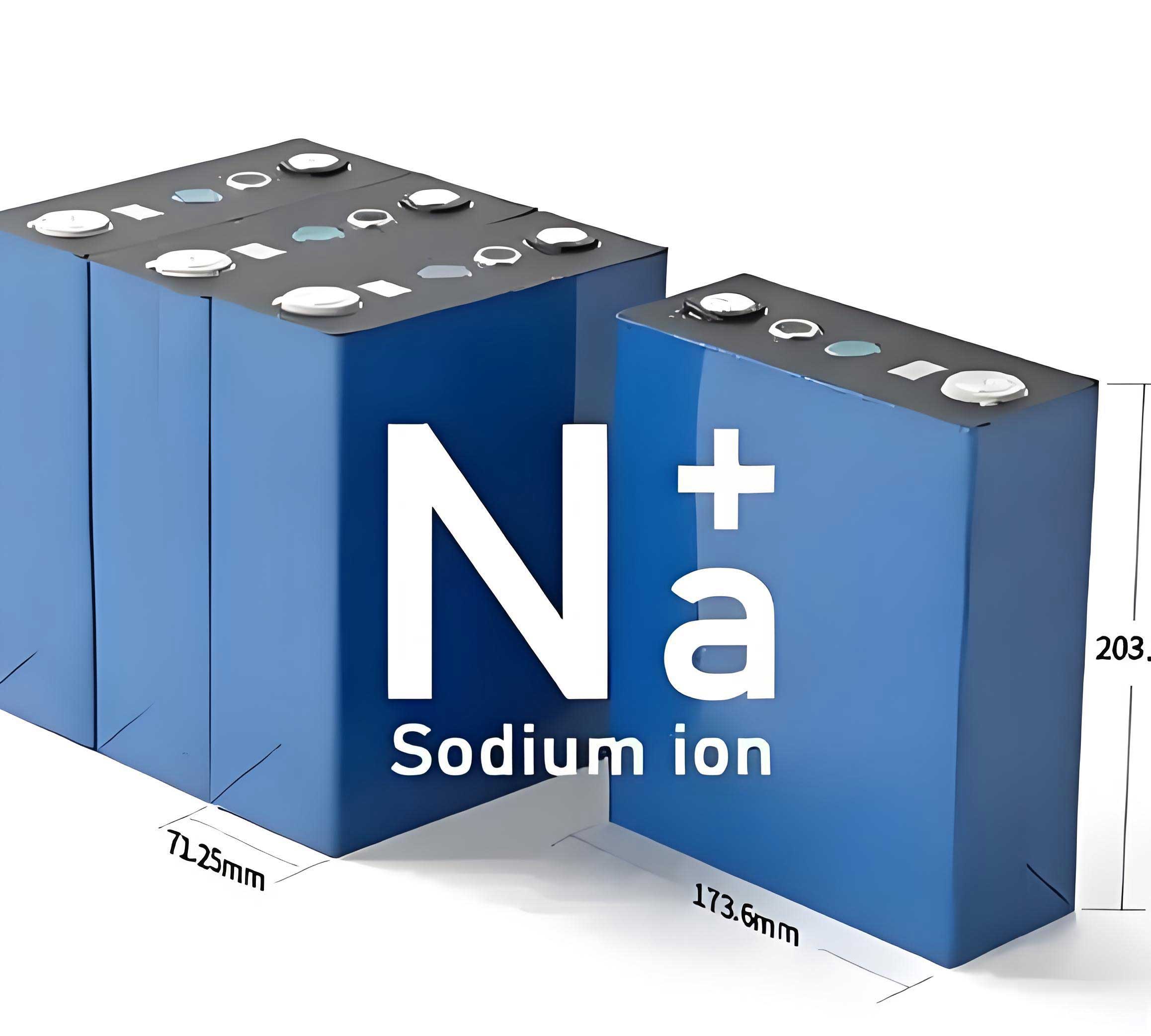
The performance metrics of a sodium-ion battery, including its specific capacity, rate capability, cycle life, operational voltage window, and safety, are profoundly influenced by the properties of the electrolyte. An ideal electrolyte must satisfy a multifaceted set of requirements:
- High Ionic Conductivity: It must allow for rapid diffusion of Na⁺ ions to support high charge/discharge rates. The ionic conductivity ($\sigma$) is governed by the number of charge carriers ($n$), their charge ($q$), and mobility ($\mu$):
$$\sigma = n q \mu$$
Achieving high $\sigma$ typically requires a salt with high dissociation constant in a low-viscosity solvent system. - Wide Electrochemical Stability Window (ESW): The electrolyte must resist reduction at the anode potential and oxidation at the cathode potential. A wider ESW enables the use of high-voltage cathodes, directly boosting the energy density of the sodium-ion battery.
- Chemical and Thermal Stability: It should be inert towards other cell components (electrodes, separator, current collectors) and remain stable across the intended operating temperature range.
- Effective Solid Electrolyte Interphase (SEI) Formation: The electrolyte must decompose in a controlled manner during initial cycles to form a stable, ionically conductive but electronically insulating SEI on the anode surface. This layer is crucial for preventing continuous electrolyte decomposition and ensuring long-term cyclability.
- Safety and Low Cost: Non-flammability, low toxicity, and the use of earth-abundant materials are essential for large-scale deployment, particularly in grid storage applications.
Composition and Formulation of Sodium-Ion Battery Electrolytes
The standard non-aqueous liquid electrolyte for a sodium-ion battery is a complex formulation consisting of a sodium salt dissolved in one or more organic solvents, often supplemented with functional additives. Each component plays a distinct and critical role.
1. Sodium Salts: The Source of Charge Carriers
The choice of sodium salt is fundamental. An optimal salt should exhibit high solubility, complete dissociation to maximize Na⁺ availability, and high oxidative/reductive stability. The anion’s size, shape, and chemical nature significantly influence these properties. A large, weakly coordinating anion promotes higher ionic conductivity due to reduced ion-pair formation. The table below summarizes key properties of commonly investigated sodium salts.
| Sodium Salt | Chemical Formula | Anion Type | Key Advantages | Key Disadvantages |
|---|---|---|---|---|
| Sodium Hexafluorophosphate | NaPF₆ | Inorganic | High ionic conductivity, good stability in carbonate solvents, relatively low cost. | Moisture sensitive, hydrolyzes to produce HF. |
| Sodium Perchlorate | NaClO₄ | Inorganic | High anodic stability, good solubility. | Strong oxidizer, significant safety hazard (explosive risk). |
| Sodium Bis(trifluoromethanesulfonyl)imide | NaTFSI | Organic | Excellent thermal stability, hydrophobic. | Corrodes aluminum current collectors, higher viscosity. |
| Sodium Bis(fluorosulfonyl)imide | NaFSI | Organic | Promotes stable SEI, good ionic conductivity. | Corrodes Al, hygroscopic, lower thermal stability than NaTFSI. |
| Sodium Difluoro(oxalato)borate | NaDFOB | Organic | Acts as a multifunctional additive/salt, promotes excellent SEI. | Often used as additive rather than primary salt due to cost. |
Among these, NaPF₆ has established itself as the benchmark primary salt for commercial and research-oriented sodium-ion battery electrolytes. Its dominance is attributed to a favorable balance of properties: the PF₆⁻ anion is sufficiently large to enable high ionic conductivity ($\sigma$ often exceeds 8 mS cm⁻¹ in standard carbonate mixtures), and it offers a good compromise between electrochemical stability and cost. Its main drawback is sensitivity to trace moisture, leading to hydrolysis:
$$\text{NaPF}_6 + \text{H}_2\text{O} \rightarrow \text{NaF} + \text{POF}_3 + 2\text{HF}$$
The generated hydrogen fluoride (HF) is corrosive and detrimental to cell components, mandating stringent moisture control during electrolyte preparation and cell assembly.
2. Solvent Systems: The Transport Medium
Solvents dissolve the sodium salt and dictate the liquid range, viscosity, and dielectric constant of the electrolyte. The dielectric constant ($\epsilon$) affects salt dissociation, while viscosity ($\eta$) impacts ion mobility. A simplified view of their interplay on conductivity is given by the Walden rule: $\Lambda \eta \approx \text{constant}$, where $\Lambda$ is the molar conductivity. Common solvent categories include:
- Carbonate Solvents: These are the most prevalent, inherited from lithium-ion technology.
- Cyclic Carbonates: Ethylene carbonate (EC) and propylene carbonate (PC). They have high dielectric constants ($\epsilon_{EC} \approx 90$), enabling good salt dissociation, but also high viscosity. EC is essential for forming effective SEI on many anode materials but has a high melting point (~36°C).
- Linear Carbonates: Dimethyl carbonate (DMC), diethyl carbonate (DEC), ethyl methyl carbonate (EMC). They have lower viscosity and melting points but lower dielectric constants. They are typically mixed with cyclic carbonates to optimize overall properties.
- Ether Solvents: e.g., 1,2-Dimethoxyethane (DME), diglyme. They generally have lower viscosity and excellent reduction stability, enabling highly reversible sodium plating/stripping and co-intercalation into graphite anodes. However, their anodic stability is poorer (~4V vs. Na⁺/Na), limiting use with high-voltage cathodes.
The conductivity of a typical electrolyte as a function of salt concentration often follows a non-monotonic trend, expressed approximately as:
$$\sigma(c) \propto c \cdot \alpha(c) \cdot \mu(c)$$
where $c$ is concentration, $\alpha$ is the degree of dissociation, and $\mu$ is mobility. Initially, $\sigma$ increases with $c$ due to more charge carriers, peaks, and then decreases due to increased viscosity and ion-pairing.
3. Electrolyte Additives: The Performance Modulators
Additives, used in small quantities (typically < 5 wt%), are indispensable for tailoring interfacial chemistry and enhancing safety. Their functions are highly specific:
| Additive | Primary Function | Proposed Mechanism in Na-ion Systems |
|---|---|---|
| Fluoroethylene Carbonate (FEC) | SEI formation agent (Anode) | Preferentially reduces to form a robust, NaF-rich SEI layer on hard carbon or alloy anodes, improving cycle life. |
| Vinylene Carbonate (VC) | SEI/CEI formation agent | Polymerizes to form a polymeric interface layer on both anode and cathode surfaces. |
| Tris(trimethylsilyl) Phosphite (TMSP) | HF Scavenger / Cathode protector | Reacts with trace HF and H₂O, and decomposes to form a protective phosphate-based coating on cathode surfaces. |
| 1,3-Propane Sultone (PS) | SEI Improver | Forms sulfonate-rich components in the SEI, enhancing its stability and ionic conductivity. |
| Sodium Difluorophosphate (NaDFP) | Multifunctional Additive | Contributes to inorganic (NaF, NaₓPOyF₂) components in the SEI, improving its mechanical stability and Na⁺ transport. |
In-Depth Focus: Sodium Hexafluorophosphate (NaPF₆)
Given its pivotal role, a deeper understanding of NaPF₆ is warranted for advancing sodium-ion battery technology.
Physicochemical and Functional Properties
NaPF₆ is a white, crystalline, and highly hygroscopic solid. Its functional efficacy in a sodium-ion battery stems from several key attributes:
- Ionic Conductivity: The quasi-spherical PF₆⁻ anion (ionic radius ~2.54 Å) exhibits weak coordination with Na⁺ ions. This promotes a high dissociation constant ($K_d$) in aprotic solvents, leading to a high concentration of free charge carriers. The resulting ionic conductivity is among the highest of the common sodium salts, a critical factor for achieving good rate performance in a sodium-ion battery.
- Electrochemical Stability: The PF₆⁻ anion is relatively stable against oxidation up to ~5V vs. Na⁺/Na in many carbonate solvents, accommodating most cathode materials under development. Its reduction stability is sufficient to allow for controlled SEI formation before massive decomposition occurs.
- Solvation Structure: The nature of the anion influences the Na⁺ solvation sheath. With PF₆⁻, the solvation structure tends to be weaker compared to more coordinating anions like TFSI⁻, potentially leading to a smaller effective Stokes radius and faster desolvation kinetics at the electrode interface, which is crucial for high-rate charging and discharging of the sodium-ion battery.
The ion transport can be related to the Nernst-Einstein equation for dilute solutions:
$$D_i = \frac{k_B T \mu_i}{q} = \frac{k_B T \sigma}{n q^2}$$
where $D_i$ is the diffusion coefficient of species $i$, $k_B$ is Boltzmann’s constant, and $T$ is temperature. The high $\sigma$ of NaPF₆-based electrolytes translates to favorable $D_{Na⁺}$ values.
Synthesis Methods for NaPF₆
The manufacturing of high-purity, battery-grade NaPF₆ is a critical step in the supply chain for sodium-ion battery electrolytes. Methods can be broadly classified as follows:
| Method | General Principle | Key Reactions / Steps | Advantages/Challenges |
|---|---|---|---|
| Direct Synthesis from PF₅ | Reaction of phosphorus pentafluoride gas with a sodium source. | PF₅ (g) + NaF (s) → NaPF₆ (s) in anhydrous HF or organic solvent. PF₅ is often generated from PCl₅ + HF or thermal decomposition of hexafluorophosphate salts. | Adv: Direct, scalable. Chal: Handling of corrosive PF₅ and HF, requires stringent anhydrous conditions. |
| Metathesis (Ion Exchange) | Exchange of cation between Na⁺ and another hexafluorophosphate salt. | e.g., NH₄PF₆ + Na → NaPF₆ + NH₃ + ½H₂ (in THF). Or, LiPF₆ + NaF → NaPF₆ + LiF. | Adv: Avoids direct use of PF₅/HF. Chal: Purity of product depends on precursor purity; may involve costly separation steps. |
| Acid-Base Reaction | Neutralization of hexafluorophosphoric acid with a sodium base. | HPF₆ (in HF) + NaOH/Na₂CO₃ → NaPF₆ + H₂O. Water and excess HF must be removed. | Adv: Conceptually simple. Chal: Handling of concentrated HPF₆ and HF, critical drying required to prevent hydrolysis. |
The direct reaction in anhydrous hydrogen fluoride (aHF) is a common industrial approach:
$$\text{PCl}_5 + 5\text{HF} \rightarrow \text{PF}_5 + 5\text{HCl}$$
$$\text{PF}_5 + \text{NaF} \xrightarrow{\text{HF}} \text{NaPF}_6$$
The product is then crystallized from the HF solution. The process demands specialized corrosion-resistant equipment and extreme control over moisture. Research into safer, more sustainable synthesis routes, such as solvent-based metathesis or mechanochemical methods, continues to be active to support the burgeoning sodium-ion battery market.
Electrolyte Formulations Based on NaPF₆
The standard baseline electrolyte for a laboratory-scale sodium-ion battery often consists of 1.0 M NaPF₆ in a mixture of EC:PC or EC:DEC (1:1 by volume). However, “standard” formulations are constantly being optimized. Key advanced concepts include:
- High-Concentration Electrolytes (HCEs) & Localized HCEs: Using NaPF₆ at very high concentrations (> 3 M) fundamentally changes the solvation structure. The solvent molecules are fully coordinated, leading to an anion-derived, inorganic-rich SEI and significantly enhanced anodic stability. The viscosity increase is a trade-off. Localized HCEs dilute the HCE with a non-coordinating diluent to recover fluidity while maintaining the unique solvation structure.
- Low-Temperature Electrolytes: Formulations for a sodium-ion battery operating at sub-zero temperatures require low-melting-point solvent blends (e.g., increasing the proportion of linear carbonates or adding esters like methyl acetate) and often optimized salt concentrations to prevent precipitation and maintain acceptable conductivity, governed by the Arrhenius relation:
$$\sigma = A \exp\left(-\frac{E_a}{k_B T}\right)$$
where $E_a$ is the activation energy for ion conduction. - Additive-Engineered Electrolytes: As shown in Table 2, combining NaPF₆ with small amounts of FEC, NaDFP, or TMSP is now standard practice to target specific interface challenges on next-generation anodes (hard carbon, alloys) and high-voltage cathodes (layered oxides, polyanionics).
Emerging Trends and Future Perspectives
The development of electrolytes for the sodium-ion battery is not limited to liquid systems. Solid-state electrolytes (SSEs)—including polymers, inorganic ceramics, and composites—are under intense investigation to address safety concerns (leakage, flammability) and potentially enable higher energy densities. The ionic conductivity of many inorganic SSEs, such as Na₃Zr₂Si₂PO₁₂ (NASICON), follows a hopping mechanism:
$$\sigma T = A \exp\left(-\frac{E_a}{k_B T}\right)$$
where the pre-exponential factor $A$ and activation energy $E_a$ depend on the crystal structure and defect chemistry.
From a market perspective, the infrastructure for producing NaPF₆-based liquid electrolytes is highly compatible with the existing lithium-ion battery electrolyte industry. The synthesis equipment and purification processes are analogous, with the primary shift being the sodium precursor instead of a lithium one. This compatibility allows for rapid scaling and cost reduction, providing a significant advantage for the commercial rollout of the sodium-ion battery. Current industry efforts focus on perfecting the large-scale synthesis of ultra-dry, high-purity NaPF₆ and formulating application-specific electrolyte blends for emerging markets like two-wheelers, low-speed electric vehicles, and stationary storage.
Conclusion
The electrolyte is a cornerstone of sodium-ion battery performance and commercialization. While challenges remain—such as enhancing high-voltage stability, improving low-temperature performance, and ensuring absolute safety—the progress has been substantial. Sodium hexafluorophosphate (NaPF₆) currently stands as the electrolyte salt of choice, offering an effective balance of conductivity, stability, and manufacturability. Its role is further enhanced through sophisticated solvent engineering and the strategic use of functional additives. Ongoing research into novel salts, solvents, and solid-state alternatives promises to unlock even greater capabilities. As the sodium-ion battery transitions from research labs to global markets, the continuous innovation in electrolyte technology will be paramount in defining its competitiveness, reliability, and ultimate success as a key pillar of the future sustainable energy ecosystem.