
In the pursuit of sustainable energy solutions, the global shift towards renewable sources has intensified the demand for efficient and safe energy storage systems. Among various technologies, lithium-ion batteries have dominated due to their high energy density and long cycle life. However, concerns over lithium resource scarcity, geographical concentration, and recurrent thermal runaway incidents have prompted the exploration of alternatives. The sodium-ion battery emerges as a pivotal candidate, leveraging the abundance of sodium and promising electrochemical performance. This study delves into the thermal runaway behavior and combustion characteristics of sodium-ion batteries, employing experimental analyses under different abuse conditions. We aim to elucidate the fire risks associated with sodium-ion batteries and compare them with established lithium-ion counterparts, providing insights for safety design and fire mitigation strategies.
The fundamental chemistry of sodium-ion batteries mirrors that of lithium-ion systems, comprising cathodes, anodes, separators, and electrolytes. Despite similarities, sodium-ion batteries exhibit distinct thermal and electrochemical properties that influence their safety profile. Thermal runaway, a self-sustaining exothermic reaction, can be triggered by mechanical, electrical, or thermal abuse, leading to catastrophic failures such as fires or explosions. Understanding these phenomena is crucial for advancing sodium-ion battery technology, particularly for large-scale applications like grid storage and electric vehicles. Our research focuses on quantifying key combustion parameters—heat release rate (HRR), total heat release (THR), smoke production rate (SPR), and total smoke production (TSP)—to assess the inherent hazards. Through rigorous testing, we evaluate sodium-ion battery responses to overcharge and external heating, benchmarking against lithium iron phosphate (LFP) and lithium nickel manganese cobalt oxide (NMC) batteries.
The thermal stability of sodium-ion batteries is influenced by multiple factors, including electrode materials, electrolyte composition, and cell design. For instance, sodium salts like NaPF6 in electrolytes may decompose at lower temperatures than lithium analogs, potentially altering gas evolution and heat generation. The combustion process involves complex interactions between released gases, volatile compounds, and flame propagation. To model these dynamics, we consider fundamental equations. The heat release rate is derived from oxygen consumption calorimetry, expressed as:
$$ \text{HRR} = \Delta H_c \cdot \dot{m}_f \cdot \phi $$
where $\Delta H_c$ is the heat of combustion, $\dot{m}_f$ is the mass loss rate of fuel, and $\phi$ is the combustion efficiency. For smoke production, the specific extinction area (SEA) relates to light attenuation:
$$ \text{SPR} = \frac{V}{L} \cdot \ln\left(\frac{I_0}{I}\right) $$
with $V$ as volume flow rate, $L$ as path length, $I_0$ as incident light intensity, and $I$ as transmitted intensity. These formulas underpin our experimental measurements, enabling quantitative hazard assessment.
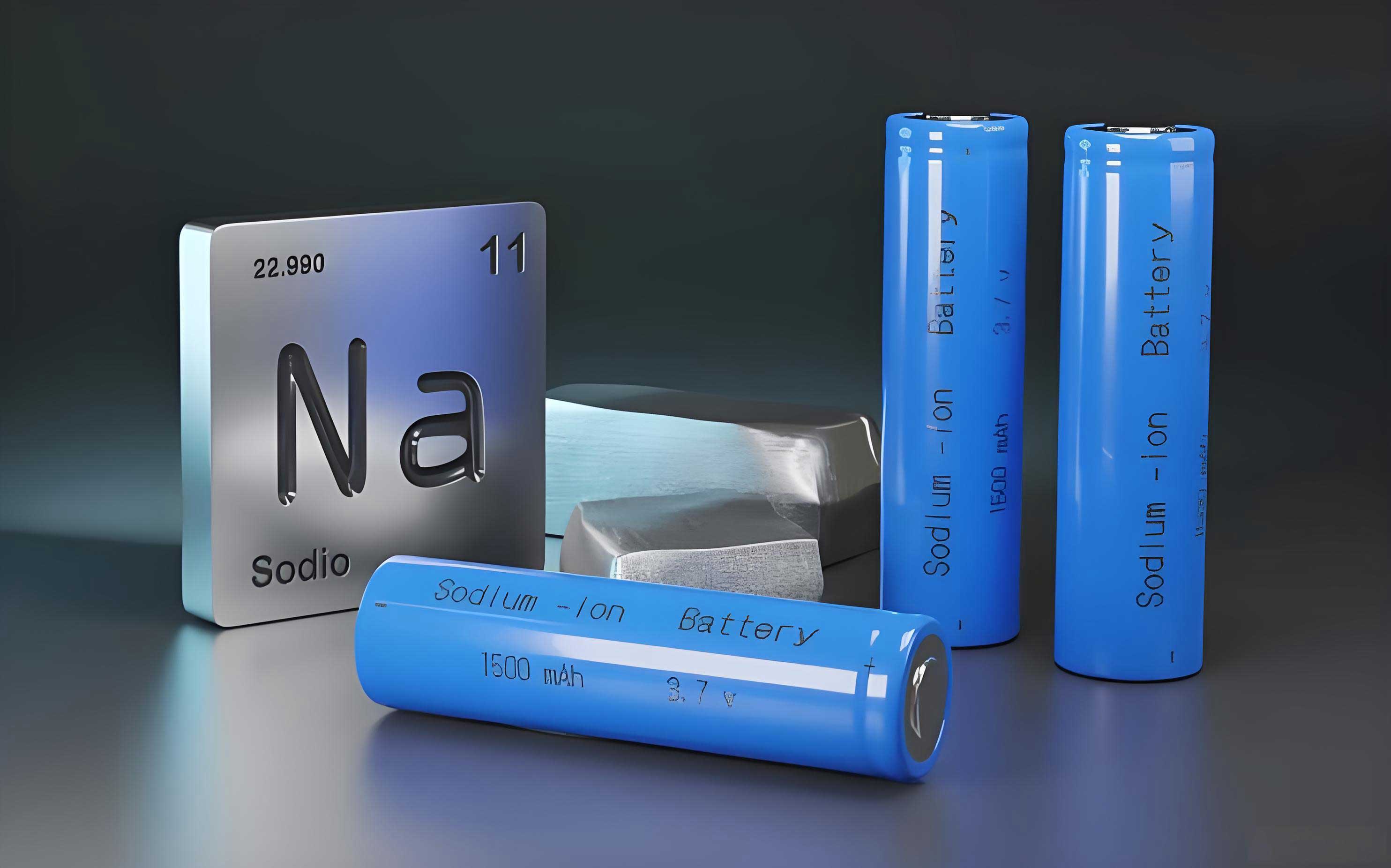
Our experimental setup involves a controlled environment with a heat release rate test system. We utilize a 180 Ah prismatic sodium-ion battery with layered oxide cathode and soft carbon anode, as detailed in Table 1. Comparative tests include 280 Ah LFP and 163 Ah NMC batteries. All cells are preconditioned to 100% state-of-charge (SOC) to ensure consistency. Two trigger methods are employed: overcharge at 0.5C rate (90 A for the sodium-ion battery) until thermal runaway, and external heating via dual-sided plates at a ramp rate of 7 °C/min. Thermocouples monitor surface temperatures at multiple points, while calorimetric equipment captures HRR, THR, SPR, and TSP. The arrangement minimizes external influences, with sensors positioned at strategic heights and distances to map thermal profiles.
| Parameter | Sodium-Ion Battery | LFP Battery | NMC Battery |
|---|---|---|---|
| Cathode Material | Layered Oxide | Lithium Iron Phosphate | Lithium Nickel Manganese Cobalt Oxide |
| Anode Material | Soft Carbon | Graphite | Graphite |
| Dimensions (mm) | 174 × 207 × 72 | 174 × 207 × 72 | 194 × 110 × 51 |
| Nominal Capacity (Ah) | 180 | 280 | 163 |
| Nominal Energy (Wh) | 540 | 896 | 611 |
| Mass (g) | 4900 ± 100 | 5387 ± 100 | 2500 ± 100 |
Under overcharge conditions, the sodium-ion battery undergoes distinct thermal runaway phases. Initially, voltage and temperature remain stable until approximately 3000 seconds, followed by a rapid escalation. Venting occurs at 4508 seconds, accompanied by jet flames and spark ejection. Peak surface temperatures reach 834.9 °C at the negative terminal side, with other points recording values between 470.7 °C and 735.2 °C. The HRR curve shows a sharp rise, culminating at 156.99 kW within 18 seconds post-venting. This aligns with a fire growth coefficient α derived from fitting:
$$ \alpha = \frac{\text{HRR}_{\text{peak}}}{t^2} $$
For the overcharge case, α computes to 0.85 kW/s², exceeding the threshold for ultra-fast fires (0.178 kW/s²). THR integrates to 3.27 MJ, while SPR peaks at 1.65 m²/s, yielding a TSP of 60.50 m². Ambient temperature measurements reveal concentrated upward flame propagation, with maxima of 619.2 °C at 0.5 m above the vent, diminishing with distance. This behavior underscores the intense, localized hazard of sodium-ion battery thermal runaway.
External heating elicits different responses. With a 7 °C/min ramp, voltage fluctuations begin around 2125 seconds, indicating micro-shorts. Full internal short-circuit and venting happen at 2481 seconds, but combustion requires external ignition. Upon ignition, HRR surges to 227.41 kW, higher than the overcharge scenario, possibly due to uniform heat accumulation. THR reaches 7.50 MJ, and SPR attains 1.54 m²/s, with TSP accumulating to 77.39 m². Surface temperatures peak at 594.7 °C near the positive terminal. The fire growth coefficient here is 1.57 kW/s², highlighting even faster escalation. Flame morphology shows multi-directional spread, contributing to rapid smoke release. These findings emphasize the sensitivity of sodium-ion batteries to thermal abuse, with heating potentially inducing more severe combustion than electrical overstress.
To contextualize the sodium-ion battery performance, we compare it with LFP and NMC batteries under identical conditions. Tables 2 and 3 summarize combustion characteristics for overcharge and heating, respectively. Normalized HRR values, calculated per unit surface area, offer a standardized metric:
$$ \text{Normalized HRR} = \frac{\text{HRR}_{\text{peak}}}{A_{\text{surface}}} $$
where $A_{\text{surface}}$ is the total exterior area of the battery. For the sodium-ion battery, this yields 1237.12 kW/m² in overcharge and 1792.04 kW/m² in heating, situating it between LFP and NMC batteries. Notably, NMC batteries exhibit the highest HRR and SPR, attributed to their reactive chemistry, while LFP batteries show prolonged combustion with maximal THR. Sodium-ion batteries demonstrate intermediate behavior but with substantial smoke production, likely due to electrolyte decomposition pathways unique to sodium salts.
| Battery Type | Peak HRR (kW) | THR (MJ) | Peak SPR (m²/s) | TSP (m²) | Normalized HRR (kW/m²) |
|---|---|---|---|---|---|
| Sodium-Ion Battery | 156.99 | 3.27 | 1.65 | 60.50 | 1237.12 |
| LFP Battery | 85.87 | 7.43 | 0.32 | 19.49 | 676.67 |
| NMC Battery | 197.40 | 4.32 | 1.66 | 35.91 | 3633.79 |
| Battery Type | Peak HRR (kW) | THR (MJ) | Peak SPR (m²/s) | TSP (m²) | Normalized HRR (kW/m²) |
|---|---|---|---|---|---|
| Sodium-Ion Battery | 227.41 | 7.50 | 1.54 | 77.39 | 1792.04 |
| LFP Battery | 139.26 | 8.12 | 0.31 | 27.88 | 1097.40 |
| NMC Battery | 237.28 | 7.56 | 2.40 | 50.30 | 4367.84 |
The combustion dynamics of sodium-ion batteries can be further analyzed through kinetic models. The rate of heat generation during thermal runaway follows an Arrhenius relationship:
$$ \frac{dQ}{dt} = A \exp\left(-\frac{E_a}{RT}\right) \cdot f(\text{SOC}, \text{material}) $$
where $A$ is the pre-exponential factor, $E_a$ is activation energy, $R$ is the gas constant, $T$ is temperature, and $f$ represents state-dependent factors. For sodium-ion batteries, the lower thermal stability of NaPF6 compared to LiPF6 may reduce $E_a$, accelerating exothermic reactions. Additionally, gas generation during decomposition contributes to smoke formation. The yield of particulate matter can be estimated as:
$$ Y_{\text{smoke}} = \int_0^t \kappa \cdot \dot{m}_{\text{electrolyte}} \, dt $$
with $\kappa$ as a yield coefficient specific to sodium-based electrolytes. Our data suggests higher TSP for sodium-ion batteries versus NMC in heating scenarios, aligning with such mechanisms.
In discussing fire safety implications, the sodium-ion battery’s intermediate hazard profile necessitates tailored approaches. For instance, high HRR peaks demand rapid fire suppression and thermal barriers, while significant smoke output requires enhanced ventilation and visibility management. Compared to LFP batteries, sodium-ion batteries pose a greater short-term threat due to intense burning, akin to NMC systems. However, their lower THR than LFP indicates reduced long-term energy release. These nuances inform protection strategies: for sodium-ion battery installations, we recommend combining fast-acting extinguishers (e.g., aerosol or water mist) with smoke extraction systems. Moreover, battery management systems should incorporate stringent monitoring for overcharge and overtemperature, leveraging early warning signs like voltage noise.
Expanding on material science aspects, the choice of cathode and anode materials profoundly affects sodium-ion battery safety. Layered oxides, as used in our test sample, may offer better thermal stability than some alternatives, but they still risk oxygen release at high temperatures. Doping strategies or surface coatings could mitigate this. Electrolyte additives that form stable solid-electrolyte interphases (SEI) might also delay thermal runaway onset. Future research could explore these avenues, quantifying their impact on HRR and SPR through similar experimental frameworks.
Our study underscores the importance of standardized testing for emerging battery technologies. While sodium-ion batteries promise resource sustainability, their fire hazards warrant rigorous assessment before widespread deployment. We propose extending this work to larger modules and packs, examining propagation risks and mitigation efficacy. Statistical analyses of multiple trials could yield probabilistic hazard models, enhancing risk prediction.
In conclusion, sodium-ion batteries exhibit substantial thermal runaway and combustion risks under abuse conditions. Overcharge triggers immediate flaming with high peak HRR, while external heating leads to even greater heat release upon ignition. Comparative analysis places sodium-ion batteries between LFP and NMC types in terms of combustion intensity, but with notable smoke production. These insights guide the development of safer sodium-ion battery systems, emphasizing the need for integrated fire protection designs. As the energy landscape evolves, continuous evaluation of sodium-ion battery safety will be pivotal to harnessing their potential reliably.