
In the context of global energy transformation, renewable sources have become pivotal for sustainable development. Among these, solar energy stands out as a clean and green alternative, with photovoltaic power generation playing a crucial role in reducing reliance on fossil fuels and mitigating environmental pollution. However, the efficiency of solar panel systems is often compromised by various factors, with dust accumulation being a significant concern. As a researcher focused on optimizing solar panel performance, I have observed that dust layers on solar panel surfaces can drastically reduce power output by blocking sunlight and increasing operational temperatures. This study aims to comprehensively evaluate two prevalent dust cleaning methods—water jet technology and dry dust removal—through experimental analysis and orthogonal testing, with the goal of identifying optimal parameters for enhancing solar panel efficiency. The findings are intended to provide practical insights for solar energy projects, particularly in regions prone to dust accumulation, thereby promoting economic viability and environmental benefits.
Dust accumulation on solar panel is a well-documented issue that affects photovoltaic systems worldwide. Over time, particles from the environment settle on the solar panel glass, forming a layer that reduces transmittance and, consequently, the amount of sunlight reaching the photovoltaic cells. This not only decreases power generation but can also lead to hotspot formation, potentially damaging the solar panel. Numerous studies have highlighted the impact of dust on solar panel performance. For instance, research indicates that after just eight days of natural dust accumulation, the relative transmittance of solar panel glass can decrease by approximately 20%, leading to a proportional drop in power output. In my review of the literature, I found that both water jet and dry dust removal technologies have been proposed as solutions, but comparative analyses under real-world conditions are scarce. Most experiments are conducted in controlled environments, which may not accurately reflect the variable factors such as temperature, irradiance, and dust composition encountered in field applications. Therefore, this study was designed to bridge this gap by conducting on-site tests to evaluate the effectiveness of these cleaning methods on actual solar panel installations.
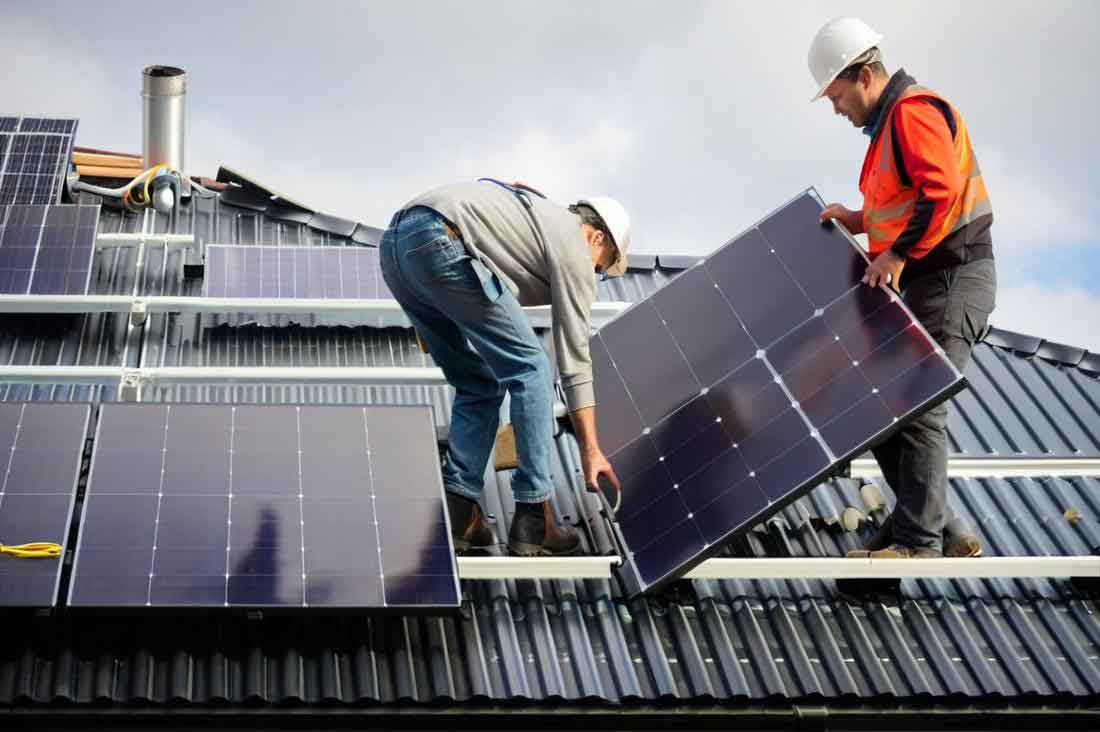
The efficiency of a solar panel is influenced by a multitude of factors, which can be broadly categorized into internal and external elements. Internally, the design and materials of the solar panel play a critical role. For example, the transmittance of the tempered glass, the optical properties of the ethylene-vinyl acetate (EVA) encapsulation, the photovoltaic conversion efficiency of the semiconductor material, and the reflectivity of backsheet materials all contribute to the overall performance. Additionally, the operating temperature of the solar panel affects its efficiency, as higher temperatures can reduce the power output. Externally, environmental conditions such as solar irradiance, atmospheric absorption, installation angle, and dust accumulation are significant. Dust not only blocks light but also insulates the solar panel, leading to elevated temperatures. To quantify these effects, researchers have developed models that relate dust properties to power loss. One such model expresses the power output of a solar panel as follows:
$$P = \eta_{T_{ref}} A G_T \tau_{PV} [1 – 0.0045(T_C – 25)]$$
where \(P\) is the power output, \(\eta_{T_{ref}}\) is the conversion efficiency at standard test conditions, \(A\) is the surface area of the solar panel, \(G_T\) is the solar irradiance, \(\tau_{PV}\) is the transmittance of the solar panel, and \(T_C\) is the cell operating temperature. This equation underscores how dust accumulation reduces \(\tau_{PV}\), thereby decreasing \(P\). Another model focuses specifically on dust characteristics, predicting the power reduction rate based on dust particle size and density:
$$\eta = 1.48 + 1.74 \times 10^{-2} D_x + 1.46 \rho – 4.26 \times 10^{-4} D_x^2 – 4.7 \times 10^{-3} \rho D_x – 5.02 \times 10^{-3} \rho^2$$
Here, \(\eta\) represents the power reduction rate, \(D_x\) is the equivalent dust particle size in micrometers, and \(\rho\) is the dust density in grams per square meter. These models highlight the complex interplay between dust properties and solar panel performance, emphasizing the need for effective cleaning solutions to maintain optimal efficiency.
In this study, I focused on evaluating two primary dust cleaning methods for solar panel: water jet technology and dry dust removal. Water jet cleaning involves using high-pressure water streams to dislodge dust from the solar panel surface, while dry dust removal employs rotating brushes or similar mechanisms to sweep away particles without water. To conduct a comprehensive comparison, I designed an experimental setup that integrated both methods, allowing for simultaneous testing under identical conditions. The equipment consisted of a drive system, water jet nozzles, dry brushing mechanisms, a data acquisition system, and a support frame. Key parameters for each method were adjusted to assess their impact on cleaning efficacy. For water jet cleaning, the variables included traversal speed, water pressure, and nozzle height above the solar panel. For dry dust removal, the variables were brush rotation speed, traversal speed, and brush contact distance from the solar panel surface. The experiments were performed on a set of 20 monocrystalline silicon solar panel, each with a rated power of 150 W, installed at a fixed tilt angle of 18 degrees. These solar panel were divided into groups for controlled testing, with one set serving as a baseline for natural dust accumulation and another as a reference cleaned manually to ensure minimal dust interference.
The experimental design utilized orthogonal analysis to efficiently explore the effects of multiple parameters. For water jet cleaning, a L9(3^4) orthogonal array was employed, with three levels each for traversal speed, water pressure, and nozzle height. Similarly, for dry dust removal, a L9(3^4) array was used with three levels for brush rotation speed, traversal speed, and brush contact distance. Power output measurements were taken before and after cleaning using a solar power meter, and the percentage improvement in power was calculated. The results were analyzed to determine the optimal parameter combinations for each method. Below are tables summarizing the parameter levels and experimental outcomes for both cleaning techniques.
For water jet cleaning, the factors and levels are as follows:
| Factor | Level 1 | Level 2 | Level 3 |
|---|---|---|---|
| A: Traversal Speed (m/s) | 0.010 | 0.015 | 0.020 |
| B: Water Pressure (MPa) | 2.5 | 3.0 | 3.5 |
| C: Nozzle Height (m) | 0.25 | 0.30 | 0.35 |
The orthogonal test results for water jet cleaning are presented in the table below, showing the power improvement percentages for each trial:
| Trial | A | B | C | Power Improvement (%) |
|---|---|---|---|---|
| 1 | 1 | 1 | 1 | 19.30 |
| 2 | 1 | 2 | 2 | 9.89 |
| 3 | 1 | 3 | 3 | 9.17 |
| 4 | 2 | 1 | 2 | 0.70 |
| 5 | 2 | 2 | 3 | 12.34 |
| 6 | 2 | 3 | 1 | 11.02 |
| 7 | 3 | 1 | 3 | 10.92 |
| 8 | 3 | 2 | 1 | 1.64 |
| 9 | 3 | 3 | 2 | 9.53 |
From the data, I calculated the average power improvement for each factor level and the range (R) to assess the influence of each parameter. The results indicated that traversal speed had the greatest impact on cleaning efficacy, with a range of 5.43%, followed by nozzle height (4.07%) and water pressure (2.32%). The optimal combination for water jet cleaning was identified as a traversal speed of 0.015 m/s, water pressure of 3.5 MPa, and nozzle height of 0.30 m, which yielded an average power improvement of 10.39% across the trials. This demonstrates that water jet technology can significantly enhance the performance of solar panel by effectively removing dust, though it may leave water spots on the solar panel surface due to rapid evaporation, which could require additional measures to mitigate.
For dry dust removal, the factors and levels are summarized below:
| Factor | Level 1 | Level 2 | Level 3 |
|---|---|---|---|
| A: Traversal Speed (m/s) | 0.010 | 0.015 | 0.020 |
| B: Brush Contact Distance (mm) | 0.3 | 0.5 | 1.0 |
| C: Brush Rotation Speed (rad/min) | 60 | 80 | 100 |
The orthogonal test results for dry dust removal are shown in the following table:
| Trial | A | B | C | Power Improvement (%) |
|---|---|---|---|---|
| 1 | 1 | 1 | 1 | 14.73 |
| 2 | 1 | 2 | 2 | 1.87 |
| 3 | 1 | 3 | 3 | 7.91 |
| 4 | 2 | 1 | 2 | 9.09 |
| 5 | 2 | 2 | 3 | 8.25 |
| 6 | 2 | 3 | 1 | 9.24 |
| 7 | 3 | 1 | 3 | 8.95 |
| 8 | 3 | 2 | 1 | 8.06 |
| 9 | 3 | 3 | 2 | 6.85 |
Analysis of the dry dust removal data revealed that brush contact distance had the most substantial effect, with a range of 4.86%, followed by brush rotation speed (4.74%) and traversal speed (0.91%). The optimal parameters for dry dust removal were a traversal speed of 0.015 m/s, brush contact distance of 1.0 mm, and brush rotation speed of 80 rad/min, resulting in an average power improvement of 8.33%. While this method effectively removed bulk dust from the solar panel, it tended to leave fine particles behind, possibly due to re-deposition or insufficient dust capture. To improve dry cleaning for solar panel, incorporating a dust suction mechanism could be beneficial. Overall, the comparison showed that water jet cleaning outperformed dry dust removal in terms of power enhancement for solar panel, with average improvements of 10.39% versus 8.33%, respectively.
Beyond technical efficacy, economic and environmental considerations are vital for adopting dust cleaning solutions in solar panel systems. To evaluate this, I conducted an economic analysis based on a hypothetical solar panel project similar to the test site. Assuming an installation of 3,722 solar panel, each with a capacity of 150 W, and an annual effective sunshine duration of 1,600.3 hours, the total annual power generation without cleaning can be estimated using the formula:
$$E_p = H \times P \times K$$
where \(E_p\) is the annual power generation in kWh, \(H\) is the annual sunshine hours, \(P\) is the total installed capacity in kW, and \(K\) is the system efficiency factor, taken as 0.75 to account for losses. Thus:
$$E_p = 1600.3 \times (3722 \times 150 / 1000) \times 0.75 = 670,085.61 \text{ kWh}$$
Applying the average power improvements from the cleaning methods, the additional annual power generation from water jet cleaning would be:
$$670,085.61 \times 10.39\% = 69,621.90 \text{ kWh}$$
For dry dust removal, the additional generation would be:
$$670,085.61 \times 8.33\% = 55,818.13 \text{ kWh}$$
These increments translate into significant economic returns, especially in large-scale solar panel farms. Moreover, from an environmental perspective, increased power generation from solar panel reduces the reliance on fossil fuels, leading to lower emissions. Based on standard emission factors for coal-fired power plants, I calculated the节能减排 effects. The emission factors per kWh of coal-based electricity are: coal consumption of 321 g, CO₂ emissions of 822 g, SO₂ emissions of 0.39 g, NOx emissions of 0.36 g, and dust emissions of 0.08 g. Using these, the environmental benefits from water jet cleaning are summarized in the table below:
| Pollutant | Reduction from Water Jet Cleaning |
|---|---|
| Coal (tons) | 21.72 |
| CO₂ (kg) | 57,229.20 |
| SO₂ (kg) | 27.15 |
| NOx (kg) | 25.06 |
| Dust (kg) | 5.60 |
For dry dust removal, the reductions are:
| Pollutant | Reduction from Dry Dust Removal |
|---|---|
| Coal (tons) | 17.42 |
| CO₂ (kg) | 45,882.50 |
| SO₂ (kg) | 21.77 |
| NOx (kg) | 20.10 |
| Dust (kg) | 4.47 |
These figures underscore the dual advantage of dust cleaning for solar panel: boosting economic output through higher efficiency and contributing to environmental sustainability by cutting emissions. In regions with high dust levels, regular cleaning of solar panel can thus be a cost-effective strategy for maximizing the benefits of photovoltaic systems.
In conclusion, this study provides a comprehensive evaluation of dust cleaning methods for solar panel, emphasizing the importance of maintaining clean surfaces for optimal performance. Through orthogonal testing and comparative analysis, I found that water jet technology offers superior dust removal efficacy compared to dry dust removal, with an average power improvement of 10.39% versus 8.33% for solar panel. The optimal parameters for water jet cleaning include a traversal speed of 0.015 m/s, water pressure of 3.5 MPa, and nozzle height of 0.30 m, while for dry dust removal, a traversal speed of 0.015 m/s, brush contact distance of 1.0 mm, and brush rotation speed of 80 rad/min are recommended. However, both methods have limitations: water jet cleaning may leave water spots on solar panel, and dry dust removal might not capture fine particles effectively. Future research should focus on optimizing these techniques, perhaps by integrating water recycling systems for water jet methods or adding vacuum components to dry systems, to enhance their practicality and efficiency. Economically, implementing dust cleaning for solar panel can yield substantial increases in power generation, as demonstrated by the annual gains of over 69,000 kWh from water jet cleaning in a mid-sized installation. Environmentally, this translates into significant reductions in coal consumption and pollutant emissions, aligning with global goals for clean energy transition. Therefore, I advocate for the adoption of regular dust cleaning protocols in solar panel projects, tailored to local conditions and dust characteristics, to ensure long-term sustainability and profitability. As solar energy continues to expand, addressing issues like dust accumulation will be crucial for unlocking the full potential of solar panel technology in the global energy landscape.