
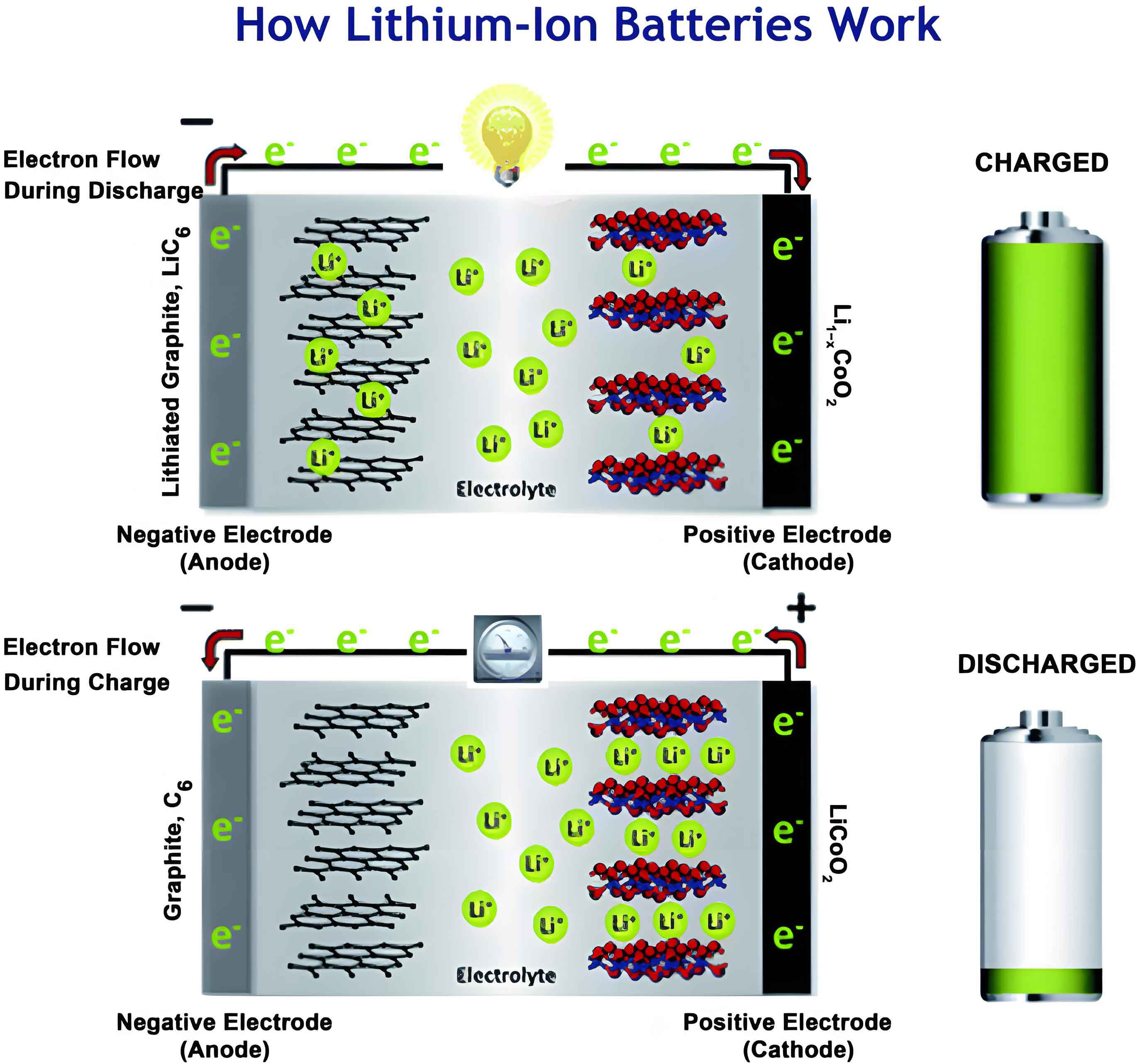
The relentless global push towards electrification of transportation and the integration of intermittent renewable energy sources have placed unprecedented demands on energy storage technologies. At the heart of this revolution lies the li ion battery, the dominant chemistry powering everything from portable electronics to electric vehicles (EVs). However, the incumbent technology, based on flammable organic liquid electrolytes, faces intrinsic safety ceilings related to leakage, thermal runaway, and dendritic lithium growth. These limitations directly constrain energy density and pose significant safety hazards, compelling the search for more robust alternatives. The development of all-solid-state batteries (ASSBs), which replace the liquid electrolyte with a solid ion conductor, is widely regarded as the most promising path forward. Within this domain, composite solid electrolytes (CSEs), particularly those formed by integrating metal oxide fillers into polymer matrices, have emerged as a critically important material class, offering a compelling balance between ionic performance, mechanical integrity, and processability for the next-generation li ion battery.
The allure of solid-state electrolytes for the li ion battery is multifold. They inherently eliminate the risks of leakage and combustion associated with organic solvents. They typically exhibit wider electrochemical stability windows, potentially enabling the use of high-voltage cathodes and lithium metal anodes, the latter being the “holy grail” for ultra-high energy density. Furthermore, their solid nature can physically suppress the growth of lithium dendrites. Despite these advantages, pure forms of solid electrolytes present their own set of challenges. Inorganic ceramic electrolytes (oxides, sulfides) often possess high bulk ionic conductivity but suffer from poor interfacial contact with electrodes, brittleness, and high grain boundary resistance. Polymer electrolytes, such as poly(ethylene oxide) (PEO), offer excellent flexibility and good electrode wettability but are plagued by low ionic conductivity at room temperature due to high crystallinity and low Li+ transference numbers.
This is where the concept of the organic-inorganic composite solid electrolyte becomes pivotal. By strategically combining a polymer host (the organic, flexible phase) with a metal oxide filler (the inorganic, rigid phase), one can architect a material that synergizes the best properties of both components. The polymer ensures intimate interfacial contact and manufacturability, while the inorganic filler can serve multiple functions: (i) as an active filler contributing to ion conduction, (ii) as a passive filler disrupting polymer crystallinity to enhance segmental motion and Li+ mobility, and (iii) as a mechanical reinforcer to hinder dendrite penetration. This review delves into the research progress of polymer-based composite metal oxide solid electrolytes, systematically analyzing the roles of different filler types, their morphological impacts, the underlying ion transport mechanisms, and the resultant electrochemical performance in the context of advancing the li ion battery. The discussion is structured around the major classes of metal oxide fillers, their interplay with polymer hosts, and the critical interface engineering required for practical application.
I. Fundamentals and Ion Transport Mechanisms in Composite Electrolytes
Understanding the ion conduction mechanisms in CSEs is essential for their rational design. In a pure polymer electrolyte like PEO complexed with a lithium salt (e.g., LiTFSI), conduction occurs primarily via the segmental motion of the polymer chains above the glass transition temperature (Tg). Li+ ions coordinate with ether oxygen atoms and hop between coordination sites as the polymer chains wiggle. The ionic conductivity (σ) follows a Vogel-Tammann-Fulcher (VTF) type relationship, strongly dependent on temperature and polymer amorphousness:
$$
\sigma = \frac{A}{\sqrt{T}} \exp\left(-\frac{B}{T – T_0}\right)
$$
where A is a pre-exponential factor, B is related to the activation energy, and T0 is the ideal glass transition temperature (typically T0 ≈ Tg – 50 K). The primary goal of adding fillers is to lower the effective Tg and increase the amorphous fraction of the polymer.
The introduction of a metal oxide filler creates a complex, multi-phase system where ion transport can occur through three primary pathways: (1) through the polymer matrix itself, (2) through the inorganic filler if it is ionically conductive (active filler), and (3) along the polymer-filler interfaces. Often, the interface becomes the most critical pathway. The Lewis acid-base interactions between surface groups on the filler (e.g., -OH on Al2O3 or SiO2) and the polymer/Li-salt can lead to the dissociation of ion pairs and the creation of a space-charge layer at the interface. This layer can have a much higher local Li+ concentration and mobility than the bulk polymer, forming percolating “highways” for ion transport if the filler particles are well-dispersed and sufficiently concentrated. This effect can be conceptually described by effective medium theories (EMT). For a composite with a low volume fraction (φ) of spherical filler particles, the effective conductivity (σeff) can be modeled as:
$$
\sigma_{\text{eff}} = \sigma_p \left[ 1 + \frac{3\phi(\sigma_i – \sigma_p)}{\sigma_i + 2\sigma_p – \phi(\sigma_i – \sigma_p)} \right]
$$
where σp is the polymer matrix conductivity and σi is the interfacial layer conductivity. This equation highlights that even if the filler itself is insulating (σfiller ≈ 0, but σi >> σp), the composite conductivity can be significantly enhanced.
| Filler Type | Example Compounds | Primary Role | Key Impact on Polymer Host |
|---|---|---|---|
| Passive/Inert Fillers | Al2O3, SiO2, TiO2, MgO | Mechanical reinforcement, crystallinity suppression, interfacial ion-pair dissociation. | Reduces crystallinity, lowers Tg, creates interfacial conduction pathways. |
| Active Li+-Conducting Fillers | Garnet (LLZO, LLZTO), Perovskite (LLTO), NASICON (LATP, LAGP) | Provide bulk ion conduction, enhance mechanical strength, widen electrochemical window. | Offers fast ion transport channels, stabilizes interface against Li metal, may participate in interfacial conduction. |
| Ferroelectric Fillers | BaTiO3 | Polarization effects to align anions/cations, promote Li+ transport. | Can create local electric fields that facilitate Li+ transference number. |
II. Polymer Matrices: The Flexible Backbone
The choice of polymer host is fundamental as it dictates the processing method, electrochemical stability, and baseline ionic transport. The most studied systems include:
- Poly(ethylene oxide) (PEO): The archetypal polymer electrolyte host. Its ether oxygen atoms strongly coordinate Li+ ions. Its main drawback is high crystallinity below ~60°C, leading to poor room-temperature conductivity. The addition of fillers primarily aims to amorphize the PEO chains.
- Poly(vinylidene fluoride) (PVDF) and its co-polymers (e.g., PVDF-HFP): These polymers have high dielectric constant (ε), which aids in salt dissociation. They are more thermally and electrochemically stable than PEO but do not coordinate Li+ as effectively, often leading to lower transference numbers. They provide excellent mechanical strength.
- Poly(acrylonitrile) (PAN): Offers good mechanical properties and high oxidation stability, suitable for high-voltage li ion battery cathodes. Ion transport is believed to occur mainly in the plasticized amorphous regions.
- Polycarbonates (e.g., PEC): Emerging hosts with good oxidation stability and flexibility. Their carbonate groups can also solvate Li+ ions.
The performance of the composite is deeply intertwined with the polymer-filler compatibility, which affects filler dispersion, interfacial adhesion, and ultimately, the continuity of ion transport pathways.
III. Metal Oxide Fillers: Classification and Synergistic Effects
The inorganic phase is the key modifier in the CSE. Its chemistry, morphology, and concentration dramatically alter the composite’s properties.
III.A. Active Li+-Conducting Fillers
These fillers possess intrinsic lithium-ion conductivity and can form continuous percolating networks for fast ion transport within the composite.
1. Garnet-Type Fillers (Li7La3Zr2O12, LLZO and its derivatives): Garnets like Ta-doped LLZO (LLZTO) are among the most promising active fillers. They exhibit high bulk ionic conductivity (~10-4 to 10-3 S/cm at room temperature), good stability against Li metal, and a wide electrochemical window. When incorporated into polymers like PEO, they serve a dual purpose. Firstly, they act as a rigid framework that suppresses polymer crystallization. Secondly, they provide a fast highway for Li+ transport. The ionic conductivity of a PEO-LLZTO composite often follows a dual-mechanism model: VTF behavior from the polymer phase and Arrhenius behavior from the ceramic phase at higher temperatures. Research has shown that optimizing the filler loading (often between 10-30 wt.%) is critical; too little provides negligible percolation, while too much compromises flexibility and increases interfacial resistance between ceramic particles. The morphology is crucial: 1D nanowires or 3D interconnected frameworks of garnet can create more effective percolating networks than isolated nanoparticles, which tend to agglomerate and block ion paths.
2. NASICON-Type Fillers (LATP, LAGP): Phosphates like Li1.3Al0.3Ti1.7(PO4)3 (LATP) and Li1.5Al0.5Ge1.5(PO4)3 (LAGP) offer high ionic conductivity and excellent air stability. However, they are often unstable in direct contact with Li metal (Ti4+ in LATP is reduced). In composites, this issue can be mitigated as the polymer matrix buffers direct contact. Their role is similar to garnets—providing fast transport channels and reinforcing the matrix. Studies on PVDF-HFP/LATP composites have demonstrated significantly enhanced ionic conductivity and improved cycle life in symmetric Li cells, attributed to the combined effect of interfacial conduction and mechanical suppression of dendrites.
3. Perovskite-Type Fillers (LLTO): Li3xLa2/3-xTiO3 (LLTO) has very high bulk Li+ conductivity but suffers from high grain boundary resistance and instability against Li metal. In composites, its nanosized form (nanoparticles or nanowires) can effectively reduce the polymer’s crystallinity. Comparative studies indicate that 1D LLTO nanowires outperform nanoparticles due to their ability to form more extended interfacial pathways for ion hopping along their length.
| Filler | Typical Formula | Room-Temp σ (S/cm) | Key Advantage | Key Challenge in Composite |
|---|---|---|---|---|
| Garnet | Li6.4La3Zr1.4Ta0.6O12 (LLZTO) | ~10-4 – 10-3 | Excellent Li metal stability, high conductivity. | Surface reactivity (Li2CO3 layer), dispersion. |
| NASICON | Li1.3Al0.3Ti1.7(PO4)3 (LATP) | ~10-4 – 10-3 | High conductivity, good air stability. | Reduction by Li metal (Ti4+). |
| Perovskite | Li0.33La0.557TiO3 (LLTO) | ~10-3 (bulk) | Very high bulk conductivity. | Grain boundary resistance, Li instability. |
III.B. Passive/Inert and Functional Fillers
These fillers do not conduct Li+ themselves but profoundly influence the polymer matrix properties.
1. Insulating Oxides (Al2O3, SiO2, TiO2): These are classic passive fillers. Their primary mechanism is based on Lewis acid-base interactions. The surface hydroxyl groups (-OH) on these oxides can interact with the anions of the lithium salt (e.g., TFSI–) and the ether oxygen of PEO. This interaction promotes salt dissociation, increases the number of free Li+ ions, and reduces ion pairing. Furthermore, the rigid particles physically impede the reorganization of polymer chains, reducing the degree of crystallinity and lowering the Tg. This dual action—increasing charge carriers and enhancing their mobility—can boost ionic conductivity by one to two orders of magnitude. The optimal particle size is typically in the nanoscale (10-50 nm) to maximize the surface area for interfacial interactions.
2. Ferroelectric Fillers (BaTiO3): This is an example of a functional filler. BaTiO3 possesses a permanent dipole moment. When incorporated into a polymer electrolyte, the local electric field generated by these dipoles can help align anions and cations, potentially increasing the Li+ transference number (tLi+), a critical parameter often low in polymer electrolytes. A higher tLi+ reduces concentration polarization during cycling, leading to better rate capability and cycle life for the li ion battery.
3. Other Functional Oxides (YSZ, Mg2B2O5): Yttria-stabilized zirconia (YSZ) is known for its high mechanical strength and ionic conductivity for O2- at high temperatures. In Li-ion composites, its role is more similar to passive fillers, providing mechanical stability and possibly creating unique interfacial environments. Magnesium borate (Mg2B2O5) nanowires have been reported to interact with lithium salts, potentially facilitating Li+ transport through Lewis acid-base interactions with boron sites.
IV. The Critical Role of Filler Morphology and Architecture
Beyond chemistry, the physical form of the filler dictates the efficiency of the composite network. The evolution from 0D nanoparticles to advanced 3D frameworks represents a significant leap in CSE design.
- 0D Nanoparticles: The simplest form. Prone to agglomeration, leading to inhomogeneous dispersion and blocked ion pathways. Their enhancement effect is primarily through interfacial area and polymer amorphization.
- 1D Nanowires/Nanofibers: Offer continuous, one-dimensional pathways for ion transport along their surface. They can form a percolating network at a lower volume fraction than nanoparticles. The orientation matters; vertically aligned nanowires connecting the two electrodes can provide the shortest, most directed Li+ migration path, minimizing tortuosity.
- 2D Nanosheets: Provide large, flat interfacial areas for interfacial conduction. Can act as excellent barriers to dendrite growth due to their platelet morphology.
- 3D Interconnected Frameworks: This is the state-of-the-art architecture. A porous, continuous 3D ceramic scaffold (e.g., of LLZO or LATP) is first fabricated, and then the polymer electrolyte is infiltrated into its pores. This structure ensures a continuous, low-tortuosity ceramic pathway for fast ion conduction while the polymer fills the gaps, ensuring excellent interfacial contact with electrodes. This bio-inspired “reinforced concrete” architecture maximizes mechanical strength and ionic conductivity simultaneously. Fabrication methods include template methods, freeze-casting, 3D printing, and electrospinning followed by sintering.
The ionic conductivity (σ) of a composite with aligned 1D or 3D fillers can be approximated by considering the parallel contributions of the filler network and the polymer-filled regions, though the interface remains dominant. For a 3D framework with a well-percolated ceramic phase, the effective conductivity can approach that of the ceramic itself at high ceramic fractions, while maintaining flexibility.
V. Interface Engineering: The Grand Challenge
While composite electrolytes improve bulk properties, the electrode-electrolyte interfaces remain critical bottlenecks for a practical all-solid-state li ion battery. Two interfaces are paramount:
1. Anode Interface (with Li Metal): The ideal CSE should be both chemically and electrochemically stable against Li metal. While garnet fillers improve stability, interfacial reactions can still form high-resistance interphases. Strategies include:
- Filler Surface Modification: Coating ceramic particles with a thin, compliant layer (e.g., polymer, Li3N) to improve compatibility and prevent side reactions.
- In-situ Interphase Formation: Adding small amounts of additives (e.g., LiNO3, fluoroethylene carbonate) to the composite that decompose during the first charge to form a stable, Li+-conducting solid electrolyte interphase (SEI).
- Applying Interfacial Layers: Depositing a thin, soft polymer or hybrid layer directly on the Li metal anode before assembling the battery.
2. Cathode Interface (with High-Voltage Oxides): At high voltages (>4.3 V vs. Li/Li+), oxidation of the polymer matrix (especially PEO) can occur. Composite electrolytes with wide-window fillers like LATP or LLZO help, but the polymer at the cathode interface remains vulnerable. Strategies here involve:
- Using more oxidation-resistant polymers (PAN, PVDF) in cathode-facing composites.
- Developing cathode composites where active material particles are coated with or embedded in a thin layer of Li+-conducting ceramic, creating a stable interface before contacting the bulk CSE.
The interfacial resistance (Rint) often dominates the total cell impedance. The goal is to minimize Rint such that the overall cell performance is limited by the bulk ionic transport and electrode kinetics. The stability of these interfaces over hundreds of cycles, under varying current densities and temperatures, is the true test for any composite electrolyte designed for a durable li ion battery.
VI. Future Perspectives and Concluding Remarks
The development of polymer-metal oxide composite solid electrolytes has progressed from simple dispersions to sophisticated, architecturally designed materials. They hold the key to unlocking safer, higher-energy-density all-solid-state lithium-based batteries. However, several frontiers demand focused research:
- Multi-scale Modeling and AI-Driven Design: Integrating computational materials science and machine learning to predict optimal polymer-filler combinations, morphologies, and interface chemistries, accelerating the discovery of novel composites.
- Advanced 3D Architecture Fabrication: Scaling up the manufacturing of 3D ceramic frameworks with controlled pore size, tortuosity, and connectivity using techniques like 3D printing or roll-to-roll processes is essential for commercialization.
- Dynamic Interface Management: Designing “smart” interfaces that can self-heal upon damage or adapt during cycling to maintain low impedance. This could involve polymers with dynamic bonds or functional additives.
- Beyond Li-ion Chemistries: Extending the composite electrolyte paradigm to other battery systems, such as sodium-ion, potassium-ion, or even solid-state lithium-sulfur batteries, where the challenges of polysulfide shuttle and interface are even more pronounced.
- Holistic Cell Integration: Moving beyond testing in symmetric Li||Li or half-cells. Research must focus on full-cell performance under realistic conditions (e.g., limited Li, high areal capacity cathodes, pressure, temperature cycles) to validate the practical viability of these materials for the next-generation li ion battery.
In conclusion, the journey from flammable liquid electrolytes to safe, high-performance solid-state batteries is being paved by innovations in composite materials. Polymer-metal oxide composite solid electrolytes represent a versatile and promising platform, offering a tunable compromise between the high conductivity of ceramics and the processability of polymers. By deepening our understanding of ion transport mechanisms across complex interfaces and leveraging advanced material architectures, we can engineer CSEs that meet the stringent requirements of future energy storage systems. The continued evolution of this field is not merely an academic pursuit but a critical engineering endeavor to power a sustainable, electrified future, solidifying the role of the advanced li ion battery as the cornerstone of modern energy storage.