
In the context of global decarbonization targets, battery energy storage systems have become one of the most widely deployed energy storage technologies worldwide. The increasing number of fires caused by battery energy storage systems has driven each country to develop safety standards tailored to their own conditions. Having extensively studied the key standards from Europe, North America, and China, I present here a comprehensive comparison focusing on mechanical safety, environmental adaptability, electrical safety, and thermal runaway behavior. The primary references include IEC 62619, UL 1973, UL 9540A, and GB/T 36276, along with their associated series. My objective is to highlight the strengths and limitations of each framework and provide practical guidance for the selection of safety standards in battery energy storage systems.
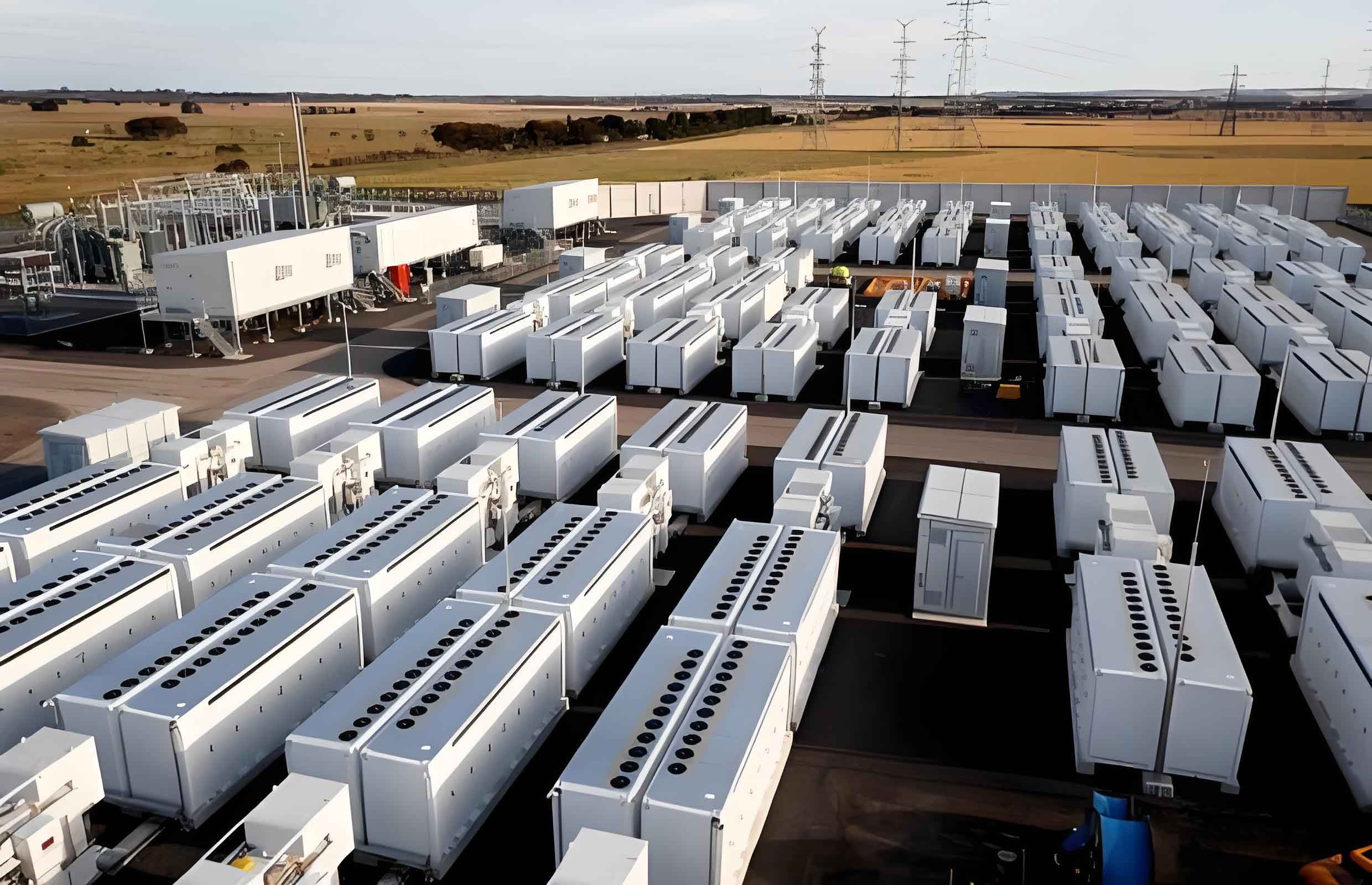
The major standard organizations are summarized in the table below:
| Region/Country | Key Standard |
|---|---|
| Europe | IEC 62619, IEC 63056 |
| North America | UL 1973, UL 9540A, UL 9540 |
| China | GB/T 36276, GB/T 34131, GB/T 34120 |
| Japan | JIS C 8715-2 |
| Korea | KC 62619 |
| Australia | AS/NZS 5139 |
| Germany | VDE-AR-E 2510-50 |
Mechanical Safety Comparison
Mechanical safety tests evaluate the response of battery energy storage systems under physical disturbances. The following table contrasts the mechanical test items covered by the three representative standard families:
| Test Item | IEC (Europe) | UL (North America) | GB/T (China) |
|---|---|---|---|
| Impact test | Yes | Yes | No |
| Drop test | Yes (height varies by sample) | Yes (height varies by sample) | Yes (fixed height) |
| Vibration test | Yes | Yes | Yes |
| Wall-mount bracket / support structure / handle test | No | Yes | Yes |
From my analysis, the UL series demonstrates the widest coverage of mechanical tests. For example, the drop test in IEC and UL standards specifies different drop heights or impact points based on the sample mass and intended application, whereas GB/T uses a single fixed height. Moreover, the pass/fail criteria under UL are the most stringent, encompassing checkpoints such as no explosion, no fire, no flammable vapor release, no toxic gas emission, no electric shock, no leakage, no rupture, and no loss of protective control. GB/T criteria include swelling, leakage, smoke, fire, and explosion, while IEC only requires no fire or explosion. This shows that UL places greater emphasis on real-world failure modes.
Environmental Adaptability Comparison
Environmental tests assess the ability of battery energy storage systems to function under harsh climatic conditions. The key differences are summarized below:
| Test Item | IEC | UL | GB/T |
|---|---|---|---|
| Thermal cycling | No | Yes | No |
| Damp heat (humidity) | No (referenced in IEC 60529) | Yes | Yes |
| Salt mist | No | Yes | Yes |
The IEC series generally omits dedicated environmental tests in the product safety standard itself, instead relying on external references such as IEC 60529 for ingress protection. Both UL and GB/T include damp heat and salt mist tests, but UL adds a thermal cycling test that is absent in GB/T. The UL approach is more comprehensive because battery energy storage systems installed outdoors in North America must withstand extreme temperature swings. Thermal cycling can induce mechanical fatigue and internal short circuits, making it a critical test that GB/T currently does not mandate.
Electrical Safety Comparison
All three standard families cover basic electrical safety tests: short circuit, overcharge, and overdischarge. However, the test conditions and acceptance criteria differ substantially.
| Test Item | IEC | UL | GB/T |
|---|---|---|---|
| Short circuit | Yes | Yes | Yes |
| Overcharge | Yes (specifies current, voltage, time in detail) | Yes (covers practical scenarios) | Yes (focuses on quantitative acceptance indices) |
| Overdischarge | Yes | Yes | Yes |
The IEC standard provides precise test parameters (e.g., charging current, cutoff voltage, duration) but does not prescribe detailed quantitative acceptance limits beyond “no fire or explosion.” GB/T, in contrast, gives very specific performance indicators such as maximum temperature rise, voltage deviation, and capacity retention, making it easier for manufacturers to verify compliance. UL distinguishes itself by incorporating real-life hazards: it explicitly checks for flammable vapor concentration, toxic gas release, electric shock risk, leakage, rupture, and loss of protective control. These additional criteria make UL the most pragmatic standard for ensuring the safety of installed battery energy storage systems.
One important electrical safety scenario is the thermal runaway cascade. The energy released during a short circuit can be expressed as:
$$ E = \int_{0}^{t} I(t)^2 R_{\text{int}} \, dt $$
where \( I(t) \) is the short-circuit current and \( R_{\text{int}} \) is the internal resistance of the cell. UL standards require that even under worst-case internal faults, the system must not propagate thermal runaway to adjacent cells.
Thermal Runaway and Fire Propagation Comparison
Thermal runaway is the most dangerous failure mode in battery energy storage systems. The three standards adopt very different philosophies for testing and evaluating thermal runaway propagation.
| Aspect | IEC 62619 | UL 9540A | GB/T 36276 |
|---|---|---|---|
| Scope (cell/module/unit) | Cell and module level | Cell, module, and unit level | Cell and module level |
| Trigger method definition | Not strictly defined | Detailed (e.g., nail penetration, heater, overcharge) | Not strictly defined; allows flexibility |
| Measured parameters | Fire/explosion only | Gas composition (toxic/flammable), combustion rate, explosion pressure, temperature rise | Fire/explosion, temperature, voltage drop |
| Acceptance criteria | No fire or explosion | No fire propagation, gas concentrations below safe limits, structural integrity maintained | No fire, no explosion, thermal propagation limited |
IEC 62619 offers a relatively simple pass/fail condition: if the cell or module does not catch fire or explode during the test, it passes. This approach can miss subtle but dangerous gas releases or slow combustion. GB/T focuses on the final test outcome but leaves the trigger method open to the user’s discretion, which can lead to inconsistent results. UL 9540A is by far the most rigorous: it requires testing at the cell, module, and unit level, and mandates measurements of gas species, pressure buildup, flame spread, and temperature history. This hierarchical approach mirrors real-world installation conditions, where a single failing cell can lead to a catastrophic system-level event.
The chemical kinetics of thermal runaway can be modeled using the Arrhenius equation for the exothermic decomposition reactions:
$$ \frac{dT}{dt} = \frac{1}{C_p} \left( Q_{\text{gen}} – Q_{\text{loss}} \right) $$
where \( Q_{\text{gen}} = A \exp\left(-\frac{E_a}{RT}\right) \cdot \Delta H \cdot m \) and \( Q_{\text{loss}} = h A_s (T – T_\infty) \). In UL 9540A, test results feed directly into computational fluid dynamics models that predict whether adjacent modules would ignite. This level of engineering rigor is absent in IEC and GB/T, which only certify at the component level.
Summary and Recommendations
After analyzing the three major standard families across mechanical, environmental, electrical, and thermal runaway dimensions, I have drawn the following conclusions:
- Coverage: UL standards (especially UL 9540A) provide the most comprehensive coverage, spanning from cell to system installation. IEC and GB/T focus mainly on cell and module levels, leaving system-level interactions untested.
- Test specification granularity: UL and IEC give detailed test conditions that vary by application (e.g., different drop heights for different product categories). GB/T uses more uniform but simpler conditions, which facilitates implementation by test laboratories but may not capture real-world variability.
- Pass/fail rigor: UL is the strictest, with multiple safety checkpoints including gas toxicity, flammable vapor concentration, and structural integrity. GB/T is moderate, and IEC is the simplest (only fire/explosion). For high-risk applications such as large-scale grid storage, UL-level testing is highly recommended.
Below is a consolidated comparison table highlighting the overall performance of each standard family across the four safety aspects:
| Safety Aspect | IEC | UL | GB/T |
|---|---|---|---|
| Mechanical safety | Moderate | High | Moderate |
| Environmental adaptability | Low | High | Medium |
| Electrical safety | Moderate (detailed procedure, simple criteria) | High (practical hazard-oriented) | High (quantitative indices) |
| Thermal runaway | Low (cell/module only, simple pass/fail) | High (multi-level, gas/ pressure/flame characterization) | Medium (flexible trigger, outcome-focused) |
For battery energy storage systems deployed in residential or commercial environments where human presence is likely, I strongly recommend adopting UL 9540A or equivalent test protocols to ensure that fire propagation and toxic gas release are properly characterized. For stationary applications inside dedicated containers with fire suppression systems, GB/T or IEC compliance may be sufficient if supplemented with system-level risk assessment.
Furthermore, there is a clear need for international harmonization. While IEC and UL standards are already converging in some areas (e.g., adoption of UL test methods into IEC technical specifications), China’s GB/T series would benefit from adding environmental cycling tests, gas analysis requirements, and unit-level thermal runaway propagation tests. Such enhancements would bring GB/T closer to the state of the art and improve the safety of battery energy storage systems worldwide.
In conclusion, no single standard is perfect for every scenario. The choice of safety standard for battery energy storage systems should be guided by the intended application environment, the severity of potential consequences, and the available mitigation measures. My analysis provides a systematic framework for engineers and regulators to make informed decisions that balance safety, cost, and practicality.