
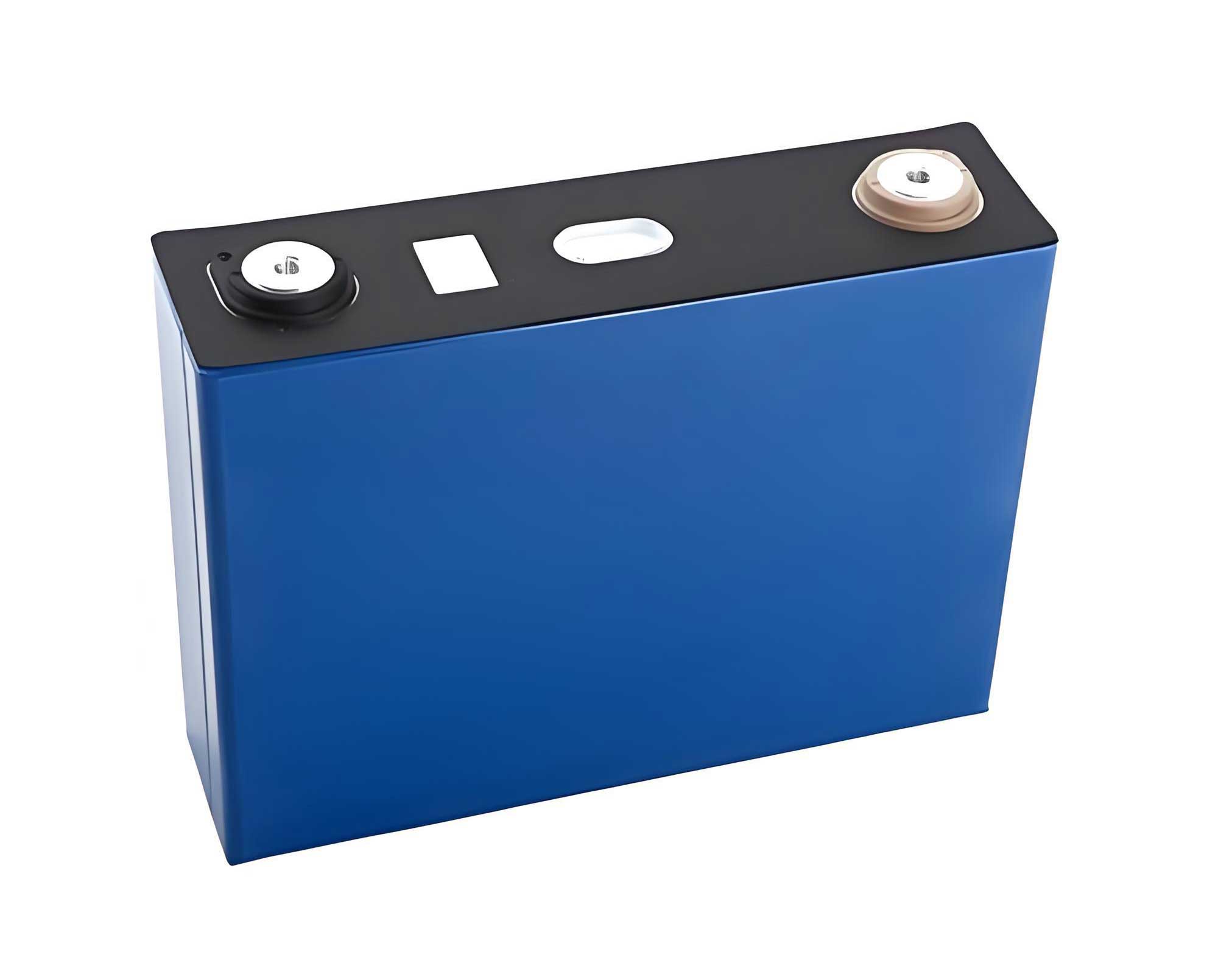
Our research group has been deeply engaged in addressing the critical safety challenges associated with large-scale energy storage systems. A primary focus is the fire and explosion hazards stemming from thermal runaway in lithium-ion batteries. While lithium iron phosphate (LiFePO4) batteries are renowned for their superior thermal stability compared to other chemistries, the industry’s push towards ever-larger capacities—now exceeding 300 Ah—introduces new, complex risks. The substantial volume of flammable gas vented during a thermal runaway event in such a large-capacity LiFePO4 battery can lead to severe secondary fires within a battery enclosure or container. Therefore, a fundamental understanding of the combustion characteristics and chemical kinetics of these vent gases is not just an academic exercise but a necessity for designing safer systems, developing effective early warning strategies, and formulating efficient fire suppression protocols.
This article presents a comprehensive investigation into the combustion behavior of gases emitted from a 340 Ah LiFePO4 battery under thermal runaway conditions. We employ an integrated methodology combining experimental measurements with detailed numerical simulations. The experimental work characterizes the real-world flame propagation and stability, while the computational modeling delves into the underlying chemical reaction mechanisms, allowing us to explore conditions beyond practical laboratory limits. This dual approach provides a complete picture, from observable phenomena to the foundational kinetic principles.
The vent gas composition, which serves as the fuel for our study, was obtained from the same 340 Ah LiFePO4 battery cells in a separate, controlled inert atmosphere test to prevent ignition. The primary constituents are detailed in Table 1. This mixture, predominantly hydrogen with significant hydrocarbons and carbon monoxide, forms the basis for all subsequent combustion experiments and simulations.
| Species | Volume Fraction (%) |
|---|---|
| H₂ | 54.9 |
| CO₂ | 25.6 |
| CO | 5.2 |
| CH₄ | 7.3 |
| C₂H₄ | 5.6 |
| C₂H₆ | 1.4 |
Our experimental setup centers on a combustion rate tester. The apparatus allows for the precise mixing of the synthesized vent gas with air at a desired equivalence ratio (φ), defined as the actual fuel-to-air ratio divided by the stoichiometric fuel-to-air ratio. This premixture is introduced into a long, transparent combustion tube. Ignition is initiated at the bottom, and the subsequent upward propagation of the flame is captured using a high-speed camera. Sophisticated tracking software analyzes the video to determine the flame’s instantaneous and average propagation speed. We systematically tested equivalence ratios from 0.8 (fuel-lean) to 1.5 (fuel-rich) to map the combustion behavior across different concentration regimes.
Complementing the experiments, we performed numerical simulations using Chemkin-Pro software, specifically the Premixed Laminar Flame-Speed Calculation (PLFC) module. The simulations utilized the detailed USC Mech II reaction mechanism, which is well-validated for H₂/CO/C1-C4 hydrocarbon fuels, making it highly suitable for modeling the complex mixture from a LiFePO4 battery vent. The simulations computed laminar flame speeds under various equivalence ratios, temperatures, and pressures, and provided deep insights into the chemical kinetics by tracking radical species concentrations and performing reaction sensitivity analyses.
Experimental Observations of Flame Morphology and Propagation
Direct observation of the flame provides immediate, qualitative insights into the stability and hazard potential of the burning LiFePO4 battery gas. At stoichiometric conditions (φ = 1.0), the flame exhibits a characteristic structure. Upon ignition, a blue, dome-shaped “flame kernel” forms. As it propagates upward, the flame does not move uniformly but in a distinct, pulsating manner. It undergoes cycles of rapid acceleration, where the flame front stretches and forms a pronounced “tail,” followed by a brief deceleration phase where the flame appears compressed. This pulsating instability is likely driven by pressure waves generated ahead of the flame front due to rapid expansion of hot gases, which temporarily alters the local mixture concentration and flow field before the flame catches up.
The equivalence ratio dramatically influences flame stability. For fuel-lean mixtures (e.g., φ = 0.8), the flame is faint, uneven, and highly unstable. It struggles to propagate consistently and often extinguishes partially in the later stages of travel. This is because the excess air dilutes the reactive mixture, reducing the reaction rate and heat release below the level required for sustained propagation. In contrast, fuel-rich mixtures (φ > 1.1) produce much brighter, more robust, and stable flames. At φ = 1.1, the flame maintains a smooth, steady, and well-defined “jellyfish” shape throughout its travel. At even higher fuel concentrations (e.g., φ = 1.4), the flame front becomes slightly more elongated or “tulip-shaped,” but remains coherent and stable. This enhanced stability under rich conditions is critical for hazard assessment; it indicates that in the confined, potentially oxygen-depleted environment of a failing battery pack, vented gases from a large-capacity LiFePO4 battery are likely to sustain combustion more readily.
Fundamental Combustion Characteristic: Laminar Flame Speed
The laminar flame speed (S_L) is a fundamental property of a fuel-air mixture, representing the speed at which a flat, one-dimensional flame propagates into a quiescent, unburned mixture. It is a direct measure of the mixture’s reactivity. We measured and simulated S_L for the LiFePO4 battery gas across the range of equivalence ratios. The results, plotted in the figure below, show excellent agreement between experiment and simulation, validating our numerical model.
The data reveals a classic unimodal trend. The flame speed increases from the lean side, reaches a peak value, and then decreases on the rich side. For this specific LiFePO4 battery gas mixture, the maximum flame speed of approximately 56.4 cm/s occurs at an equivalence ratio of φ = 1.1. This “slightly rich” peak is typical for hydrocarbon-hydrogen blends, as hydrogen’s high diffusivity and reactivity shift the maximum speed away from the stoichiometric point. The chemical reason is that at φ = 1.1, the combined effects of fuel concentration and available oxidizer optimize the production of key chain-carrying radicals (H, O, OH), leading to the highest net heat release rate per unit flame area, which directly drives the propagation speed. This peak speed condition represents the most reactive and potentially hazardous state for the vented gases.
The mathematical expression for the mass burning rate, which is related to the flame speed, is given by:
$$ \dot{m}” = \rho_u S_L $$
where \( \dot{m}” \) is the mass burning rate per unit area, and \( \rho_u \) is the density of the unburned mixture. A higher S_L directly translates to a faster energy release rate in a fire scenario involving thermal runaway gases from a LiFePO4 battery.
The Influence of Temperature and Pressure on Flame Propagation
In real thermal runaway events within a LiFePO4 battery pack, the vented gases are hot, and the pressure can build up rapidly in a confined space. Therefore, understanding how temperature and pressure affect combustion is vital. Our simulations systematically explored these parameters.
Effect of Initial Temperature (T_u): We calculated flame speeds at unburned mixture temperatures of 298 K (room temperature), 348 K, and 398 K. As shown in the data, increasing T_u significantly enhances S_L across all equivalence ratios. For instance, at φ = 1.1, S_L increases from ~56 cm/s at 298 K to over 84 cm/s at 398 K. This strong positive dependence can be explained by the Arrhenius kinetics of the chemical reactions. The reaction rate constant k for a generic reaction is:
$$ k = A T^n \exp\left(-\frac{E_a}{RT}\right) $$
where \( E_a \) is the activation energy, R is the universal gas constant, and A and n are constants. Higher initial temperature exponentially increases the rate of the key chain-branching and propagation reactions, leading to a hotter flame, faster radical generation, and consequently, a faster propagating flame front. This implies that gases venting from a very hot LiFePO4 battery cell will burn more violently than those released from a cooler one.
Effect of Initial Pressure (P_u): In contrast to temperature, increasing pressure suppresses the laminar flame speed for this mixture. Simulations at 1 atm, 5 atm, and 10 atm show a clear decrease in S_L with increasing P_u. At the peak reactivity condition (φ=1.1), S_L drops from ~63 cm/s at 1 atm to about 28 cm/s at 10 atm. This counter-intuitive trend, common for many fuels, is due to the pressure dependence of three-body termination reactions. These reactions, where two radicals combine in the presence of a third body (M) to form a stable molecule (e.g., H + O₂ + M → HO₂ + M), have reaction rates that scale with the square or cube of pressure. As pressure rises, these termination pathways become overwhelmingly faster relative to the two-body chain-branching reactions, effectively scavenging the reactive radicals (H, O) needed to sustain a fast-propagating flame. The global reaction rate for a termination step can be expressed as:
$$ \text{Rate}_{term} \propto [H][O_2][M] \propto P^3 $$
This strong pressure dependence explains the observed suppression of flame speed. For safety design, this means that while high pressure might be dangerous from an explosion containment perspective, it inherently acts to slow down the deflagration speed of a LiFePO4 battery gas cloud.
Probing the Combustion Mechanism: Radicals and Sensitivity Analysis
To move beyond macroscopic properties and understand the “why” behind the observed behavior, we used our kinetic model to analyze the combustion mechanism at the molecular level. We focus on the peak reactivity condition (φ=1.1) at standard temperature and pressure.
Radical Pool Dynamics: The combustion of the complex LiFePO4 battery gas is governed by a high-temperature radical chain mechanism. The concentrations of atomic hydrogen (H), atomic oxygen (O), and the hydroxyl radical (OH) are paramount. Our simulations track these through the flame structure. The OH radical typically reaches the highest concentration (on the order of 10⁻² mole fraction), acting as the primary oxidizer for CO and hydrocarbons. The H radical, though present at a lower concentration (order of 10⁻³), is the most important chain carrier due to its high mobility and reactivity. It drives the crucial chain-branching step. The evolution of these radicals with temperature and pressure aligns with the flame speed trends. Higher initial T_u leads to higher peak concentrations of all radicals. Conversely, higher P_u drastically reduces the peak concentration of H radicals, as explained by the enhanced three-body termination, directly linking radical suppression to flame speed reduction.
Reaction Sensitivity Analysis: This technique identifies which elementary chemical reactions have the greatest influence on the calculated flame speed. A positive sensitivity coefficient means the flame speed increases if that reaction’s rate constant is increased, and vice versa. The analysis for the LiFePO4 battery gas mixture at φ=1.1 reveals the dominant reactions:
| Reaction Number | Reaction | Role & Sensitivity Trend |
|---|---|---|
| R1 | H + O₂ ⇌ O + OH | Chain-branching. Universally the highest positive sensitivity. Accelerates propagation by creating two radicals (O, OH) from one (H). |
| R3 | OH + H₂ ⇌ H + H₂O | Chain-propagation. Major source of H radicals, critical for feeding R1. High positive sensitivity. |
| R38 | HCO + M ⇌ H + CO + M | Radical source. Provides additional H atoms from fuel decomposition intermediates. Positive sensitivity. |
| R31 | CO + OH ⇌ CO₂ + H | Heat release & propagation. The main exothermic step and a key source of H. Positive sensitivity. |
| R9 | H + O₂ + M ⇌ HO₂ + M | Chain-termination. The dominant inhibiting reaction. Scavenges H and O₂ to form less reactive HO₂. High negative sensitivity. |
| R4, R5 | H₂/OH + HO₂ ⇌ H₂O/OH + O₂ | HO₂ consumption. Can have positive or negative sensitivity depending on conditions, affecting the net impact of the HO₂ pathway. |
The competition between the chain-branching reaction (R1) and the pressure-sensitive termination reaction (R9) is the central kinetic duel controlling the combustion of LiFePO4 battery vent gases. Under elevated pressure, the rate of R9 increases significantly (as it scales with [M]≈P), winning the competition and throttling the radical pool. This kinetic understanding directly informs mitigation strategies. For example, fire suppression agents that catalytically promote termination reactions like R9, or that scavenge H and OH radicals, would be particularly effective against fires fueled by thermal runaway gases from a large-capacity LiFePO4 battery.
Synthesis of Findings and Implications for Energy Storage Safety
This integrated study elucidates the combustion hazards posed by gases from a failing large-capacity LiFePO4 battery. The vent mixture, rich in hydrogen and light hydrocarbons, exhibits a well-defined combustion regime with a peak flame speed around φ=1.1. Flame stability is greater under fuel-rich conditions, which are likely to occur in the poorly ventilated sections of a battery pack. The fundamental properties of this flame are strongly modulated by environmental conditions: accelerated by increasing temperature but inhibited by increasing pressure due to shifting kinetics in the radical chain mechanism.
The implications for the safety of LiFePO4 battery-based energy storage systems are multi-faceted:
- Hazard Assessment & Detection: Knowing that the gas burns most vigorously at slightly rich conditions (φ~1.1) helps in calibrating gas detection systems. Alarms and ventilation triggers should be set to act well before concentrations approach this critical ratio. The understanding of flame stability also guides the placement of optical flame detectors.
- Enclosure and Vent Design: The pressure-suppression effect suggests that completely rigid, sealed enclosures might experience slower internal flame spread if a gas cloud ignites, though peak explosion pressures could be higher. Vent designs must account for the potential for stable, rich combustion outside the vent port.
- Fire Suppression Agent Selection: The kinetic sensitivity analysis provides a roadmap for developing or choosing effective extinguishing agents. Compounds that can interfere with the key chain-branching reaction (R1) or enhance radical termination (like R9) are predicted to be highly effective. This moves suppression strategy from a purely empirical approach to a chemically-informed one.
- System-Level Thermal Runaway Propagation: The hot, fast-burning gas from one initiating LiFePO4 battery cell is a potent vector for propagating thermal runaway to neighboring cells. Our measured flame speeds and temperatures help model this secondary heating effect, informing cell spacing, barrier design, and pack-level mitigation systems.
In conclusion, while the LiFePO4 chemistry is inherently safer in terms of onset temperature, the sheer volume of flammable gas released by a modern, large-capacity LiFePO4 battery presents a significant and quantifiable combustion hazard. Our work provides the essential experimental data and mechanistic understanding required to translate this knowledge into engineering solutions. Future research will focus on validating suppression agents based on these kinetic principles and integrating this gas-phase combustion model with whole-cell and pack-level thermal runaway propagation models for the LiFePO4 battery, ultimately enabling the design of energy storage systems that are not only high-performing but also inherently safer.